

Yet why is he unknown when according to Gardeners Chronicle “few men in horticulture have been better known or more respected”? The Standard “confidently declared that Mr William Bull’s exhibition in King’s Road, Chelsea offers a sight unparalleled in the world”. The Morning Post too was impressed saying “it gives one the idea of fairyland.” Fellow nurseryman Benjamin Williams wrote it just shows “what the perseverance, courage, and enterprise of one man can do”.
His nursery was indeed “Horticulture in Excelsis”
What on earth did William Bull do to achieve such praise? And again that question: if he was that important why haven’t you heard of him?

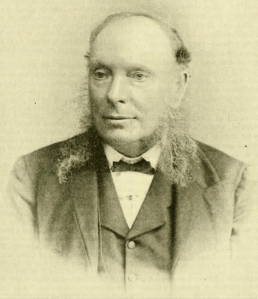
William Bull, from his obituary in Gardeners Chronicle 7th June 1902
Born in Kings Somborne, Hampshire into a comfortably off family, at 14 “the natural bent of his genius for floriculture” meant that the young William decided [or rather was allowed] not to continue in academic education but to become an apprentice gardener. He was obviously a success because at 17 he set off for a placement in London at Henderson’s nursery and within another 3 years was made a travelling rep for the firm. At 26 he was offered a job with another leading London nursery, Rollinson’s of Tooting where he not only acted as a rep in Britain but was sent “to almost every country of consequence in Europe.” When some 6 years later Rollinson would not take him into partnership Bull decided to branch out on his own.

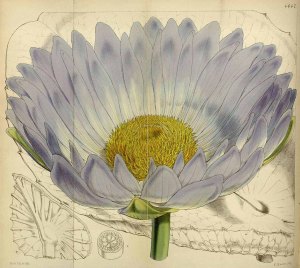
In January 1861 young William managed to take over the stock and part of the Chelsea premises of John Weeks, a well-established nurseryman, and horticultural builder. It included a range of state of the art glasshouses and a 70ft square winter garden which had only opened in 1857.
Rather than paying Weeks a lump sum, he paid him £300 a year before eventually buying the freehold in 1874, and upping the annuity to £500.
[For more on Weeks see this earlier post]

Bull’s obituary in William Robinson’s magazine, The Garden, says this “initiated a new era in the history of British horticultural enterprise.”
His first advert [see below] looks a bit dull and it’s a pity the small print is so difficult to read but it’s clear he was not backwards in coming forwards.
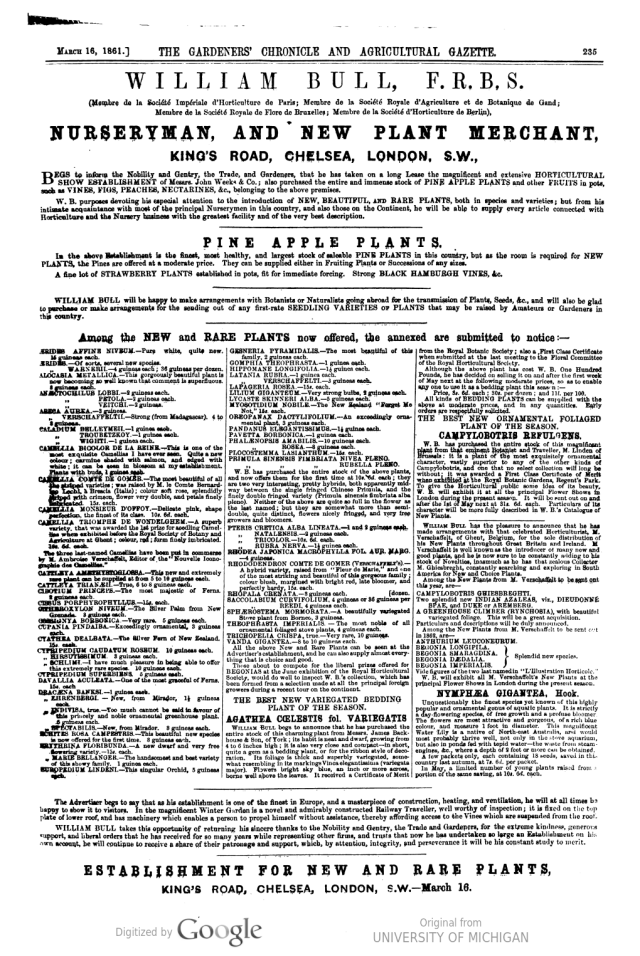
Advert from Gardeners Chronicle, 16th March 1861

Having admitted that he had taken over the “magnificent and extensive” stock of John Weeks, William went on to declare his intention to the introduction of NEW BEAUTIFUL and RARE PLANTS both in species and varieties, using his connections both in Britain and across the continent.

Dracaena spectabilis now Cordyline fruticosa – a new introduction which he was selling for 8 guineas
Even in this first advert there are signs that he had already begun the process.
In addition to all the normal run of nursery stock it announces 75 “new” plants with his first catalogue containing a number of rare and interesting kinds, including Cattleya amethystoglossa which is mentioned as “a fine novelty”, and offered at the price of five and ten guineas.

He tells readers he has purchased the entire stock of Primula sinensis fimbriata nivea pleno which were on offer at 10s6d each, and the entire stock of Campylobotris refulgens from “that eminent Botanist and Traveller, M. Linden of Brussels.” In addition he had “made an arrangement with the famous Belgian nurseryman M. Verschaffelt of Ghent to be his sole agent for new plants in Britain.”
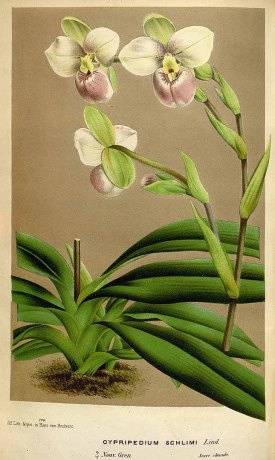

Several of the plants listed in the advert were still rarities 40 years later when he retired. Unfortunately it’s often difficult to identify precisely which species/varieties are being discussed as names have changed and spelling were often erratic. I’ve done my best checking with reputable on-line taxonomy databases but still may well be mistaken! [A good case in point is plant on the left]

The 1860s saw Bull’s reputation quickly boosted by a string of medals and awards from important horticultural shows such as those of the Royal Botanic Society, the Crystal Palace Flower Show and the Horticultural Society at Kensington. He also exhibited at major shows abroad, including the 1867 Paris International Exhibition and again picked up prizes. These were, of course, then used throughout his career as part of his advertising.
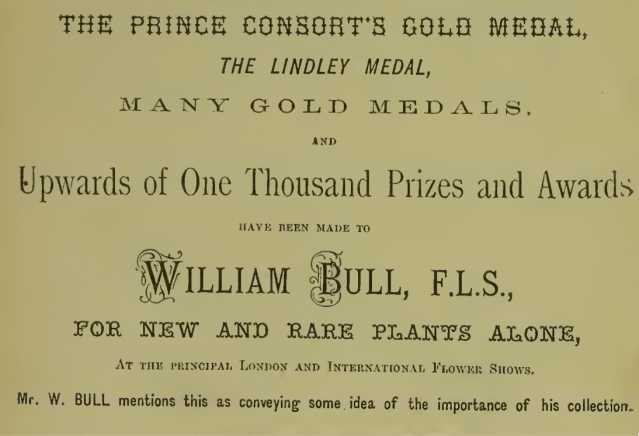
Soon his commercial horticultural network, especially of continental nurseries, and his membership of a number of the leading horticultural societies in France, Belgium, Germany and Russia which he had developed in his time as a rep for Rollinson, was paying off. His clientele list grew and included the royal family and virtually all the British aristocracy. [Check out the 17 dukes and 65 earls and all the rest in his 1882 catalogue – who knew we had so many aristocrats?!]
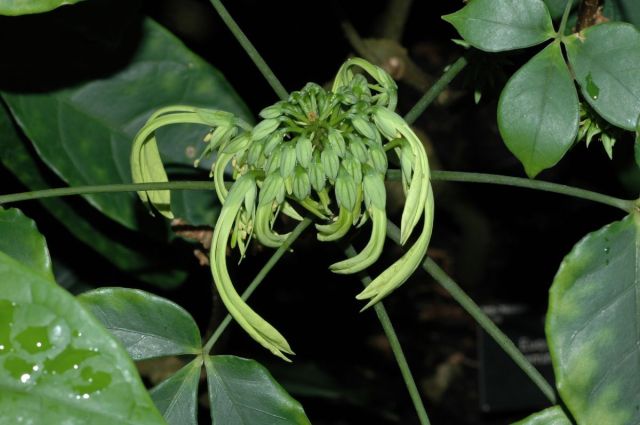
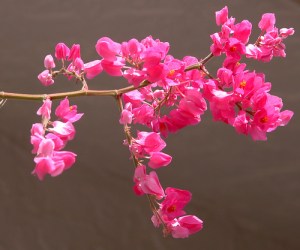
Antigonon insigne [now Antigonon gautamalense] “discovered in the U item States of Colombia by one of my collectors” from the 1882 catalogue
Bull advertised regularly in Gardeners Chronicle and in 1878 said that he was “constantly receiving large importations from his Collectors and Correspondents in Assam, Colombia, Burmah, Brazil, Mexico, ‘Costa Rica, Venezuela, Ecuador, West Indies, and the Eastern Archipelago, and can offer many of the rarest and most beautiful kinds at extremely low prices. Customers can choose their plants from eleven large houses full of Orchids.”
from The Week’s News 23 Feb 1878
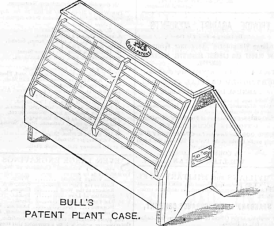
To assist the movement of plants Bull devised and in 1870 patented a modified Wardian case.

Amongst the collectors he worked with were Richard Pearce who had previously been work for James Veitch in South America. After several successful trips between 1859 and 1866, in which he introduced the begonia to Britain, Pearce’s contract was not renewed and Bull stepped in to offer him work. Pearce returned to Panama looking mainly for orchids but he caught yellow fever and died on in July 1867 aged only 33.


Later Bull sponsored an orchid hunting expedition to Colombia and central America led by Edward Shuttleworth and John Carder. They collected several new species of Masdevallia and were successful in bringing them back to England alive.
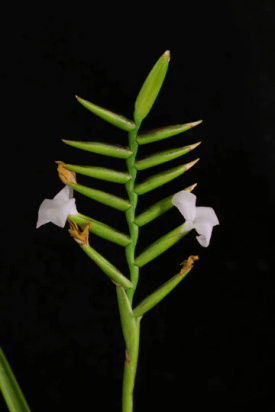
Bull seems to have also worked with Carl Falkenberg whose most important discovery was Vriesea falkenbergii W. Bull, a bromeliad from Panama [seen at the top of this post]

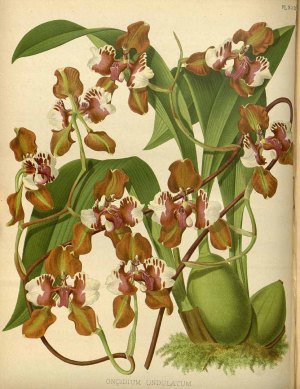
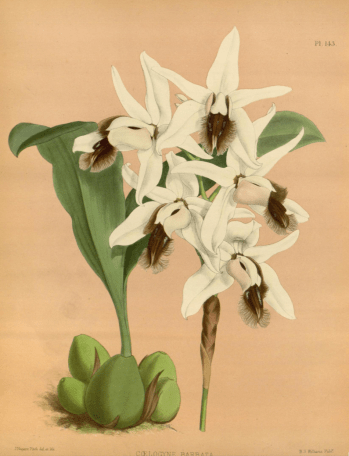
Over the years Bull developed a real passion for orchids, and in 1883 he began an annual exhibition. This ran for 15 years until in 1898 he sold some of his ground and semi-retired. It was one of the sights of the London season and always attracted a lot of attention, being visited by royalty both home-grown and foreign including the King of Siam. As the Morning Post declared in May 1896 it became “a sight that could be seen nowhere else in. the world.”
The Orchid Review carried a report of one show. “The large show house presents a charming sight , the plants being tastefully arranged with maidenhair ferns etc” with a long list of rare and unusual species and varieties. Mr Bull “has no doubt contributed…to the popularity of orchid culture which has undergone such a marked development during recent years.” The shows often included new introductions such as in 1886 Oncidium ondulatum from Columbia “the first in London” and Cattleya Lawrenceana occulta “from the recently exploited Rowaira Mountains”. [I think this must be Mount Roraima on the borders of Venezuela, Brazil and Guyana.] For more on the taxonomy of Cattleya lawrenciana follow this link.

There was of course a downside to all this orchid collecting. One short article in Gardeners Chronicle in 1878 caught my eye and exemplifies what happened. Since Bull was far from being the only nurseryman and collector scoring the world for new plants one can only imagine the effect on the hitherto largely unspoilt habitat.


But it was not only orchids. Bull clearly had an eye for good plants and their commercial possibilities. He promoted them through whole page adverts in Gardeners’ Chronicle and by exhibiting at all the major horticultural shows at both home and abroad where his displays consisted almost entirely just of these new exotics.
This led to him picking up a special award at the Brussels Exhibition in 1876 for “scientific merit” as well as gold medals for “the highly important nature and beauty of his introductions.”
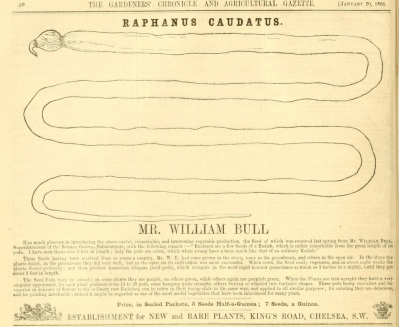
It would be impossible to attempt a definitive list since it would run into the many hundreds of plants but just to give a flavour of the range apart from orchids… it included a variegated coleus from Verschaffelt which was popular because it was so easy to propagate, Polyscias guilfoylei [the wild coffee] and Raphanus caudatus – the rat’s tail radish – a vegetable from Java. Seeds of this were advertised 7 for a guinea!
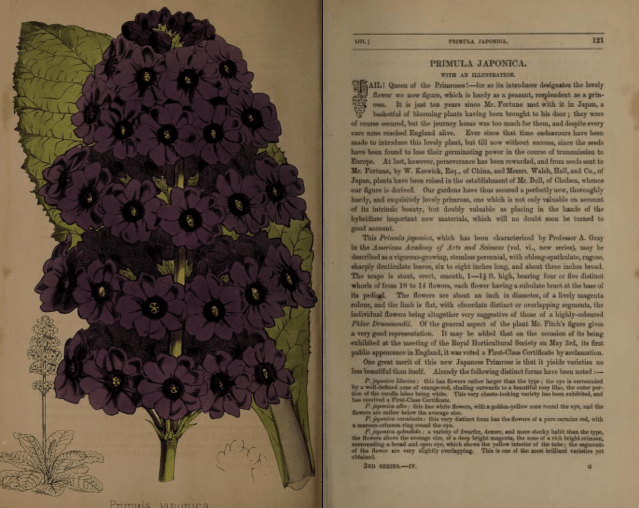

In 1871 in perhaps one of his more enduring successes he introduced Primula japonica into the commercial market. Hailed as “Queen of the Primroses” by The Florist, “it is just ten years since Mr Fortune met with it in Japan… but the journey home was too much for them and none reached England alive. Attempts to grow it from seed has also failed many times until “perseverance has been rewarded…and plants have been raised in the establishment of Mr Bull of Chelsea.” It was “a thoroughly hardy and exquisitely lovely primrose” which would place in the hands of the hybridiser important material which will no doubt be soon be turned to good account.”
To put Bull’s collecting into context, Gardener’s Chronicle in 1878 in a long editorial itemised recent new plant arrivals. Bull had introduced 33 in the previous year alone,[“three Ferns, three Cycads, eleven Cordylines, three Dieffenbachias, two Dracontiums, two Dipladenias, two Crotons, and eight miscellaneous”], compared with 29 for his nearest rivals James Veitch and 10 for Benjamin Williams.

His nursery worked on hybridisation programmes for a whole range of plants, notably orchids and pelargoniums, but also the then fashionable and now almost forgotten gloxinia. He bought rare orchids at auction at up to £300 a plant, probably to include in this, although according to his obituary “the results for the most part have yet to be seen, this being a work in which a good deal of patience is necessary”. Bull introduced the strain known as Regal Pelargoniums largely by crossing P. cucullatum with P. grandiflorum. The results were mainly named after members of the royal family, but also with one named after him and were in commercial production by 1864.


There was also a red azalea William Bull, reported to be “one of the best for early forcing”, and a camellia “William Bull ”
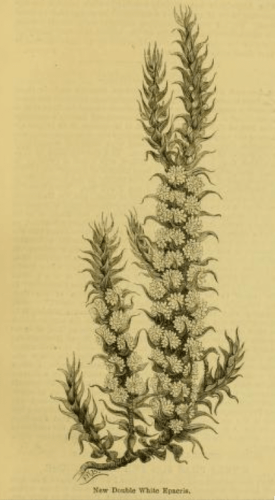
Business was soon going so well that he was short of space in his nursery grounds and hothouses, so in 1874 he held a large auction to clear a lot of his stock to allow room for new consignments which were arriving.
Amongst them were a double epacris, an Australian heath in 1876, ” which cannot fail to become a great favourite for its sprays. especially for the formation of wreaths for the adornment of ladies hair, are most elegant and pure”
from The Week’s News 23 Feb 1878

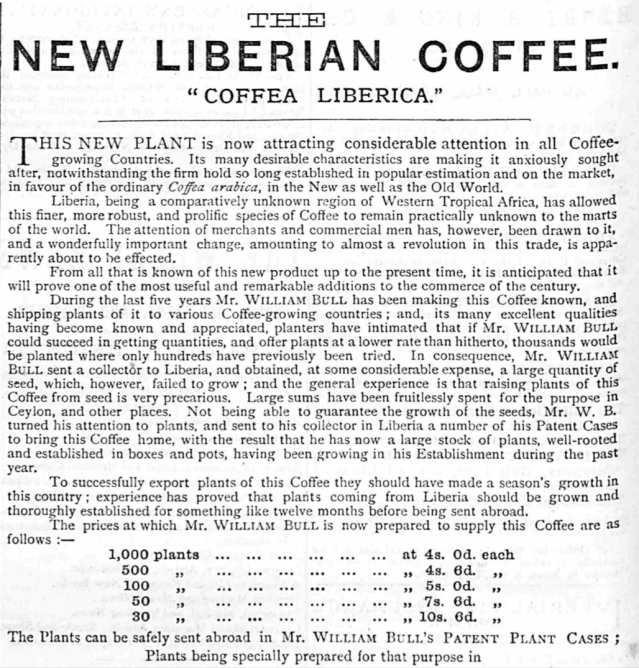
Bull had also been growing small quantities of Liberian Coffee since 1873 but in 1878 a disease – Hemileia vastatrix – devastated the coffee arabica plantations of Ceylon. However Coffea liberia was immune to it and now Bull grew it in industrial quantities to replace the crop and would of course be sent out in his patented plant cases.
This meant risking expanding again, and taking over the part of the grounds of Cremorne Gardens just across the road from his existing site. Here he employed a leading greenhouse manufacture to design and build as many as 18 new hot houses. It meant he now had about 3 acres mostly heated under glass.

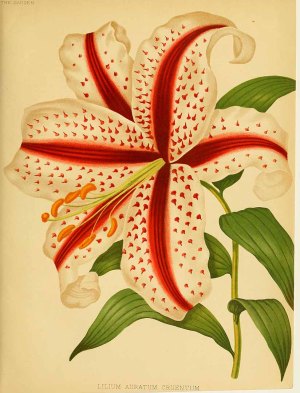
As the century wore on so his success continued to grow. Apart from orchids and other much cheaper but still fashionable greenhouse plants such as pelargoniums, fuchsias, and verbenas he added much hardier plants to his range – every thing from aucubas which he obtained from Siebold’s nursery in Belgium, to Lilium auratum recently introduced from Japan via tree ferns from New Zealand.
He had a good eye for publicity and there were frequent reports in not just the horticultural press but local and national newspapers of what was currently in flower. For example in 1884 many carried an account of the blooming of a giant Godwinia.

This was said The Graphic “quite an event in the botanical year; and numerous indeed will be the visitors to see this strange plant.” There was a long description of the plant which “was not unlike a giant arum… [but] curious rather than beautiful” Bull had a scoop because ” it is the only plant of its kind in Europe, and this solitary exile from Nicaragua has only blossomed once before and that eleven years ago!”
The editor of Gardener’s Chronicle recalled that he had often “been summoned by telegraph at an early hour to see some novelty on ‘your way to town and never was disappointed” “On another occasion Bull took an ” Aroid whose perfume was as vile as its interest was great” to the Chronicle offices. “He carried in his brougham until the stench became so great that he was obliged to get out and sit with driver in the open air.”
Another way of publicising his new plant introductions was to encourage amateur growers to try them. Bull regularly offered many prizes at horticultural shows all over the country to those who exhibited them successfully. As just one example in 1879 he gave silver cups worth 15, 12 and 6 guineas to a show in Carlisle for a display featuring 12 of the plants that he had introduced.

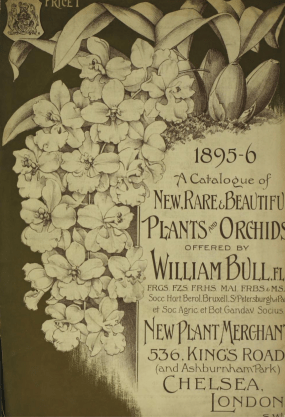
Alongside all this he kept up the more mundane aspects of a nurseryman’s existence. There were regular catalogues of vegetable and flower seeds, bulbs as well as more specialist stuff such as plant food. There are nearly 90 of these online at archive.org.
William Bull seems to have taken a great interest in horticultural science too. From his earliest days he was a Fellow of the Linnaean Society, and later was admitted to the Royal Geographical Society, the ZoologicalSociety, the Royal Botanic Society, the Society of Arts and the Anthropological Institute. He was one of the original recipients of the RHS Victoria Medal of Honour.
But, all good things come to an end and in March 1898 he sold the freehold of the grounds & auctioned off much of the stock – but continued to run a much smaller business ,which still had 13 employees, until he died following a short illness in 1902, leaving £7200.
His many obituaries, like the one in the Gardeners Chronicle, were fulsome. They revealed an energetic, hardworking man, with shrewd business acumen who was well-planned and organised about everything he did. At the same time it’s clear that he was popular and respected by his peers, his customers and his workforce.
The business continued under his two sons William junior who died in 1913 and Edward. It was Edward who continued to develop the orchid business but he retired from running the nursery in 1916, turning his attention instead to marketing Bull’s Plant Food and Bull’s Fumigating Compound. This did not last long and the business finally closed completely in 1920 with the site being sold for development for £19,500.
So why haven’t you heard of William Bull before now? The answer is, I think, quite simple: how many of the plants I’ve mentioned do you grow, or did you even recognise? He was pre-eminent because of his introduction of new hothouse plants and most people’s ability to maintain large heated conservatories disappeared with the First World War. These days the only places you’re likely to find many of the plants he championed are at Kew or Wisley and even they don’t have many of them. In short his fame really only lasted as long as the money to provide heated homes for exotics.
For more information a good place to start is Biodiversity Heritage Library and word search for William Bull in the any of the horticultural press, or look at the opening pages of any of his catalogues which you can find on archive.org [Be warned that as I write archive have just updated their system and the filters aren’t working very well so you may get other stuff coming up as well.]

from The Week’s News 23 Feb 1878


 The Garden History Blog

You must be logged in to post a comment.