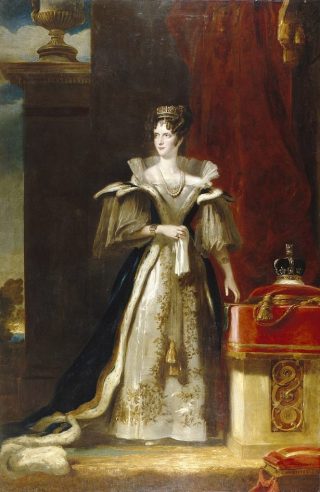
Let’s start today with a pub quiz question. Who was Queen Adelaide? Did you even know Britain once had a Queen Adelaide? Would it help if I told you that before her engagement to a royal duke she was Her Serene Highness Princess Adelheid Luise Therese Caroline Amalie of Saxe-Meiningen?
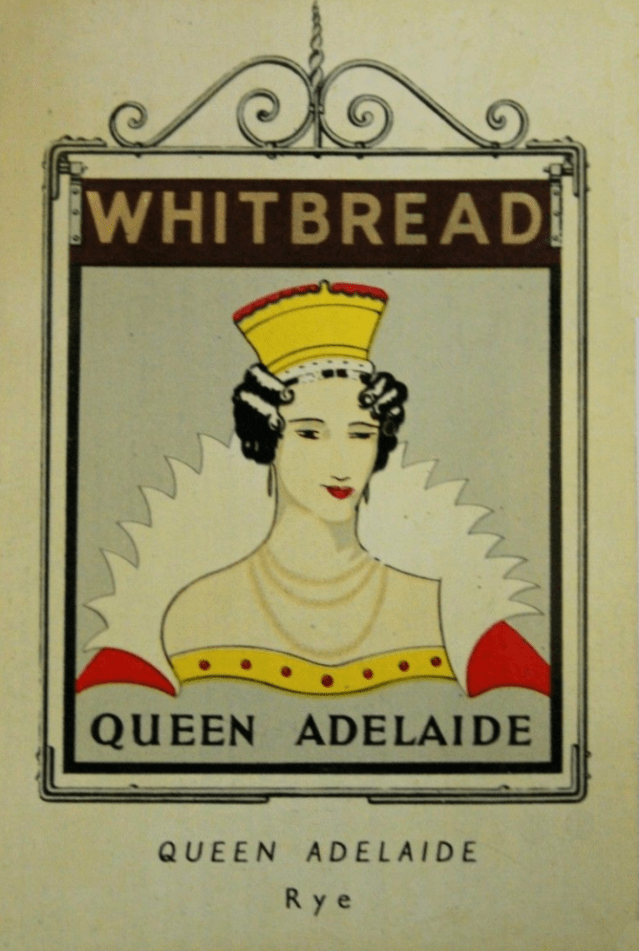
If you have heard of Adelaide it’s probably because of the capital city of South Australia or one of the many pubs and streets round the country which were named after her. Still not a clue?
And in any case what’s Queen Adelaide doing in a blog about gardens?
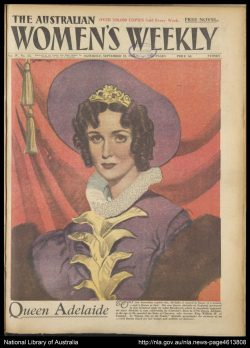
In fact she’s already made a passing appearance in seven earlier posts : those about the early growers of money-puzzle trees, the career of Charles Macintosh, James Bateman’s giant book of orchids, the charitable work of George Glenny, the story of the Other London Zoo, the botanical artist Augusta Withers and most recently in a post about Belvoir. That might suggest that she had some interest in gardens and flowers, as indeed she did.
This post is going to explore that a bit further…

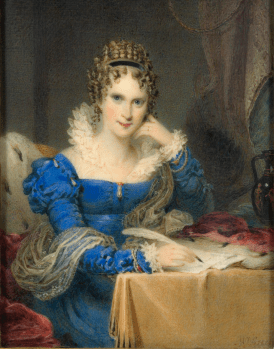
First a bit about her and how and why she became queen.
Adelaide was 26 when she accepted the proposal of marriage from a man she’d never met, who was twice her age, and who had until recently lived with his mistress and their ten illegitimate children.
She travelled over from Meiningen in central Germany, arriving in London in July 1818, and a week later was married at Kew to William, Duke of Clarence, the third son of George III and Queen Charlotte, and younger brother of the Prince Regent.
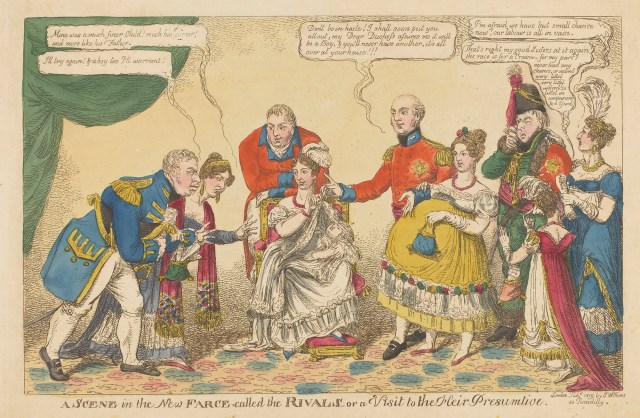
The royal family was undergoing a crisis because the Prince Regent’s only child, Princess Charlotte, had died a few months earlier in 1817, leaving the succession going to his four younger brothers who did not have a single legitimate heir between them. This threat to the dynasty created an urgent need for William and his brothers to find suitable wives and produce babies. The next brother in line after William, Edward Duke of Kent, was also lined up with an “instant” wife and married at Kew Palace on the same day to another princess from a minor German state, Victoria of Saxe-Coburg-Saalfeld and it was their child Victoria who eventually became the longed-for heir.
So what you might ask?. What’s all that got to do with gardens?

After the death of George III the royal family took very little interest in any of the royal gardens – or perhaps more accurately they spent very little money on them and although George IV was patron of the London Horticultural Society [founded in 1804 and forerunner of the RHS], that was about the extent of his interest. Loudon commented in the first edition of his Encyclopedia of Gardening in 1825 that “the royal gardens of England cannot be greatly commended” and “neither Kew nor any other of the royal gardens are at all kept in the order as they ought to be, not on account of want of skill in the royal gardeners but from want of support from their employers.” Indeed after the death of Queen Charlotte in 1819 even Kew Palace was largely abandoned.
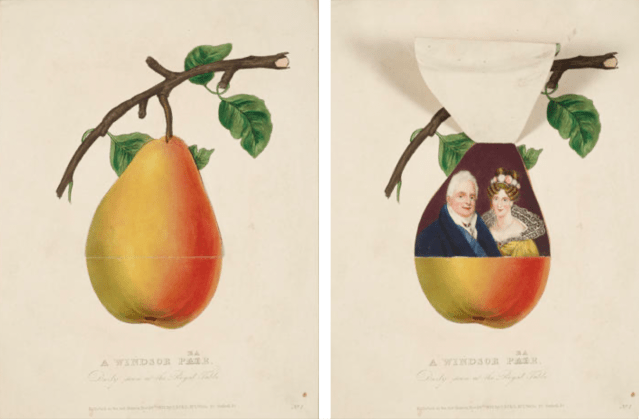
A Windsor Pair/Pear. A novelty print with a movable flap. containing a portrait of William and Adelaide.
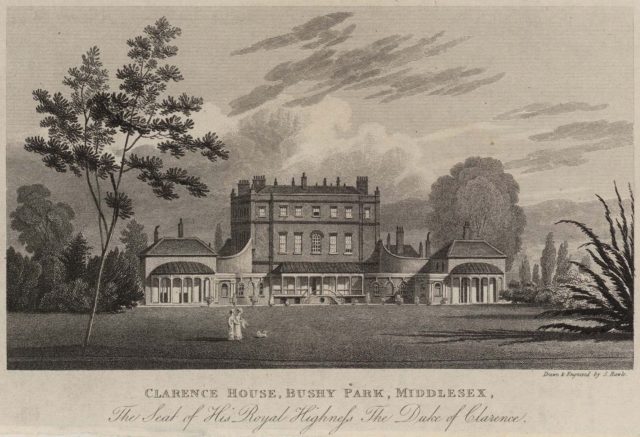
After a year or so living in Hanover, where George IV was also king, the newly-wed Duke and Duchess of Clarence returned to London. They lived between Clarence House, which was newly built for them by John Nash, and Bushy Park, where the duke held the post of Ranger. Their lifestyle was so quiet and simple that observers thought them parsimonious. They remained in comparative retirement until with the death of George IV, 26 June 1830 the Duke ascended to the throne as William IV, and his wife became Queen Adelaide.
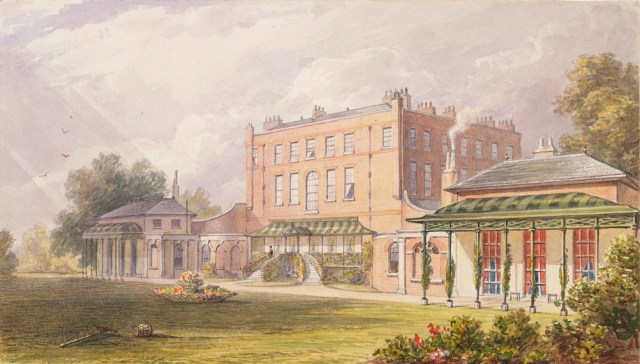
Bushy Park by Henry Ziegler
probably commissioned from Ziegler who was paid £14 from Queen Adelaide’s Privy Purse accounts,
Just a couple of months later In 1830 she appointed one of the leading botanical artists of the day, Augusta Withers, ” flower painter in ordinary and teacher of botanical drawing to Queen Adelaide” which might suggest that she’d been taking lessons in drawing and painting flowers in the years before. [For more on Mrs Withers see this earlier post] Certainly Adelaide’s interests in flowers became apparent soon after her arrival in Britain, with her husband later saying “he and his wife were quiet people; “and, indeed,” as he once remarked, “the Queen does nothing after dinner but embroider flowers.” ”[ from Memoir of Queen Adelaide, by Dr. Doran]
From Bushy she would often arrange to visit the gardens of well-known plant collectors, and slightly more controversially visit local flower shows, often taking her husband along with her. In an earlier post I wrote about the rise of flower shows and horticultural competitions during this period, and how slowly they were moving from being the pursuit of the working and the lower middle classes, often held in pubs and their gardens, to attracting the interest of more elevated levels of society. The fact that the Clarences decided to attend helped speed up that process.
As I showed in an earlier post George Glenny’s The Royal Ladies Magazine secured the patronage of Queen Adelaide when it started in 1830. Articles about gardening soon began to appear with an early one noting that “the principal beds of tulips near London, open to the public, are not very numerous; though many private cultivators delight in showing their collections if applied to. …Mr. Lawrance of Hampton, the host of the Red Lion Inn, has also a very superior collection, which has been visited repeatedly by their present majesties, when Duke and Duchess of Clarence, with great delight, and is annually exhibited in May to many distinguished persons, who rarely fail to dine there once during the tulip bloom. [The Royal Lady’s Magazine, 1831]
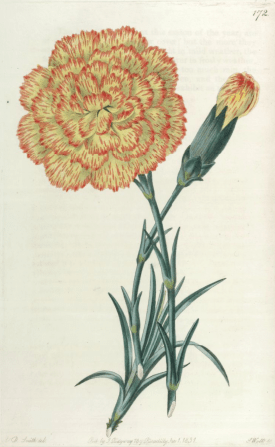
As the flower show developed so amateur flower growers – usually referred to at the time as florists wanted to formalise their hobby. In 1833 the Metropolitan Society of Florists and Amateurs – sometimes known as the Metropolitan Floricultural Society was set up, and Adelaide accepted an invitation to be its patron. The Society began to organize seriously competitive flower shows and so was “likely to be secure a prominence and rank not inferior to that of Horticultural Society.” [the future RHS] With the queen as patron the Society was seen as highly respectable, a reputation they maintained by refusing membership to those they considered “undesirable”. However they continued to hold most of their meetings in taverns and their grounds. The 1833 tulip show was, for example, held at the Red Lion but later shows were also held at the Crown and Anchor on the Strand. This was a huge venue with a room that could hold over 2000 people.
Despite their location these shows were attended by the gentry and nobility in large numbers, again partly at least because of Adelaide’s patronage. As I showed in that earlier post the Society also began to hold more general shows as well as specialist ones in honour of that other newly fashionable plant – the dahlia.
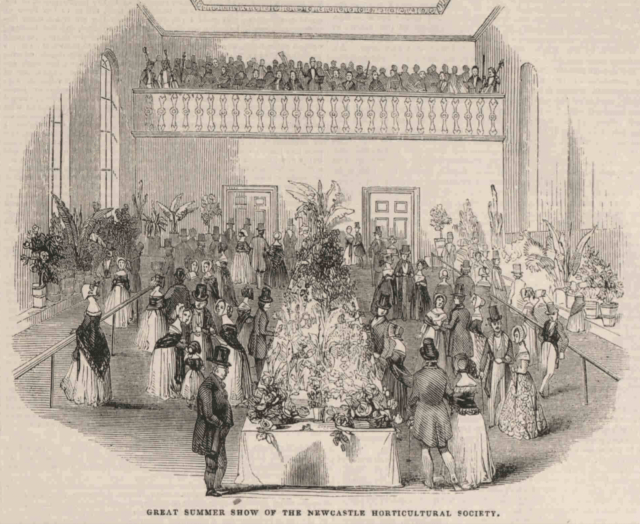
Summer Show of the Newcastle Horticultural Society from Illustrated London News 24 June 1843
The same pattern is soon seen all round the country with horticultural and floricultural societies springing up everywhere as witnessed by Loudon’s Gardeners Magazine [founded in 1826] giving pages of coverage to many county shows, with lists of winners and prizes in each category. Again Adelaide’s patronage was important. Not only did she allow some societies to assume the title “royal”, including, for example, the Royal Devon and Cornwall Botanical and Horticultural Society, but she served as patron and sometimes gave prizes such as the Queen’s Plate, valued at 10 guineas, to the Metropolitan Society in 1837.
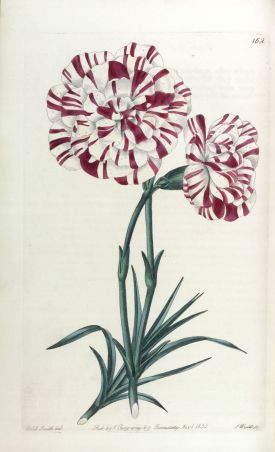
One gardener she would certainly have known is George IV’s gardener at Windsor, John Gould [who was incidentally the father of John Gould the famous ornithologist]. He had regularly exhibited at shows, especially local ones, usually walking away with prizes. He was renowned for carnations and pinks which were extremely popular at the time. Although Gould died in December 1829 just before William attained the throne the tradition of growing such flowers at Windsor continued under Adelaide and she maintained and enhanced the carnation collection buying in new stock from Thomas Hogg, a prominent London nurseryman who was later to dedicate a book to her.
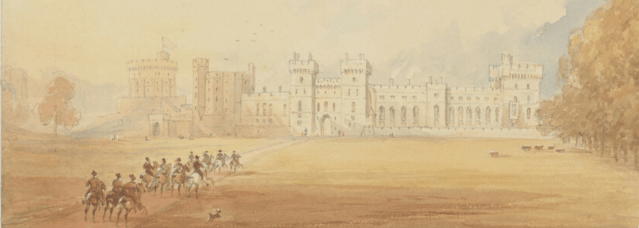
Unfortunately this interest in florists flowers and flower shows doesn’t seem to have spread to taking greater care of the royal gardens more generally. Perhaps it was because of William and Adelaide’s frugal lifestyle that their neglected state did not improve. John Claudius Loudon’s visit to Windsor in 1833 led to condemnation, that was severe even by Loudon’s standards” that there were beds “almost without flowers” and pots that contained a few shabby half-starved fuchsias and other greenhouse plants that would have would be considered a disgrace in a cottager’s window.”
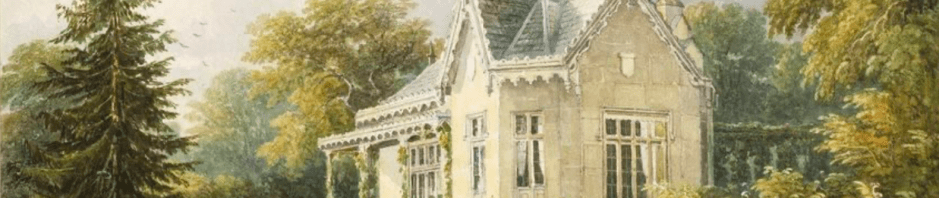
Yet in her own grounds Adelaide does seem to have taken great pride. Just after she became queen William had a small house built for her in the grounds of Windsor Castle. It was used rather like Queen Charlotte’s cottage in the grounds of Kew, as a private retreat and for tea-parties and excursions with friends. Now known as Adelaide Cottage it was designed by Jeffry Wyattville in the picturesque style. Described At the time of construction in 1831, as “chastely elegant” with two “public rooms”, a retiring room for the queen, and a pages’ room. “It has none of that obtrusive splendour which characterizes palace-building, but much of the quaint elegance of the embellished order of domestic architecture in the Old English school. In short, this unostentatious little building must altogether be considered complimentary to Her Majesty’s taste.”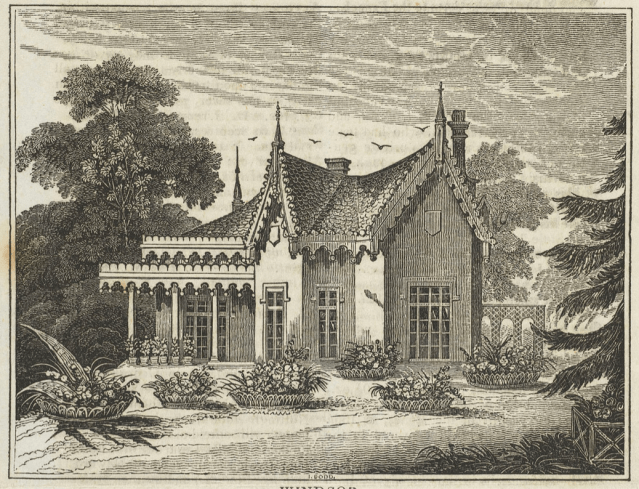
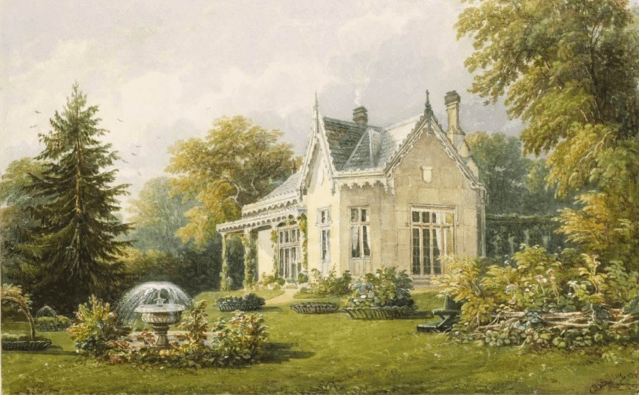
One interesting thing to note about the garden is the early use of Hardenburg baskets. These take their name from the Prussian statesman Karl August Hardenburg whose Klein-Glienicke estate outside Berlin was visited by the English architect John Adey Repton(son of Humphry ) in 1822. One feature he admired were baskets made of wooden trelliswork which were used as to hold roses bushes, and when he returned he began to use them in his own designs.
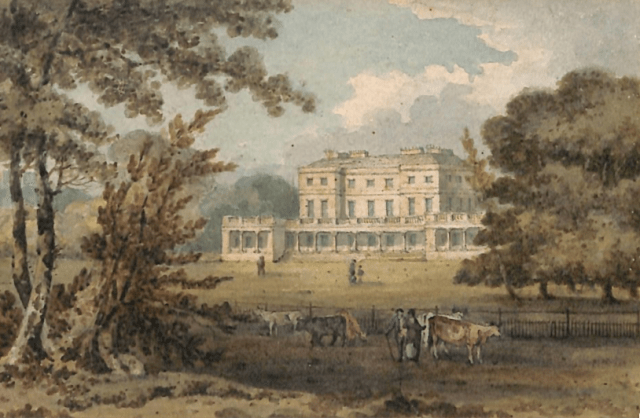
Adelaide also took a great interest in the gardens at Frogmore: one visitor noted in a letter that the queen “ dedicated the time to us to show us her walks, flower-garden, a cottage that is building for her, her beautiful dairy, with a little neat country body like our Betty at the farm, and her labourers’ cottages, whence out came the children running to her. One had a kind word, another a pat on the head. Then we saw the farmyard, pigs, cows, etc. Then she took us all over Frogmore Garden, which is extensive and very pretty, and then back by dairy and slopes. We were absolutely three hours, walking a good pace. We numbered about fourteen, … The day was very lovely, and her animation and spirits quite delightful. And this is our Queen—not an atom of pride or finery, yet dignified in the highest degree when necessary to be Majesty.”
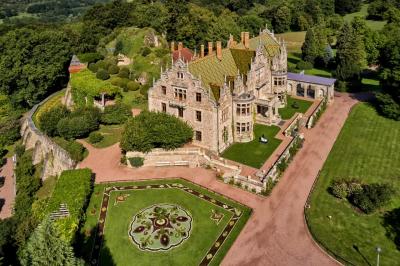
Altenstein
Adelaide returned to Germany occasionally to see her family and her interest in gardening went with her. On one visit she was accompanied by her doctor who noted that “one day the Duke took them all to see the now empty castle of Meiningen, which struck the English ladies as very dreary. They were also disappointed that there were no gardens at Altenstein [the family’s summer residence] ; and the Queen, who noticed this also, said she would send out an English gardener when she returned home, in order to remedy the defect and plant flowers.” She asked Wyattville to produced new designs but in the end it was that great Anglophile gardener Hermann, Prince Pückler-Muskau who advised on redesigning the grounds in the English style in the 1840s.
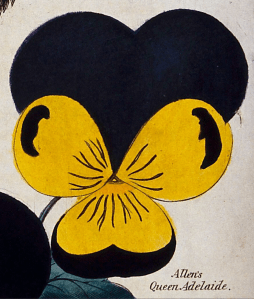
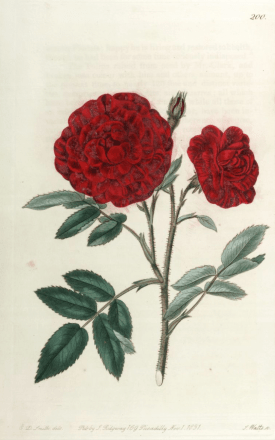
Her known interest in horticulture led to many plants being named in her honour, with more than a dozen cultivars of carnation named Queen Adelaide. That’s in addition to the ones named for her as the Duchess of Clarence. There were also pansies, at least 4 pelargoniums, a blue and white anemone, a fuchsia, a tulip, a hyacinth, an apple and at least 2 dahlias in shades of red. There was also a Queen Adelaide rose [image earlier in the post] Unfortunately most of them have long disappeared and there are very few illustrations so we have little idea of their appearance.
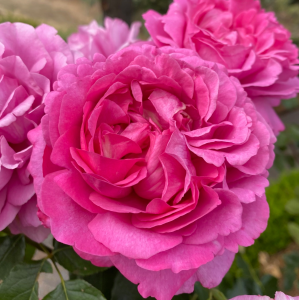
Additionally in 1985 the French rose breeder Meilland named another rose after her, which has proved very popular in Australia, although it’s sold as “Yves Piaget” in France and the “Royal Brompton Rose” in Britain!
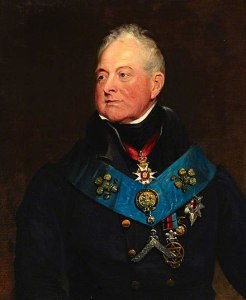
William and Adelaide’s marriage proved a happy one, despite all the obvious difficulties. This was probably because Adelaide was amiable, domestically-minded, and, despite being conservative both socially and politically, virtually adopting her husband’s ten illegitimate children. They all bore the surname Fitzclarence and she helped to secure their futures and marry them off respectably. Unfortunately although she and William had children, only two survived birth and died soon afterwards. She had several more miscarriages and after that the Clarences remained childless. She did however form a very warm friendship with her niece, Princess Victoria who became William’s heir by default.
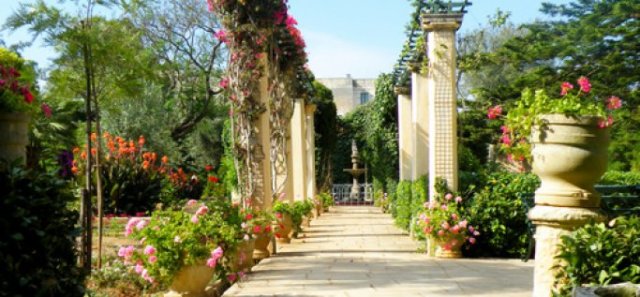
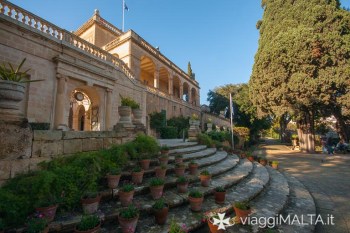
After William died in 1837, she was awarded a substantial pension – £100,000 a year – but gave half of it away to charitable causes. She had never been physically very robust but as her health declined she was advised to seek warmer climes, and so set off for Malta from where she wrote to Victoria about the gardens she saw, and especially those of the San Anton palace in Valetta where she stayed for several months.
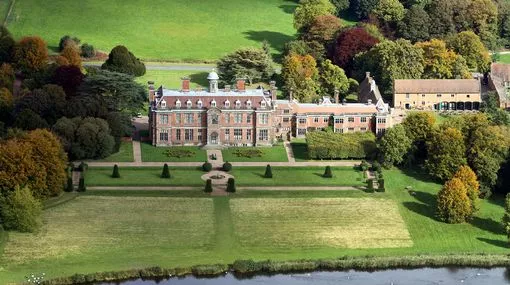
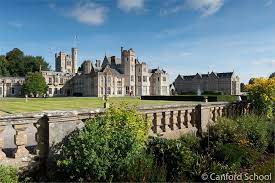
When she returned to Britain she made Bushy Park her main residence, since when William became king he had appointed Adelaide Ranger in his stead. She was also given Marlborough House on The Mall, but she preferred to spend her time quietly in the countryside and so rented a series of a country houses around Britain Amongst them were Sudbury in Derbyshire which she rented from Lord Vernon from 1840-43. From there she moved to Canford Hall Dorset, where when she first arrived “at the entrance of the village… a handsome triumphal arch had been erected, tastily furnished with evergreens and decorated with the word “Adelaide ‘ in richly coloured dahlias.” Unfortunately she didn’t like the house and didnt stay long.
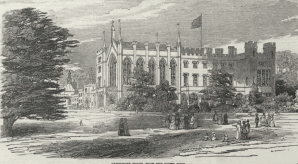
engraving of Cassiobury to accompany the article in Illustrated London News about Victoria’s visit 24th Oct 1846
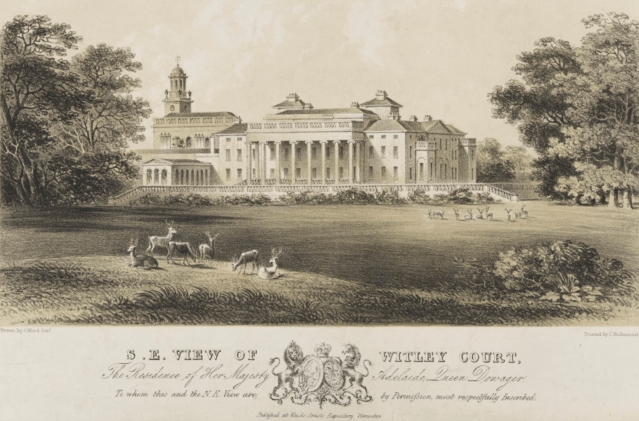
Next was Witley Court in Worcestershire rented from Lord Ward followed by a short time at the Earl of Essex’s Cassiobury Park at Watford which had one of the best plant collections in the country. She was visited there by Victoria and Albert but her doctors thought the place unhealthy ” so she once again decided to head off to the sun and spend the winter of 1847 in Funchal, Madeira.
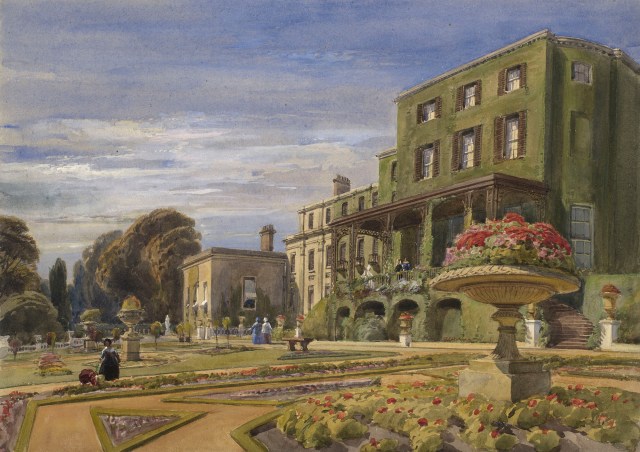
Her final residence was Bentley Priory, near Stanmore, Middlesex, home of the Marquess of Abercorn. The house had been remodelled by Sir John Soane and was famous for its gardens. Unfortunately she was too frail to be able to cope with the stairs and so lived in two rooms on the ground floor which opened on to a huge conservatory.
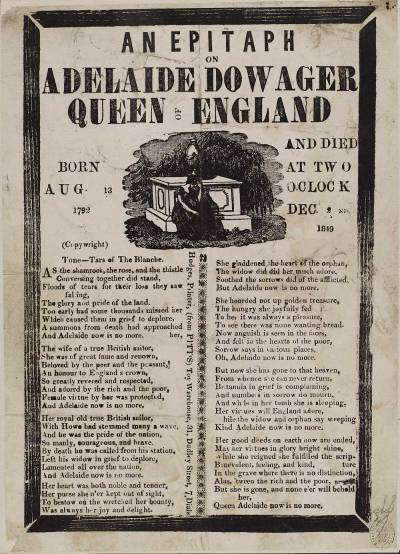
It was there that she died on 2 December 1849. She was buried at St George’s Chapel Windsor, widely mourned, not least by Queen Victoria, who had a lasting affection for her aunt, and recorded that ‘All parties, all classes, join in doing her justice‘.


 The Garden History Blog


You must be logged in to post a comment.