
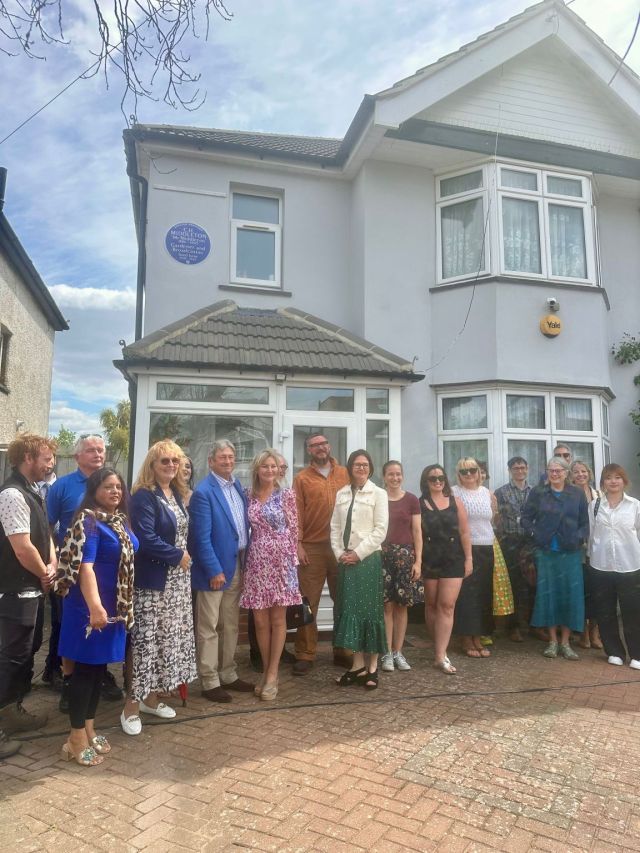
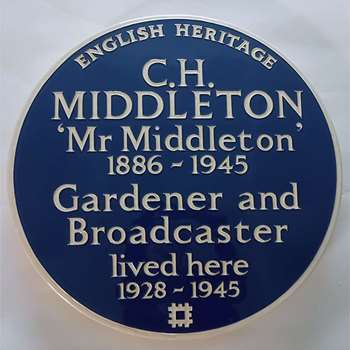
We’re all used to seeing gardening programmes on the TV these days, hosted by an array of “celebrity” TV gardeners like Alan Titchmarsh. However earlier this year it was a much earlier celebrity gardener who was Titchmarsh’s subject when he spoke at the ceremonial unveiling of a blue plaque by English Heritage on this suburban semi in south-west London. He was honouring the man who paved the way for television gardening programmes when he became the first TV gardener and later also the voice of the wartime Dig for Victory Campaign and as such “the Voice”.
I wonder if you know he was?
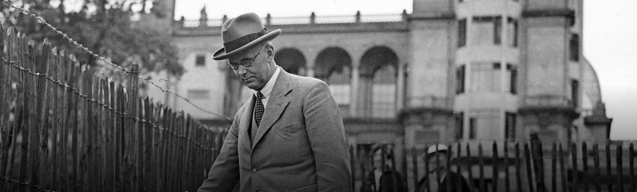
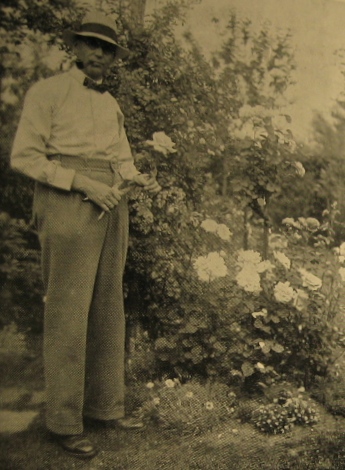
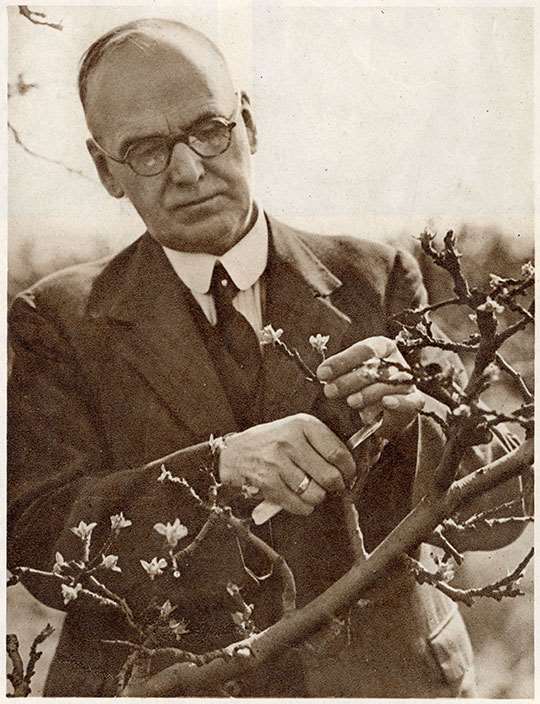
Mr Middleton in his garden, from Mr Middleton Talks about Gardening, 1935
Cecil Henry Middleton was born in 1886 and grew up on the Weston Hall estate in Northamptonshire where his father was head gardener to Sir George Sitwell father of the famous Sitwell siblings Osbert, Edith and Sachaverell. I suspect that Village Memories a book of short pieces he wrote about the joys of rural life were based on his childhood and upbringing.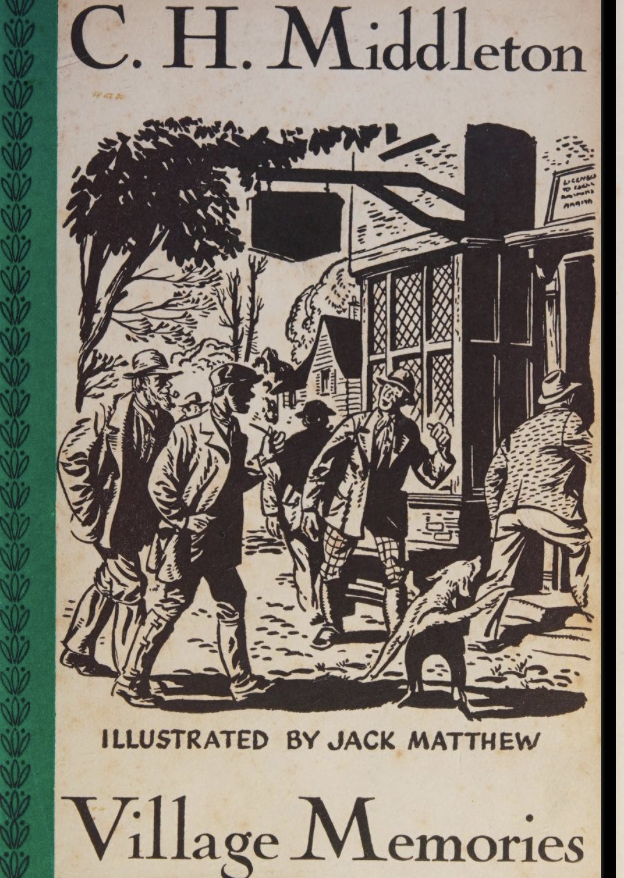
By the age of 13 he was working on the estate and “spent his boyhood in greenhouses and potting sheds” until aged 17, when as the publishers blurb in his “Outlines of a Small Garden” (1934) put it…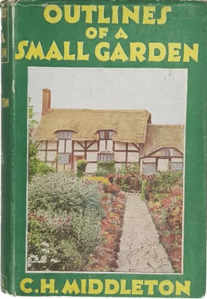
….”dressed in my Sunday suit and a flat little bowler hat, with 50 shillings and plenty of self-confidence, I came to London and got a job”. This was at the Feltham nursery grounds of the most important nursery from in the country James Veitch & Sons Ltd then onto H. B. May’s Nurseries, at Upper Edmonton, and several private establishments before in 1906 he enrolled as a student at Kew.
He recalled those early days as a gardener in a long but very readable article in The Journal of the Kew Guild in 1941, where his modesty and gentle sense of humour shine through. “Previous to Kew I had wobbled through that period of indecision when misguided youth so often drifts into unsuitable avenues. I started work in a garden, but I’m afraid my heart was not in it. A village youth joined the police and came home full of swank and swagger, so I decided that the police force was the only life for me; another became a tram conductor and I changed my mind. Then for a time I longed to be a footman and wear nice clean clothes.
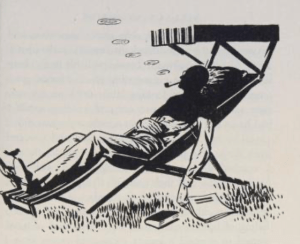
From Village Memories
However, none of these openings came my way, so I went on crocking pots and carrying water, and gradually became interested in it. In fulness of time I arrived at Kew and the way seemed clearer. I have never had cause to regret it, a generous helping of luck compensated me for a lack of ability, and so far I have managed to steer clear of either the workhouse or the prison, and, having developed a peculiar gift of dodging hard work, my gardening life has been very pleasant.”
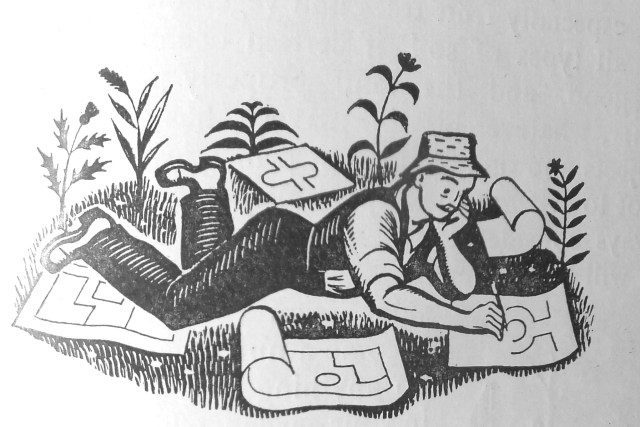
illustration by Eric Fraser, from In Your Garden, 1938
He finished his training and left Kew in March, 1908 going to work for Carter’s Seeds, before returning to Veitch at Feltham. Having obtained the national diploma for horticulture “his expert knowledge was in demand” so he joined the Board of Agriculture as an advisor and then moved on to become a horticultural instructor for Surrey County Council. By February 1926, he had become a Fellow of the Royal Horticultural Society and in 1928 was made County Horticultural Adviser.
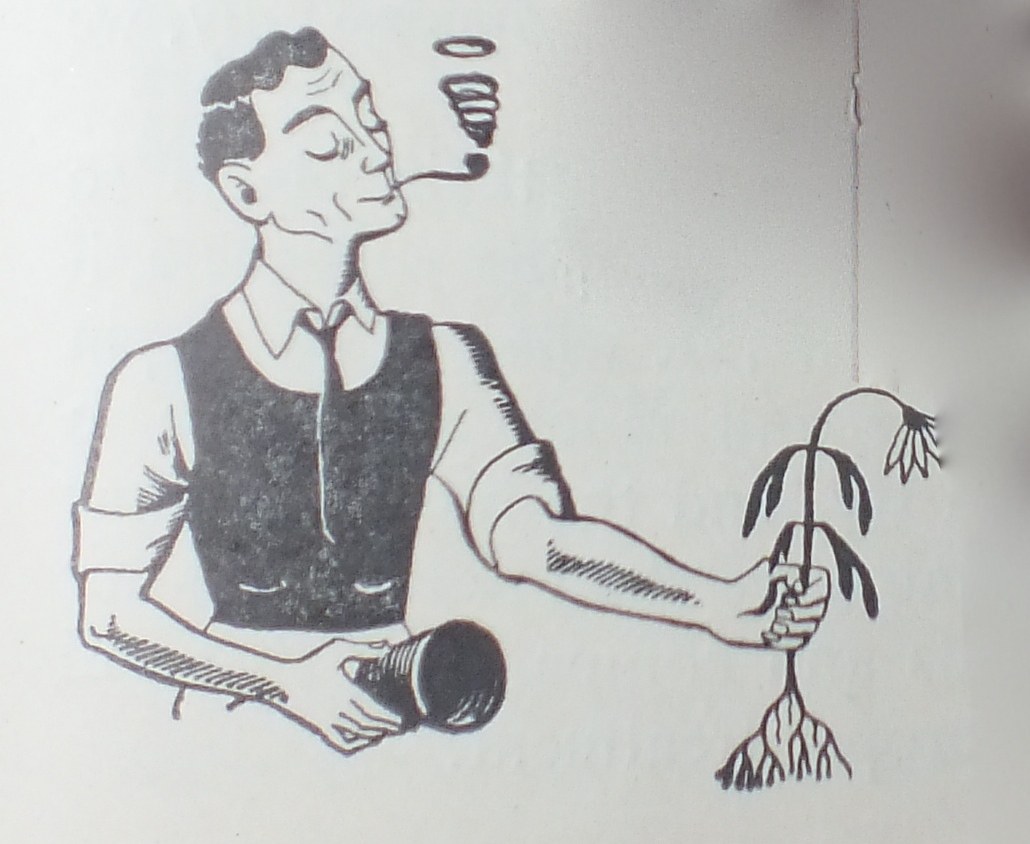
illustration by Eric Fraser, from In Your Garden, 1938.
The BBC started gardening talks on the radio as early as 1922. A few of these were given by famous gardeners such as Vita Sackville-West and Marion Cran but mostly they were just a list of practical tips compiled by the Royal Horticultural Society and read out impersonally by the announcer. As broadcasting grew more sophisticated the BBC asked the RHS for ideas for other contributors and Middleton was one of their suggestions. He was eventually chosen as the presenter from a field that also included Sackville-West.
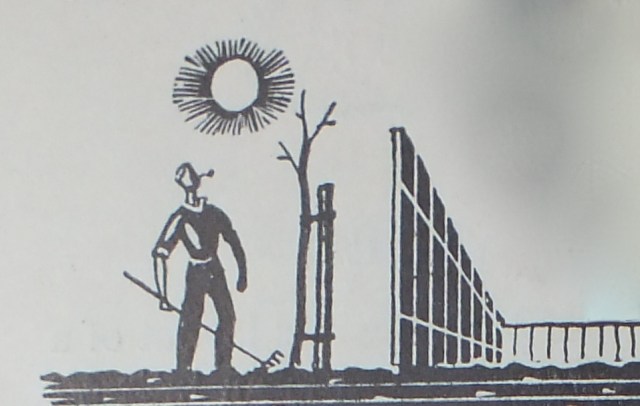
illustration by Eric Fraser, from In Your Garden, 1938
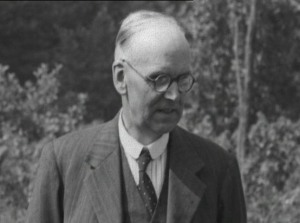
Mr Middleton
He turned out to be a born broadcaster with a very conversational style, far removed from the normal rather stilted BBC presenters of the time. His first words in his first talk on 9 May 1931 soon became one of his catchphrases: ‘Good afternoon. Well, it’s not much of a day for gardening, is it?’
I?illustrations by Jack Matthews from Village Memories
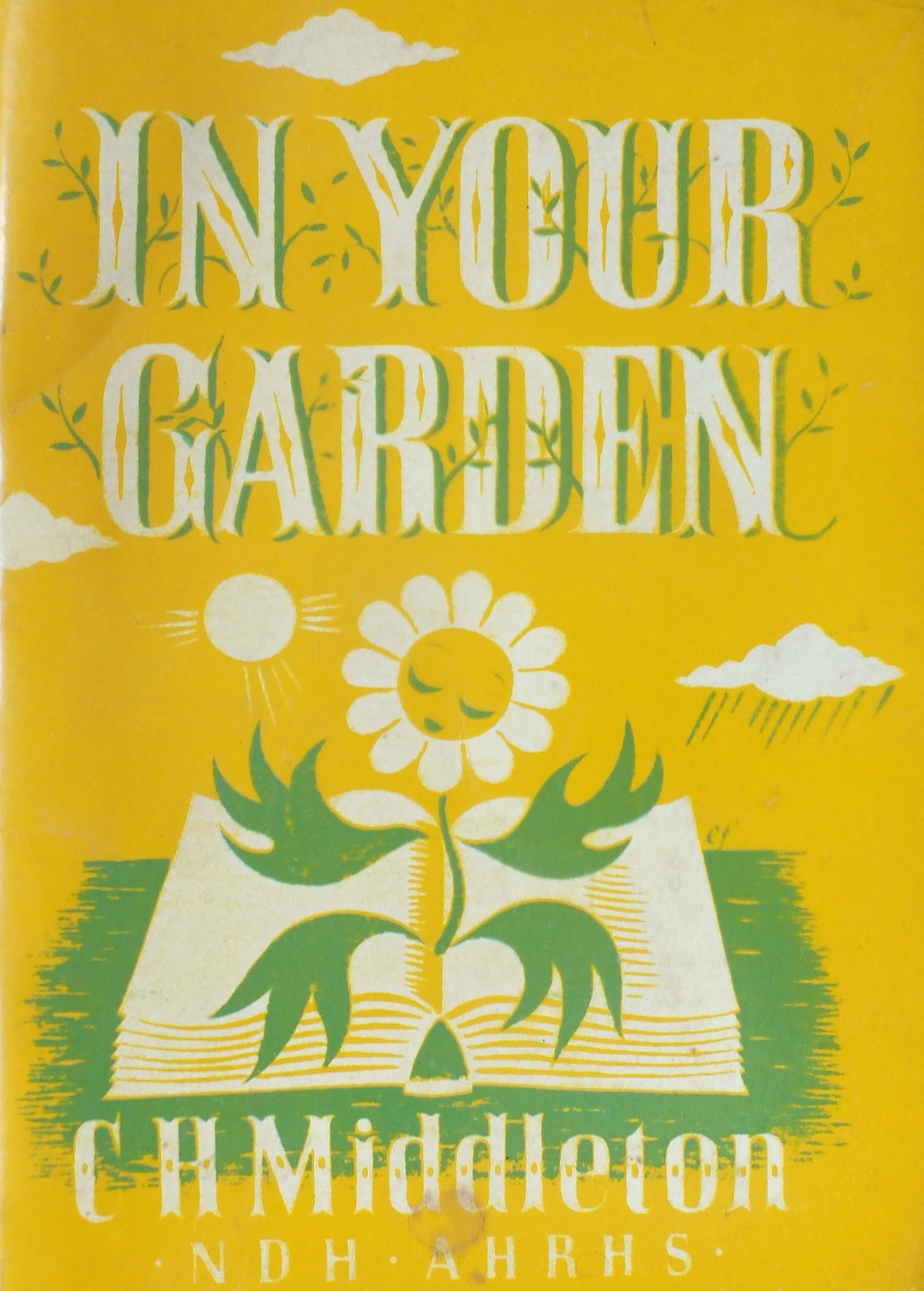
Cover illustration by Eric Fraser, 1938
Three years later in 1934 he began his weekly Sunday afternoon talks called “In Your Garden”.
The writer and critic Wilfrid Rooke Ley summed up his appeal in 1935: “It is the art of Mr Middleton to address himself to the lowest common denominator of horticultural intelligence without the faintest hint of superiority or condescension. He will assume that your soil is poor, and your pocket poor. All he asks is that your hopes are high and your Saturday afternoons at his service … he has the prettiest humour. He stands for common sense and has the gift of consolation.”
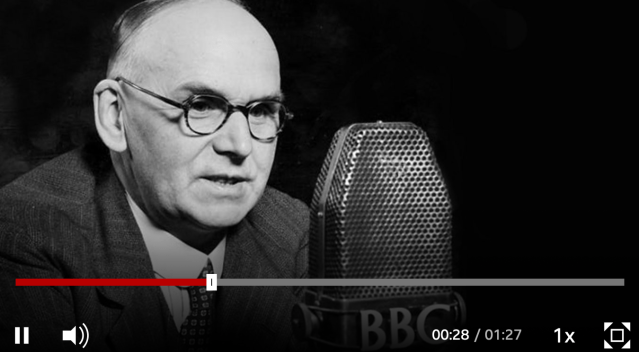
His talks became immensely popular because “there was nothing brainy about them” and became a regular event over the next ten years. In 1935 he published a collection of them in as “Mr Middleton talks about gardening“, and they were probably a major reason why the BBC rather than any newspaper or author, became established as the leading source of gardening information for the public. They became a long-running series which continued until May 1945, with an audience at its peak of between three and four million. Their success also meant that in 1938 he was able to resign his day job and concentrate on his new career as a broadcaster and writer.
![Times [London, England] 30 May 1938: 21. The Times Digital Archive. Web. 2 Aug. 2014.](https://thegardenhistory.blog/wp-content/uploads/2014/08/times-tv-nov21-1936.png)
from the Times 30 May 1938
Sadly there are no surviving recordings because the recording tape was extremely expensive and so was continually wiped and reused.
![Times [London, England] 30 May 1938: 21. The Times Digital Archive. Web. 2 Aug. 2014.](https://thegardenhistory.blog/wp-content/uploads/2014/08/times-chelsea.png)
from the Times 30 May 1938
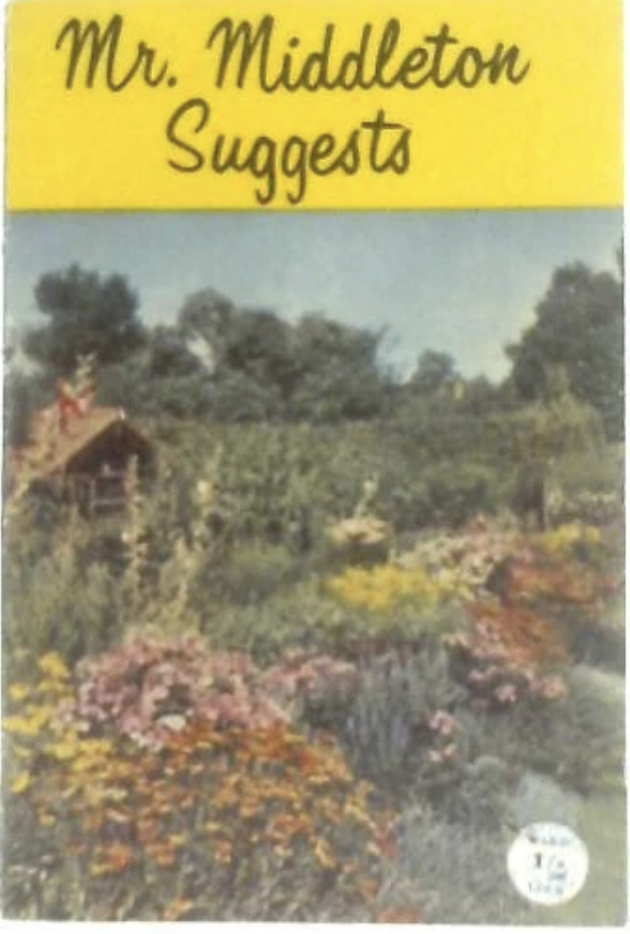
At the same time he was putting his thoughts and advice into print. He wrote a total of eight books before the war – Outlines of a Small Garden (1934), Mr Middleton Talks about Gardening (1935), From Garden to Kitchen (1937) With C. H. Middleton in your garden, Colour All the Year in my Garden (both 1938), and Mr Middleton Suggests and Outlines Of A Small Garden (1939) as well as the undated Winter flowering plants for outdoor borders. All were popular and frequently republished. Sadly none of these are available on-line. Additionally there was a weekly column in the Daily Express.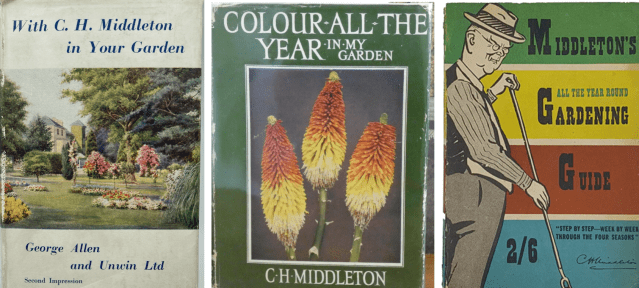
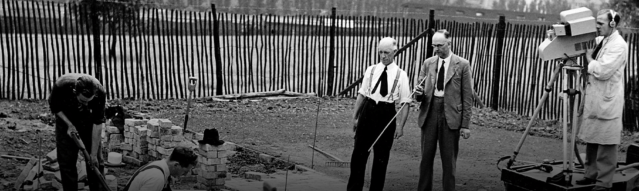
By this point his understated image and voice were instantly recognisable. He was impersonated in a review in 1938 whilst a performance by comic actor, Nelson Keys was captured gently mimicking him in another variety show. Sadly there are only a few seconds of this to survive but you can still see how accurate it probably was.
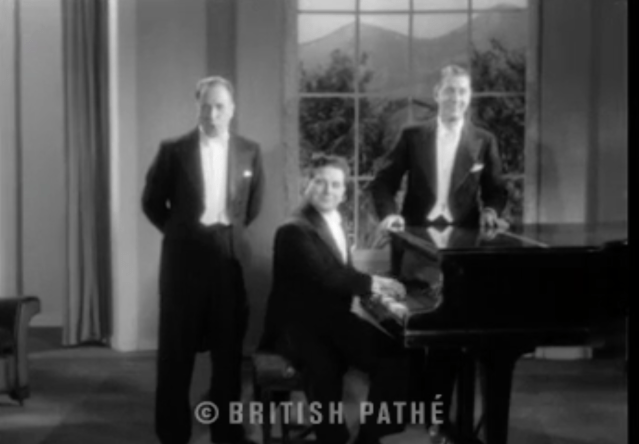
And his advice was even turned into a cabaret song …..”Mr Middleton Says It’s Right”
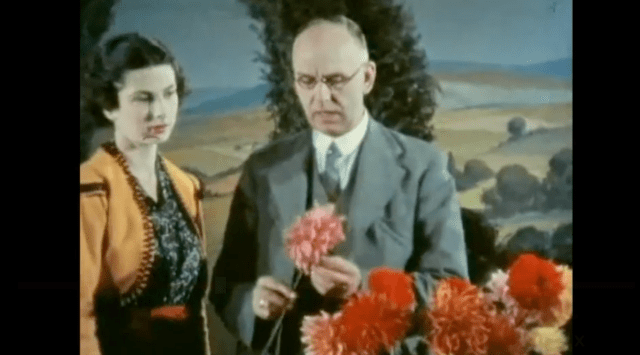
Unfortunately his TV career did not last long because televised broadcasting stopped with the onset of war in 1939.
However his radio broadcasts went from strength to strength, and by 1940, about 3.5 million people every week were listening to “In Your Garden”, which was, because of the dispersal of the BBC during the war, broadcast from a studio at Evesham. By 1942 that number had risen to about 70% of those households with radio sets. In other words most of the country tuned in to listen to Mr Middleton. That’s probably because he spoke knowledgeably yet straightforwardly, appealing to both those who were experienced and the many novices pushed into productive gardening by wartime necessity.
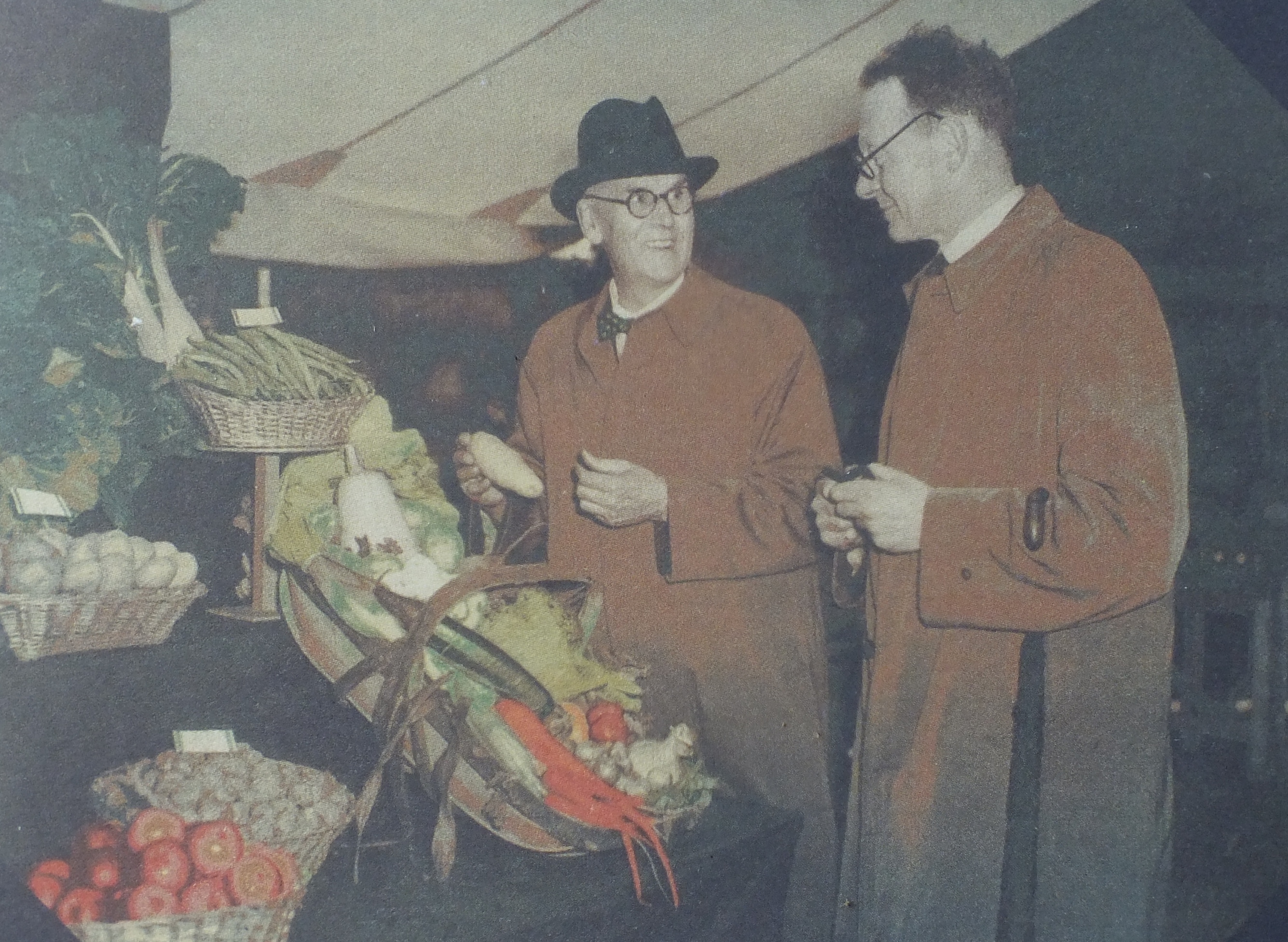
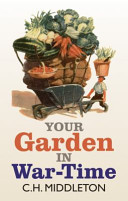
A modern reprint
He was a key figure too in the Dig for Victory Campaign: “There is no more peaceful spot on earth than an English garden, and for some years you and I have been building up our little flower gardens, making them more beautiful, more intimate and more than ever an essential part of our homes. But grim times are with us, and under the stress of circumstances we are now called onto reorganise those gardens and turn them into munitions factories…Potatoes and beans are munitions of war as surely as bullets and shells.”[Preface to Your Garden in War-Time, 1941]
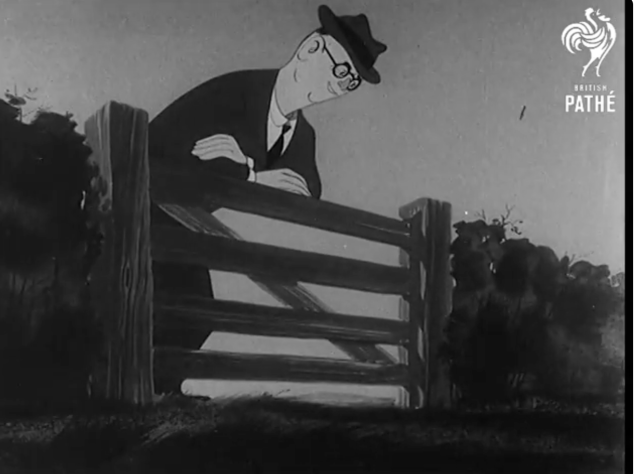
One of the short films he made for the Ministry of Information survives. In Compost Heaps For Feeding (1944) Mr Middleton becomes a cartoon character leaning on gate telling the public how to go about making a compost heap or ‘plant canteen’. It’s only about a minute long and should work by clicking on the link below.
Many of his other talks were compiled into another series of books which were issued unillustrated and as cheaply as possible. Talks on Vegetables and Fruits and War Time Allotments in 1940, Mr Middleton advises-More gardening talks in 1941 and then in 1944 his All the Year Round Gardening Guide & Encyclopaedia of Gardening (1944) which ran to at least 15 editions. He even produced a book of short pieces praising rural life in 1941.
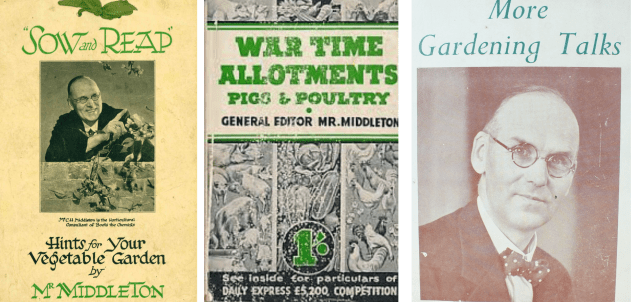 He broadcast live on ‘The Kitchen Front’, a series of programmes sponsored by the Ministry of Food, urging Britons to make the greatest use of their gardens and allotments, declaring, ‘Potatoes and beans are munitions of war as surely as bullets and shells’ and ‘the harder we dig for victory, the sooner will the roses be with us again.’ That last comment almost gave the game away because it’s clear that he actually preferred growing flowers., declaring in the he preface of Your Garden in War Time in June 1941 that “we must look forward to the time when tis nightmare will end – as end it must – and the morning will break with all our favourite flowers to greet us once more, and who nows, perhaps my next volume of talks will be of roses, mignonette, daffodils and lilies.” Elsewhere he declared ‘Hitler or no Hitler, war or no war, I’m going to grow a few bunches of sweet peas next summer’.
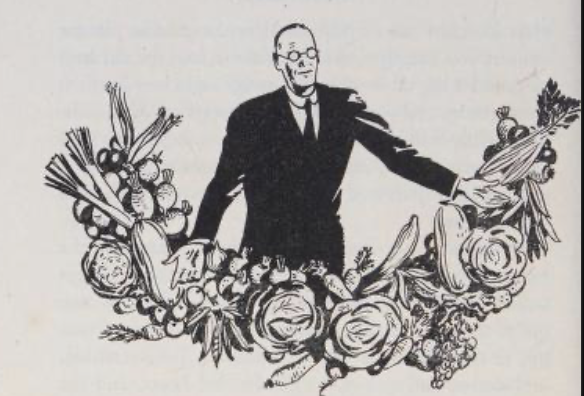
from Village memories
His own typical rectangular plot at the 17 Princes Avenue, gets the occasional mentions in a very understated and amusing way because with characteristic honesty he admitted, ‘I only pay occasional visits to this garden and have neither time nor opportunity for chasing slugs or nursing the more delicate inhabitants, so it is more or less a case of the survival of the fittest’.

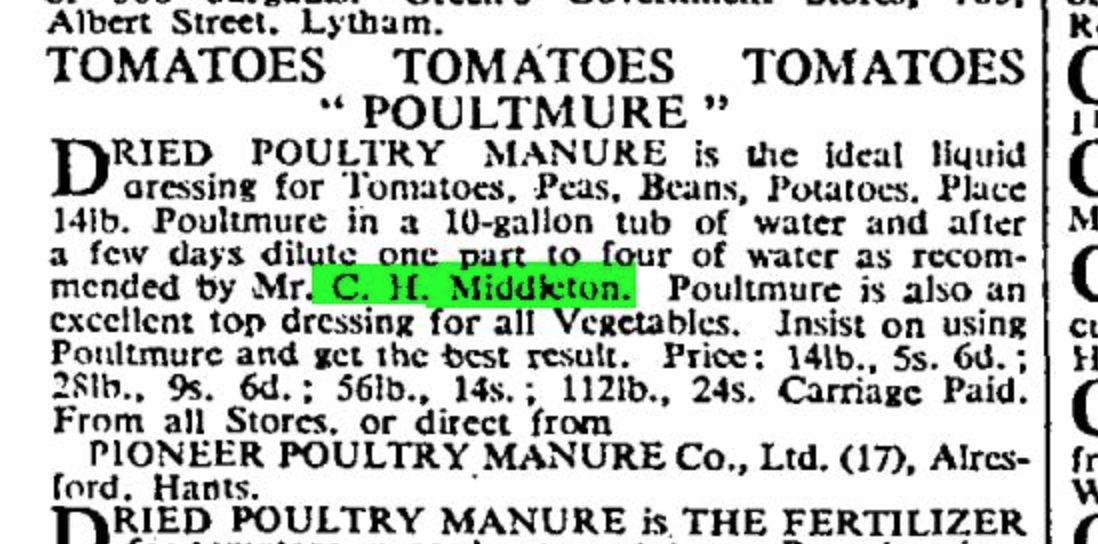
Mr Middleton became a celebrity by default giving speeches and opening flower shows, and even gave endorsement to gardening products, but alongside that he carried on a host of other things very quietly. He broadcast on Children’s Hour, designed primary school gardens and worked for children’s charities such as the Children’s Aid Society.
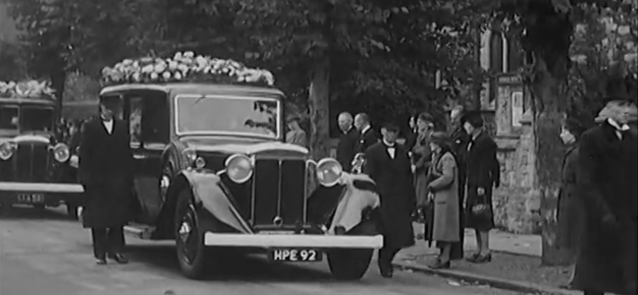
!["Obituary." Times [London, England] 19 Sept. 1945: 4. The Times Digital Archive. Web. 2 Aug. 2014.](https://thegardenhistory.blog/wp-content/uploads/2014/08/fetch-5.jpeg)
from the ” Times 19 Sept. 1945
Pathe News recorded part of his funeral cortege which made national headlines and reported how “the finest hothouse blooms were sent by leading nurseryman, and chrysanthemums and Michaelmas daisies came from the ‘pocket handkerchief’ urban and suburban plots that he had encouraged people to cultivate. [See the short footage by clicking the link]
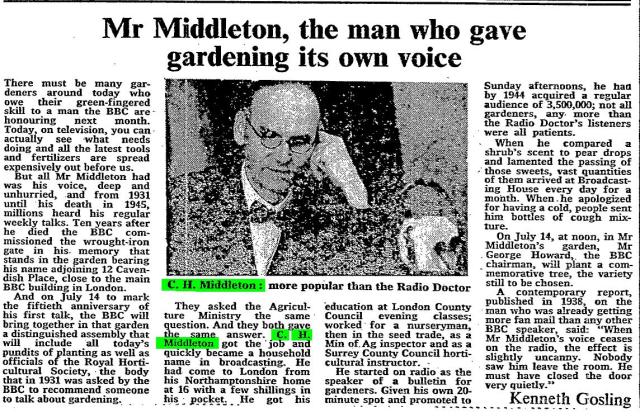
from Times 19 June 1981
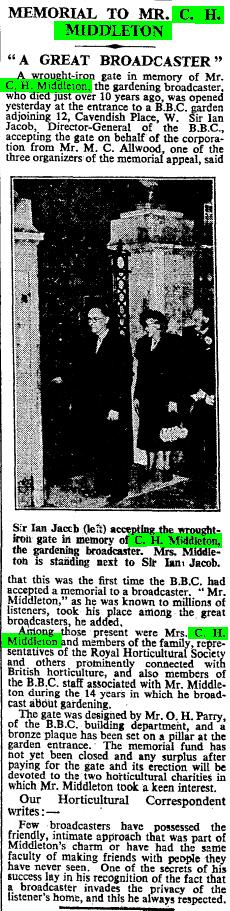
Ten years later there was a public memorial appeal, which provided funds for a set of ornamental gates that the BBC installed at the entrance to his radio garden allotment behind the Langham Hotel near Oxford Circus.

The Queen of Flowers, from In Your Garden, 1938
One of the oldest private gardens in the West End the Middleton Garden, as it has been known since 1961, was revamped as a rose garden in 2011 by the Langham group and made available for hire as an events and wedding venue. Sadly I can’t find any good images of it nowadays but I suspect Mr Middleton wouldn’t recognise the site of his former allotment!
Even in 2000, 55 years after his death, Mr Middleton was ranked 9th (immediately below Gertrude Jekyll and the then Prince Charles, although a long way behind Geoff Hamilton who had recently died) in a poll of readers of Amateur Gardening Magazine who voted for their for Gardener of the Millennium”: [Vicky Bamforth, The Gardener’s Companion 2004]. Given that most of those voting would neither have seen or heard him broadcasting that seems a pretty good indication of his importance as a moving force in modern gardening and horticulture…and a good reason for celebrating his life which is just what Alan Titchmarsh and English Heritage have done.
Apart from the links to English Heritage included above there isn’t another single source for more information, and sadly his books don’t seem to be available anywhere on-line although you can still pick them up cheaply second-hand.


 The Garden History Blog
You must be logged in to post a comment.