
 A more serious post than usual.
If you’re in the UK you’ll know that the government is looking to speed up the planning system which it says is one of the major obstacles to growth.
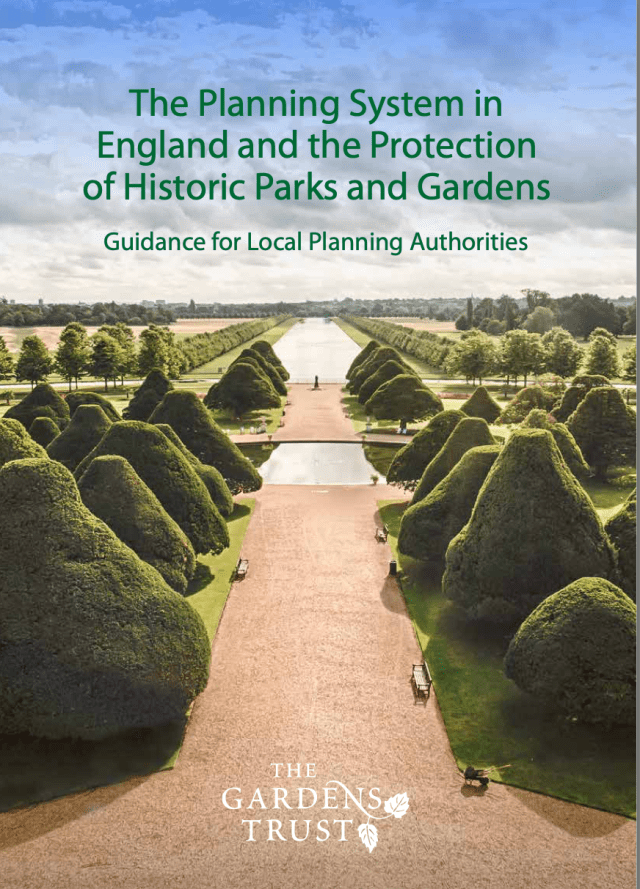
As part of that it is consulting on reforms to the system of statutory consultees. These are organisations who play an important role in the planning application process by providing expert advice on significant environmental and heritage issues. The Gardens Trust has been one of these consultees since 1995 and that means that local authorities have to consult the Trust on any planning applications that affect gardens and landscapes listed on Historic England’s Register of Historic Parks and Gardens.
The government is proposing to take away or reduce that role, a move which will put parks and gardens at greater risk of damage so the Gardens Trust needs your support to try and convince ministers that their arguments are wrong…
It might sound technical but its really important, so please read on to find out more…
The basis of the government’s argument is that the current system is not working effectively because “in far too many instances, statutory consultee engagement with planning applications is not proactive or proportionate, and advice and information provided is not timely or commensurate with what is necessary to make development acceptable in planning terms.”
The Gardens Trust robustly contests this in relation to its work, and would welcome sight of the reports from local planning authorities and developers –referred to in the consultation – which suggest this is the case. In fact it has plenty of testimonials from key stakeholders such as the Parks Management Association, Historic Houses, the National Trust, the Royal Horticultural Society, World Heritage UK and the Heritage Alliance, as well as owners, managers and planners which say precisely the opposite.
There is only a 21 day deadline for response to planning applications and this is met in the vast majority of cases – which is remarkable since most of the Trust’s responses rely on local volunteers. The Trust does not oppose change and in the last year made 1,289 responses, of which 372 offered constructive advice and recommendations to support positive change. Objections were only registered in 85 cases – just 6.6% of the total – and of these 16 were simply because the applicant did not include the information the planning system requires – so the number of actual objections was 69. To support this work the Gardens Trust receives a small grant of £42,000 from the Department of Culture, Media and Sport but it has to rely heavily on experts working pro bono and an army of volunteers across its 36 affiliated County Gardens Trusts. It has been estimated that the value of this volunteer contribution is £200,840, while the cost to local planning authorities if they had to deliver this service themselves is estimated at £3,692,846 per annum if they had the in-house expertise [which most don’t] and nearly £8 million if they had to employ outside consultants.
I could go on! But instead I’d urge you to take a look at the public consultation document which is now live and can be accessed here. It is unfortunately quite an intimidating document BUT this is the only way to respond to the government’s proposals. However the Gardens Trust has provided some key points of advice on how to go about it – and even a short response is better than doing nothing.
You can read more about the Gardens Trust’s work, including examples of its statutory consultee casework, on its Impact pages. and of course join us if you want to help more!
Thanks for reading this far – and please do make a response.


 The Garden History Blog
You must be logged in to post a comment.