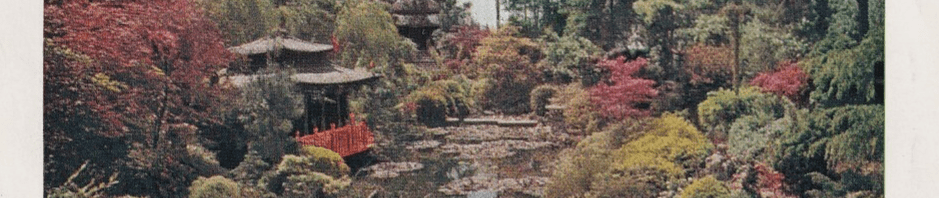
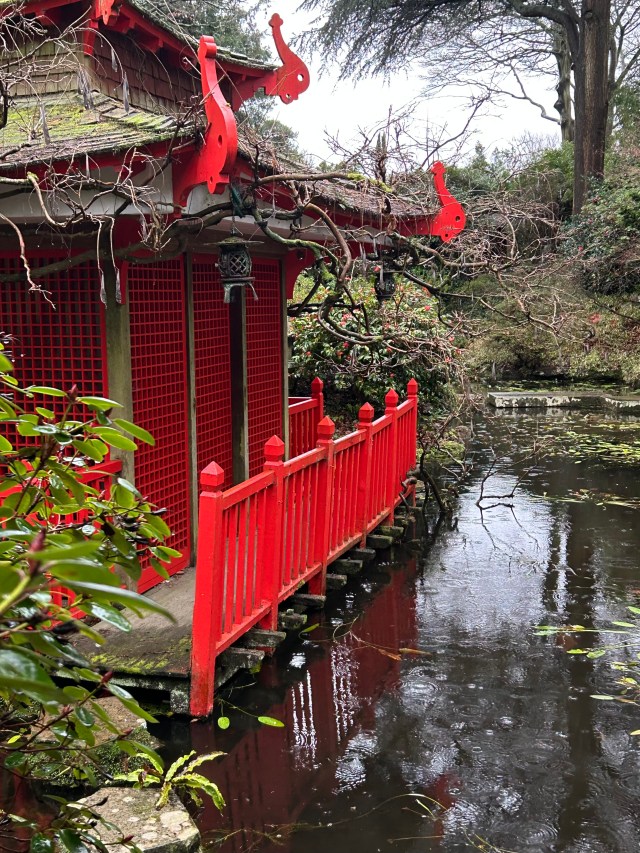
 I’ve just spent a long weekend in high winds and pouring rain , exploring some of the gardens around Bournemouth. Not ideal conditions, even in February, but the unusual advantage was that we were usually the only people on site! The one garden where the wind and the rain didn’t matter that much was Compton Acres at Canford, between Poole and Bournemouth.
Although originally built as a private garden in the early 1920s it was soon opened to the public for charity. After the first owner died it slowly became what Tim Mowl in his book Historic Gardens of Dorset, called “a visitor centre with gardens attached’. Now one of Britain’s most visited gardens it’s definitely none the worse for that.
A very brief history of the site and lots of photos of the garden today can easily be found on-line as well as in the guidebook, but as I tried to research a bit further I discovered that these sources gloss over the story of the garden’s early days… 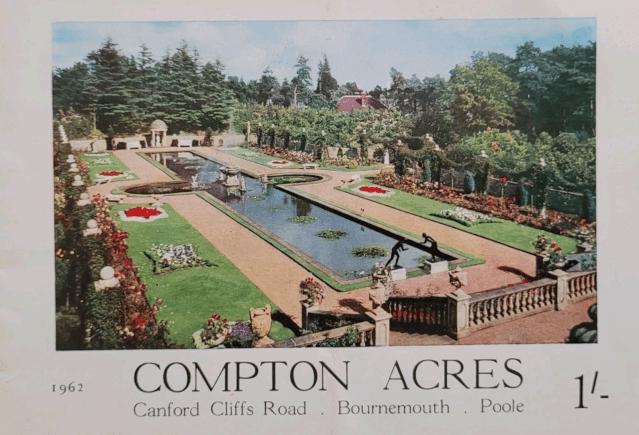
As usual the images are mine unless otherwise acknowledged
This stretch of the Dorset and Hampshire coastline was once heathland, with acres of pine trees and gorse. a few scraps of which survive in amongst the few remaining grand mansions and blocks of flats which have replaced them in the past hundred years or so.
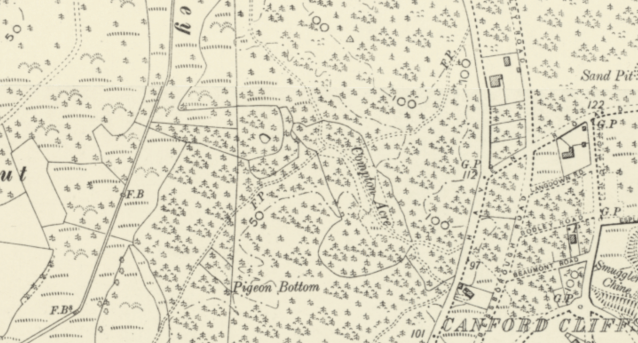
The area, part of which was known as Compton Acres, was described in 1909 as “one of the most romantic and beautiful positions on the south coast of England” when it was sold off by Lord Wimborne in 50 large plots for “the immediate erection of Family Residences, Villas and Bungalows of a good class.” [As an aside Canford now has some of the most expensive properties in the country outside London so, although almost all of these original houses have been replaced, his Lordship was prescient.]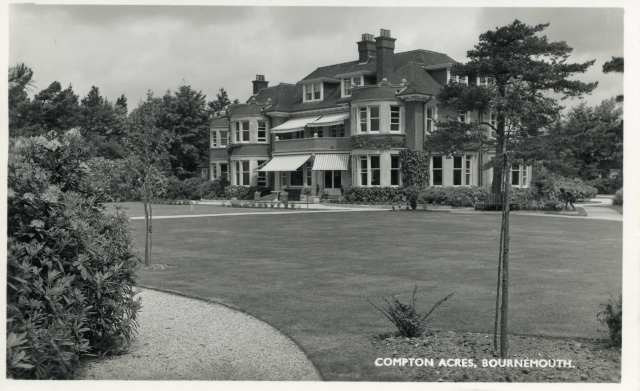
 Some versions of the story say that a house called Compton Acres was built there in 1914 but apparently never lived in ,before being sold to Thomas Simpson in 1920. Other reports say that it was Simpson who built the vast 13 bedroomed mansion. Whatever the truth, there’s no doubt that Simpson is something of a mystery man and always very private about his life and career.
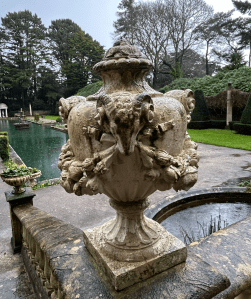
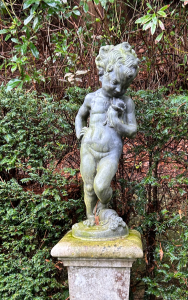 He is often referred to as a local business man [which he wasn’t since he lived in London] and a margarine entrepreneur [which is an exaggeration] the local paper, the Bournmouth Times and Directory carried a short piece about him in July 1938. Their research found that he had ” colossal interests in Mincing Lane and is one of the biggest rubber men in the world” and “director of nine rubber companies with a total issued capital of nearly £1.5 millions….Mr. Simpson is further director of the British Margarine Company.” He was well traveled too, and almost certainly visited Japan as well as the rubber plantations in south-east Asia.
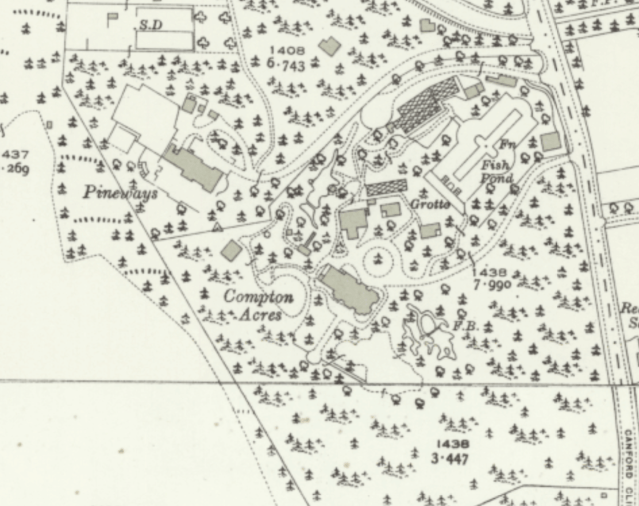
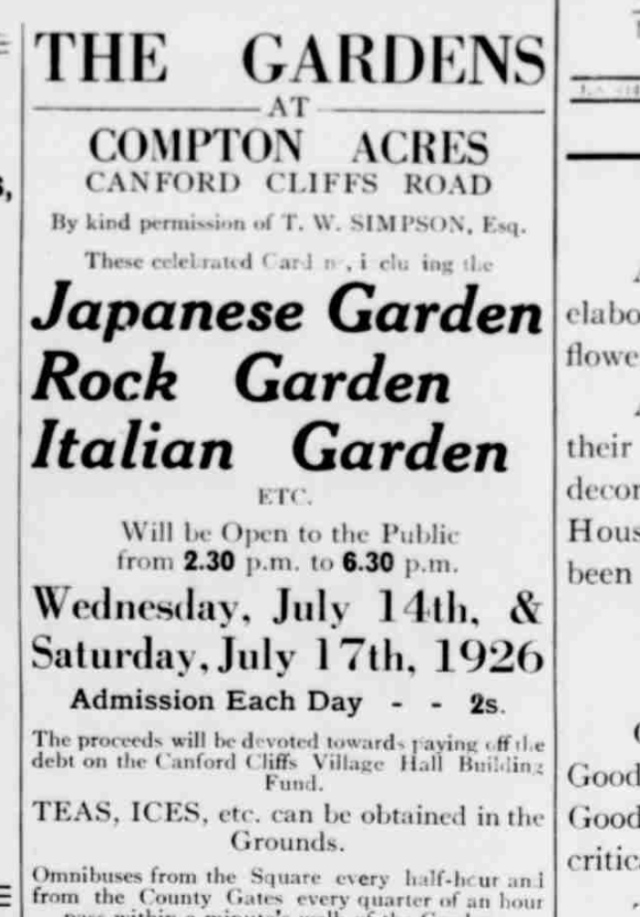
Bournemouth & Southampton Graphic, 9th July 1926
All that meant he was immensely rich and over the next few years is thought to have spent around £220,000 [probably around £10 million in today’s money] on creating a string of gardens around the house which stood on a rise in the centre of the site.
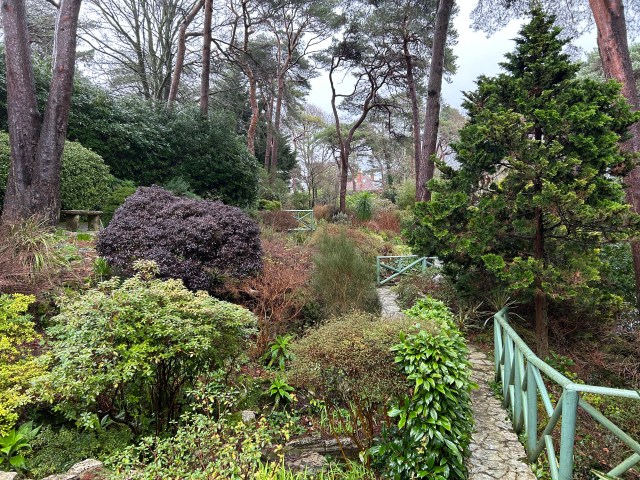
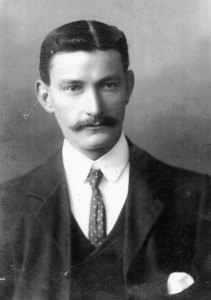
The work to built them was overseen by his Head gardener, Mr. A. E. Middleton who had worked for Simpson since about 1910 at his previous home, Greenfield Hall, Laleham-on-Thames where they had also made impressive gardens.
Later Middleton also became a lecturer about gardens, offering talks using his own lantern slides, as well being as a judge at flower shows etc.
[If anyone knows more about Greenfield Hall or Mr Middleton please let me know]
What might surprise you – it certainly surprised me – is that, despite spending such huge sums of money, time and energy into creating their gardens its seems Mr Simpson and his wife Kathleen maintained their home in Knightsbridge in London and did not plan to move to Compton Acres permanently, instead just visiting at weekends and holidays.
To help protect his privacy Simpson also bought up land opposite the entrance gates to the estate, building at least 4 houses there which faced away from Compton Acres.
There are however no further mentions of SimpSon or the estate in the local press until 1925 when The Bournemouth Graphic for August 14th reported that “Numbers ranging near a thousand visited the beautiful gardens of Mr. T. W. Simpson at Compton Acres.”
The Simpsons were very generous philanthropists, regularly opening the gardens for a number of charities ranging from the National Gardens Scheme, to paying off the debt of the local village hall. In 1937 alone they opened to support two local hospital, the N.S.P.C.C., Bournemouth Disabled Sailors’ and Soldiers Workshops, the R.N.L.I and the Bournemouth branch of the Waifs and Strays Society.
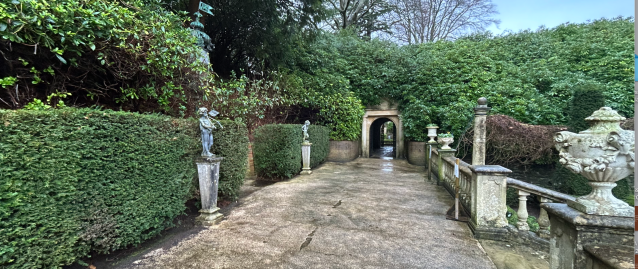
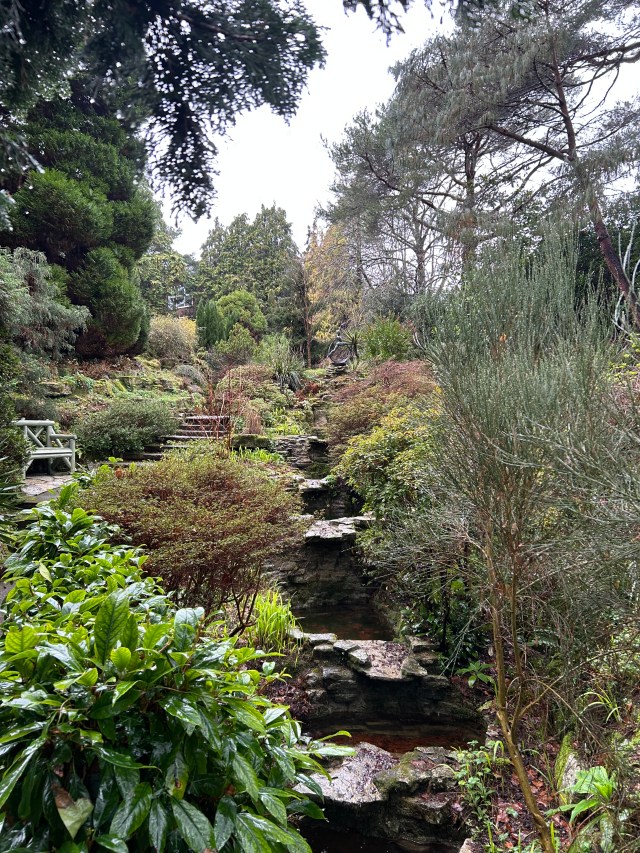 On these days average attendance is thought to have been over 500 a day, all paying their two shillings entry. He even sent one of his Rolls-Royce cars out with the chauffeur putting up posters for these charitable openings.
The gardens proved instantly popular and financially very profitable for the charities concerned. They were usually the most popular garden opened locally. In 1928 for example 36 gardens in Dorset opened for the Queen’s Institute of Nursing [which alter evolved into the National Garden Scheme]. A total of £536 was raised -with £198 of that coming from Compton Acres, and only £20 coming from the next most popular.
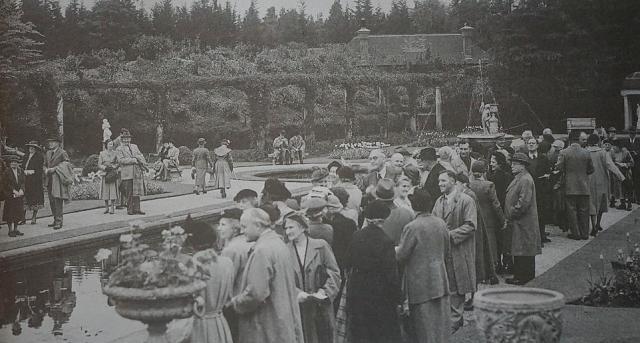
Despite that both Simpson and his wife, according to the Bournemouth Times in 1938 “both endeavour to keep out of the public eye as much as possible and if you attempt to ‘pump’ the gardeners you will have no success. It is further, impossible to secure press photographs of them. They keep the customary ‘by courtesy of’ notice of their names from the advertising by charities for whom their gardens are open.”
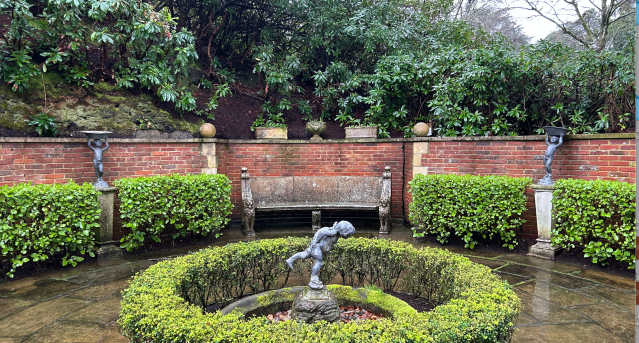
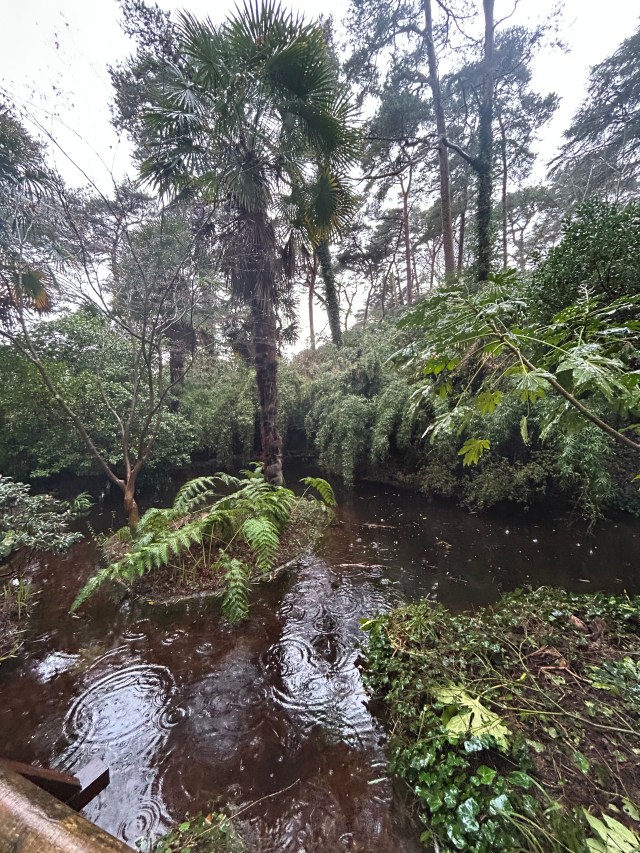 Nevertheless I suspect that sharing the gardens with the public from time to time was all part of their intention when creating the gardens. Its certainly reported that “his whole object” was to have the gardens prepared for July and August when the public were admitted. For these two months eight permanent gardeners used to move hundreds of trees and plants from the acre of glass houses and put them out in the grounds.”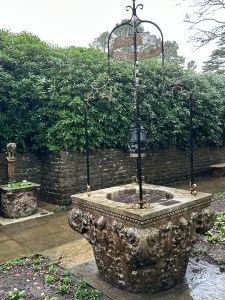
For example 60 Dicksonia tree ferns were taken from the houses and put in the Dell, around the pools and waterfalls. Come the winter they went right back into the houses again. It took eight men three days to move each of the massive date palms to a section of the Italian Gardens just for those months of July and August where they were set out in a mass of bedding plants. Hundreds of cactus and succulents were planted out in the area known as The Desert.”
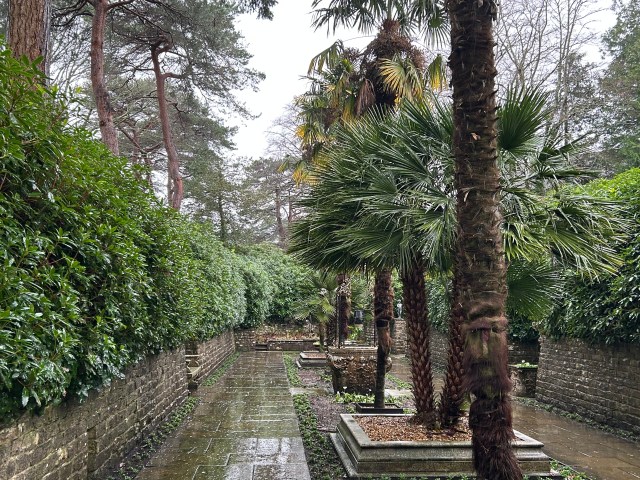
Even the layout of paths suggests that opening was part of the plan because they effectively create a one-way system round the grounds, so that people could pass through without struggling against crowds going the other way.
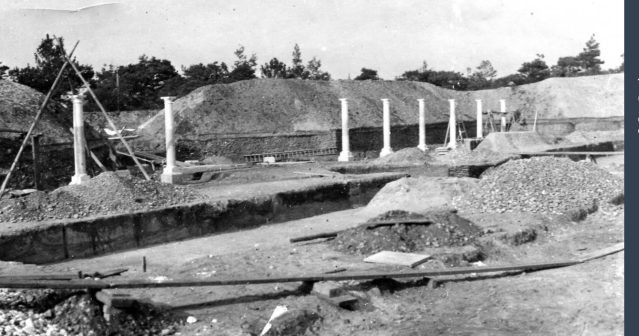
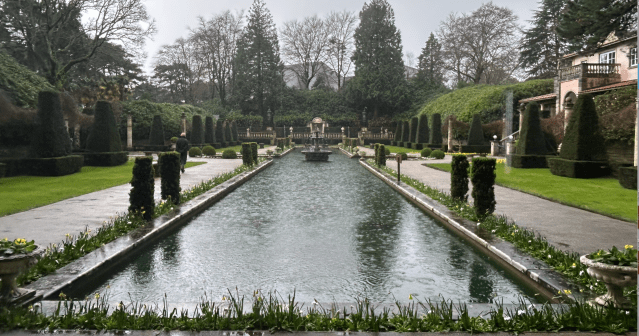
To keep each garden entirely separate from the others, there was large scale earth movement. For example the ground level in the half-acre or so of the Italian garden, was reduced by 4 foot with the excavated spoil used to create banks elsewhere. It was said that Mr Simpson “would never allow a path to be monotonous so every few yards there will be a statue or a waterfall .”
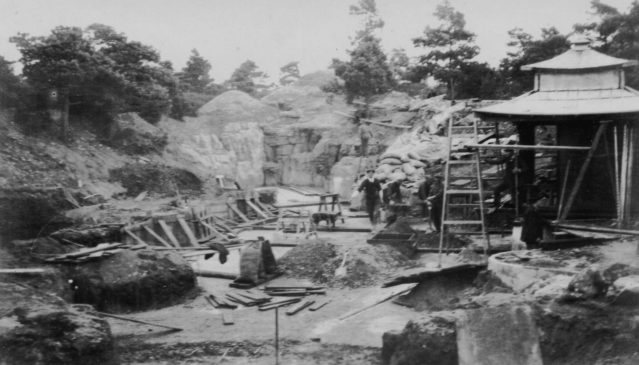
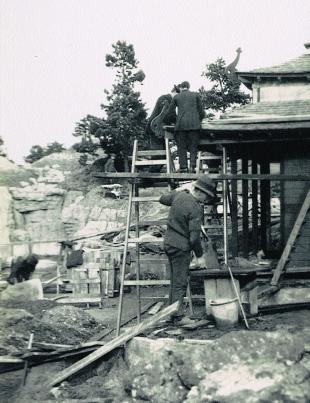
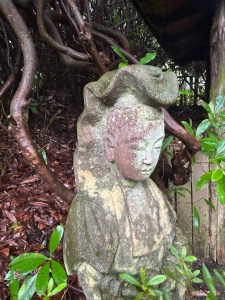
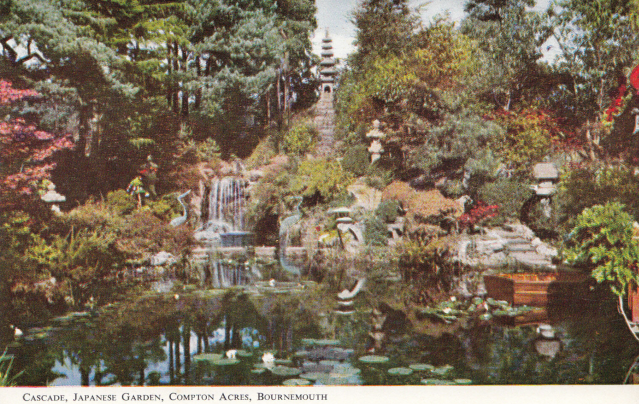
Everything was to be of the best quality and wherever possible genuine, so for the rock gardens thousands of tons were bought down from Cumberland, while the Japanese garden was constructed from stone, ornaments, plants and even fish imported from Japan.
Unfortunately there are not many contemporary images, although I understand that Mr Gritten, the Simpsons’ chauffeur, left a photo album which has since been donated to the current owners. [I suspect that is where the local papers obtained the black and white photos which I’ve used] So. in addition, I’m going to try and use contemporary newspaper accounts to describe the gardens.
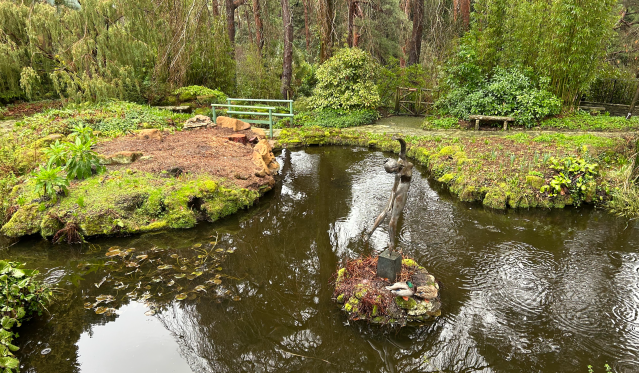
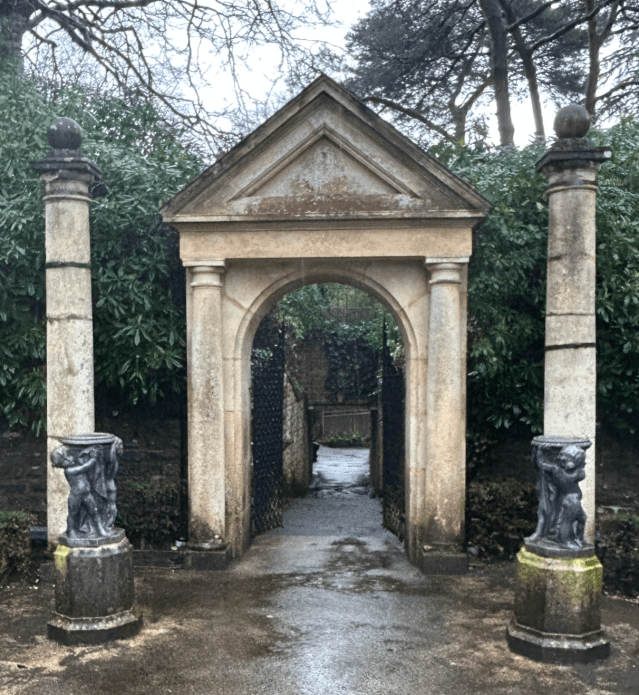 An article in The Sphere in 1933 had the author taken completely by surprise by some of the things he saw – a feeling that affects today’s visitor too. He explains that he had seen “many private gardens during the past season, but none so curious as Compton Acres …Here Mr. Simpson has transformed 15 acres overlooking Brownsea Island and Poole Harbour into the pleasure grounds of a Kubla Khan.”
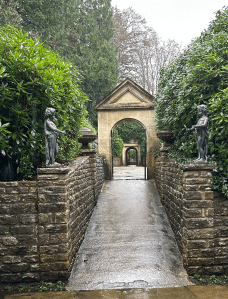
“Miles of narrow paths, within clipped hedges, wind like a maze in and out, opening unexpectedly on to ‘chambers’ of different kinds of plants. There are several chambers of rock plants, grottos, classic gardens, Italian gardens.
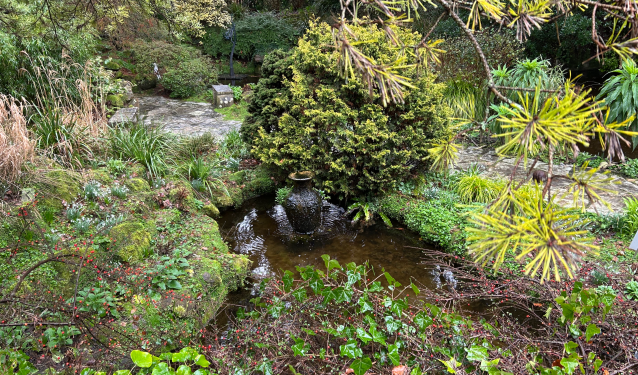
One peep reveals far below a delightful brook pool in a fir wood in which cranes and pink flamingos contemplate the world standing on one leg.” Sadly the flamingoes are no more and the cranes today are bronze rather than alive.
“But of all the chambers which open out from the dark and tortuous passages, the sandy garden of the rarest and most grotesque cacti, having the shape of all sorts of animals and things, and set in an arid desert, is one of the oddest.” Unfortunately many of these were lost to winter wet when they weren’t able to be moved into shelter during the war while the remainder sold off afterwards. The area is now a heather garden.
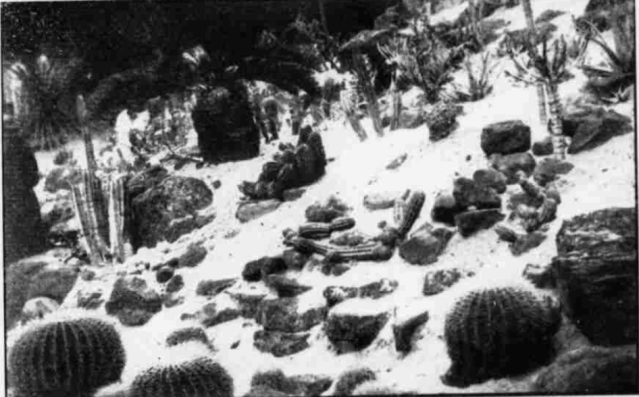
Pre-war photo of The Desert from Bournemouth Times 28th August 1947
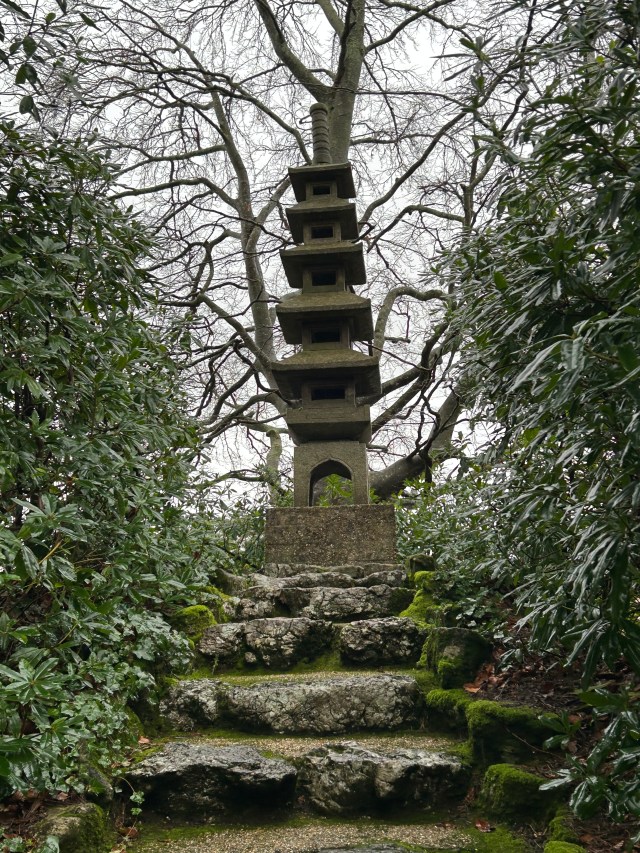 But it wasn’t only the cactus garden that was odd. The “Far-Eastern garden, with its little stone bridges, its stone gods and pagodas, and its little temple with a vista of a tiny emerald green lawn before it, runs the cactus garden close. In half-a-dozen pagodas or summer-houses, you find tea things set out, in aviaries cunningly built into the green walls bright coloured birds are found.” Sadly no aviaries any more and only one pagoda left – although it is still a pretty impressive one.
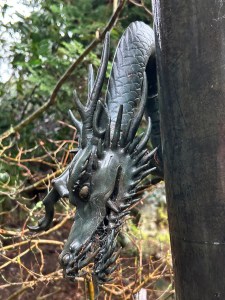
“”The whole is a peep show of breathless interest. True, it is glaringly artificial and it is stuffy, but it is a miracle of invention and of landscape gardening. The admission charge is high, but the queue of cars would not shame Bond Street during the rush-hour, and no visitor ever yet has failed to admit that he has had his money’s worth. …. There is no garden in England so fantastic, so grotesque, so well cared for.”
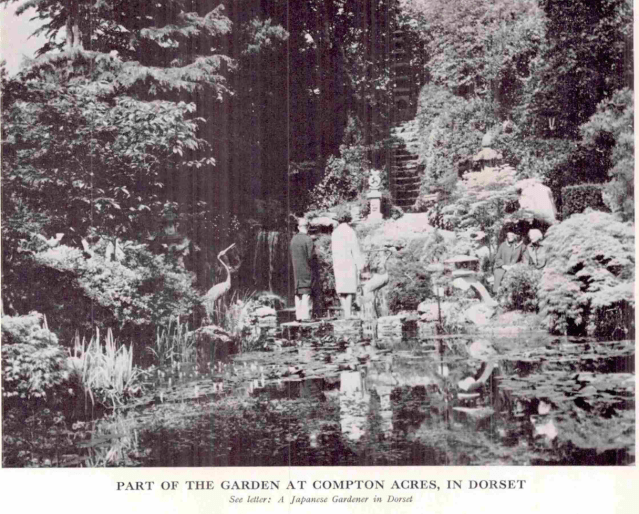
Most of the early descriptions are very similar, almost as if they’ve been copied from a press handout but the best and fullest comes in a very lengthy article in the local paper in 1937. headed “In an Enchanted Garden.” It’s too long to add in its entirety but so I’ve chosen a few extracts and put the full article on-line here because it’s worth reading if you have time.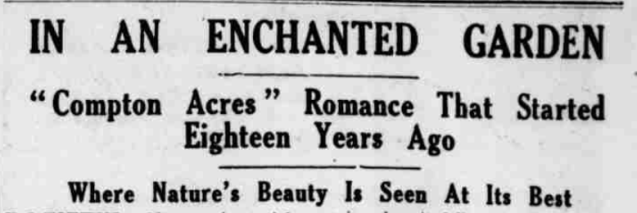
The author was taken round the garden by Middleton who pointed out many of the unusual plants including many from New Zealand, South Africa and Asia. The cactus collection (thought odd in the earlier description) is revealed to be one of the largest and finest in the country and included one 300 year old specimen as well as some smooth “prickly pears” [Opuntia] the newly available product of years of hybridisation by Luther Burbank, the Californian gardener.
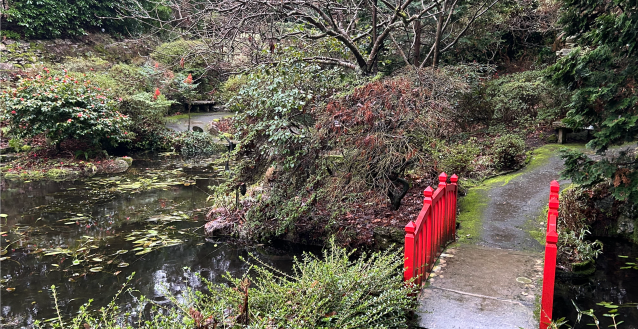
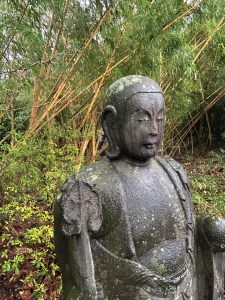 Also worthy of mention was the unusual water watering system which, despite looking natural, was in fact “entirelv artificial” with water “pumped through the gardens and back again by two 4hp engines, set beneath the surface level so that their noise shall be drowned and not disturb the naturalness of the garden.”
When necessary the ponds and streams were topped up by tapwater paid for on the meter by the mains. In a lovely turn of phrase Middleton referred to the sound of the cascades as ‘ the orchestra of the garden”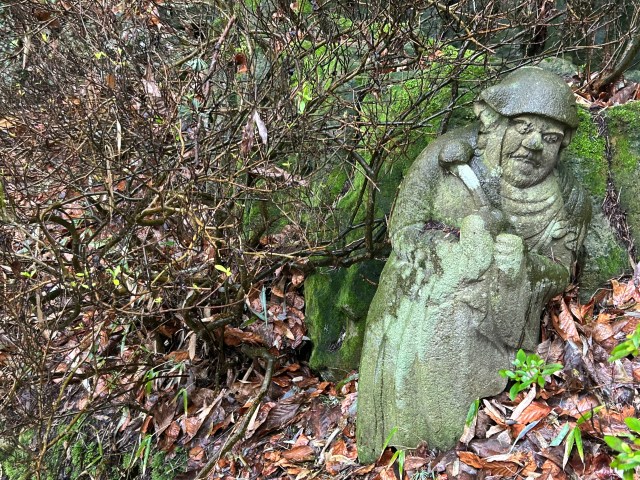
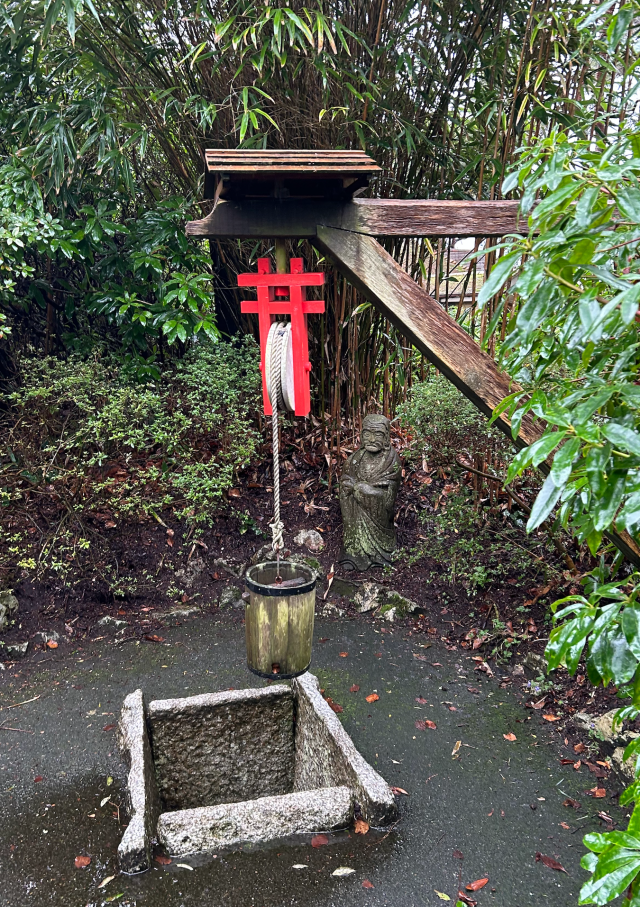 The Japanese garden was “so real as to be deceptive” with “genuine Japanese pergolas, bridges and temples”. The route round the garden is different today because the house, once central has been replaced by a block of flats accessed via a bridge over the gardens, although strangely almost completely unnoticeable.
Then the pathway led “to the Italian garden, where the rich hues of the beds of begonias are reflected in the cooling waters of the pool from which lilies open their petals. Here Mr. Simpson has a new variety of water lily. It is a tropical plant in a light. blue shade, and the bloom is on a stem that reaches ten inches from the surface of the water.”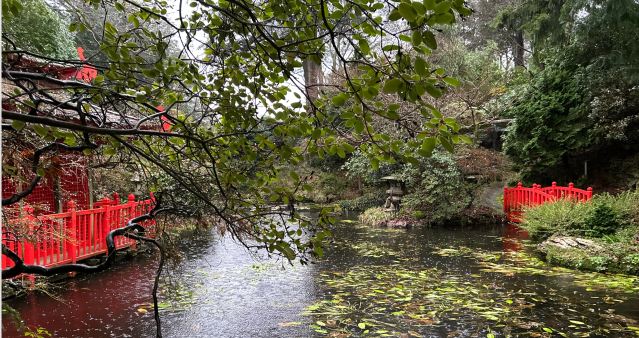
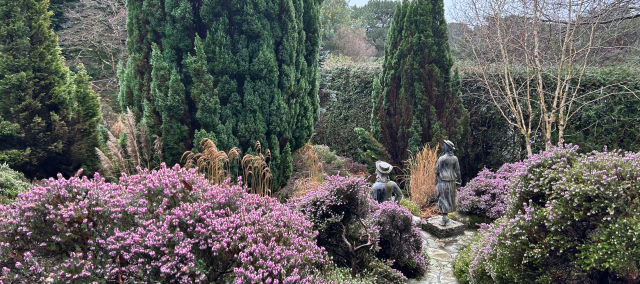
The Heather Garden which replaced The Desert
Finally came “the fern garden, in the centre of which is a beautiful piece of Roman masonry and wrought ironwork forming a well-head. Its weight is 35 cwt. Some of the ferns in this garden are of astonishing size, and all of them, together with the eighty New Zealand ferns in the rock garden, have to be stored in glasshouses during the winter months.”
This is the end of the tour, but one could go over the same ground again and again, and each time find something new and interesting.”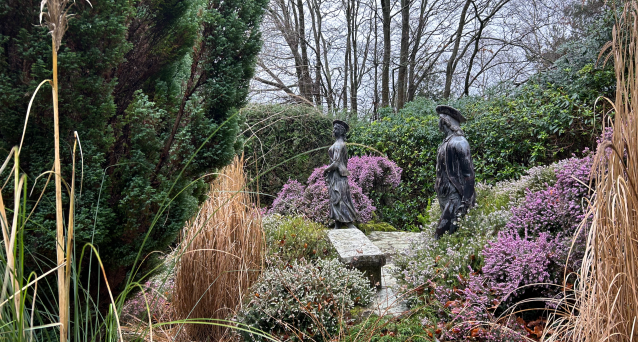
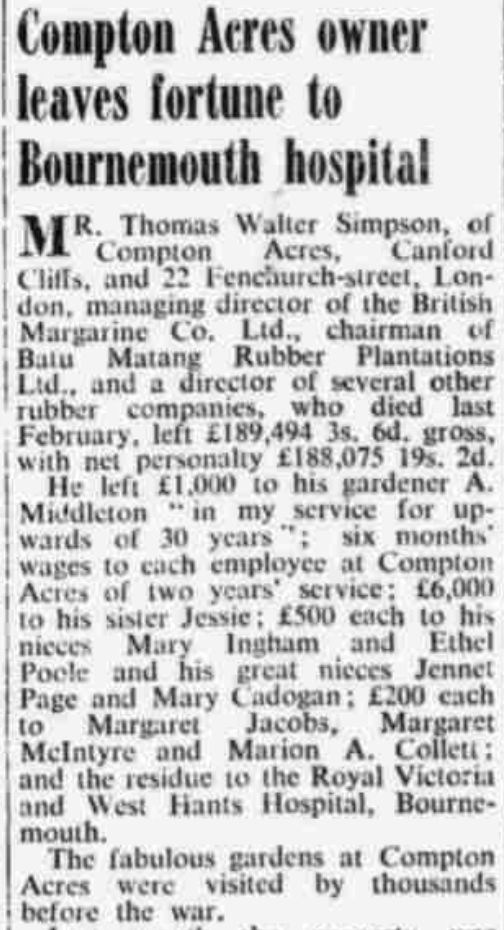
From The Bournemouth Times 17th October 1947
Of course when war came in 1939 almost everything stopped. The gardens closed and there were no charitable openings. By 1945 Mr Middleton had retired and Mrs Simpson had died with the house and grounds neglected. However, Simpson’s chauffeur Gritten, and a team of three gardeners “” bought the gardens back to perfection ” until in 1947 Simpson himself died. Apart from bequests to Middleton and the other staff he left the rest of his £188,000 estate to the local hospital.
The estate was put up for auction but bidding only reached £19,000 and it was withdrawn. It sold shortly afterwards to Percy Fisher, a local buyer, for £23,000. Simpson’s collection of antique furniture and other contents were also sold at an auction raising a further £16000 and the four houses he owned opposite the entrance gates to Compton Acres were also sold for substantial sums. Within a year Fisher had put the estate back on the market for £35,000.
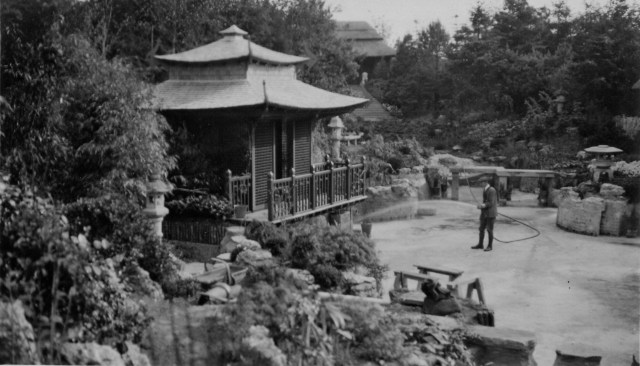

It finally sold in 1950 to Stanley Beard, senior partner in a London firm of architects who specialised in cinema design. According to the Bournemouth Times, he intended ” to revive the former glories of the garden, and will probably employ six gardeners.” He certainly spent a small fortune restoring the gardens – in particular replacing Simpson’s original peat banks with Purbeck stone walls and construction more and wider paths. The gardens finally re-opened in May 1952 but now it wasn’t occasionally for charity but every afternoon from Easter to late autumn on a commercial basis by the Compton Acres Garden Company Limited.
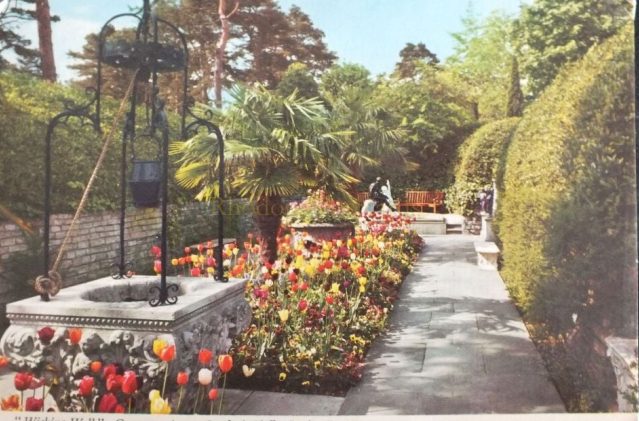
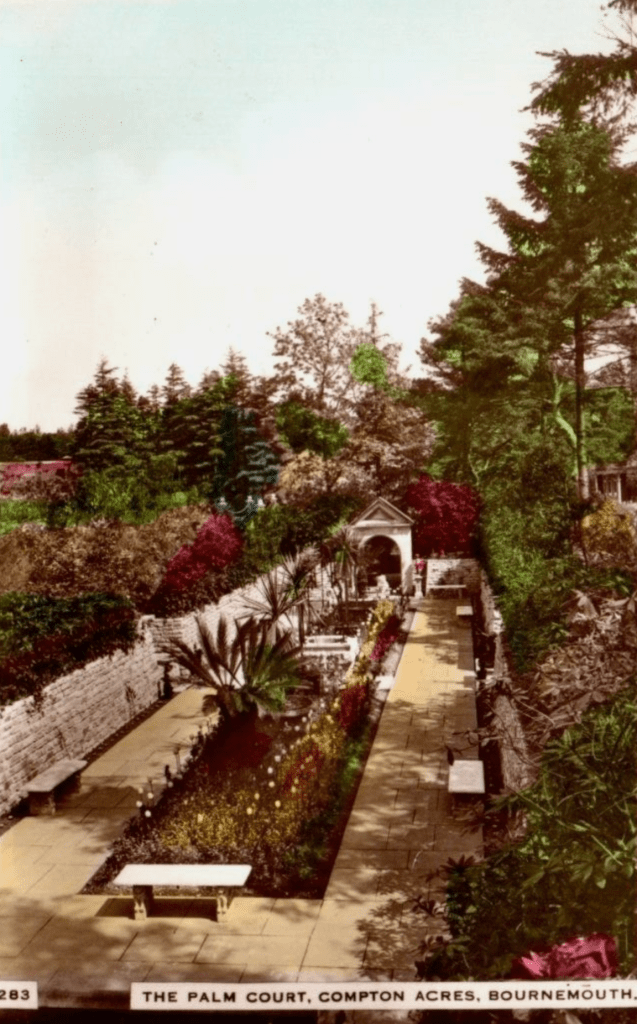 Perhaps as part of that commercialisation Kinematograph Weekly for 3rd November 1955 reports that a film, narrated by Alvar Liddell, was made about Compton Acres to be shown in cinemas as a short feature. Unfortunately although I’ve found mentions of it I can’t track down a copy so if anyone knows of one please let me know.
Beard may have run the gardens on a commercial basis with about 80,000 visitors a year but he clearly really loved them and wanted to ensure their future. Realising that they occupied one of the most valuable building sites in the area he set about safeguarding them from development.
He told The Times in October 1963″I shall be 74 next July”, and the time has come to ensure that the gardens continue after my death. At my age money is unimportant so I am willing to sacrifice a considerable part of the market value of the site if I can find the right man who will undertake not to break up the estate and to keep the gardens open to the public.”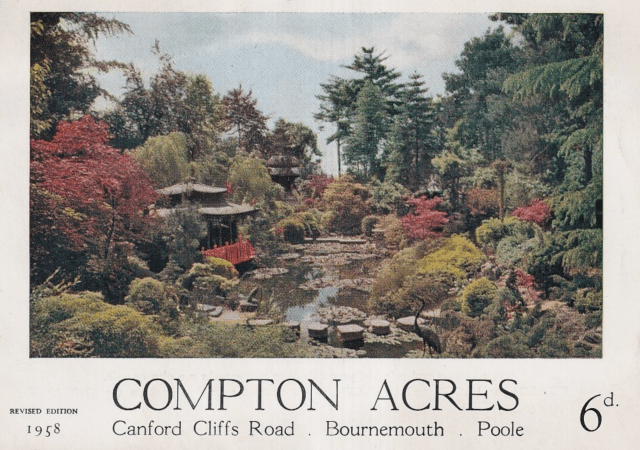
He found a buyer in the Brady family, who accepted a restriction against development for seven years after his death and with a stipulation that it be offered to Poole Corporation first before any development could take place. John Brady and his wife moved into the house and extended opening hours. They added a shop and restaurant while making “the garden’s borders and beds bright with colourful plantings.” In 1985 it changed hands again being bought London property developer, Lionel Green, who added more water features and improved visitor access to the more remote parts of the garden.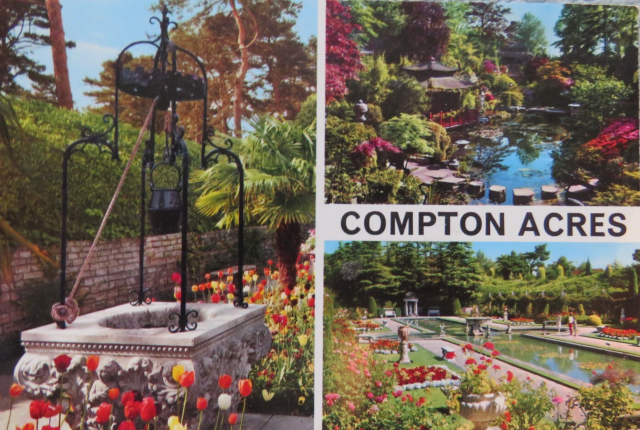
 However some land on the boundaries was sold off for development, and the original house was replaced with two massive blocks of flats, accessed by a bridge over the garden, although they are almost unbelievably hardly noticed because of the clever landscaping. More building on adjoining plots means that there are apartment blocks all round and sometimes right up to the boundary fence.
The gardens changed hands several more times before the present owners, Bernard and Kaye Merna, purchased them and undertook a great deal of development, with the construction of a Compton Acres Visitor Centre, café and tearooms, plant centre, gift shop and most recently, The Italian Villa, which has become a popular venue for weddings and functions.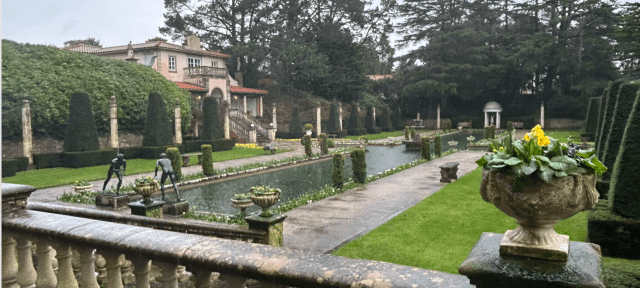
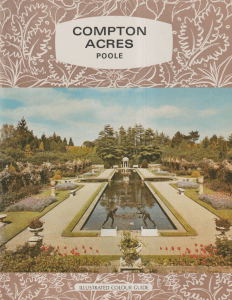 There’s no doubt that Compton Acres is commercial but there was little alternative, and it has kept Simpson’s vision and design alive and well a hundred years on. I can’t wait to go back when it’s not pouring with rain!
For more information the garden website is a good place to start, and as I said there are plenty of photos and short videos on-line. The moody interesting historically is a guidebook with a lot of black and white photos from the Beard era [late 1950s/early 1960s?] which has been put onto Flickr by Alwyn Ladell, but there’s no detailed definitive history, so if anyone is looking for a good MA project get in touch!


 The Garden History Blog

You must be logged in to post a comment.