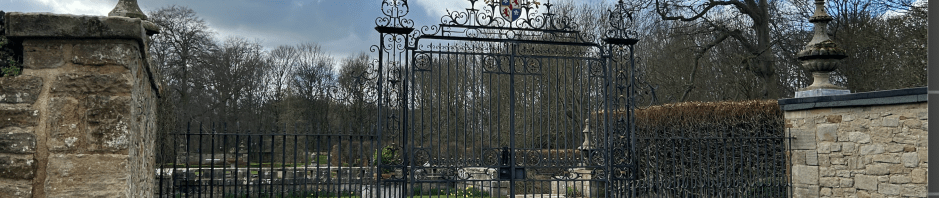
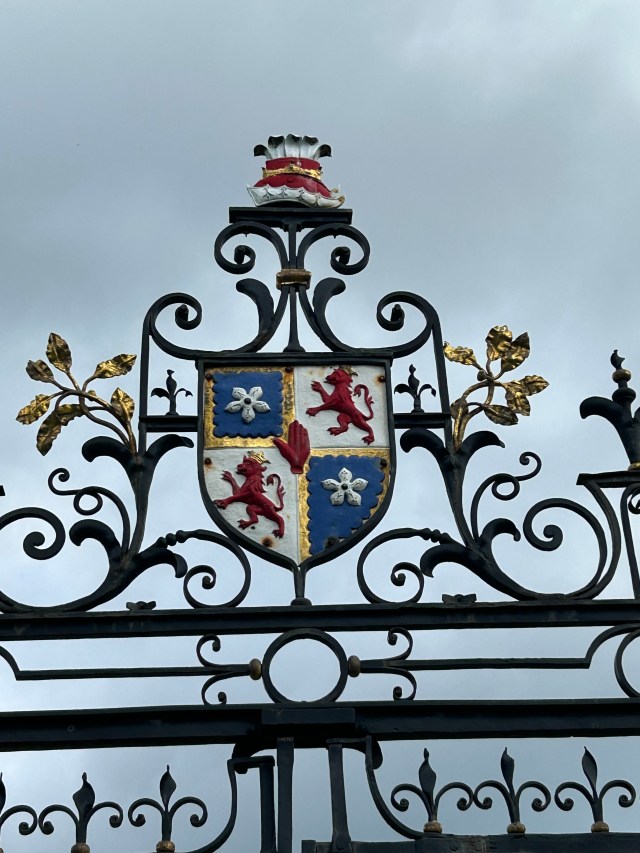
 It’s over ten years since I first visited Seaton Delaval Hall just north of Newcastle. I wrote a post about it shortly afterwards saying I’d been mesmerised by Vanbrugh’s final masterpiece. I returned last week and came away even more impressed.
The National Trust, working with the local community, and with grants from the Heritage Lottery Fund, have given the house and garden a new lease of life, under a project called The Curtain Rises. They deserve congratulations especially because it’s the 300th anniversary of Vanbrugh’s death in just a few days time, on the 26th March. For more on that see the Vanbrugh300 website.
While the popular press’s description of the house as the “Geordie Versailles” maybe a bit of an exaggeration the house is, as an 1887 guidebook put it, “unsurpassed for grandeur and dignity by any other in the north.”
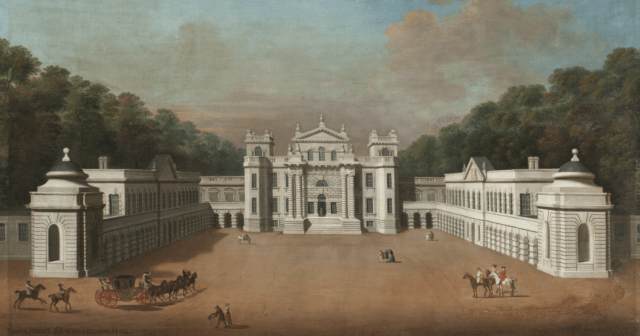
As usual the images are my own unless otherwise acknowledged
First impressions can be crucial, and at Seaton Delaval they are dramatic in the extreme.
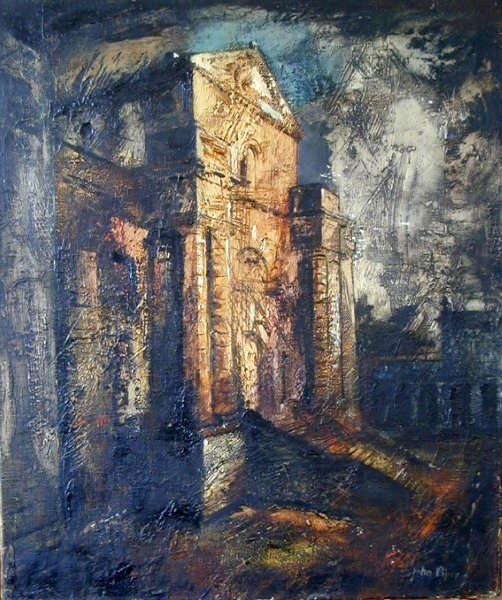
Christopher Hussey travelled to Seaton Delaval by sea in 1923 and wrote about his visit in Country Life . In an highly atmospheric piece he managed to capture both the ghost-filled ruins and the spectacular architecture of Vanbrugh “an original genius and out of his time.” He went on “before he was an architect Vanbrugh was a dramatist, and before a dramatist a romantic. … The romantic nature of the site stirred him to his depths, and he produced this splendid theatrical pile, this palace of the fates and winds.” As you can see from the images the artist John Piper was captivated too.
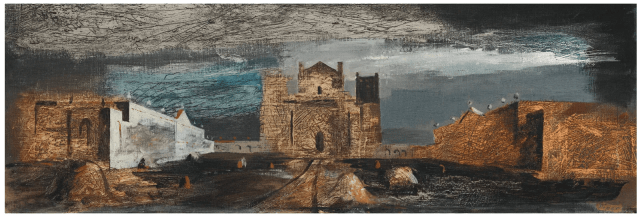
That sense of theatricality – the house as stage set -has been recaptured neatly as Seaton Delaval has become a showcase for contemporary art and changes to the way that rooms and the remaining contents have been displayed.
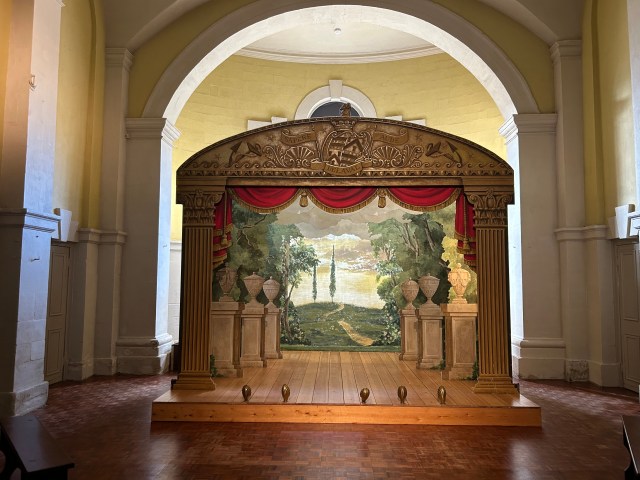
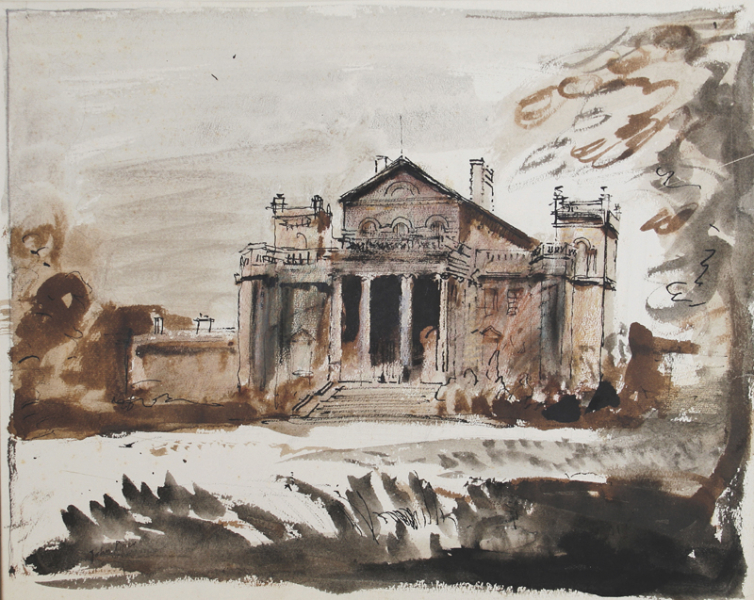
The house was constructed between 1721 and 1728 for Admiral George Delaval. He was not only a well educated and very well travelled naval officer but also a diplomat including having been envoy to the Emperor of Morocco and to the king of Portugal. His original plan was, as he told his brother in 1717 , “to divert myself in my old age, repairing the old house, making a garden and planting forest trees, for which we may expect prayers when we are no more.”
Somehow he changed his mind quite quickly, telling his brother now “I intend to persuade Sir John Vanbrugh to see Seaton if possible and to give me a plan of the house, or to alter the old one, which he is most excellent at… So something may be done by degrees and be the entertainment of our old age, or as long as we can live.”
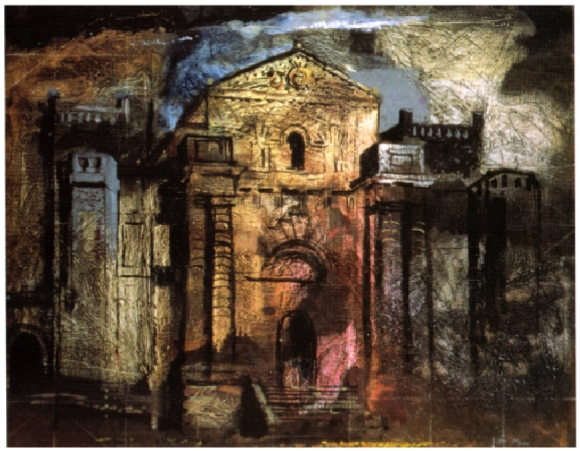
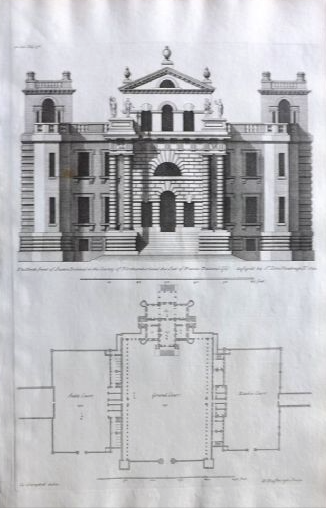
Vanbrugh was indeed persuaded to visit. There was, however, no alteration or remodelling but a complete new building supervised by the York mason William Etty. The existing house – a 14thc tower with Tudor manor and Jacobean extensions was demolished in 1720, ad its exact location now unknown although the Ordnance Survey map of 1860 does show the “supposed site of the Castle”.
Vanbrugh’s plan was published in Vitruvius Britannicus of 1725, along with those for other houses he had designed including Eastbury in Dorset and Grimsthorpe in Lincolnshire. “The Admiral”, wrote Vanbrugh “is very Gallant in his operations not being dispos’d to starve the Design at all.”
That’s because the admiral’s money came from the lucrative export of coal from Seaton Sluice, the harbour built by his predecessor Sir Ralph Delaval a couple of decades earlier.
There is a full description of the house in William Hutchinson A View of Northumberland, first published in 1777.
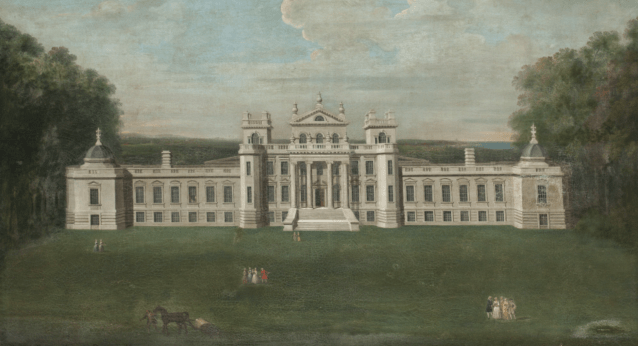
The Hall has an impressive although comparatively small [75ft square] central block, which contained the principal and state rooms, with the two porticos providing viewing platforms out over the surrounding landscape. There are two equally impressive arcaded and pedimented wings on either side of a grand courtyard. 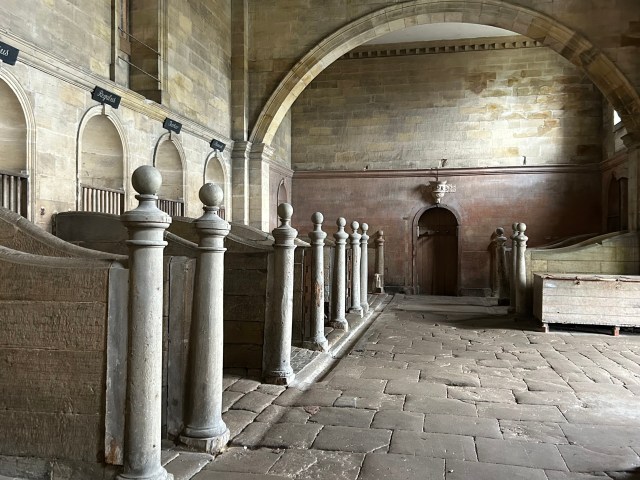
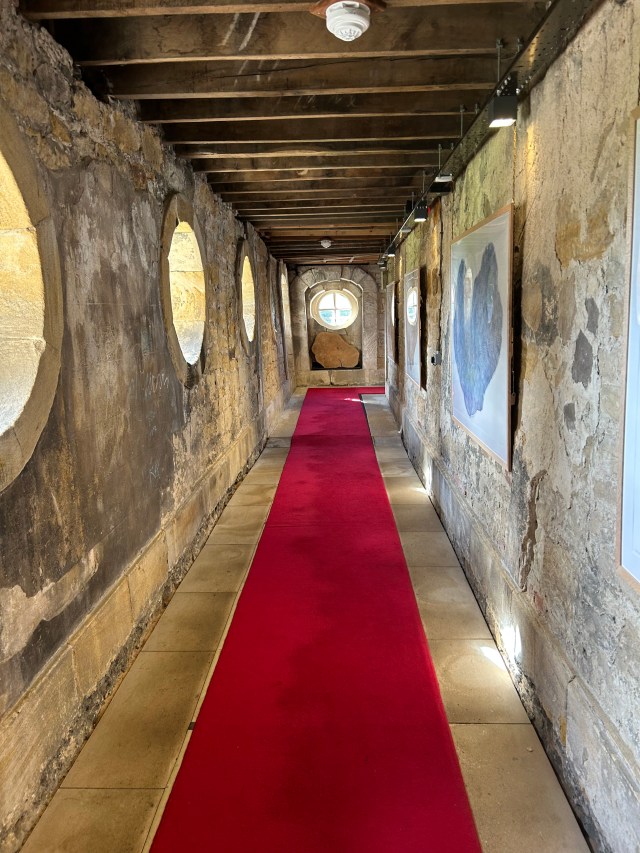
The east wing housed magnificent stables, while the west originally contained the services, but more recently was converted to be the home of the owners, Lord & Lady Hastings and their family. These rooms are now used to display the surviving contents in a very different but effective way – more akin to the V&A Storehouse than a “standard” National Trust property.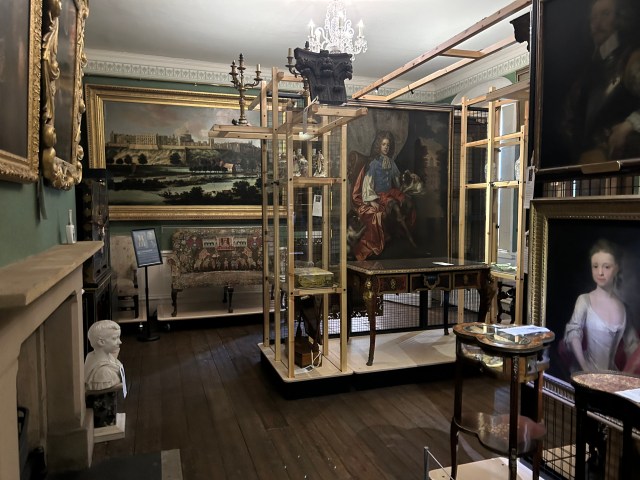
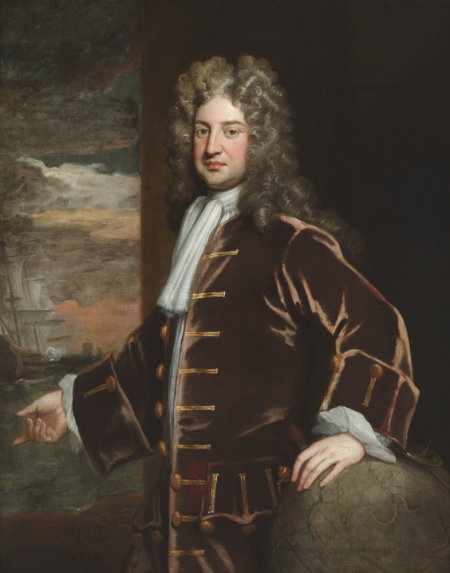
Vanbrugh died before the house was finished, and unfortunately since its completion in 1728, it has had an unfortunate history.
Admiral Delaval did not live to be entertained by it in his old age as he had hoped, but was thrown from his horse in 1723 and died of his injuries. The Admiral’s heir, his nephew Francis, who completed the house, got rather worse for drink and died after he fell down the front steps in 1752.
The Hall was then inherited by his daughter Rhoda, who married into the Astley family, who were ennobled in 1841 as the Barons Hastings. It remained with them until 2009.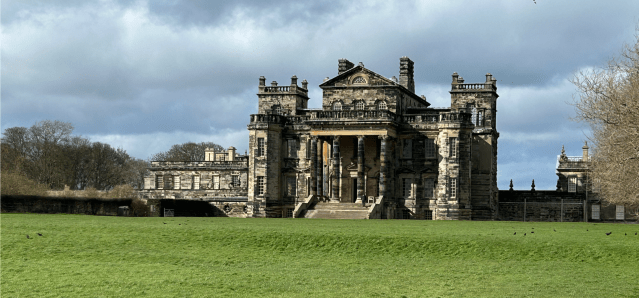
While the exterior remains a perfect example of English baroque, the interior of the central section was gutted by fire in 1822. “The heat was so intense that the glass in the windows was reduced to a liquid state and the lead on the roof poured down like water.” [Tomlinson’s Guide to Northumberland, 1889)
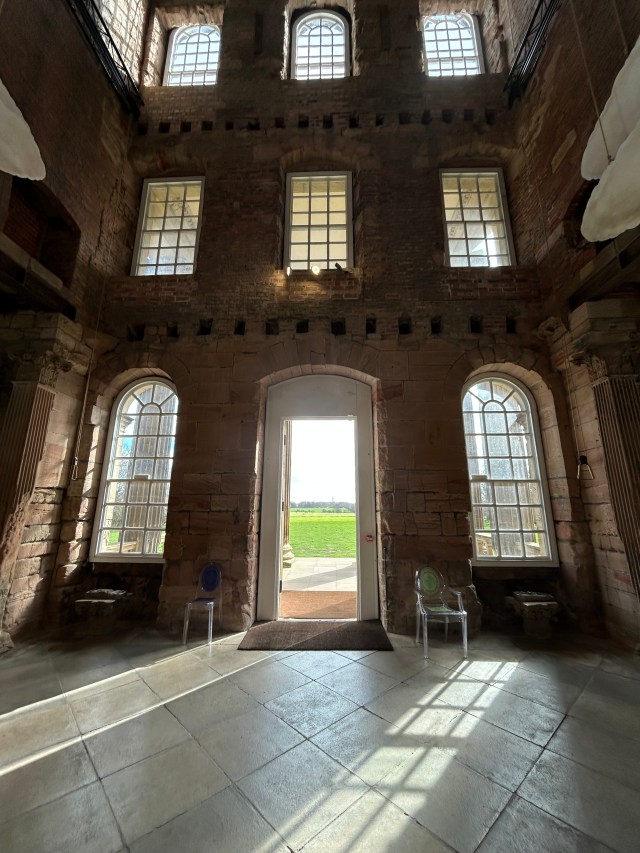
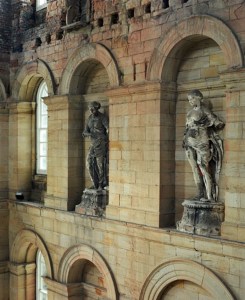
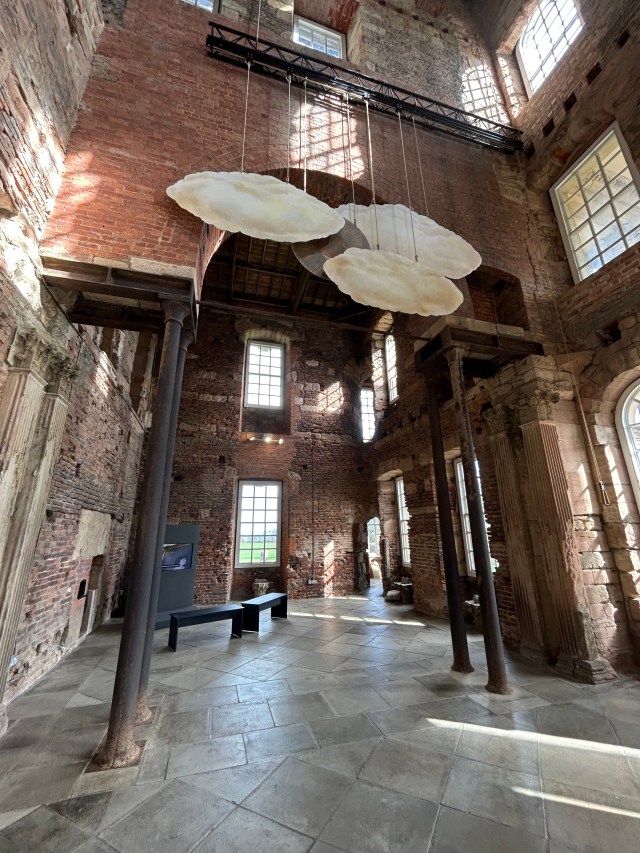 It was not restored, but stands, floorless and gaunt testament to the power of Vanbrugh’s design. The effects of the fire are clearly visible in the great hall, originally 30 feet (9.1 m) high but still open to the roof, with some remaining statues of the Muses standing on the otherwise bare walls. It is a stunning sight.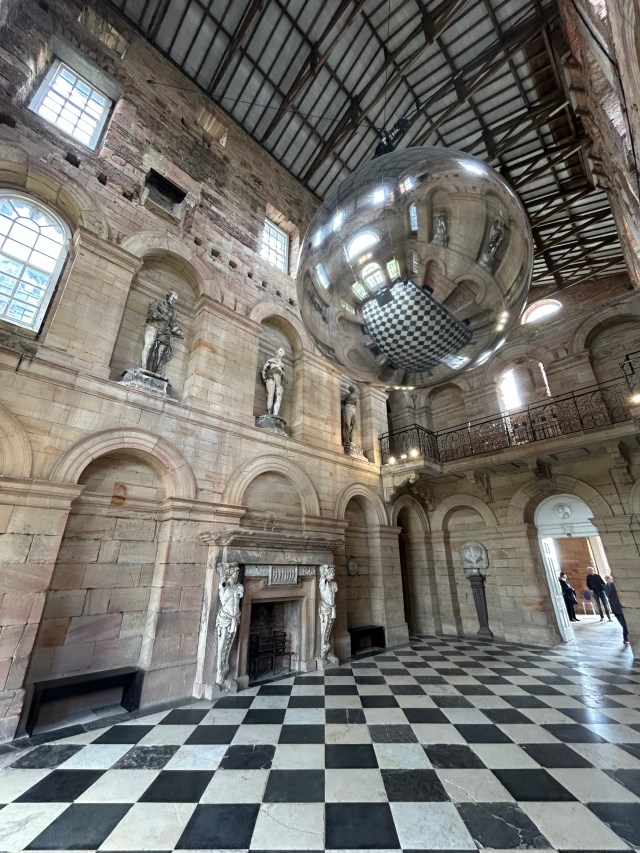
After the fire the house was largely deserted for about 160 years, despite some partial restoration in 1862–63 when the central section was re-roofed, and again in 1959. It was not until the 1980s that Edward Delaval Astley, 22nd Baron Hastings moved back to the Hall and converted the old service wing into his home. He remained there until his death in 2007.
 Subsequently his son, Delaval Astley, the new Lord Hastings, found himself facing an enormous inheritance tax bill and decided to sell up. In September 2008 the National Trust launched an appeal to raise £6.3 million to acquire the house and its surrounds. This took 15 months and the Hall was finally opened in May 2010. It marked a new era for the Trust in more ways than one.
 For starters, the acquisition itself was unique and came about only after the Trust had consulted 100,000 local people, who then, in six months, in the teeth of a recession, raised nearly £1m of the £3m the organisation needed to find. And this was, said Jane Blackburn, a member of the Trust’s regional committee, “in a part of the country that is not, frankly, one of the wealthiest, and most of whom have never visited a Trust property, let alone joined”. [Guardian 10 Feb 2010,]
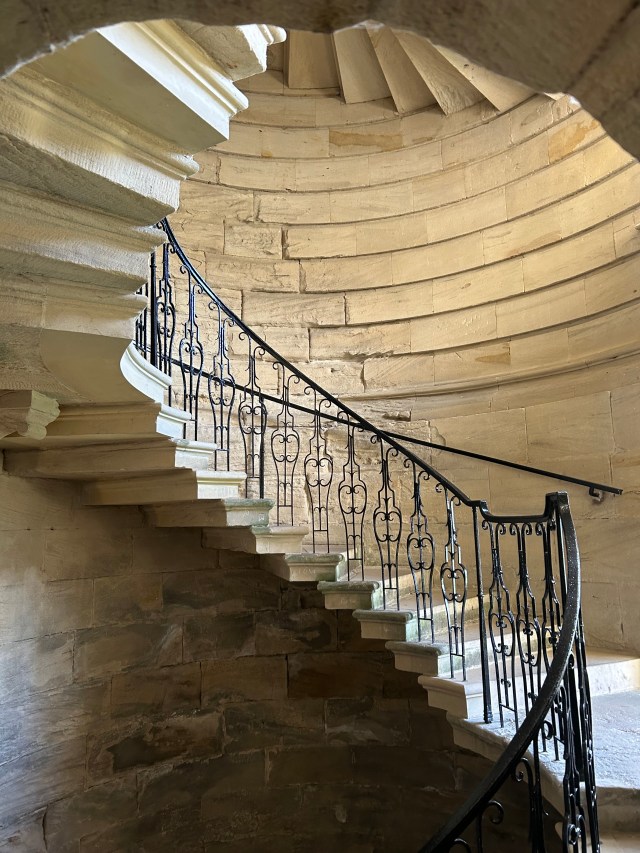
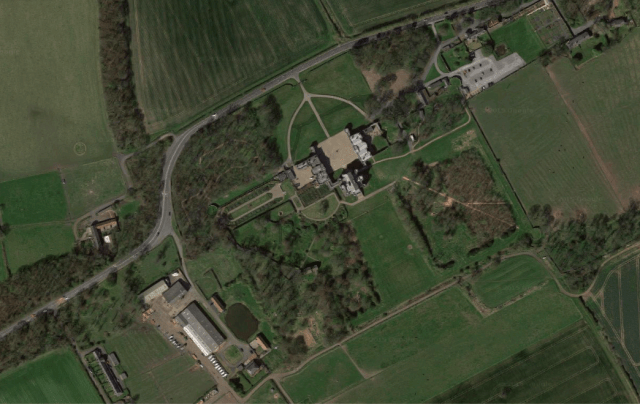
There is no doubt that Vanbrugh and the Admiral wanted the house to be an integral part of its surroundings, and the gardens must have been designed together with the Hall. Much of the hard landscaping, such as the bastions, boundary walls and ha-ha have survived, although, unsurprisingly much of the layout and the planting has been lost or substantially altered. The National Trust were only able to buy the land around the house which is merely a quarter of the surrounding estate.
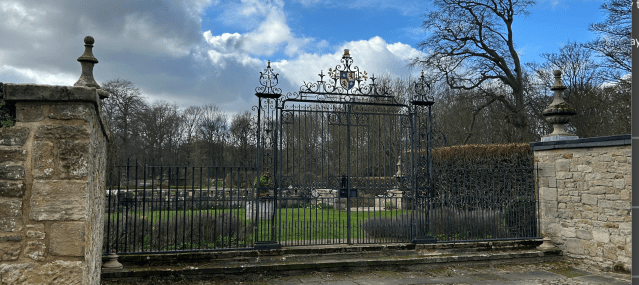 As. a result it’s quite difficult to appreciate the scale and layout of the original pleasure grounds and their relationship with the wider landscape. This was obvious to William Hutchinson in 1777: “The appearance of Seaton Delaval now engaged the eye; the spreading plantations extended over the plane afforded an agreeable scene, which was beautifully improved by the distant prospect of the ocean.”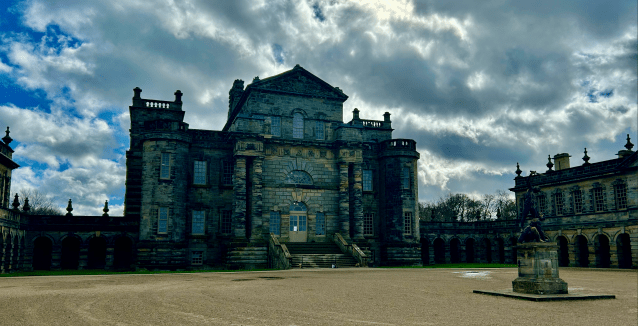
The main front of the house faces north and was approached by an avenue, more than a mile long, which runs along the main road, although nearer the house it curves sharply round the estate boundary rather than running straight, and has also been cut across by the railway. Originally composed of a double row of limes planted on a mound to avoid the low-lying coastal clay, it was later interplanted with beech. Remnants still survive.
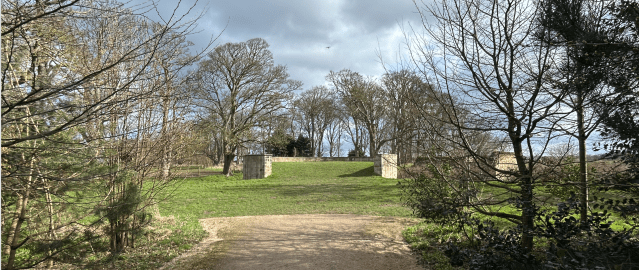
The south east bastion
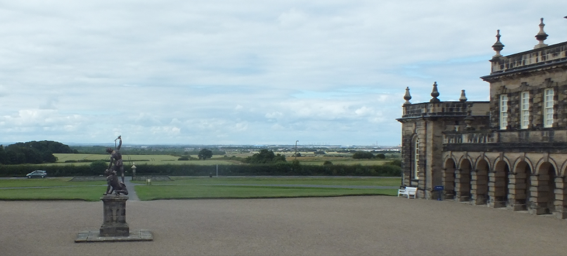
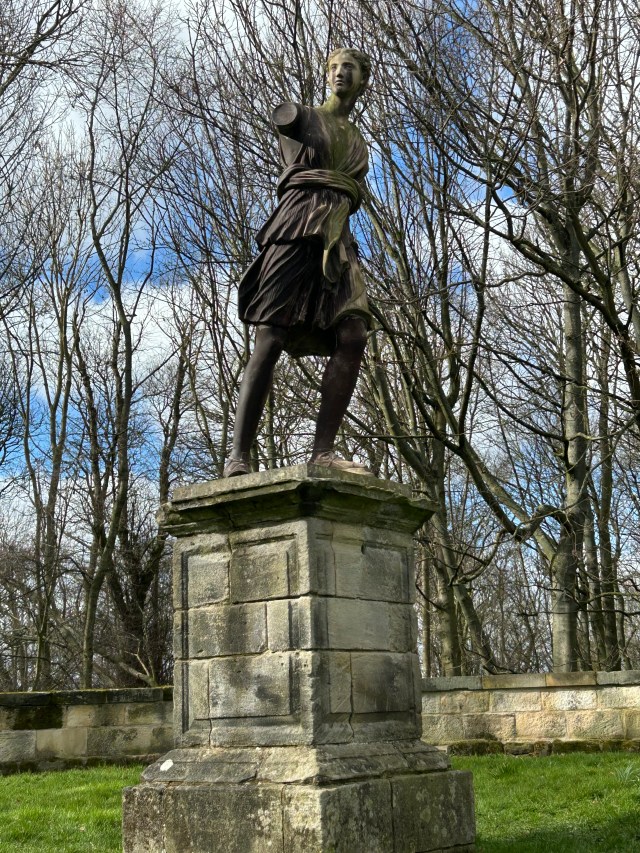 Vanbrugh set the house on the edge of a rectangular “fortified” garden, complete with a semi-circular bastion at each corner, all surrounded by a ha-ha. Each bastion had a statue installed, three of which survive although they have all been moved from their original locations.
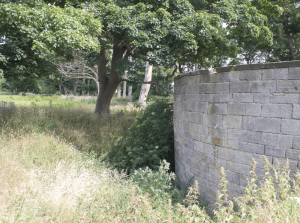
The ha-ha and retaining wall of the SE bastion
A lead figure of Diana, identical to the one by John Cheere at Stourhead, survives somewhat the worse for wear, and now stands on the NW bastion next to the Parterre garden where Samson and the Philistine also stand. Another of David and Goliath was stolen but recovered and now stands proudly dominating the front court of the house. The fourth, thought to be a shepherdess, is still missing.
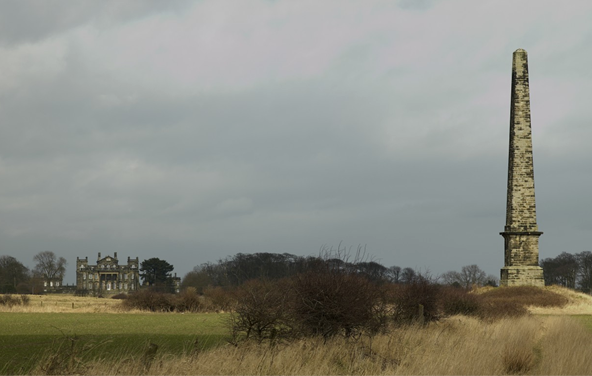
The south front of Seaton Delaval Hall, seen from the obelisk erected on the axis of the house exactly half a mile from it. Country Life Picture Library 2010
 The overall design is easy to discern on the OS map of 1865. John Wallis writing in 1767 described what was within: “before the south front is a grass lawn, edged with plantations; and beyond it, a spacious Avenue, with shady walks on each side; a swimming bath about midway; terminated by an obelisk; the ancient ruin of Tynemouth Priory, and the ocean being in sight.”
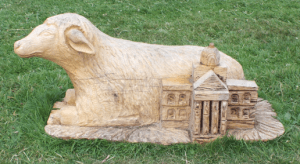
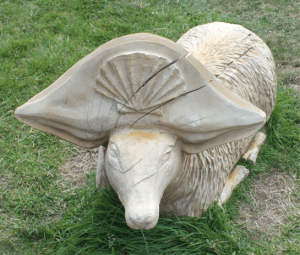 The Avenue has long gone but the views over rough grazing through to the pond and obelisk remain. It was also said that Sir Francis kept a ‘flock’ of sheep carved from stone in front of the Hall which a visitor in 1752 said ‘would deceive anybody til very near’.
There were wooden replicas of these when I visited in 2015 but unfortunately I didn’t spot them on this visit.
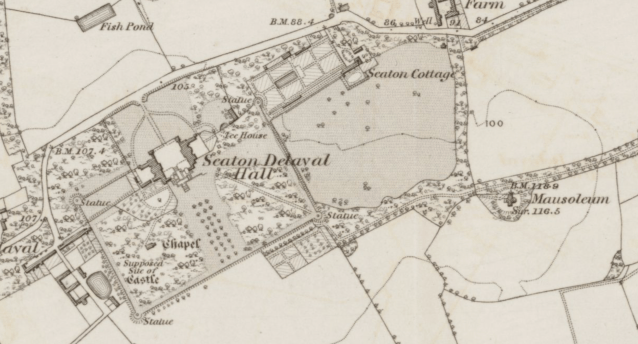
As you can see from the Ordnance Survey map diagonal paths, perhaps survivors from the earlier divisions of the 18thc formal pleasure grounds, led from the house to the bastions in the SE and SW corners. These would have led through woodland plantations with statuary installed in clearings. On my 2015 visit these areas were heavily planted and often overgrown. Today they have been transformed.
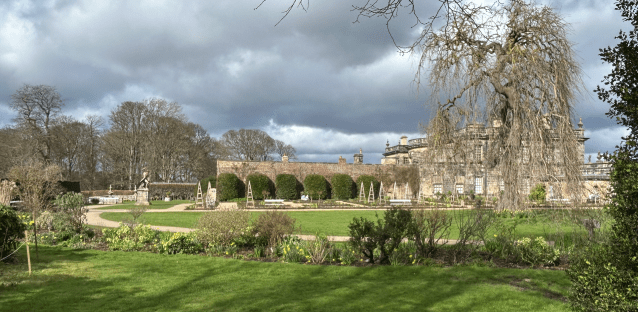
The area to the south west bastion is now much more open and largely informally planted, although inspired by the last Lady Hastings to live in the house there is also a rose garden, some mixed borders, an arboretum and what’s known as the privy garden with its summerhouse. It is also home to the small Church of Our Lady (early 12thc & listed grade I), which was the family’s private chapel until the 1890s. 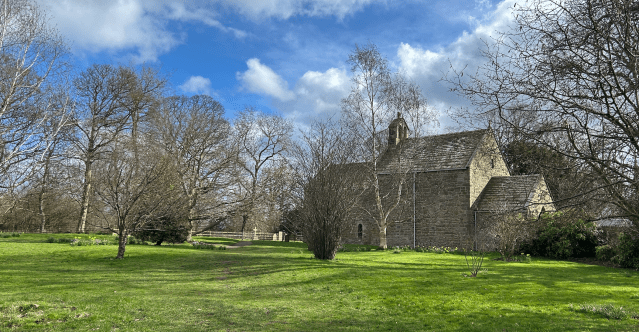
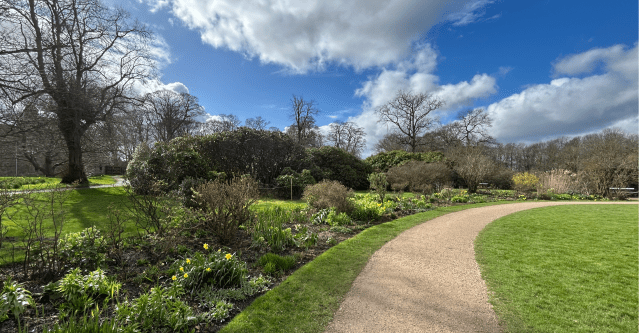
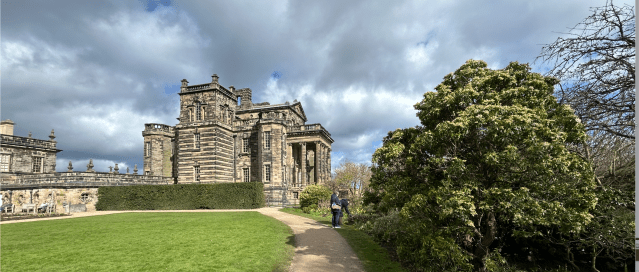
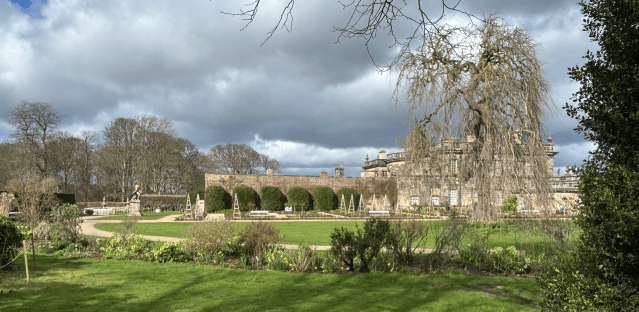
There is one further impressive garden on the west side of the house which was laid out in 1950 in the north west corner of the fortified garden. Then it was a large sunken rectangular area that was probably created in the 19th century, and occupied by a derelict rambler rose walk and a disused tennis court. Lord Hastings commissioned a new Italianate Parterre Garden from James Russell of Sunningdale Nurseries. Russell’s success here led him on a distinguished career as a nurseryman and garden designer, including, most famously at Castle Howard. For more information on Russell see the excellent obituary in Country Life 20th March 2010:
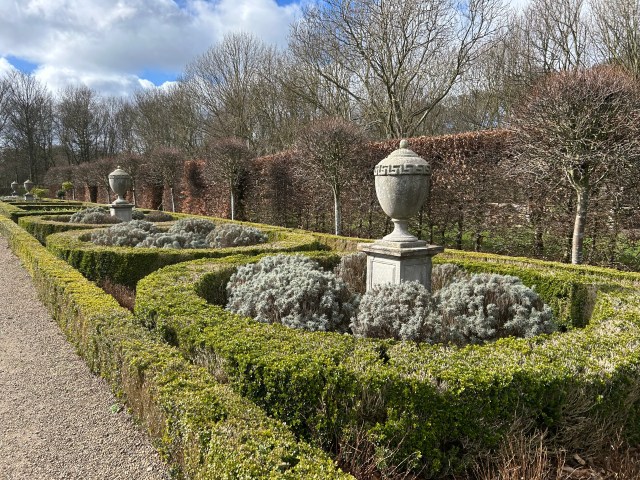
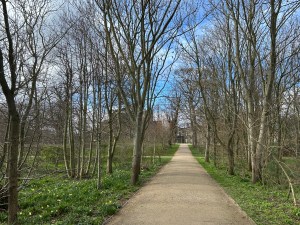 Let’s return now to the opposite side of the garden where, inspired by the surviving 1781 estate plan, the area leading to the south east bastion has been replanted in a splendid modern interpretation of its 18thc roots. In addition to some really good sustainable woodland planting there are contemporary art installations dotted about.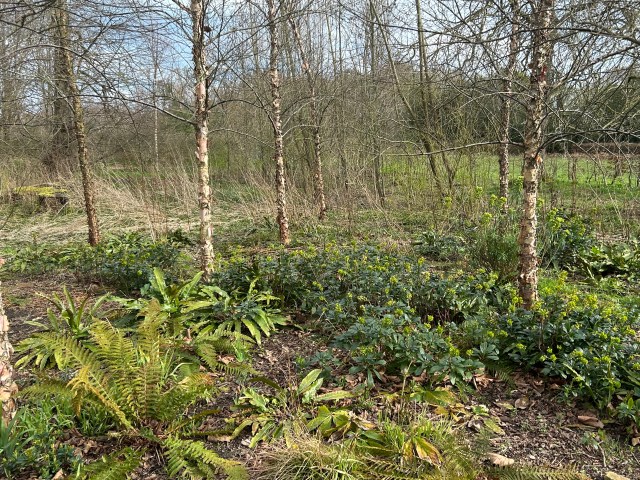
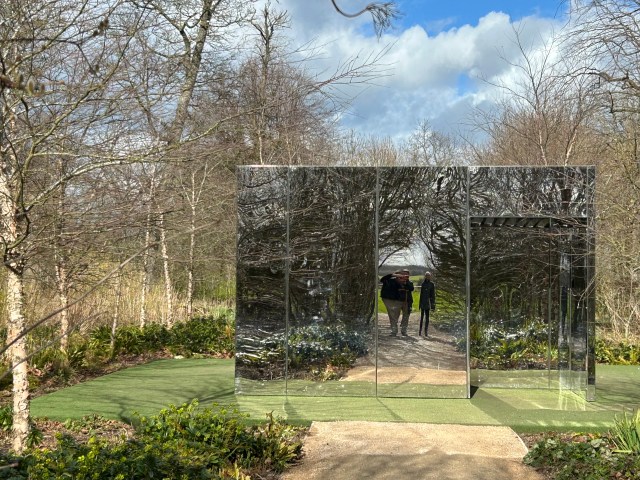
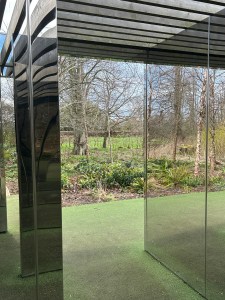 While these might not be popular with those visitors who perhaps want a more traditional approach, they are not obtrusive and are definitely in the spirit of the Delavals’ and Vanbrugh’s playfulness. An area known as the Oval, a large clearing to the south of the woodland has also been restored as part of the Curtain Rises project. This was where the family held parties and even circus performances, George Delaval noting in 1753 that “upwards of four thousand Gentlemen and Ladies had been assembled at Seaton Delaval to see the Rope dancers.” [although probably not all in the Oval at once]. There were also “long tournements, Bull-batings and two dancing Bears, as well as the more sedate tea parties that Rhoda Astley hosted in a tent.
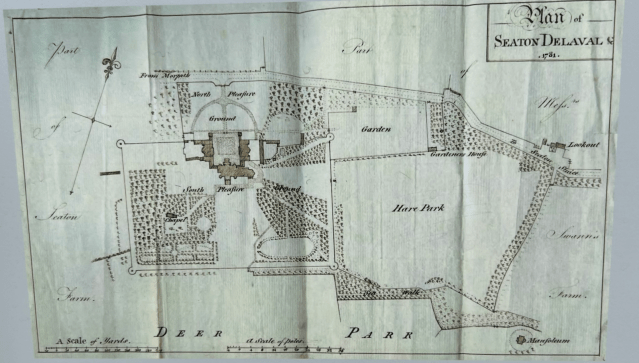
Estate Plan of 1781
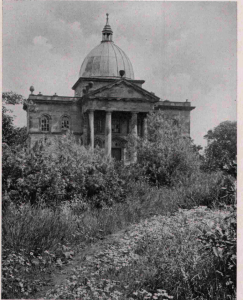
The Mausoleum from from Country Life, 15th Dec 1923
Beyond the South East bastion there is the Lady’s Walk or The Sea Walk. It was originally reached by a drawbridge from the bastion over the ha-ha and then through a doorway in the park wall. It passes a family mausoleum, built around 1766–1777 by Lord Delaval for his son John. However, it was never consecrated or used for burials.
Originally domed it is now a roofless, ruinous landmark although still listed at Grade II*. It sits on a circular mount, surrounded by a ha-ha and which was presumably reached by a similar drawbridge arrangement.
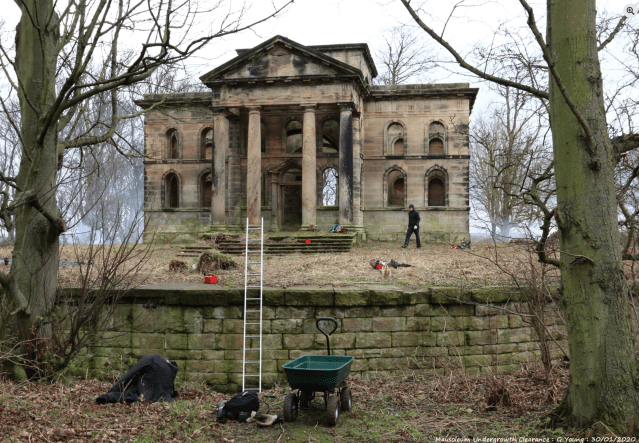
The Mausoleum from the Facebook page of the Seaton Delaval Hall Knowledge Repository
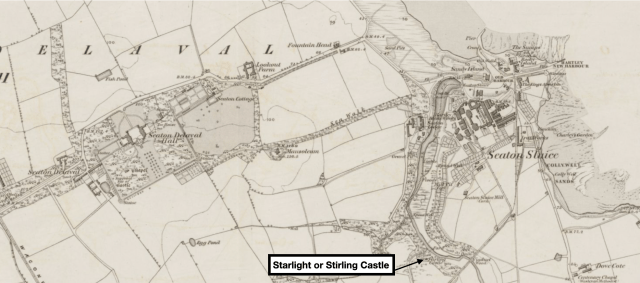
The path continues down to Seaton Sluice, a natural harbour which was used for exports from the Delaval’s nearby coal pits and glass factories. A stream runs into the harbour from the south through a steeply sided wooded valley and perched high above the banks with commanding views is another folly of Sir Francis – Starlight or as on the OS map, Stirling Castle – which has been really well described on the blog of the wonderful Folly Flaneuse, so do go and read about it there.
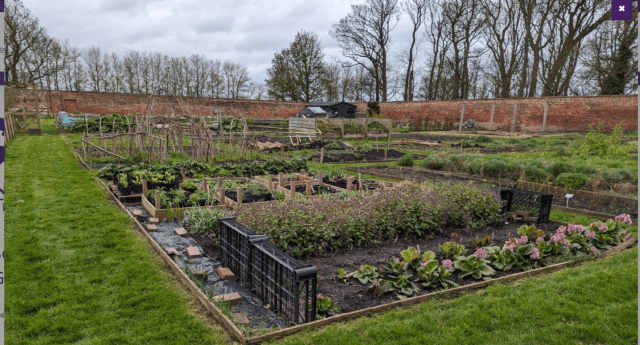
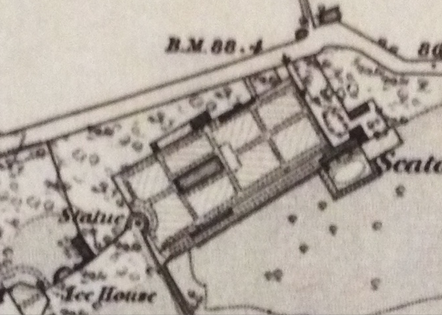
The NW corner of the grounds and the kitchen garden from the 1865 OS map
Running along the eastern side of the fortified garden from the South East bastion to its North Eastern counterpart is a boundary walk. From it the visitor looks down at what Wallis described as “a garden, very handsome with a conservatory or green-house.” This was the kitchen garden extending to 3 acres, although sadly, as so often, now used mainly for the car park. However the orchard, orangery, and the base of the greenhouse which was in a ruinous state in 2015, still remain and a large section has been given over to a flourishing Community Kitchen Garden.
The OS map shows what was probably the 18thc kitchen garden layout, with two sets of four quarters divided by fruit trees, and also a rectangular fish-pond. There is also a line of glass lean-tos ranged against the north wall, together with a boiler house. Pevsner ascribed the Orangery to William Etty, suggesting that it was contemporary with the main hall. Richard Wheeler then the National Trust’s Garden Historian, suggested to me in 2015 that it is a left-over from the previous house and estate layout. Certainly he felt the adjoining garden cottage was probably mediaeval in origin, perhaps even part of the mediaeval hall, and this gives rise to speculation of what else might survive underground in the vicinity.
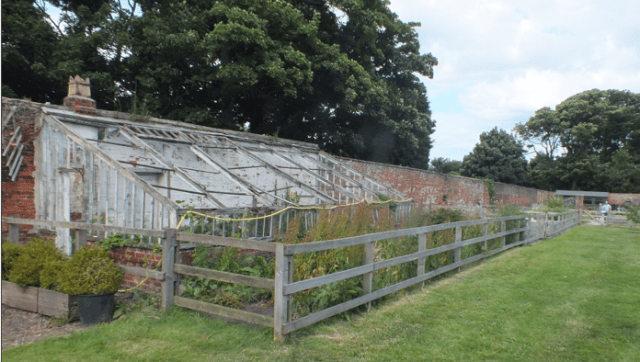
The greenhouse July 2105
Little is known about the Walled Garden’s early history. A 1769 visitor described it as “very handsome” with a conservatory, and estate drawings from 1808 show two heated glasshouses; one by the orangery and another on the south side, used for growing high status crops like grapes and pineapples. The pond was noted for its carp as early as the mid-18th century, and the orchard is recorded in the 19th. By then the garden and the habitable parts of the hall were let to a market gardener named George Bell and “the visitor can buy grapes, flowers, fruit, etc. By the side of the fish-pond, which still contain good many fine carp, are 2 or 3 old statues.” Today, the area includes the car park and Visitor Centre, but the orchard, orangery, and greenhouse base remain.
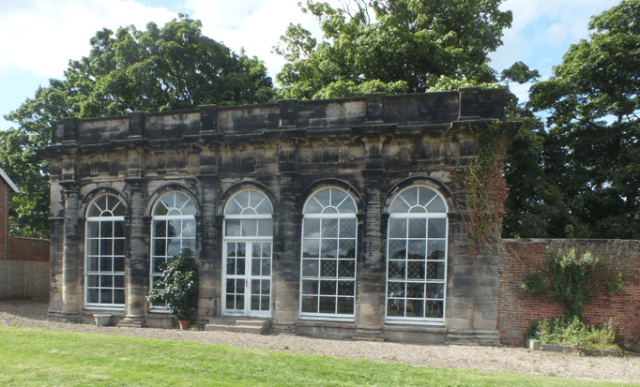
The Orangery, 2015
As I said earlier the acquisition of Seaton Delaval in 2009 marked a shift in attitudes and approach by the National Trust. At the time Susan Dungworth, a local councillor was clear that “the National Trust didn’t come here and say it wanted to make Seaton Delaval a major attraction. It didn’t say, this is our finest piece of 18th-century architecture, and here’s what we’re doing with it. It said, we want this place to be a local resource; serve the community.” And very quickly on the evidence of visitor numbers, news stories, events and activities centred around the hall it certainly seems to be doing that! 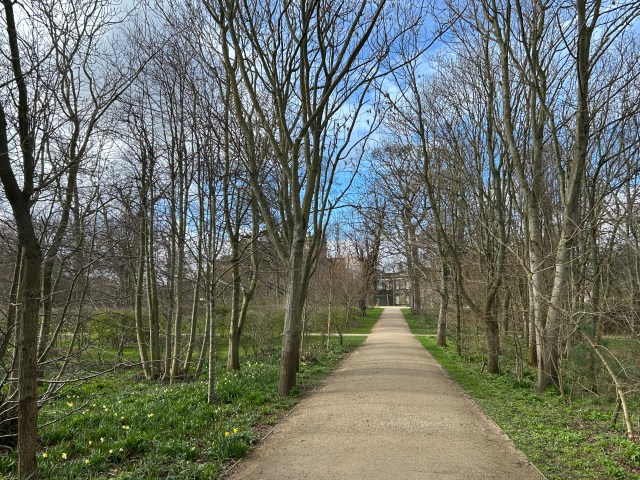
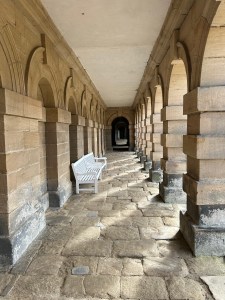 As my friend Jill said on her blog way back in 2014 : “Some will disapprove of this approach, arguing that such an important house and estate deserve to be restored to their glory days. But I like the way you can see many elements of the property’s subsequent history, from the nineteenth century fire to later twentieth century attempts to restore the dwelling to a home. It is a fine example of history being seen as a continuum, rather than a moment in time, and a splendid case study in the role of a local community in saving and defining its own heritage.”
Photograph: Christopher Simon Sykes/National Trust
Today the place buzzed and I’m sure it will be all through 2026 with the Vanbrugh celebrations because Seaton Delaval along with five of his other most notable properties – Castle Howard, Blenheim Palace, Grimsthorpe Castle, Kimbolton Castle and Stowe House there’ll be a series of events, exhibitions and activities across the year. Backed by the Georgian group and funded by the National Lottery Heritage Fund Vanbrugh 300 should be not only very informative but great fun too.


 The Garden History Blog
You must be logged in to post a comment.