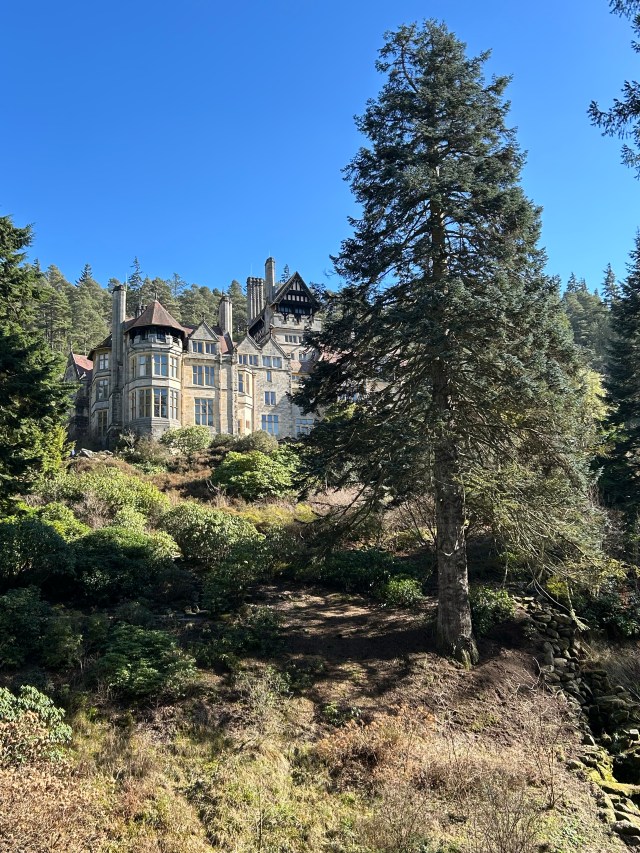
 I’ve just been to Cragside in Northumberland and my first reaction was that its creators, William and Margaret Armstrong, must have had very powerful leg muscles!
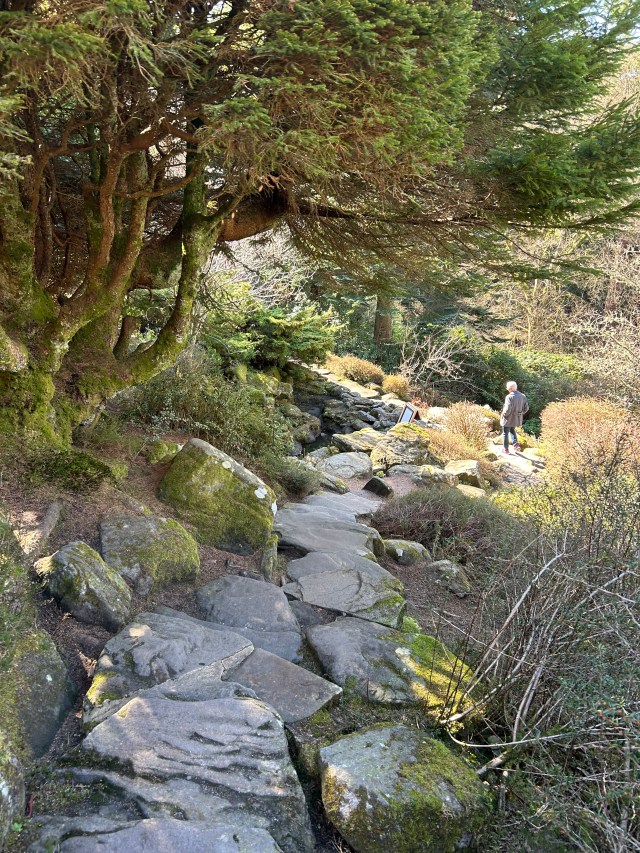
It is a stunning site but there are so many steps and precipitous slopes as to be almost unbelievable. It’s no wonder that the first house in the world to be lit by hydro-electricity, also had the world’s first hydro-powered lift. I could have done with one to explore the rock garden below the house as it covers 4 acres and is the largest in Europe.
.
 The Armstrongs planted an estimated 7 million trees and shrubs as well as creating over 3 acres of formal gardens and a range of greenhouses and conservatories for plants you wouldn’t expect to survive, let alone thrive, in Northumberland.
They were also philanthropists on a grand scale, supporting parks, hospitals, education and museums, as well as running businesses in engineering, shipbuilding and armaments which employed over 25,000 people. But for William Cragside was relaxation. He told a journalist in 1893 “I can’t begin to give you the faintest idea of the pleasure it’s given me… I feel certain that, have there been no Cragside, I should not be talking to you today – because it has been my very life.”
 Read on to find out why…
As usual the photos are my own unless otherwise acknowledged.
So where did it all start? William’s father had risen from humble beginnings before prospering as a corn merchant with a home near the steep-sided valley of Jesmond Dene. now part of Newcastle. William trained as a lawyer and in 1835 after he had qualified he married Margaret Ramshaw whose parents gave the newly-weds 16 acres of land bordering Jesmond Dene.
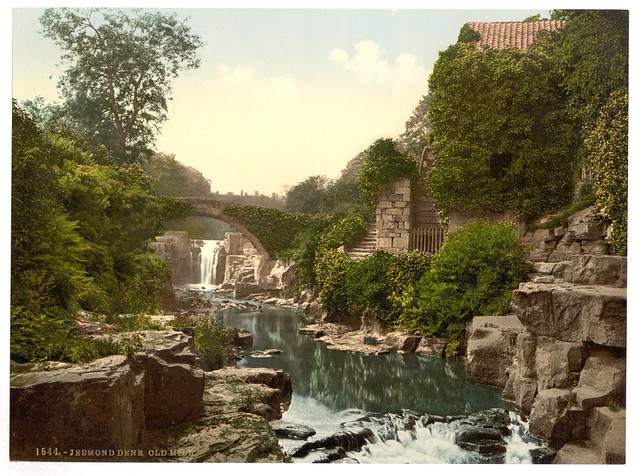
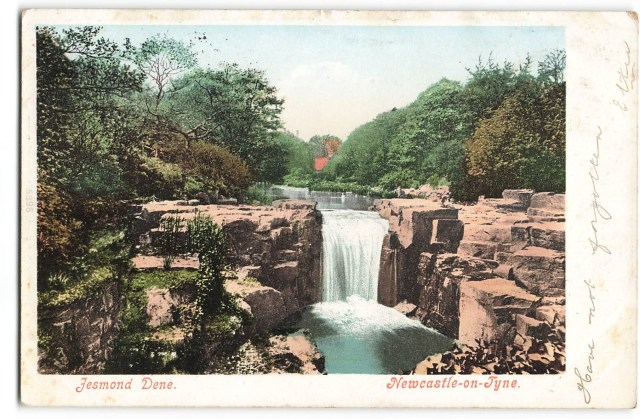
There they built themselves their first house, and laid the grounds in a picturesque parkland style with a waterfall, islands and several bridges including one from which to view the waterfall. They planted huge numbers of rhododendrons and trees, many imported from North America. It was to be a forerunner of Cragside and was given to the city of Newcastle as a public park in 1884.
[For more on the landscape there see the website of the Friends group]and also the images of the valley on C0-Curate a website run by Newcastle University.]
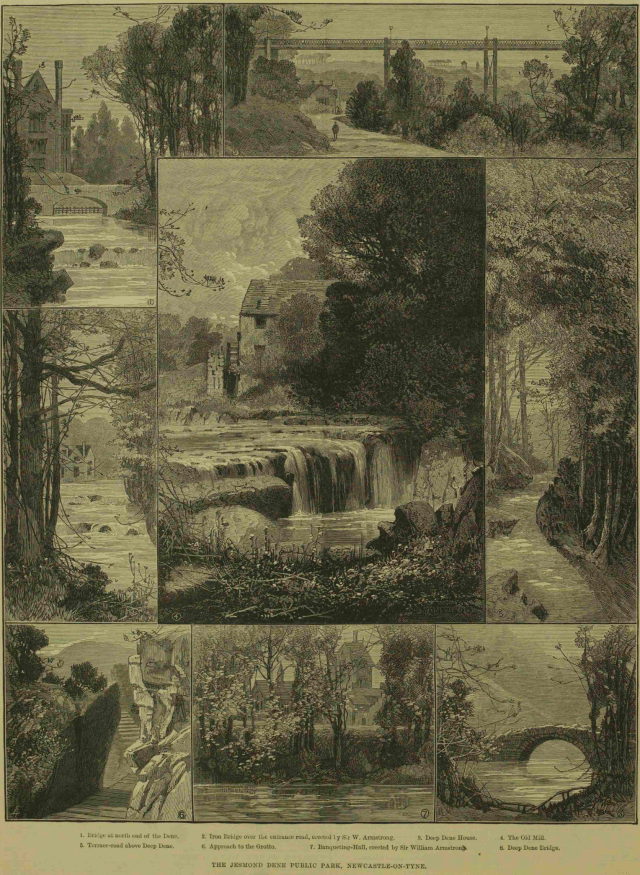
From Illustrated London News 21st July 1883
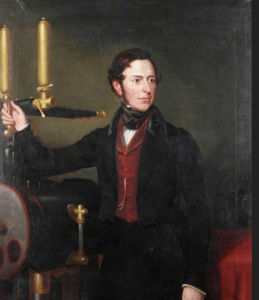
William did not enjoy his legal work saying later it “was not of my choosing but for a good many years I stuck to the law, while all my leisure was given to mechanics.” Instead he devoted himself to experiments with electricity, inventing a hydroelectric machine which showed how electricity could be generated by friction. This went on show in London in 1843 and in 1846 he was elected a Fellow of the Royal Society.
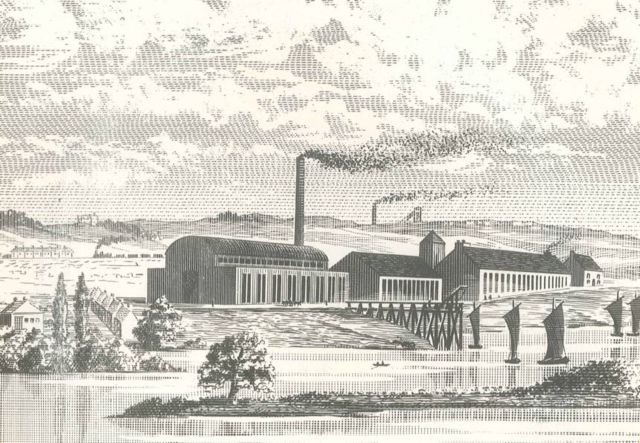
By then his main attention had shifted to the possibilities of using water as “automotive power.” He designed and built hydraulic cranes, founding his own company and opening a factory at Elswick on the Tyne. Business boomed and took a militaristic turn during the Crimean War when he switched to designing guns and artillery, and then opening an ordnance factory. This too was a commercial success and by the mid 1860s he had become the worlds first international arms dealer, supplying arms not just to the British government but a range of foreign clients from around the world, but especially Japan half of whose navy consisted of ships built on the Tyne by Armstrong’s company. It was this that paid for Cragside.
In 1863 Armstrong was elected President of the British Association for the Advancement of Science and in his presidential address showed how prescient he was by predicting the end of coal-mining in Britain, advocating instead water and solar power. He followed this up in 1881 by saying”when the time arrives for utilising the power of great waterfalls, the transmission of power of electricity will become a system of vast importance.” It’s worth noting that the engineer behind the first hydroelectric power plant built at Niagara 1895 had twice visited Cragside to see Armstrong’s system in place.
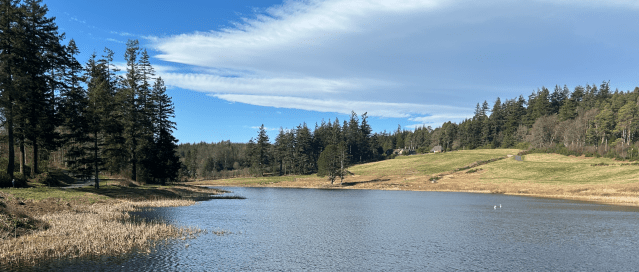
In 1863 the couple decided to take a holiday at Rothbury in Northumberland where William had spent time as a child and within a few weeks they purchased 20 acres of bleak hillside. They built a house and then “overcoming seemingly insuperable difficulties” began to create “a miniature paradise”.
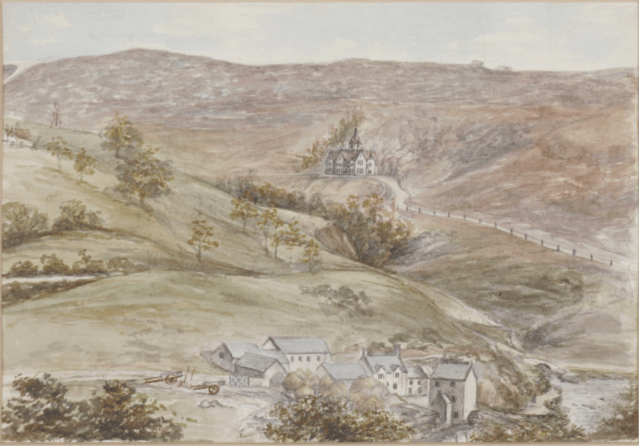
Their earlier work at Jesmond Dene now served as a template for transforming the inhospitable site. The topography with its precipitous rocky slopes and two substantial streams dictated what was to happen.
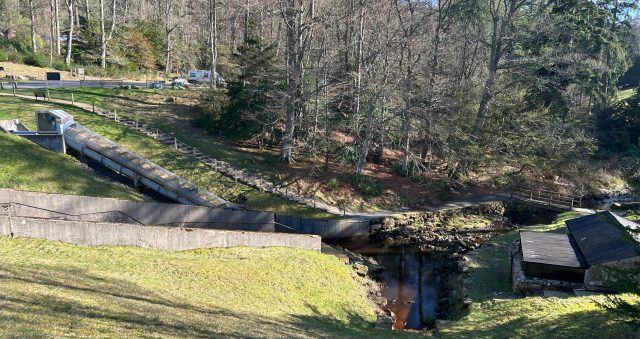
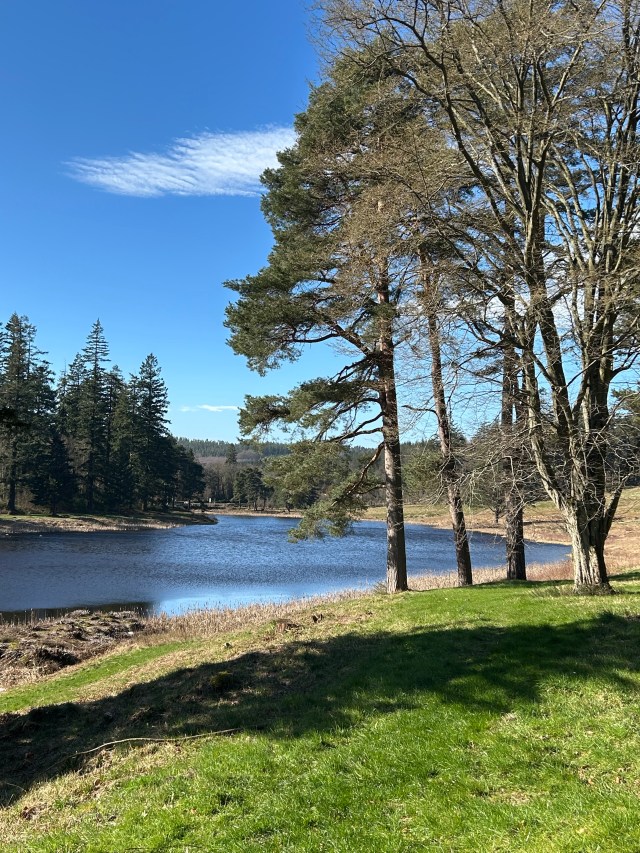
A modern Archimedes screw, 17m long, at Cragside adapted to generate electricity using water from the nearby lake to create enough power for all of the lightbulbs at the House!
In 1865 Armstrong began a massive water engineering project, which eventually created a series of five lakes across the estate. A series of pumps and hydraulic engines not only ran the cascades in the garden but also domestic services and appliances in the house including powering incandescent bulbs in the house.
As at Jesmond Margaret and William planted newly imported American conifers mixed with native trees and underplanted with rhododendrons azaleas and heathers. The result led Joseph Hooker, the Director of Kew to write that “Cragside is not so much either a garden or a plantation, as a wilderness blooming like a rose and more comparable to the Rhododendron region of the Himalayas than anything known to me.”
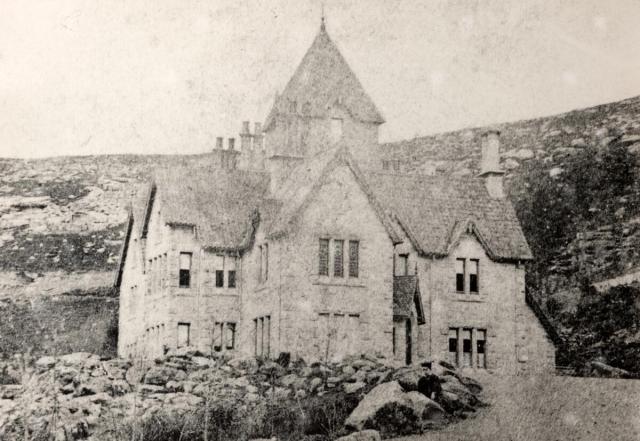
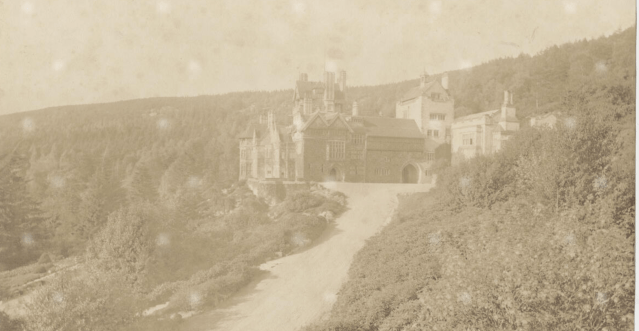
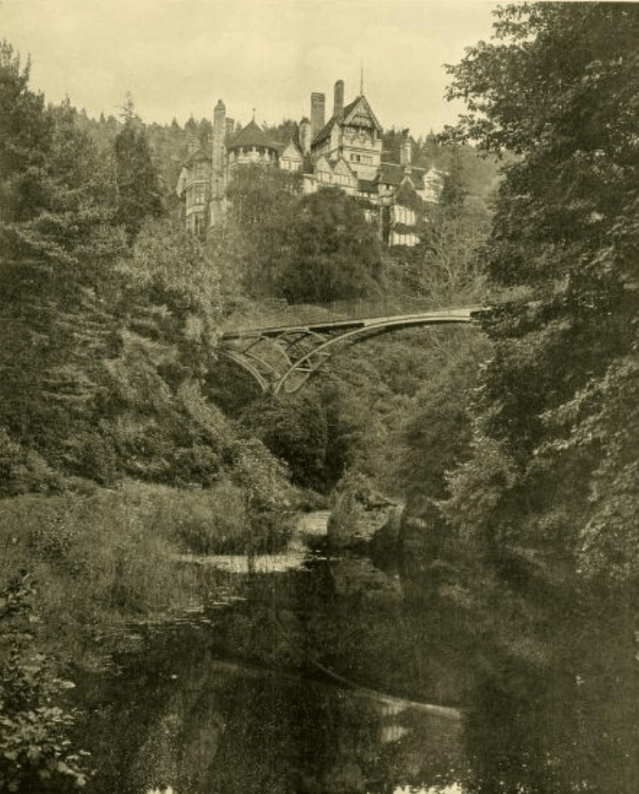
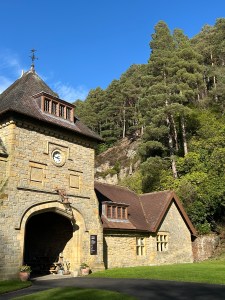 The original house did not satisfy them for long and they decided to enlarge it, choosing the architect Norman Shaw who had already worked for them at Jesmond. He first visited Cragside in 1869 and thought “it would be very satisfactory working for William as he knows right well what is about” and later that he has “wonderful hydraulic machines that do all sorts of things you can imagine.” Nevertheless, he wasn’t given a completely free hand and building work was staged over the next 15 years or so until the house had over 100 rooms, plus the stables and service block. At the same time it was given the latest mod cons including a plunge bath, hot air heating systems a hydraulic lift and water powered gadgets in the kitchen.
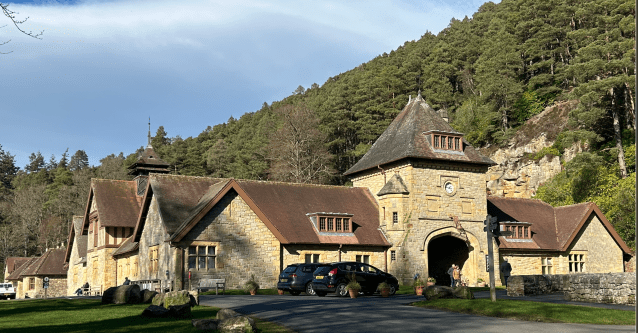
The stables and other service buildings
Building News [10th May 1872] published Shaw’s latest drawings with the comments that “nothing can exceed the beauty of the surroundings, varying from a rich dell in the bottom of the valley, filled with every variety of rare tree and shrub, all in full vigour, up to the
boldest rocks and moorland on the hill top.”
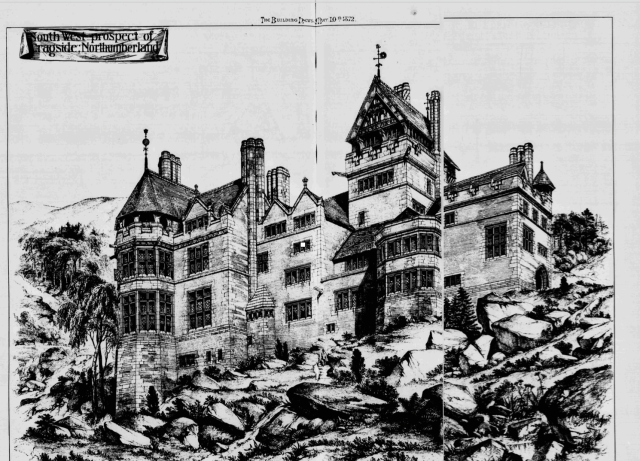
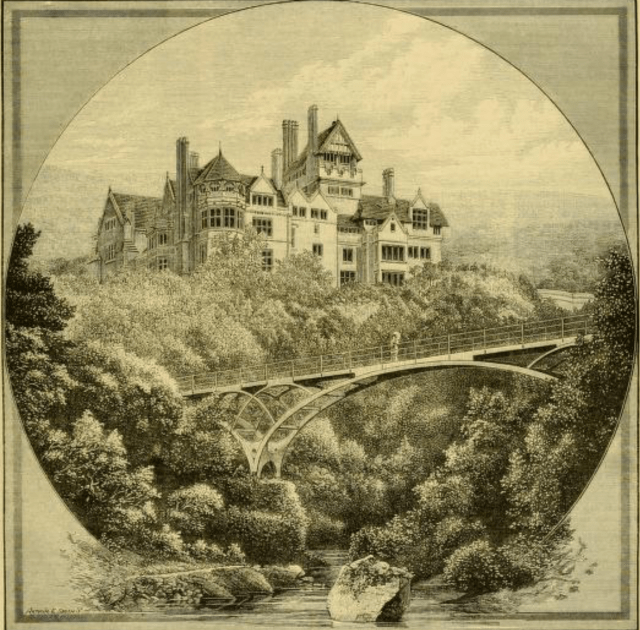
Shaw’s drawing of Cragside shown at the Royal Academy, image from Builders News 10th May 1872
It was Margaret Armstrong herself who supervised the construction the rock garden on the steep incline below the house, and who also apparently paid people to bring fertile soil from the Dales to fill planting pockets amongst the boulders. These were planted ” in imitation of the Himalayas” with alpines, ferns, heath and heathers while Armstrong’s hydraulic systems were used to power the cascade tumbling down the slopes. These had long stopped working by the time the National Trust began restoration in 1988, and the rock garden had become completely overgrown with almost no stone visible. It took years to clear back to the basic structure so it could be replanted and to get the cascades working again.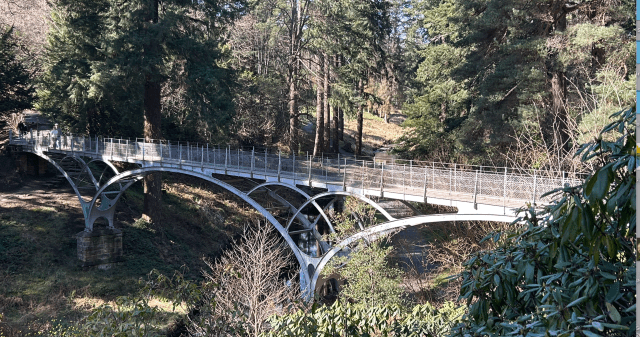
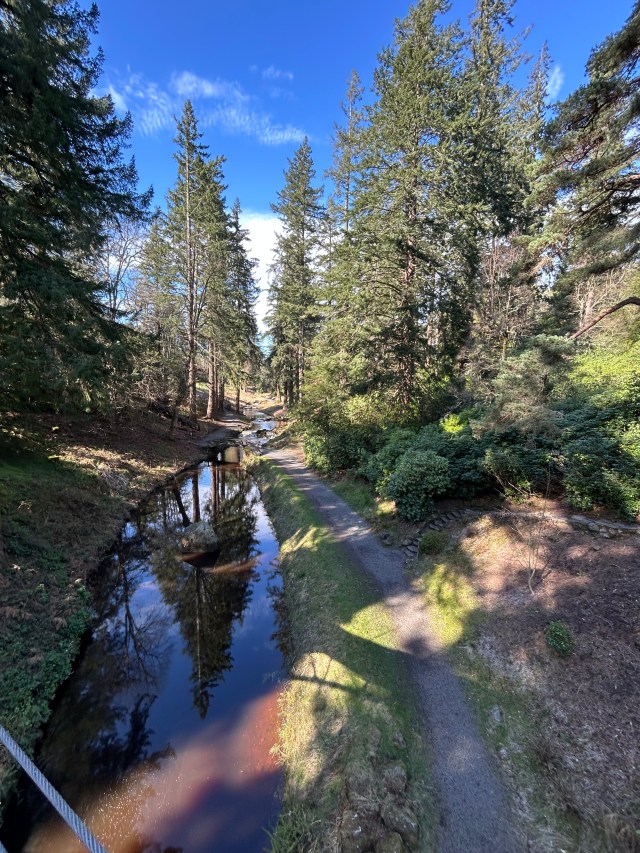 On the other side of the stream from the rock garden, and linked to it by an elegant iron bridge, is a pinetum in the shelter of the damp stream valley. This was planted up by William and Margaret largely with North American species, including Douglas Firs, Noble Firs and Western Hemlock About a hectare in extent it now includes five of the top 10 champion trees in the country.
Cragside was the subject of an article in Gardeners Chronicle in 1880 by HE [maybe Henry Ellacombe? or Henry Elwes?] which described it as “one of the delightful spots in Northumberland” and “pre-eminently pretty”
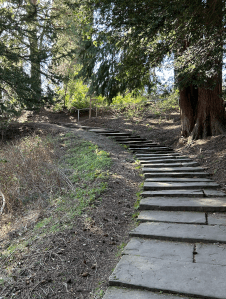
A small section of the steep steps up to the Formal Gardens
What’s more interesting about the article is that it’s not the conifers and other tree planting around the estate that captured most of the author’s attention. Instead it’s the large formal gardens on another more gently sloping hillside some distance south-west of the house. These were, even then, open to the public, although only on Thursdays. Arranged over a series of terraces, they are being restored by the National Trust who only acquired then in 1991, some 14 year after they acquired the rest of the Cragside estate. The restoration generally reflects the original layout although without the orchard and kitchen garden, and with a different main approach, but is very impressive.
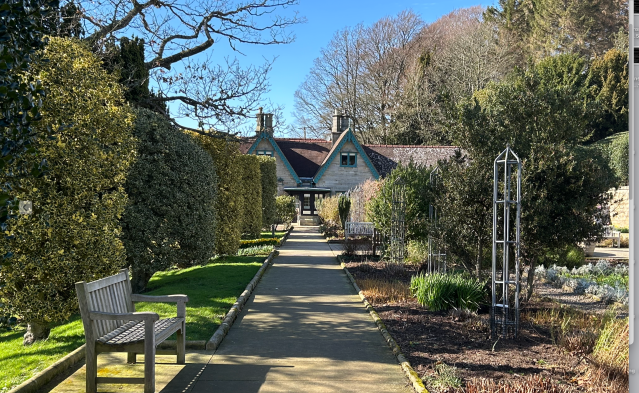
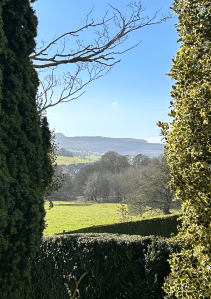
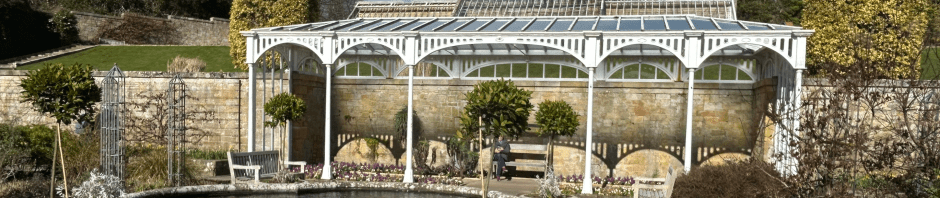
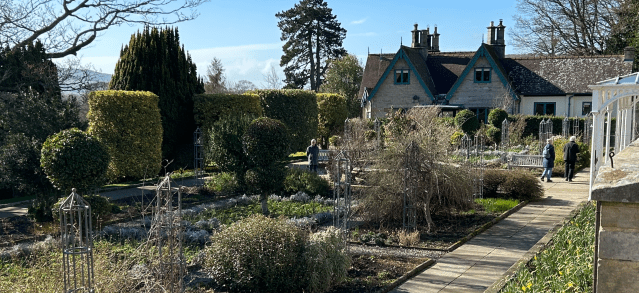
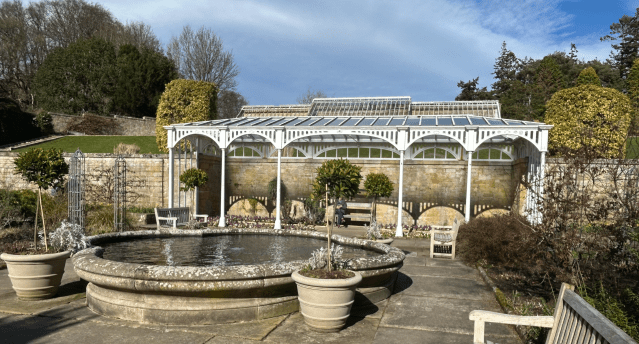
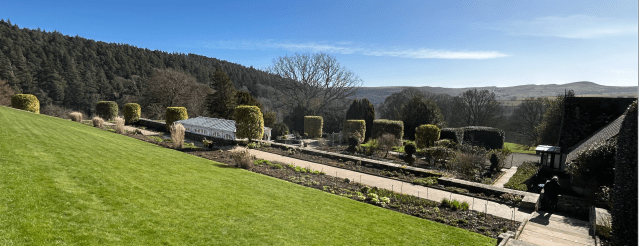
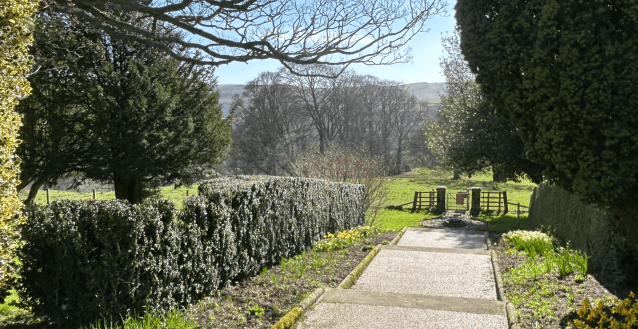 The lowest level of the gardens is an Italianate-style terrace which has stunning views out over the valley of the river Coquet below. There is a belt of clipped specimen trees which offer protection from much of the wind, while more tender plants are protected under a beautiful open-fronted glass shelter. At one side is what Gardeners Chronicle called “the most perfect building of its kind” then occupied by Mr Bertram, the general manager. Built in the 1860s, during the austerity of the interwar period it was used occasionally by then Lord Armstrong instead of the main house. This is now divided into two and available as holiday cottages.
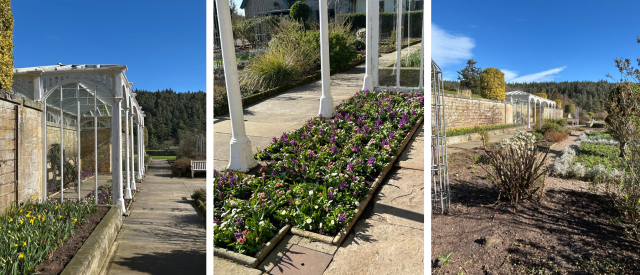
Higher up the slope the narrower middle terrace has a double border back by a steeply sloped lawn rising up to the next level where the remaining conservatories stand.
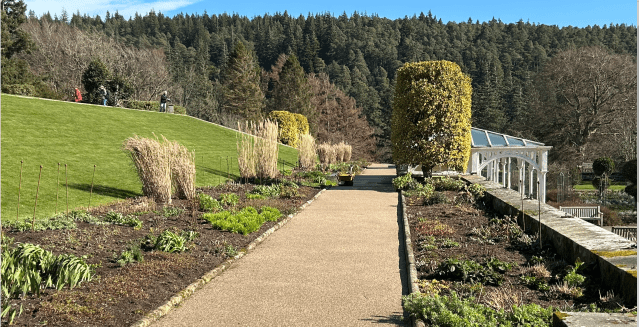
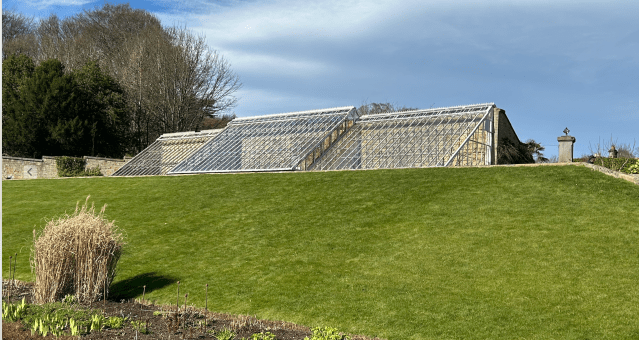
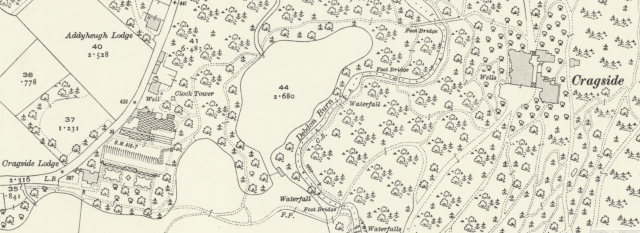
When Gardeners Chronicle visited in the 1880s there were a whole range of glasshouses including hothouses for palms and tropical ferns and a Display House for prized horticultural specimens. Their outline can be seen on the OS map above but most were demolished in the 1920s, although the brick bases still survive.
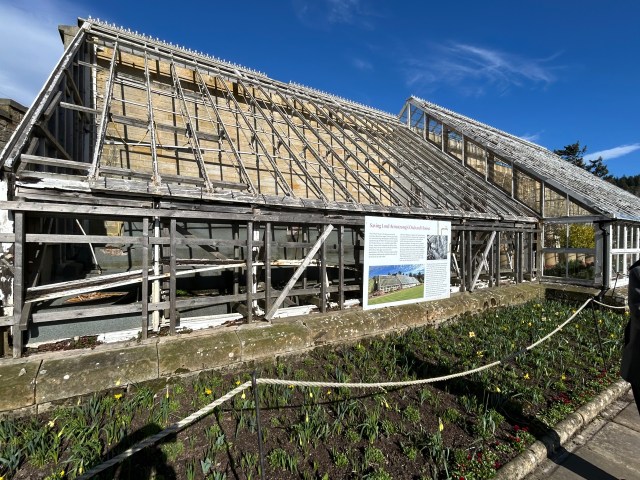
What remains is the three-section Orchard House dating from about 1870, which thanks to the National Trust, is still quite spectacular. Although work began over thirty years ago some of that is now failing because of timber rot with further damage was caused by a storm in 2018. Luckily it’s not quite as bad as it looks because the glass and the pots from the western section have been put into storage for re-use.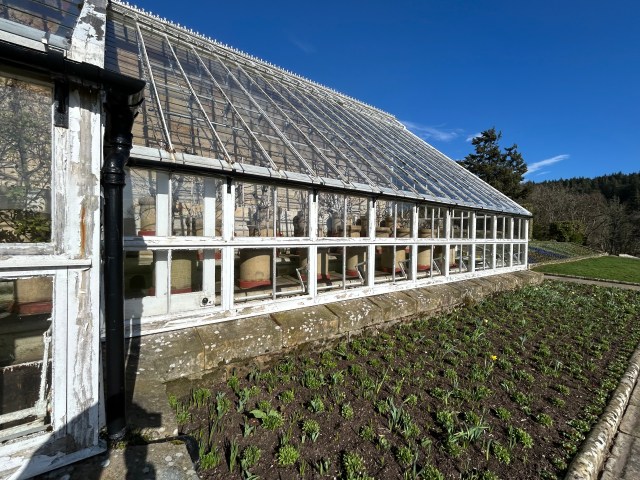
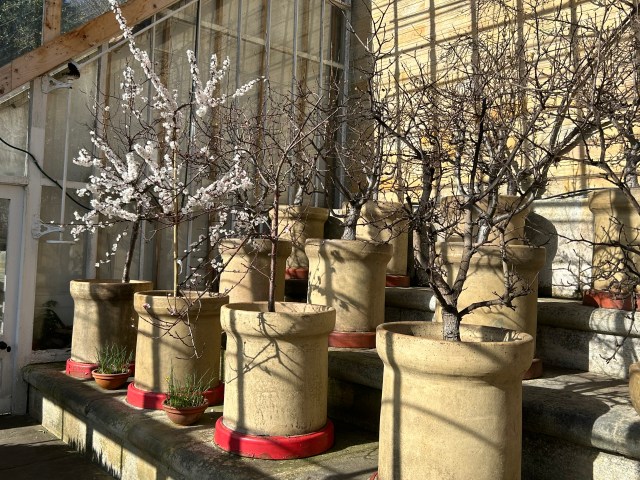
Like most things at Cragside, the Orchard House was a great feat of Victorian engineering. There was an elaborate heating system, fed by a boiler in the basement with winch-operated roof vents to help control growing conditions. Cleverly designed raked stone staging prevented the trees from shading each other while the unusual looking pots are actually sections of earthenware water pipe, sitting on turntables that can be individually rotated so that all the fruit trees get their fair share of sunshine. Although there’s no longer any heating its position high on a south facing slope means the remains fruit trees which include lemons and figs still get as much benefit from the sun as possible. 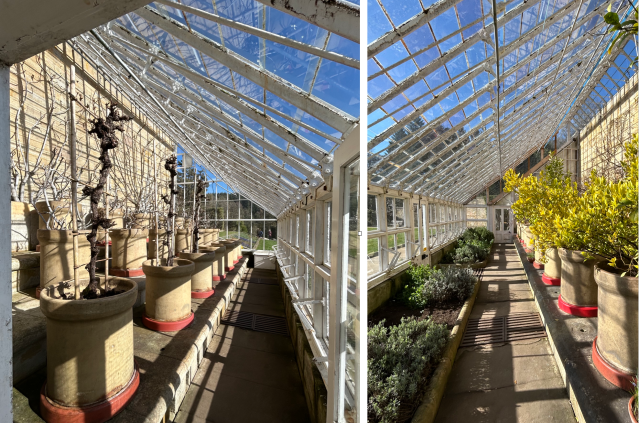
.
At the side of Orchard House can be seen the bases of some of the lost glasshouses, now filled with colourful bulbs but which used to planted with up to 10,000 diminutive foliage plants in intricate patterns which were regularly trimmed to keep the pattern distinct but flat like a carpet.
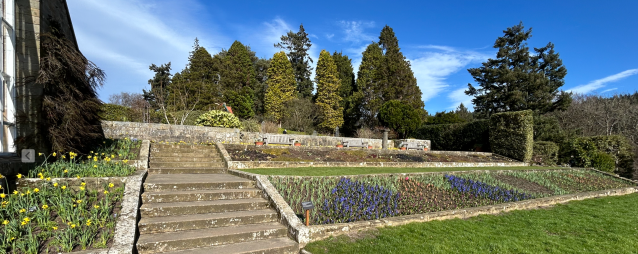
Steps lead up to yet another terrace largely hidden behind the greenhouses which has several different areas. Most obviously there’s a formal rectangular pond,and then…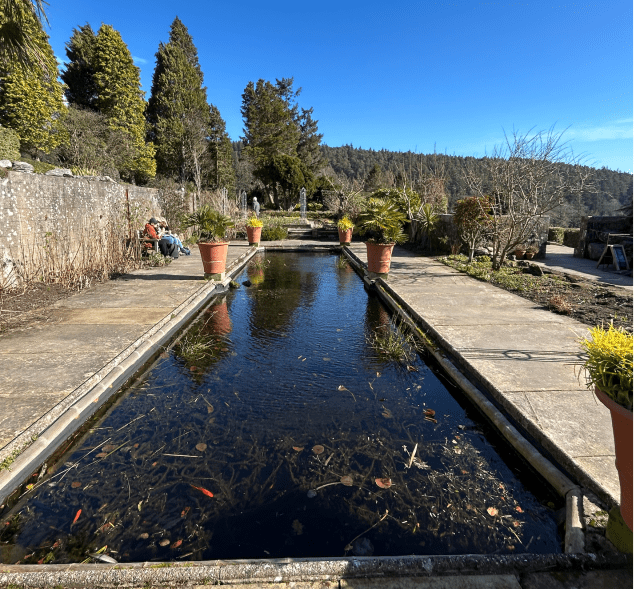
…an extraordinary fernery – part of which is almost a grotto. Gardeners Chronicle described it as “the prettiest fernery I have ever entered” which showed the “skill and taste” of Henry Hudson the head gardener. There is a long list of the specimens which make it look ” like Nature’s own work, and as you wander through it you might suppose that it was Nature’s hand not Mr. Hudson’s that had planted it, setting the larger number of a most interesting collection in their proper places, and placing the smaller ones on she ledges of the rock, peeping from every nook and cranny.” It too is being lovingly restored and replanted.
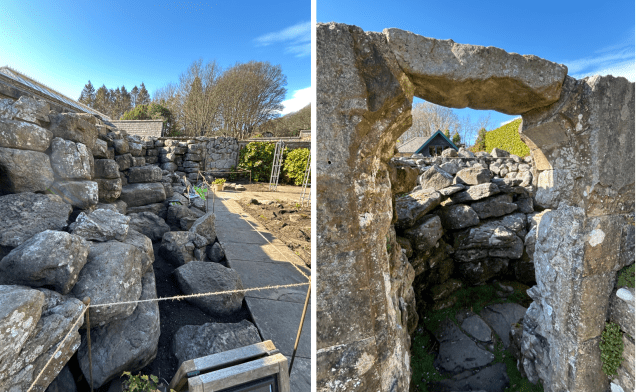
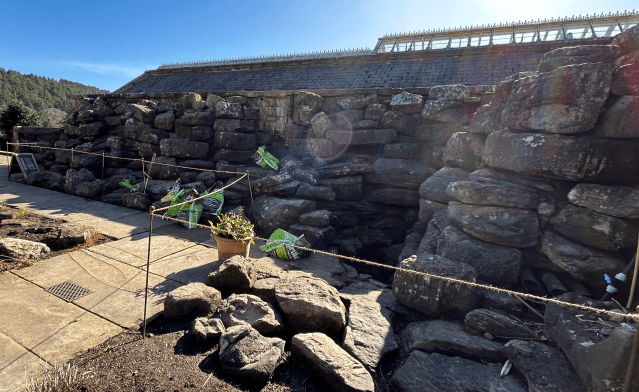
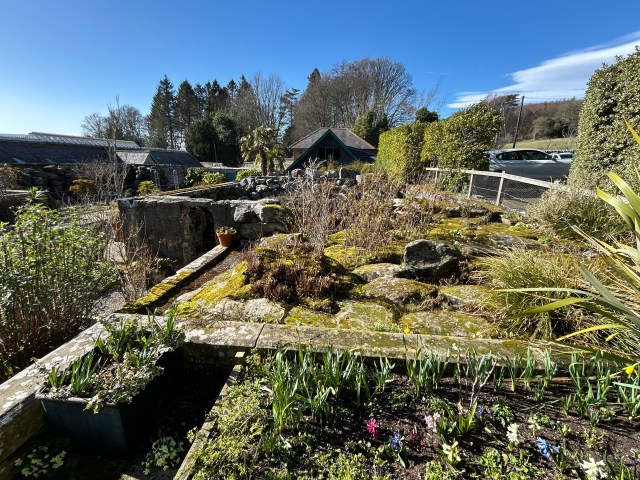
the Grotto fernery [central mid-distance ]from above
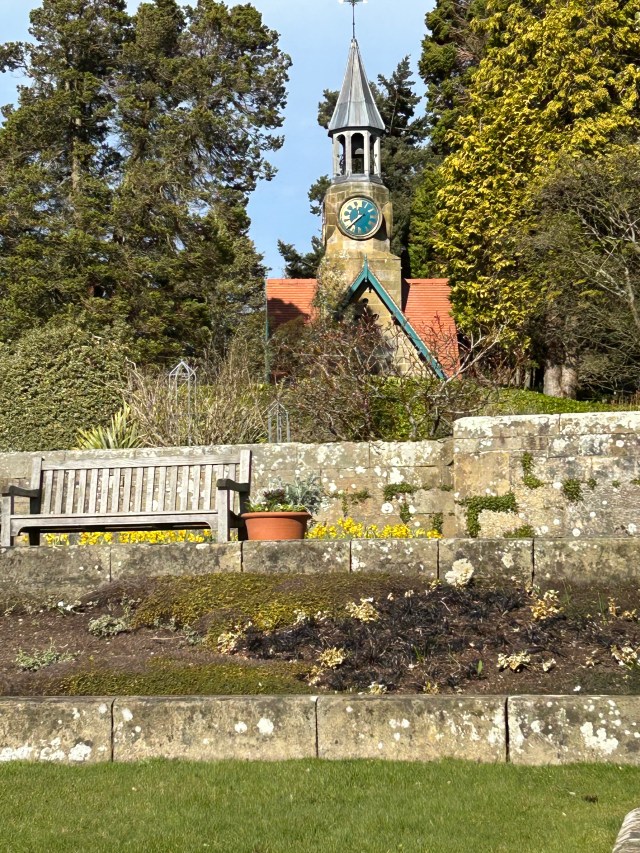 At the western end of this area “stands a gem of a cottage, occupied by Mr.Hudson, the gardener, whose clever hand has been the immediate instrument in the creation of a perfect paradise around his dwelling, which he seems thoroughly to enjoy.” [sadly I couldn’t get close enough to get a good photo of it]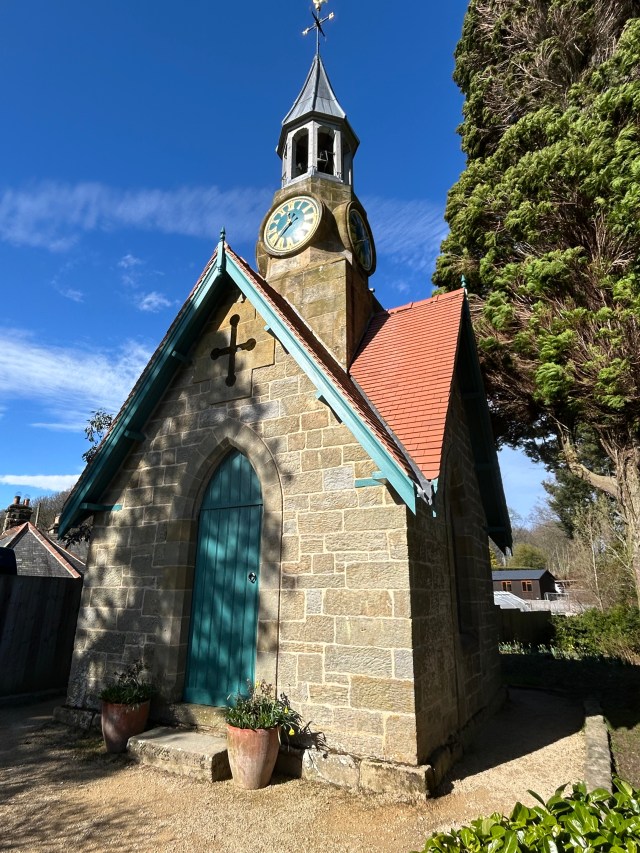
The estate by this point was employing as many as 300 people at peak periods so in 1864 a clocktower was built high up behind the formal gardens to serve as the estate timepiece but also the pay office with staff queuing up the steps to get their wages.
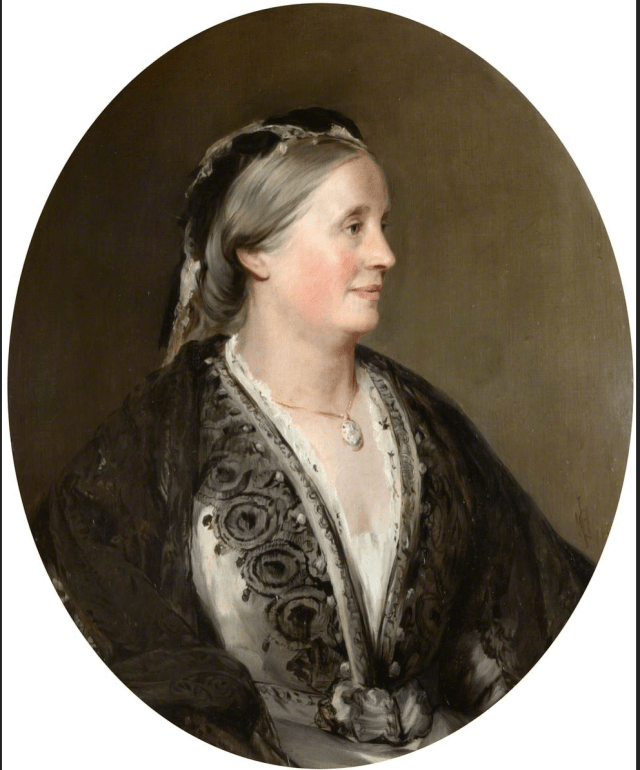
In 1893 Margaret died following a carriage accident and the distraught William, who had been raised to the peerage six years earlier, decided to embark on another ambitious project, the restoration of Bamburgh Castle on the coast. His intention was that part of it should eventually become a convalescent home for people of “superior upbringing” who had fallen on hard times. The project took nine years to complete and cost about £60 million in today’s money.
William himself died in December 1900 but just a few weeks before that Cragside was the subject of an article The Garden, William Robinson’s magazine.
William must have been pleased to read that “the creation of the house and estate has been a triumph”, and “a striking lesson of what can be done when sound principles are adopted and the most is made of conditions that seem adverse. The planting that has gone on for nearly forty years has been wonderfully successful, and in the early days of spring, as in the full richness of summer, or again when autumn has blown, those hillsides, with their varied hues, are marvellously beautiful, while the garden has attractions (quite its own, and is glorified in particular by vast masses of Azaleas and rhododendrons, which flourish in the sheltered situation and in the light soil of that country.”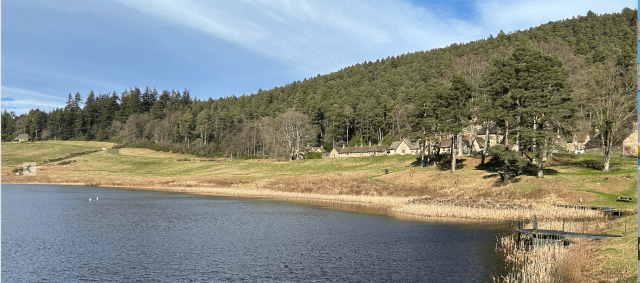
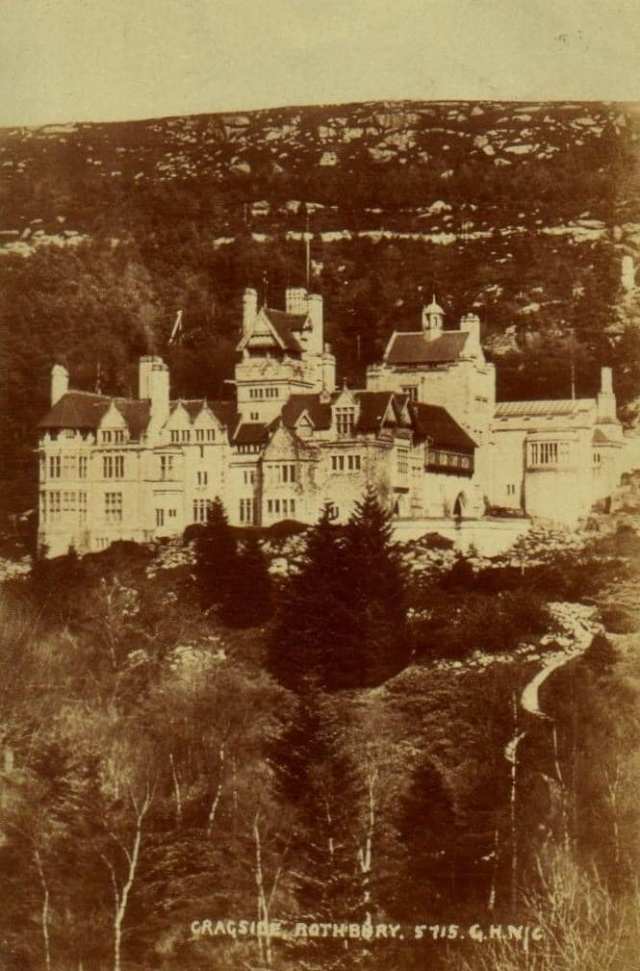
 As William and Margaret had no children most of their wealth and property including Cragside and Bamburgh went to his great nephew William Henry Watson-Armstrong although the title became extinct. Watson-Armstrong continued his great uncle and aunt’s good works, living mostly at Cragside with his wife Winnie. He was ennobled in his own turn in 1903 but unfortunately was not financially very astute and within a decade of receiving his inheritance he was £500,000 in debt so land and artworks were sold off to help pay them. Driven by events he had to close up the main house and move to the cottage in the garden before dying in 1941 following a riding accident.
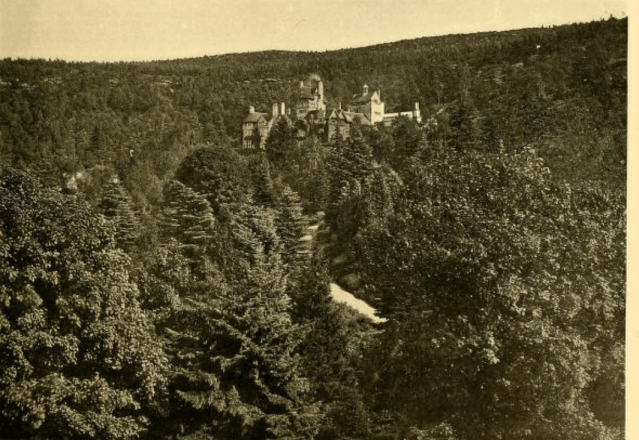
The estate was inherited in turn by his son who became the second Baron Armstrong. He had even more financial difficulties because of heavy death duties which resulted ultimately in the estate passing to the National Trust in 1977. With Victorian architecture very much out of fashion there was considerable debate about whether Cragside was worth saving for the nation. Luckily the significance of William’s engineering achievements ensured it happened. The Duke of Gloucester speaking at the opening ceremony in 1979 said Cragside was “built to satisfy the heart rather than the intellect” and represented “all that was romantic in the Victorian era.”
It also represents much that was great and innovative in Victorian horticulture, and of course much that is great and innovative in the National Trust”s conservation programme.


 The Garden History Blog
You must be logged in to post a comment.