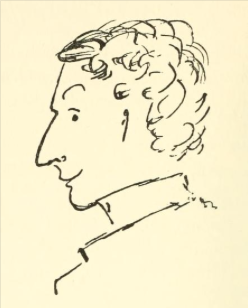
Philip Miller and his Gardener’s Dictionary

I wonder if you’ve heard of Philip Miller.  If you’re not a garden historian then probably not,  but he was  probably the most influential British horticulturist and garden writer of the eighteenth century, amongst other things  writing the first dictionary of gardening.  A member of the Royal Society, his reputation stretched not just across Britain, but its colonies and most of Europe.

Miller was also in charge of Chelsea Physic Garden for nearly 50 years,  turning it into the leading botanic garden and hub of horticultural knowledge  of the day. As a result he knew everyone of any importance connected with horticulture: aristocratic landowners, medics, scientists, plant collectors, and nurserymen,  both at home and abroad.

Continue reading

Posted in Uncategorized | Leave a comment

Wild Men

I did a double-take when I saw this relief carving on the house I stayed in at Ubeda in central Spain recently. Heraldry is symbolic but who or what on earth were the two figures supporting the coat of arms of the family who had once lived there? Were they athletic men in fur coats throwing frisbees or…?

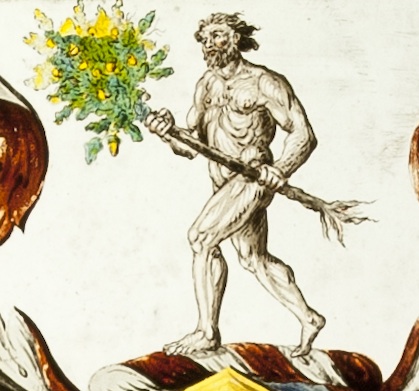
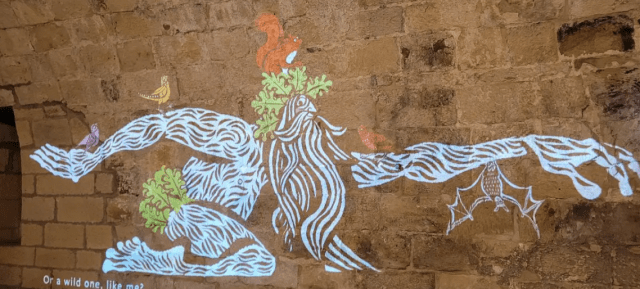
Of course, it didn’t take long to realise they were “Wild Men” one of the most delightful and fascinating inventions of the mediaeval imagination, and who persisted in popular culture right through until the late 18thc at least, and are now being used by English Heritage  to help visitors understand the landscape and gardens at Belsay Castle in Northumberland.

Continue reading

Posted in Uncategorized | Tagged | Leave a comment

Mushrooms and magic , fungi and fairies

Do you believe in fairies and magic? I’d guess that living in the 21st century the answer probably not. However, as I’m sure you realise,  there is a long history in virtually every culture of supernatural creatures and powers of all kinds and belief in them was almost universal.

This post isn’t going to try and convince you to change your mind but instead  follow up on last week’ post and look at the apparent  link between magic and mushrooms and fairies and fungi.

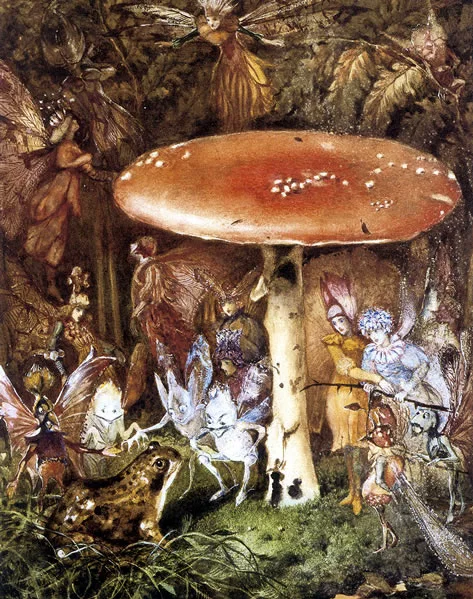
As many of you will know I’ve lectured widely in the history of garden gnomes and one of the things that struck when i was researching for that was how many mushrooms and toadstools appeared in images of them and other  “little folk”, whether in fairy stories or paintings. But why?

I wonder if it’s anything to do with the properties of certain mushrooms? So off we go down another research rabbit-hole. Continue reading

Posted in Uncategorized | Tagged | Leave a comment

Mushrooms

I made dinner for a friend the other day, pasta with a nice mushroom sauce,  but was a bit puzzled when he looked and said “I don’t really like mushrooms. There’s just something about them that freaks me out. I mean how do you know they’re safe to eat?”  He’s definitely a mycetophobe!

It led me to wonder where this uncertainty came from. Was that  because of an irrational but inbuilt fear rooted in traditional stories about the dangers of eating fungi. Certainly , like most people, I’ve always been wary of picking  them when I find them in my own garden because although most fruiting fungi are actually safe to eat, we all know that eating one of the few wrong kinds can cause hallucinations, illness or even death.

It then made me ponder about  when we started cultivating mushrooms in the garden, and perhaps even more basically when  did we start eating them and becoming mycetophiles?

Continue reading

Posted in Uncategorized | Leave a comment

An Easter Parade… of Roses in the Pub

Easter is always a difficult time for garden-related bloggers – there’s only a limited and rather obvious range  of possibilities – bunnies, chocolate, easter lilies, ,passion flowers, chickens and eggs  and over the last 12 years I’ve done most of them.  Then I remembered a lovely story in a lecture I give about one of the nicest people in garden history  that took place one Easter.

We know gardening appeals to a very wide range of people but is it a classless pursuit?  Is there any real connection between the wealthy and their ability to garden on a grand scale:  think paid staff, stately homes, Gardens Illustrated and Chelsea…and the rest of us, constrained for space, time and money: think suburban back gardens, Gardener’s World and the local garden centre?

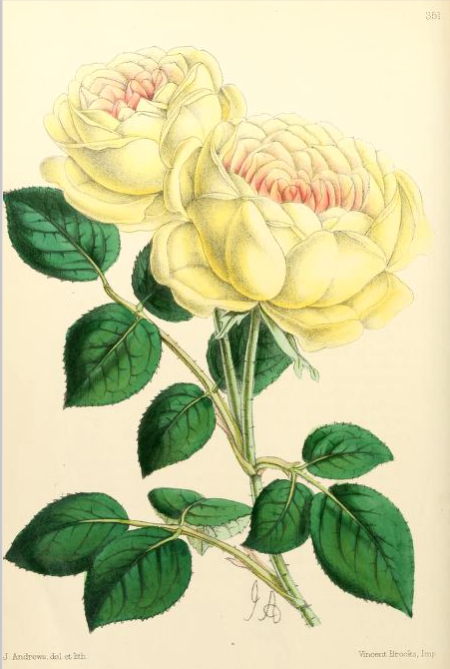
Perhaps not as much as we might  like and one person who definitely thought there ought to be more, was the Rev. Samuel Reynolds Hole,  Canon of Lincoln, later Dean of Rochester and a great rose enthusiast.  His sympathies are clear: “Not a soupçon of sympathy can I ever feel for the discomfiture of those Rose-growers who trust in riches .”

Read on to find out why….and to hear about the surprising people  he thought were the real gardeners.

Continue reading

Posted in Uncategorized | Tagged , , , , | Leave a comment