Mounds & Mounts 2: the heights of fashion

detail from Wadham College  British School, undated (c) Wadham College, Supplied by The Public Catalogue Foundation

detail from Wadham College 
British School, undated (c) Wadham College, Supplied by The Public Catalogue Foundation

Last week’s post showed how earlier landscape features such as tumuli and castle mottes were reused to create prospect mounds in gardens.  But by the mid-16thc mounts were also being deliberately constructed to gain a view not only over the garden but the surrounding countryside.   It was a reflection of the way that the architecture of great houses no longer needed a military defensive role, and instead of being  inward-looking  could become exuberantly outward looking.

Read on to find out how mounts developed and varied and then suddenly seem to have gone out of fashion… Continue reading

Posted in Uncategorized | Tagged , , , , | Leave a comment

Mounts and Mounds 1: reusing the past

detail from View of Lord Hartford's House at Marlborough, William Stukely, Itinerarium Curiosum 1776

detail from View of Lord Hartford’s House at Marlborough, William Stukely, Itinerarium Curiosum 1776

There’s nothing like a good view, and if you don’t have one naturally why not create one? Don’t have high ground? No problem – create it artificially.

Although man-made hills are often associated with fortifications – think motte and bailey castle – they became one of the key features  of many  Tudor and Stuart gardens, offering views down over the often complex designs but equally importantly looking outwards over the surrounding landscape. As Francis Bacon put it in his famous essay On Gardens of 1625:  ‘At the End of both the Side Grounds, I would have a Mount of some Pretty Height…to looke abroad into the Fields.’

But mounds and mounts are sometimes more they might at first seem…read on to find out more

Continue reading

Posted in Uncategorized | Tagged , , , , , , , , , , , | Leave a comment

Mr Loudon & a second-rate suburban villa

screenshot

Mrs Lawrence’s Villa, from The Gardeners Magazine, July 1838

As I am sure regular readers will have noticed I’m a great fan of John Claudius Loudon, the energetic Scotsman who  tried to bring information about gardens, horticulture and agriculture [and indeed everything else!]  to the widest possible audience in the first part of the 19thc.  He wrote prolifically including many biblical-sized encyclopaedias as well as editing magazines, aiming his work squarely at the middle classes with their suburban villas and gardens.

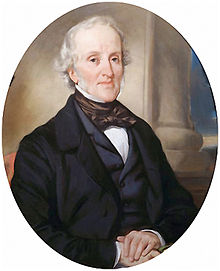
Louisa Lawrence wikipedia

Louisa Lawrence
wikipedia

Another of his admirers was Louisa Lawrence who lived  in what Loudon described as “a second-rate suburban villa”  at Drayton Green  on the western outskirts of London. And the admiration was clearly mutual.  In labelling it second-rate Loudon was not being dismissive of the fact that she  managed to cram in almost every conceivable fashionable garden feature of the day into her few acres – exactly the opposite in fact.  She won Loudon’s highest praise for doing so!

Louisa Lawrence was also “the lady who created the biggest upset among the bewhiskered gentlemen of the Horticultural Society”   [Catherine Horwood, Gardening Women] so read on to find out more her and her second-rate villa and its garden… Continue reading

Posted in Uncategorized | Tagged , , | Leave a comment

Dinosaurs and superphosphates…

This is third  and probably the last  [I’m sure you’ll be glad to hear!] post about the Victorians and their use of manure and fertilizer.

Even as guano took over from night soil as the ‘best’ fertilizer, and began to transform British agriculture and horticulture  in the mid-19thc [as was explained in two recent posts]  experiments began to find cheaper alternatives. These included making artificial versions of ‘guano’, although the name often stuck because it seemed  to have been a magical word in terms of sales.

It might be hard  to believe, but some of the alternatives were even more extraordinary than the idea of scraping dried bird droppings off remote islands and shipping them half way round the world, and the weirdest of all was completely home-grown. Read on to find out more…

Continue reading

Posted in Uncategorized | Leave a comment

The Most Special Place in Wales…

Whats this?

A post from P&G?

But it’s not Saturday!

Well I confess I haven’t written it and  although I wouldn’t normally re-post something written on another blog, since I’ve written about Dyffryn Gardens quite recently  [post 13th Dec 2014] when I saw this from the National Trust’s wonderful Treasure Hunt blog I thought I would make an exception.

Great to see a garden win prizes and even better that it’s the wonderful garden at Dyffryn!   Congratulations to the whole team there on their success in being voted the most special place in Wales. Continue reading

Posted in Uncategorized | Tagged , , , , , | Leave a comment