
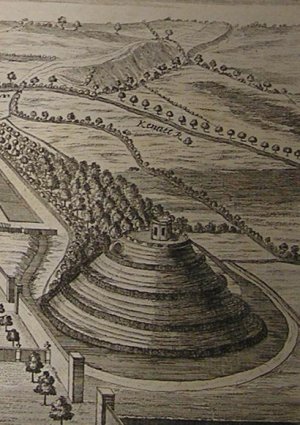
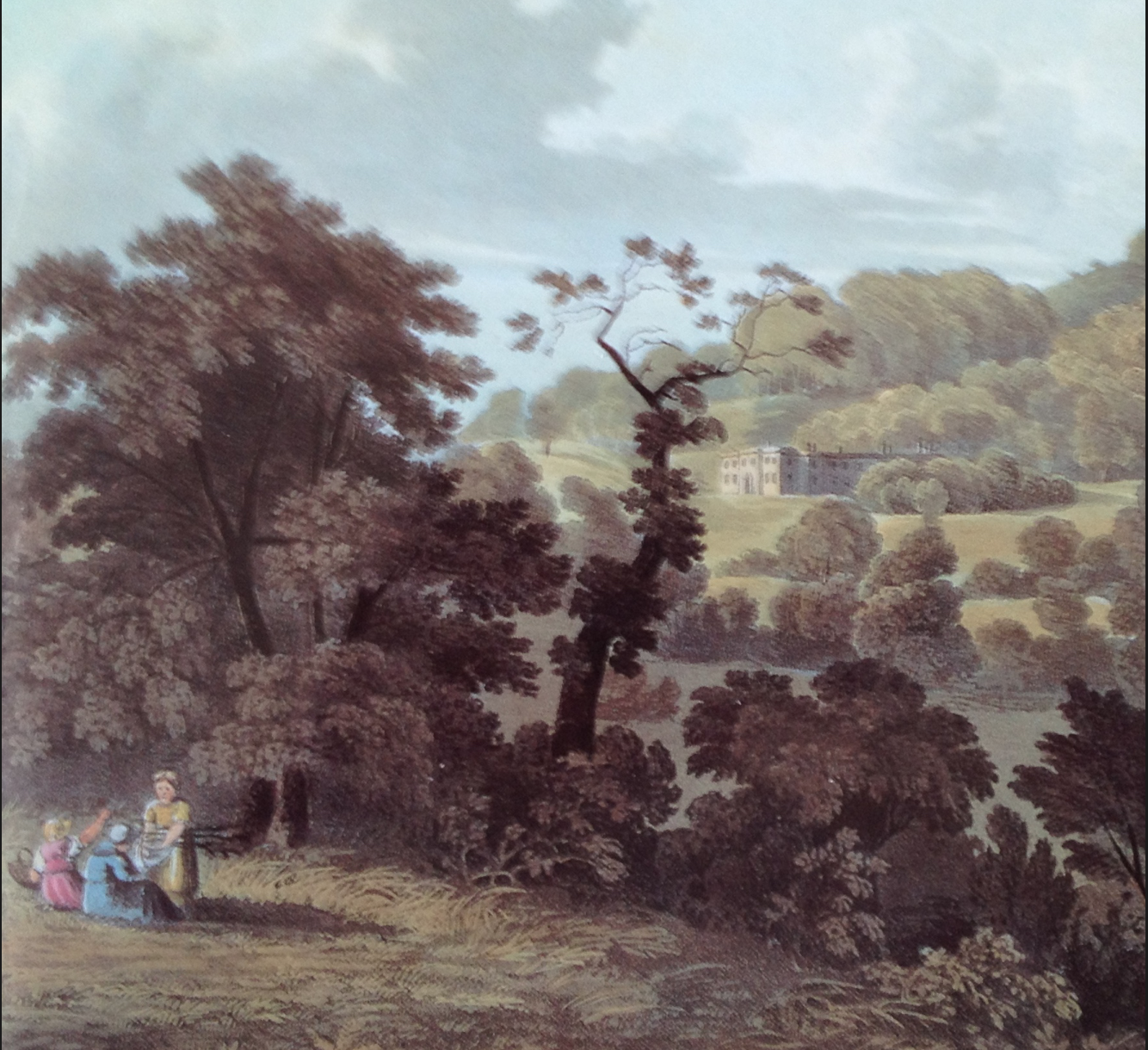
detail from View of Lord Hartford’s House at Marlborough, William Stukely, Itinerarium Curiosum 1776
There’s nothing like a good view, and if you don’t have one naturally why not create one? Don’t have high ground? No problem – create it artificially.
Although man-made hills are often associated with fortifications – think motte and bailey castle – they became one of the key features of many Tudor and Stuart gardens, offering views down over the often complex designs but equally importantly looking outwards over the surrounding landscape. As Francis Bacon put it in his famous essay On Gardens of 1625: ‘At the End of both the Side Grounds, I would have a Mount of some Pretty Height…to looke abroad into the Fields.’
But mounds and mounts are sometimes more they might at first seem…read on to find out more






 The Garden History Blog

You must be logged in to post a comment.