
Rochfords: the start of a dynasty.

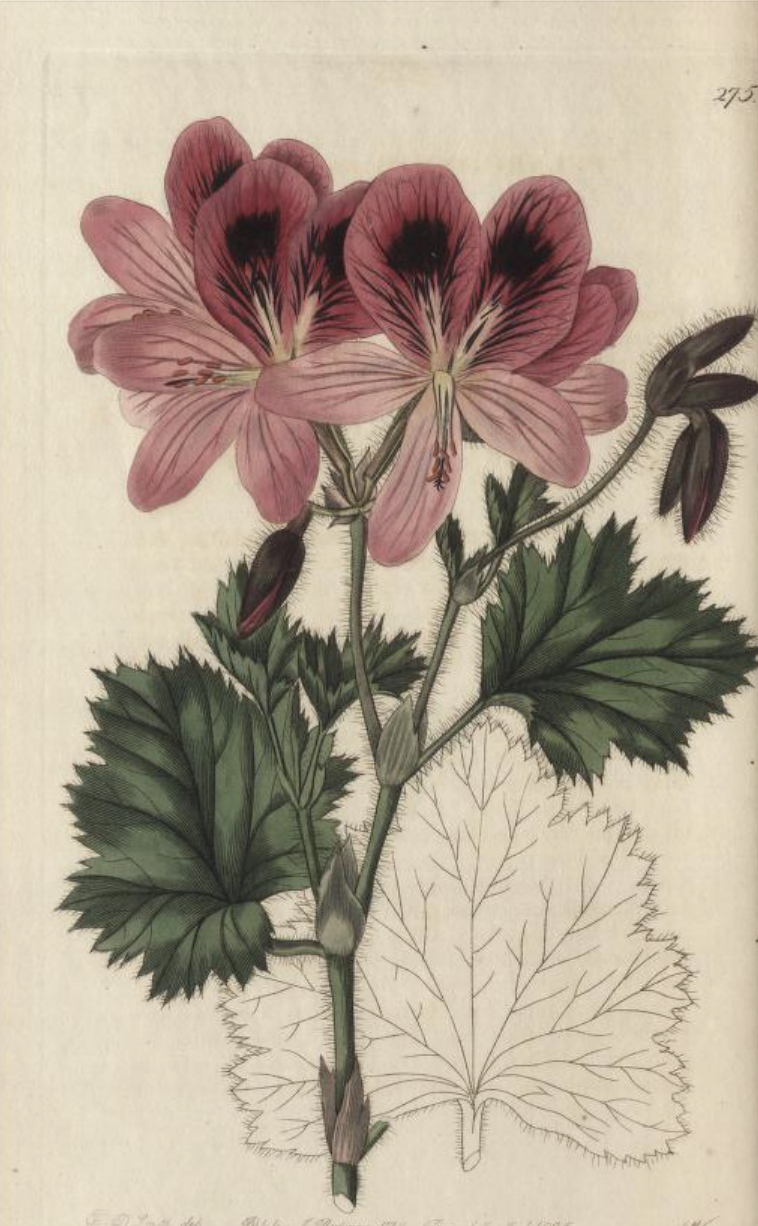
From The New Practical Window Gardener, by J.R.Mollison, 1877

From The New Practical Window Gardener, by J.R.Mollison, 1877

In 1840  Michael Rochford, a 21 year old Irishman man,  left County Clare, and came to London. He found work with fellow countryman James Knight at his Exotic Nursery in Kings Road, Chelsea, before going on to  start his own nursery,  and found a dynasty whose name became synonymous with houseplants.

from John Mollison, The New Practical Window Gardener, 1877

from John Mollison, The New Practical Window Gardener, 1877

Read on to discover how the business started as an ordinary market garden, and then diversified and flourished in the hothouses, flower markets and sitting rooms of Victorian England. Continue reading

Posted in Uncategorized | Tagged , , , , , , , , , | 2 Comments

Menageries 4: Knowsley … and Edward Lear

from Queery Leary Nonsense, compiled by Lady Strachey, 1911

from Queery Leary Nonsense, compiled by Lady Strachey, 1911

More on menageries….real and imaginary. The early 19thc saw a shift from menageries as showcases for curiosities to the beginnings of the zoological garden as a base for science. At the same time that the royal menagerie in the Tower was being transferred to Regents Park, and the Duke of Devonshire was enjoying his mini-zoo at Chiswick [see earlier posts in July & August] Edward Stanley, later 13th Earl of Derby was building the greatest private menagerie in the country on his family estate at  Knowsley near Liverpool.

from a letter by Edward Lear to Evelyn Baring, 1864

from a letter by Edward Lear to Evelyn Baring, 1864, from Edward Lear: Selected Letters, ed by Noakes 1988.

His menagerie did not, however, include a quangle-wangle, pobble or  a bearded and bespectacled snail….or even an owl and a pussy-cat or a runcible bird. They were to be  added later!

Continue reading

Posted in Uncategorized | Tagged , , , , , , , , , , | Leave a comment

The Buzzing of the Bees….

from Edward Bevan's The Honey Bee, 1827

from Edward Bevan’s The Honey Bee, 1827

Bees and their homes have always had a special place in our gardens [even if we don’t have coolibah trees or remember Burl Ives!] Most of us would think instantly of their honey, their  pollination of crops, and the sight and sound of them buzzing about,  but their homes are often interesting garden features too…

I bet you didn’t know that there are still hundreds of mediaeval bee shelters  around in British gardens, or that  although until a century or so ago most bees were kept in simple straw structures there were a few lucky colonies which lived in castles or even inside an elephant!

Read on to find out more about homes  for bees, ancient and modern, in our gardens…

Continue reading

Posted in Uncategorized | Tagged , , , , , , , , , | Leave a comment

Ivor Abrahams … garden inspired artist

ivor-abrahams_2

from Oxford Garden Suite, 1977

from Oxford Garden Suite, 1977

Ivor Abrahams who died on 6th January was an artist whose work was amazingly diverse – he sculpted, painted, printed and worked in ceramics in both traditional and  more experimental ways.

Born in Wigan in 1935 he was taken on a childhood visit to the exotic roof-garden at Derry & Toms in Kensington [see Post  July 4, 2014]. This sparked his interest in gardens and apparently convinced him he wanted to be an artist, to his mother’s pleasure and his father’s fury: “He had hoped for Perry Mason or Dr Spock, or at least an accountant in the family.”

His work  developed and changed, sometimes dramatically, over the rest of his life, although  he had several constant themes, returning time and again to urban landscapes, classical figures, the sea – and gardens.

Read on to see some of his garden-related works and find out more about the artist who was described as “our greatest interpreter of the suburban dream.”


All the images in this post, unless otherwise stated,  are from his own website http://www.ivorabrahams.com


Continue reading

Posted in Uncategorized | Tagged , , | Leave a comment

The Wheelbarrow… a weapon of war?

screenshot

Girl with a wheelbarrow, English school, c.1800 http://www.hamsheregallery.co.uk/stock.php?id=809

Wheelbarrows have been around for ever haven’t they?  But who invented the one wheeled labour-saving contraption?   A Roman road builder?  A clever mediaeval gardener? A wily Victorian entrepreneur?  You might guess at any of them but you’d be wrong.

The wheelbarrow doesn’t  appear in the west until the Middle Ages and in fact the earliest evidence suggests that it was first invented by the Chinese nearly 2000 years ago, with the earliest image coming from a carved brick in a tomb dated to 118AD.

Rubbing of a pottery relief, Sichuan, 1st/2nd century AD http://spot.colorado.edu

Rubbing of a pottery relief, Sichuan, 1st/2nd century AD
http://spot.colorado.edu

But tradition in China usually gives the credit to a Chinese politician in 231 A.D, and he didn’t design it as a useful piece of labour-saving garden equipment, but a weapon of war!


Continue reading

Posted in Uncategorized | Tagged , | 2 Comments