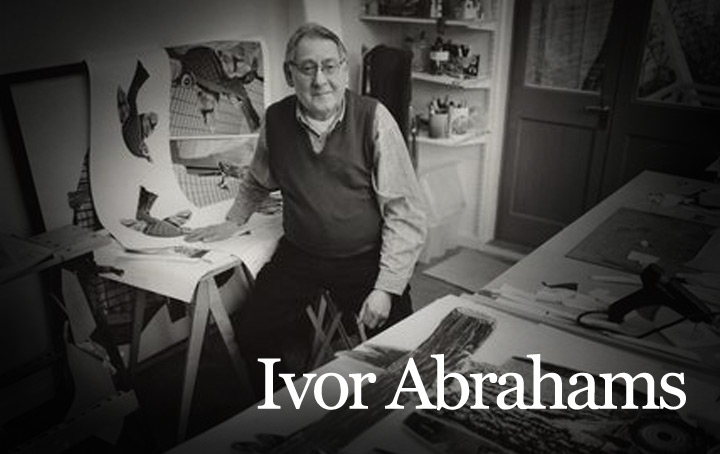
Ivor Abrahams … garden inspired artist

ivor-abrahams_2

from Oxford Garden Suite, 1977

from Oxford Garden Suite, 1977

Ivor Abrahams who died on 6th January was an artist whose work was amazingly diverse – he sculpted, painted, printed and worked in ceramics in both traditional and  more experimental ways.

Born in Wigan in 1935 he was taken on a childhood visit to the exotic roof-garden at Derry & Toms in Kensington [see Post  July 4, 2014]. This sparked his interest in gardens and apparently convinced him he wanted to be an artist, to his mother’s pleasure and his father’s fury: “He had hoped for Perry Mason or Dr Spock, or at least an accountant in the family.”

His work  developed and changed, sometimes dramatically, over the rest of his life, although  he had several constant themes, returning time and again to urban landscapes, classical figures, the sea – and gardens.

Read on to see some of his garden-related works and find out more about the artist who was described as “our greatest interpreter of the suburban dream.”


All the images in this post, unless otherwise stated,  are from his own website http://www.ivorabrahams.com


Continue reading

Posted in Uncategorized | Tagged , , | Leave a comment

The Wheelbarrow… a weapon of war?

screenshot

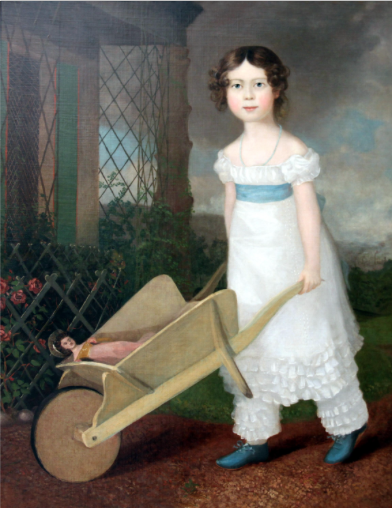
Girl with a wheelbarrow, English school, c.1800 http://www.hamsheregallery.co.uk/stock.php?id=809

Wheelbarrows have been around for ever haven’t they?  But who invented the one wheeled labour-saving contraption?   A Roman road builder?  A clever mediaeval gardener? A wily Victorian entrepreneur?  You might guess at any of them but you’d be wrong.

The wheelbarrow doesn’t  appear in the west until the Middle Ages and in fact the earliest evidence suggests that it was first invented by the Chinese nearly 2000 years ago, with the earliest image coming from a carved brick in a tomb dated to 118AD.

Rubbing of a pottery relief, Sichuan, 1st/2nd century AD http://spot.colorado.edu

Rubbing of a pottery relief, Sichuan, 1st/2nd century AD
http://spot.colorado.edu

But tradition in China usually gives the credit to a Chinese politician in 231 A.D, and he didn’t design it as a useful piece of labour-saving garden equipment, but a weapon of war!


Continue reading

Posted in Uncategorized | Tagged , | 2 Comments

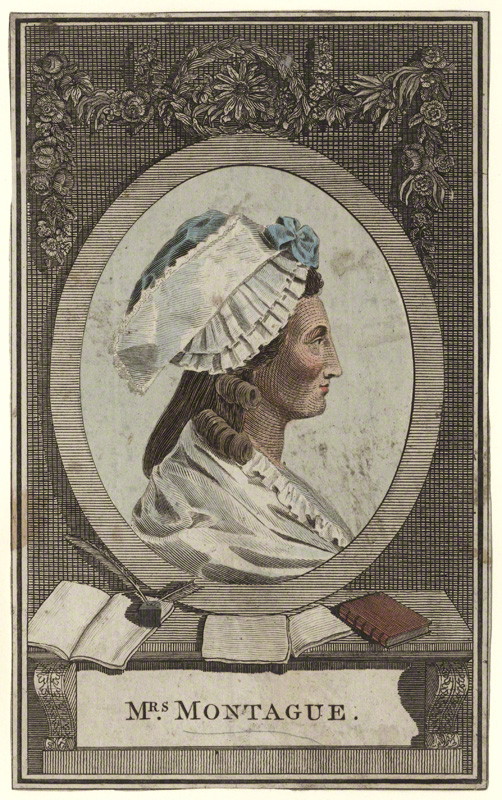
Mrs Montague : The Bluestocking Gardener

Elizabeth Montagu by Wilson Lowry, 1787 © National Portrait Gallery, London

Elizabeth Montagu
by Wilson Lowry, 1787
© National Portrait Gallery, London

Elizabeth Montagu is best known today as one of the leaders of the bluestockings and a great lady of letters – she was ‘brilliant in diamonds, solid in judgement, critical in talk’ but it’s much less well known that she was an enthusiastic builder and  garden maker.

She was also a prolific correspondent and her letters are a major source of information about intellectual life, especially amongst women, in the second half of the 18thc.

So…read on to discover more about her views on leading gardens such as Stowe, about the creation of her famous “feather room” in London and her work with Capability Brown at Sandleford Priory…
Continue reading

Posted in Uncategorized | Tagged , , , , | Leave a comment

Percy – The Nation’s Head Gardener

Cover photo from Timothy O'SullivanPercy Thrower: A Biograpy

Cover photo from Timothy O’Sullivan       Percy Thrower: A Biography

Percy Thrower was a household name during his long career in gardening programmes on radio and television.  A natural broadcaster, with quiet enthusiasm and a very hands-on practical approach, he built a substantial following amongst adults and children alike. 

Always cutting a fairly formal figure in jacket and tie, he was usually seen with a pipe in his hand, even when actually gardening.  His biographer may have called him” a mild mannered sergeant-major”, but Peter Seabrook, one of his successors on Gardener’s World said “Percy was comfortable to watch on television… He was a lovely man and he smiled from the inside”. Alan Titchmarsh, another of his successors,  says it was Percy who inspired him to take up gardening.

Read on to discover how he became so influential and why, as a result, he was nicknamed the Nation’s Head Gardener.

Continue reading

Posted in Uncategorized | Tagged , , , , , , , , | Leave a comment

Garden Menageries 3 … Osterley

A male gold pheasant: a bird standing on a mossy rock in profile to right, with a crest and a long dappled tail; plate for 'Birds ... from the Menagerie at Osterley Park' (1794). Hand-coloured etching © The Trustees of the British Museum

A male gold pheasant from ‘Birds … from the Menagerie at Osterley Park’ (1794). 
© The Trustees of the British Museum

Continuing with my occasional theme of menageries in the garden,  todays’s post looks at Osterley Park in west London and also reveals how garden history interacts with wider current research.  The East India Company at Home project  has been trying to put the country house and estate into its global and imperial context and has  made a special study of Osterley, in  particular looking  how its owners acquired and used exotic Asian commodities in  the 18th and 19thc. This included birds for their garden menageries.

Continue reading

Posted in Uncategorized | Tagged , , , , , , , , , , , , , | Leave a comment