The Vicar and Gladi-mania…

Despite what you might think, it wasn’t Dame Edna Everage who was first to shout about the glories of the gladi, but a medal-winning vicar from Kent with a dry sense of humour, who rejoiced in the name of Henry Honeywood D’Ombrain… and I bet he’s someone else you haven’t heard of before now.

Henry Honeywood D'Ombrain http://www.dover-kent.com/Rose-Deal.html

Henry Honeywood D’Ombrain
http://www.dover-kent.com/Rose-Deal.html


His 1873 book on the gladiolus opens: “it is impossible  to be poetical in writing  on the Gladiolus, for it would be as difficult to find a rhyme for it as for porringer. I cannot be sentimental – no lover could call his inamorata, My Gladiolus.  To be learned is out of the question; the ancients did not know it, and so I cannot cog a list of quotations from Homer downwards; I have, therefore, only aimed to be practical.”

The Rev. D’Ombrain is  going to be the first in a series of occasional posts on gardening clerics… some serious and some just ever so slightly eccentric! Continue reading
Posted in Uncategorized | Tagged , , , , , , , , , | Leave a comment

“What God would have built if he had the money…”

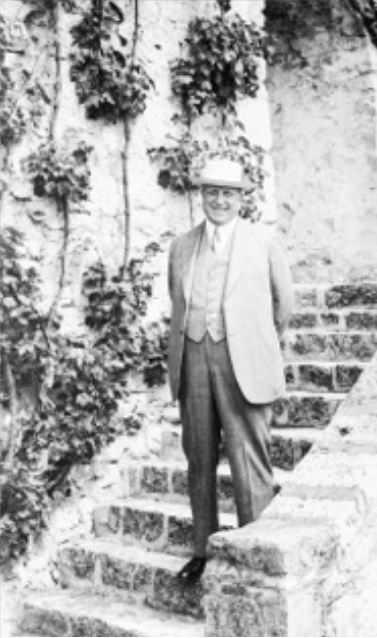
Willaim Randolph Hearst on the steps of St Donat's Cuntry Life Picture Librray

William Randolph Hearst on the steps of St Donat’s
Country Life Picture Library

“What God would have built if he had the money…” is what  George Bernard Shaw is supposed to have said on visiting William Randolph Hearst at St Donat’s Castle in South Wales.  It’s not surprising that Shaw was impressed!   St Donat’s  is a picture-book mediaeval castle that has been continuously occupied since the twelfth century.  Not far from Cardiff and set high overlooking the Bristol Channel  its gardens  are  quite simply amongst the most spectacular and outstanding Tudor gardens in Britain.

DSCF2026 - Version 2The home of the Stradling family from 1298-1738 the castle then  passed through several hands before eventually being bought in 1925 by American press magnate,  William Randolph Hearst, the model for Citizen Kane, who ‘modernized’ the castle without destroying its character. From 1962 the castle has been occupied by Atlantic College, the first of the United World Colleges founded by the German educationist Kurt Hahn.

Aerial view of St Donats Castle , 1934

Aerial view of St Donat’s Castle , 1934

I visited this summer with Liz Whittle, former Inspector of Historic Parks and Gardens at CADW, and I am very grateful to her for permission to use her notes as the basis for this post.

In the interests of historical accuracy I should also add that I have also seen Shaw’s words in a slightly different form used about his visit to Hearst Castle at San Simeon in California, and I have been unable to track down the source or veracity of either attribution – but its too good a quote to ignore! Continue reading

Posted in Uncategorized | Tagged , , , , , , | Leave a comment

Dead Dogs….

Boatswain by Clifton Tomson (1808) Nottingham City Museum and Galleries

Boatswain by Clifton Tomson (1808)
Nottingham City Museum and Galleries

Hows that for a cheery topic?   It’s the 200th anniversary next week of the death of a dog. Admittedly not just any old dog but one called Boatswain, a much-loved Newfoundland dog  that belonged to Lord Byron. So besotted was the poet that he commissioned a large monument in the hound’s memory for the gardens of Newstead Abbey.   This act obviously struck a chord in the British psyche because  the reason I know about the anniversary is an article about the Northern Newfoundland Club holding a celebration  at Newstead Abbey laying a posy of flowers as “a fitting tribute to one of the most famous Newfies in our history.”

The Boastwain Monumnet, Newsted image courtesy of William Bishop

The Boatswain Monument, Newstead Abbey
image courtesy of William Bishop

I suppose I’m not surprised. Already this year I’ve mentioned the tomb of Mrs Soane’s dog Fanny, in the courtyard of the Soane Museum, and more recently  the dog’s cemetery at Wrest Park,  but I’ve been amazed how many other monuments and tombstones for dogs  exist in our historic parks and gardens.  We’ve certainly come a long way from the days when dead dogs were thrown out with the rubbish onto the wasteland outside the town’s walls – the Houndsditch.  Some might think we’ve come too far in our animal commemoration of course,  but as Lucinda Lambton has shown with her wonderful books on animal-related architecture, remembering and honouring our pets is part of a  great British tradition and it’s still alive and well although its heyday seems to have been in the late 18th c and into the 19th. Continue reading

Posted in Uncategorized | Tagged , , , , , , | Leave a comment

Beatrice Parsons : Queen of the blazing border….

The Smell of Summer, 1901 Christies.com

The Smell of Summer, 1901
Christies.com

Go on admit it…you’ve never heard of Beatrice Parsons.  But believe it or not a century ago she was one of the leading garden painters in Britain, with many exhibitions to her credit, and her pictures collected by fashionable society, including 30 owned by Queen Mary. Nowadays we might think her work a bit chocolate-boxy, but underneath the sometimes almost unreal, brightly coloured flowers she captures the glory days of the Edwardian border but also the smaller more ordinary gardens of the suburban middle class.

3B5744ED-8893-43F4-AD5C-5386ACA9C400


The gardens at Abbotswood, Buxted, Sussex

The gardens at Abbotswood, Buxted, Sussex http://www.artscroll.ru

Continue reading

Posted in Uncategorized | Tagged , , | 2 Comments

More heraldic beasts…

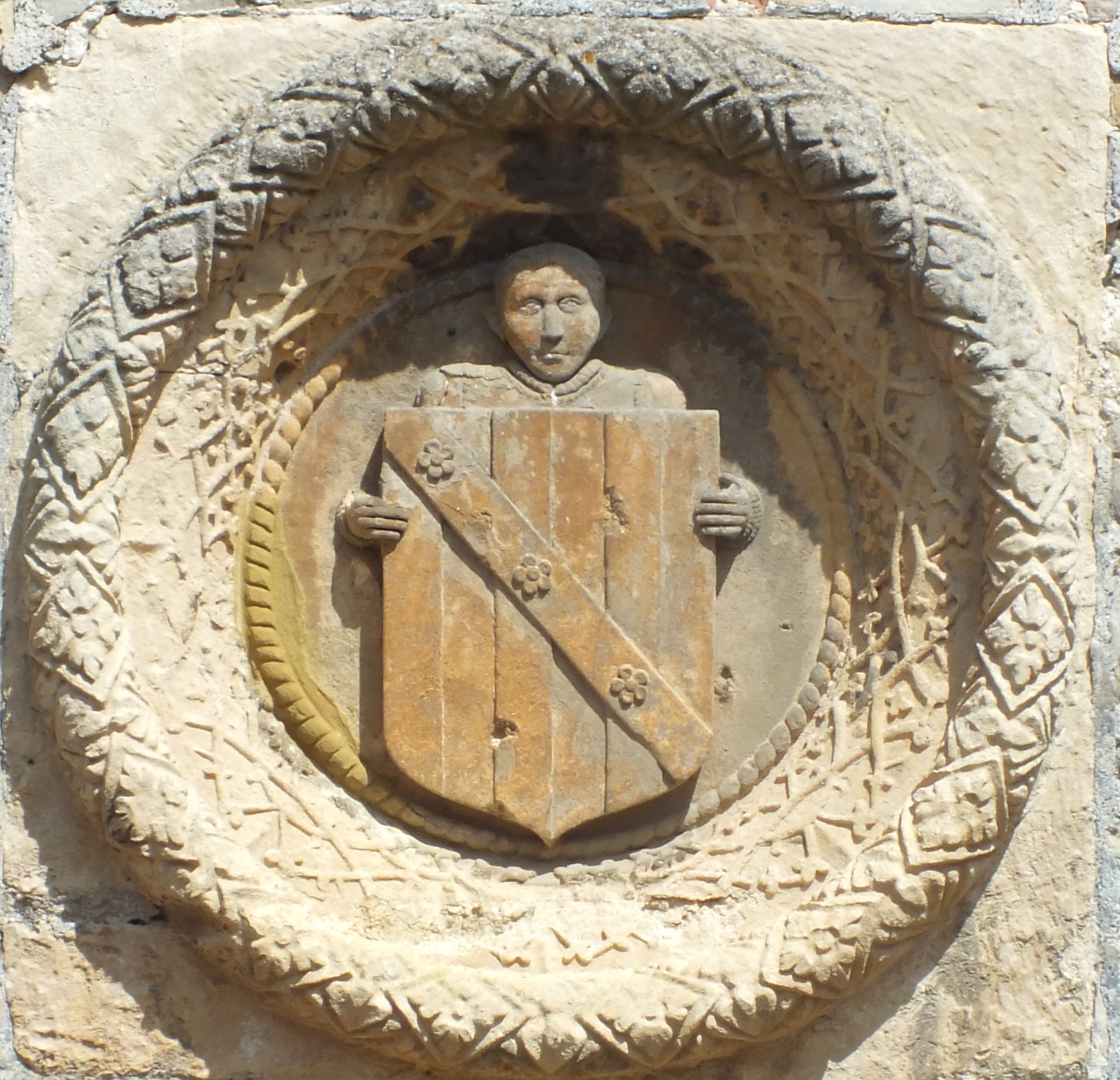
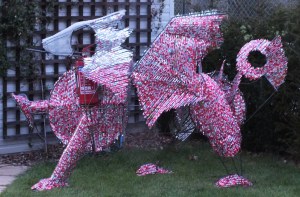
As I said at the end of my last post sets of heraldic beasts became rarer in Elizabethan times, as imagery became much more focussed on the queen herself. however there was a revival of interest in the early 19th century, and again more recently, as you can see in a slightly funkier way!

This is not an attempt at a comprehensive survey of heraldic beasts in gardens but just a brief look at a few sites, and as always, I’d love to hear from anyone about other places where they exist or existed.

A stone lion at Sheriff Hutton Hall. Country Life Picture Library Published originally 15/09/1966

A stone lion at Sheriff Hutton Hall.
Country Life Picture Library Published originally 15/09/1966

But lets start with a 17thc example…and no – this is not a concrete lion from a Jacobean bad-taste garden centre – at least I don’t think it is.   I found references [using our database] to two new sets being created in the first half of the 17thc.  Both were at Sheriff Hutton in Yorkshire where Sir Arthur Ingram built ‘a very fair new Lodge … with a fair garden enclosed with a brick wall with mount walks and fair ornaments’.  He sent roses up from London with instructions to ‘set them at every corner of the knots and cut the privet into beasts ‘ (Ingram family papers quoted in Country Life,  1966). Maybe the privet didn’t take very well to being topiarised because in 1637 his son, Sir Thomas Ingram, employed Thomas Ventris, a sculptor of York, to carve twenty heraldic beasts in stone for the garden.

The garden front of Sheriff Hutton Hall. Country Life Picture Library, originally publihsed 08/09/1966

The garden front of Sheriff Hutton Hall.
Country Life Picture Library, originally publihsed 08/09/1966

Like so many other houses, Sheriff Hutton has undergone many changes, so although the lion in the photo, and its colleague on the other gatepost, may just possibly be survivors from Ingram’s set,  I suspect they are more likely to date from the early 19thc when the grounds were remodelled. If anyone has any further information please let me know.

http://www.parksandgardens.org/places-and-people/site/2960/summary

Continue reading

Posted in Uncategorized | Tagged , , , , , , , , , , | Leave a comment