Elephants and the royal menagerie…

Henry I from BL Royal 20 A. ii, f. 6v.

Henry I
from British Library, Royal Ms 20 A. ii, f. 6v., c.1300

After a look at mechanical elephants in our parks and gardens I thought perhaps I should look at the place of the real thing there as well.   Garden menageries have a long history: the earliest recorded in Britain from the early 12th century in the grounds of what is now Blenheim Palace. The chronicler, William of Malmesbury, writing around 1130, noted that Henry I “was extremely fond of the wonders of distant countries, begging with great delight, as I have observed, from foreign kings, lions, leopards, lynxes or camels – animals which England does not produce. He had a park called Woodstock in which he used to place the favourites of this kind.”
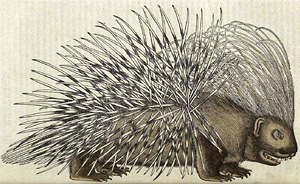
Porcupine, from Historia Animalium by Conrad Gesner, 1551

Porcupine, from Historia Animalium by Conrad Gesner, 1551

Sadly no elephants but instead in 1110 Henry walled in part of the grounds to contain his collection and  “he had placed there also a creature called the porcupine, sent to him by William of Montpellier… covered with bristly hairs which it naturally darts against the dogs when pursuing it; moreover these are, as I have seen, more than a span long, sharp at each extremity, like the quills of a  goose where the feather ceases, but rather thicker and speckled, as it were with back and white.”
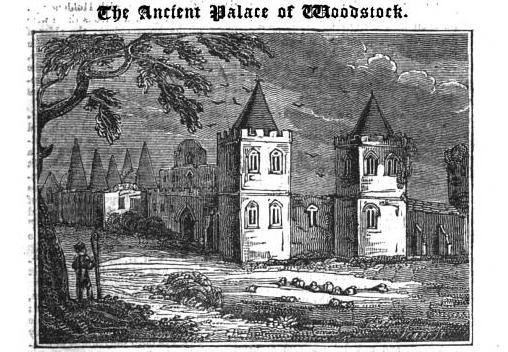
The Old Palace of Woodstock from The Mirror of Literature, Amusement, and Instruction Vol. VII. 1826.

The Old Palace of Woodstock from The Mirror of Literature, Amusement, and Instruction Vol. VII. 1826.

Unfortunately there is no trace of Henry’s private zoo since the decaying mediaeval palace was pulled down and all its the gardens obliterated when Blenheim was built for the Duke of Marlborough in the early 18thc.

Henry I’s royal menagerie was later moved to the Tower of London, and it was there in 1255 that Matthew Paris, a monk from St Albans Abbey, was able to draw from life a “beast about ten years old, possessing a rough hide rather than fur”.  The creature had “small eyes at the top of its head, and eats and drinks with a trunk.”
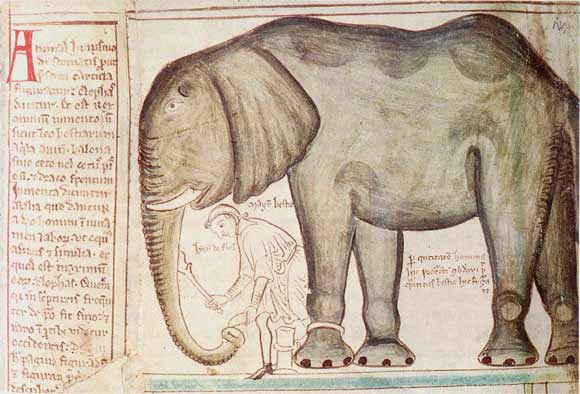
Henry III's elephant from Matthew Paris, Corpus Christi College, Cambridge, Parker Ms 16.

Henry III’s elephant from Matthew Paris, Chronica maiora, Parker Ms 16., Corpus Christi College, Cambridge

A gift to Henry III from the king of France, and probably captured during his time on crusade, it was “a beast most strange and woonderfull to the English people, sith most seldome or neuer any of that kind had béene séene in England before that time.” (Raphael Holinshed Chronicles, vol. 3, 1586]  It was housed a specially built wooden house, some 20 ft by 40ft, at a cost of £22.  Its spacious surroundings were no guarantee of longevity though and the poor animal died within a couple of years. Its skeleton was later disinterred although no-one knows quite why.  It may have been put on display as the bones of a biblical giant like Goliath or more probably used to make fake saints relics and ivory reliquaries to house them!
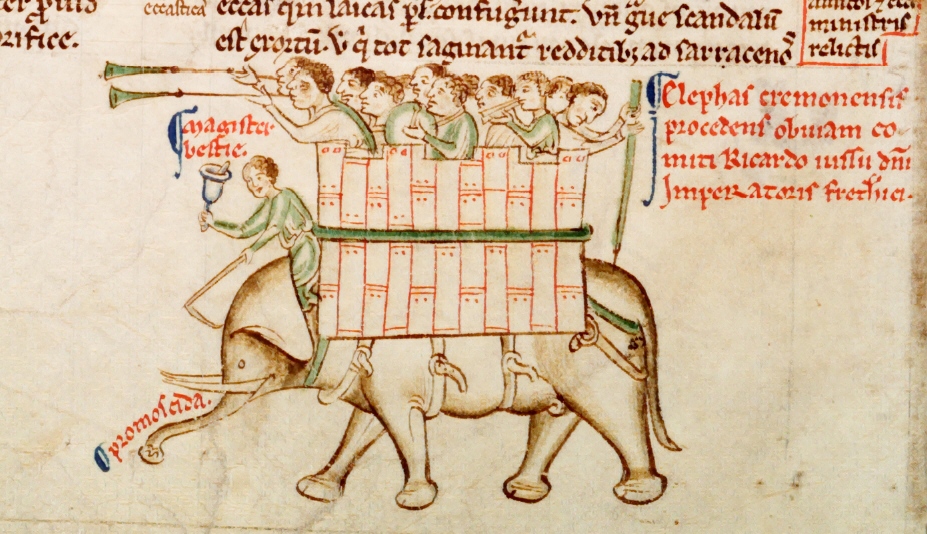
Elephant from Matthew Paris, Chronica maiora, Part II, Parker Library, MS 16, fol. 151v

Elephant from Matthew Paris, Chronica maiora,               Parker MS 16, Corpus Christi College Cambridge

You can discover more about Matthew Paris and his elephant drawings and descriptions at  the blog page of the Parker Library in Cambridge:
Matthew Paris and the Elephant at the Tower

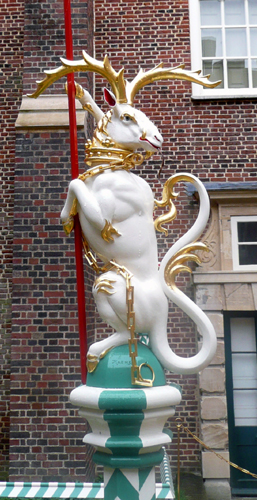
The silver yale of the Beauforts in the reconstructed Tudor garden at Hampton Court http://patrickbaty.co.uk/2009/09/03/a-tudor-garden/

The silver yale of the Beauforts in the reconstructed Tudor garden at Hampton Court
http://patrickbaty.co.uk/2009/09/03/a-tudor-garden/

Even as late as the Tudor period, the elephant must have seemed as mysterious and strange as many of the mythical creatures in mediaeval bestiaries – dragons, cyclops, mermaids and, of course, unicorns.  But strangely, unlike many other exotic or legendary animals  it was never adopted as an heraldic symbol  by the crown or any other leading families in England.   These heraldic beasts were an important element of elite Tudor gardens and I’m going to return to them at some point in the future.

Commentators still  depended mainly on classical or scriptural sources for their knowledge. The very word elephant must have formed a vivid mental image even though they had hardly ever been seen in this country.
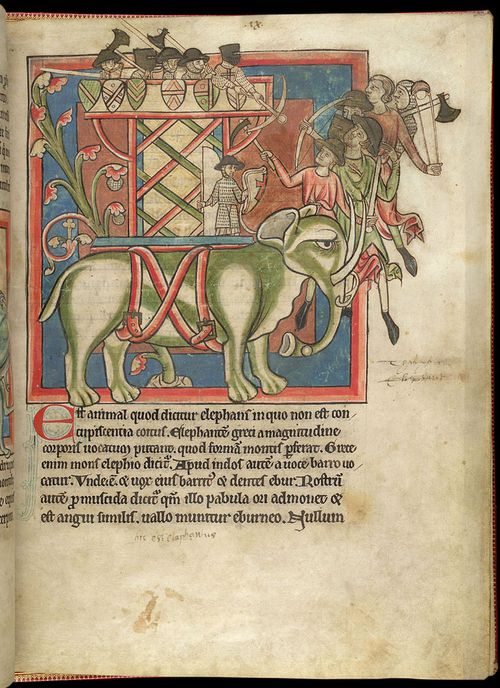
Miniature of an elephant and castle; from a bestiary, England, mid 13th century, Harley MS 4751

Miniature of an elephant and castle; from a mid-13thc English bestiary, British Library, Harley MS 4751


As a result the animal is often portrayed as a military weapon which it had been in the west since the time of Alexander the Great : “the stronge & mighty elephaunte With a castell on his backe” [William Nevill, The Castell of Pleasure, 1530], or associated with the biblical Behemoth: “the greatest beast on earth” [John Meerbecke, A booke of notes and common places, 1581].

Perhaps because of these associations elephants were clearly popular royal gifts.

Henry VIII was given an elephant together with its keepers, although we don’t know who gave it to him.  It might have been one of the few living things to disobey his royal wishes: “There is an elephant given to the king, but none can guide him but they that came with the present.” [Thomas Horton, Vulgaria, 1519, f.192v].
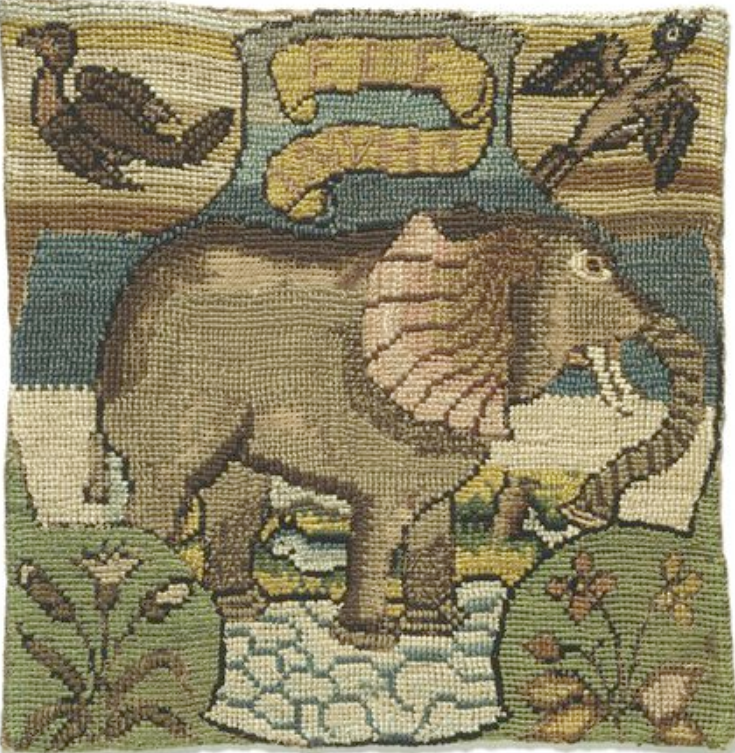
one of the Oxburgh Hangings, made by Bess of Hardwick and Mary Queen of Scots and their circle, c.1

one of the Oxburgh Hangings, made by Bess of Hardwick and Mary Queen of Scots and their circle, c.1

Elizabeth I received her elephant from France.  It had been sent to Henri IV by sea from India but apparently when the king discovered the cost of feeding it he had it forwarded to “madame ma bonne suer” over the channel.  What happened to it I have been unable to find out, so if you have any information do let me know.

James I also received a pachydermous gift, along with 5 camels, this time from the King of Spain in 1623.  However it didn’t last long  since its keepers were told to give it nothing but wine to drink to help ward off the cold!
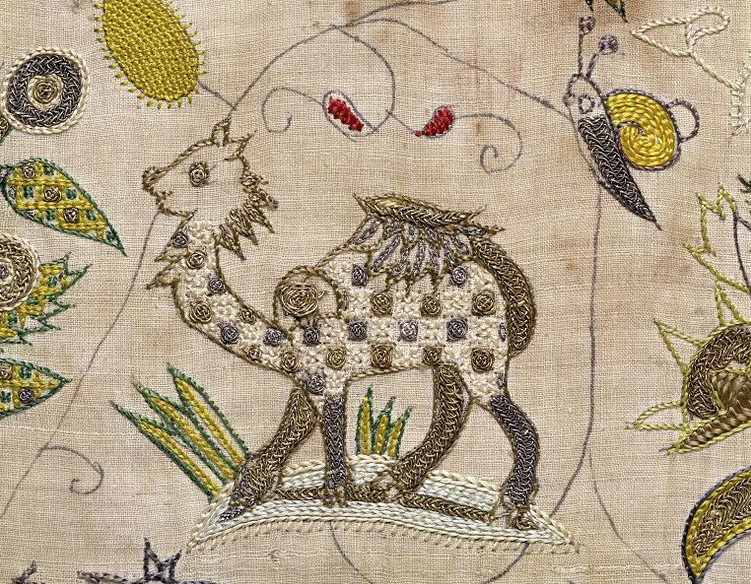
silk and silver thread embroidery panel of a camel, c.1600-1625 V&A
silk and silver thread embroidery panel of a camel, c.1600-1625
V&A

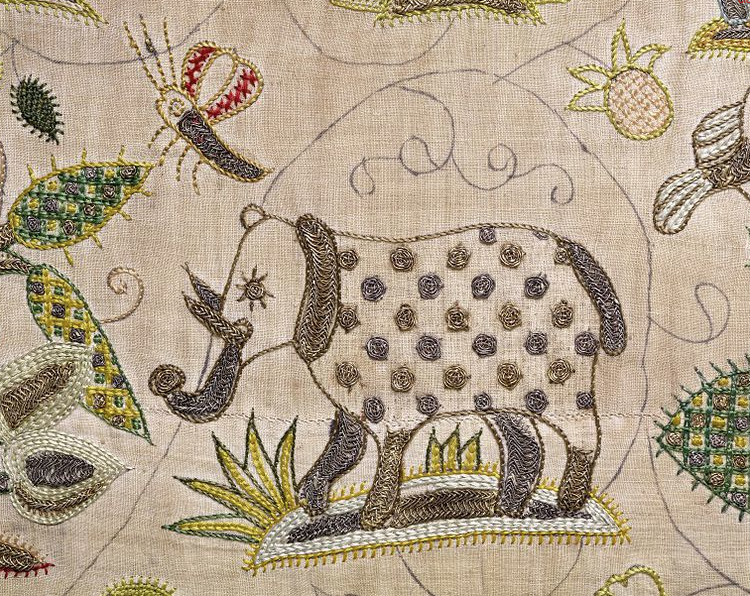
silk and silver thread embroidery panel of an elephant, c.1600-1625 V&A

silk and silver thread embroidery panel of an elephant, c.1600-1625
V&A


All in all, I suspect that Wilfrid Blunt was right when he remarked: “Interfauna is always a less satisfactory service than Interflora.” [Blunt, The Ark in the Park, 1976, p.161]
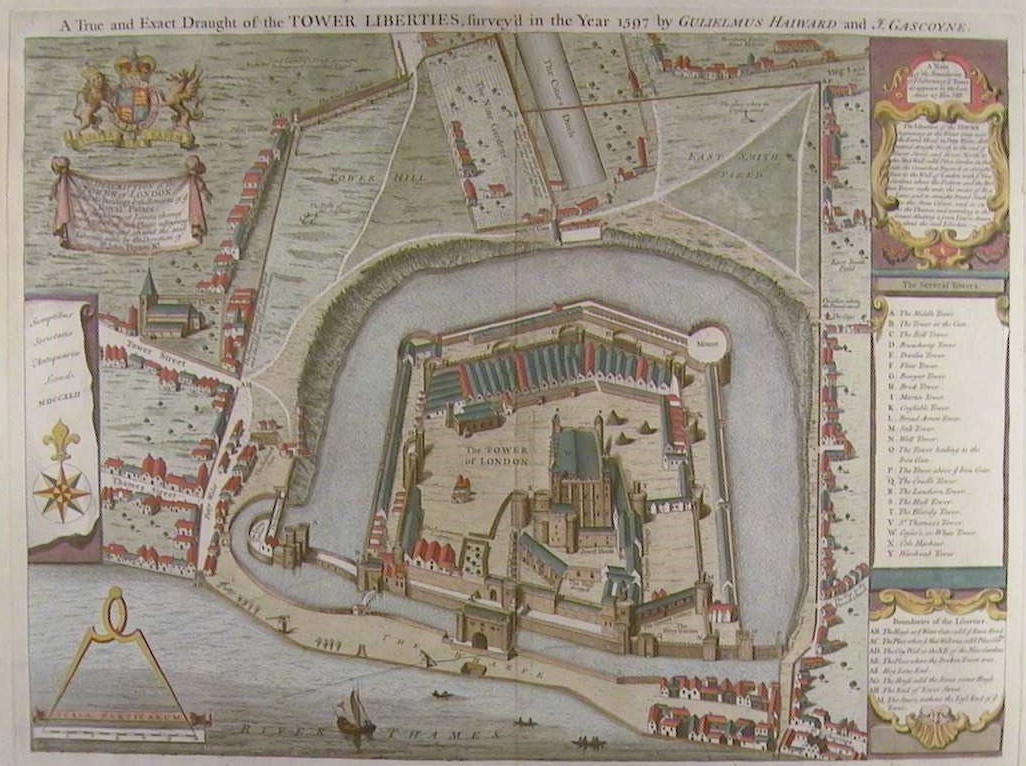
The Tower of London, 1597 by Haiward and gascoyne from http://www.royalarmouries.org

The Tower of London, 1597 by Haiward and gascoyne The Lion Tower is the isolated projection into the moat, reached by its own bridge, on the bottom left hand side of the plan.
from http://www.royalarmouries.org

Despite forcing his elephant to become a dipsomaniac,  James rated his collection of animals very highly and had the  Lion Tower extended  to provide a large viewing platform for guests. This was, however, was not so that the animals could be better observed out of scientific interest, but in order to allow viewers  to watch them being baited by dogs in the pit below.  Exotic beasts might have been extremely rare and expensive but they were still disposable toys.   James not only maintained the menagerie in the Tower of London but set up a second one in St James’ Park, which contained many varieties of exotic birds, particularly from North America, as well a beaver and, believe it or not, an American Indian.
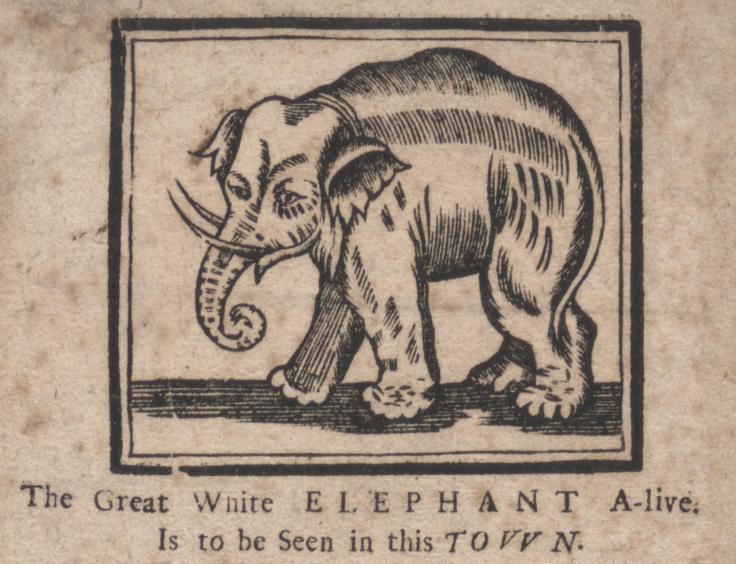
―The Great White Elephant‖ (Printed between 1702 and 1714) Bodleian Library, University of Oxford

The Great White Elephant‖ (Between 1702 and 1714) Bodleian Library, http://christopherplumb.files.wordpress.com/2011/05/plumbthesis2010.pdf, p.243

By the mid 18thc and the establishment of British rule in India elephants had become a slightly more common sight in Britain, as had many other exotic animals.  A menagerie  became a ‘must-have’ feature on many landed estates the length and breadth of the country, although I have only found evidence of an elephant being kept in one of them.


A quick look at our database suggests that at least 21 sites had menageries associated with them, while Sally Festing’s research, (“Menageries and the landscape garden“, Journal of Garden History 1988, 8:4, p104-117)  names 43, with a strong suspicion that many more examples have been lost without record.   More about some of them in my next post.
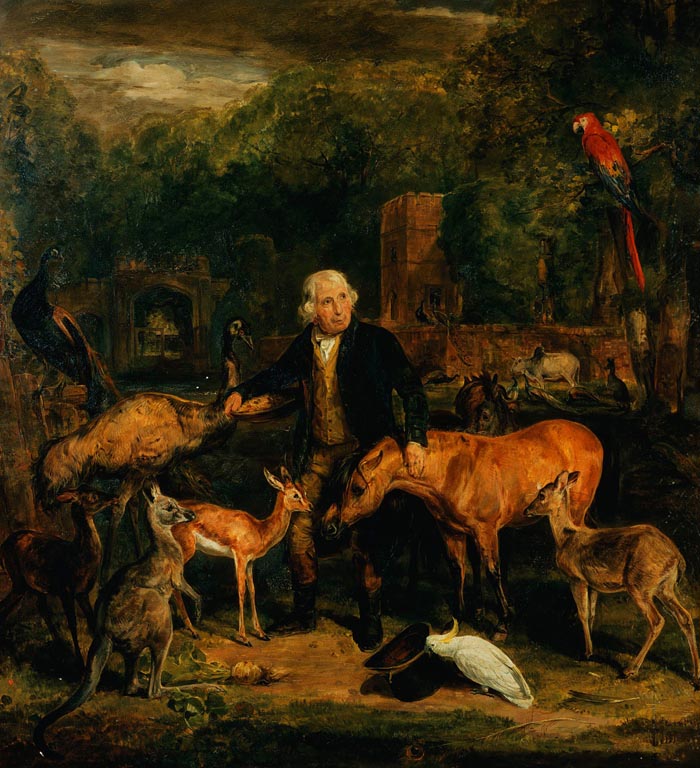
John Clarke,Keeper of the menagerie at Windsor, by John Lewis, 1828 Royal Collection

John Clarke,Keeper of the menagerie at Windsor, by John Lawrence, 1828
Royal Collection

The royal menagerie in the Tower was open to the public, with an admission fee of threepence at the beginning of the 18thc rising to a shilling by the end.  There was, however,an  alternative way of paying: with a dog or a cat which could be fed to the lions!

By the time George IV came to the throne the collection had dwindled down to almost nothing: a grizzly bear, assorted birds and surprisingly an elephant.  George rebuilt the collection and opened another private menagerie in the Great Park at Windsor Castle which was soon full of exotic animals from the ever-growing empire, including a giraffe, wapiti,  zebus, gnus, quaggas,  llamas,  emus, ostriches and parrots

However, his brother and successor, William IV, was not interested in the collections and both the Windsor and Tower menageries were quickly closed down after he came to throne.  In 1831 the surviving 150 animals, including kangaroos, camels, bears, and llamas, but by now no elephant, were transferred to the care of the newly formed Zoological Society in Regents Park.

THE MIRROR OF LITERATURE, AMUSEMENT, AND INSTRUCTION, Vol. 12. No. 330.]SATURDAY, SEPTEMBER 6, 1828 https://archive.org/download/themirrorofliter11389gut/11389-h/11389-h.htm

The new zoological gardens in Regent’s Park, from The Mirror of Literature, Amusement and Instruction, Vol. 12. No. 330, 6 September, 1828
https://archive.org/download/themirrorofliter11389gut/11389-h/11389-h.htm

As The Mirror of Literature said: “The gardens, independent of their zoological attractions, are a delightful promenade, being laid out with great taste, and the parterres boasting a beautiful display of flowers. The animals, too, are seen to much greater advantage than when shut up in a menagerie, and have the luxury of fresh air, instead of unwholesome respiration in a room or caravan.”
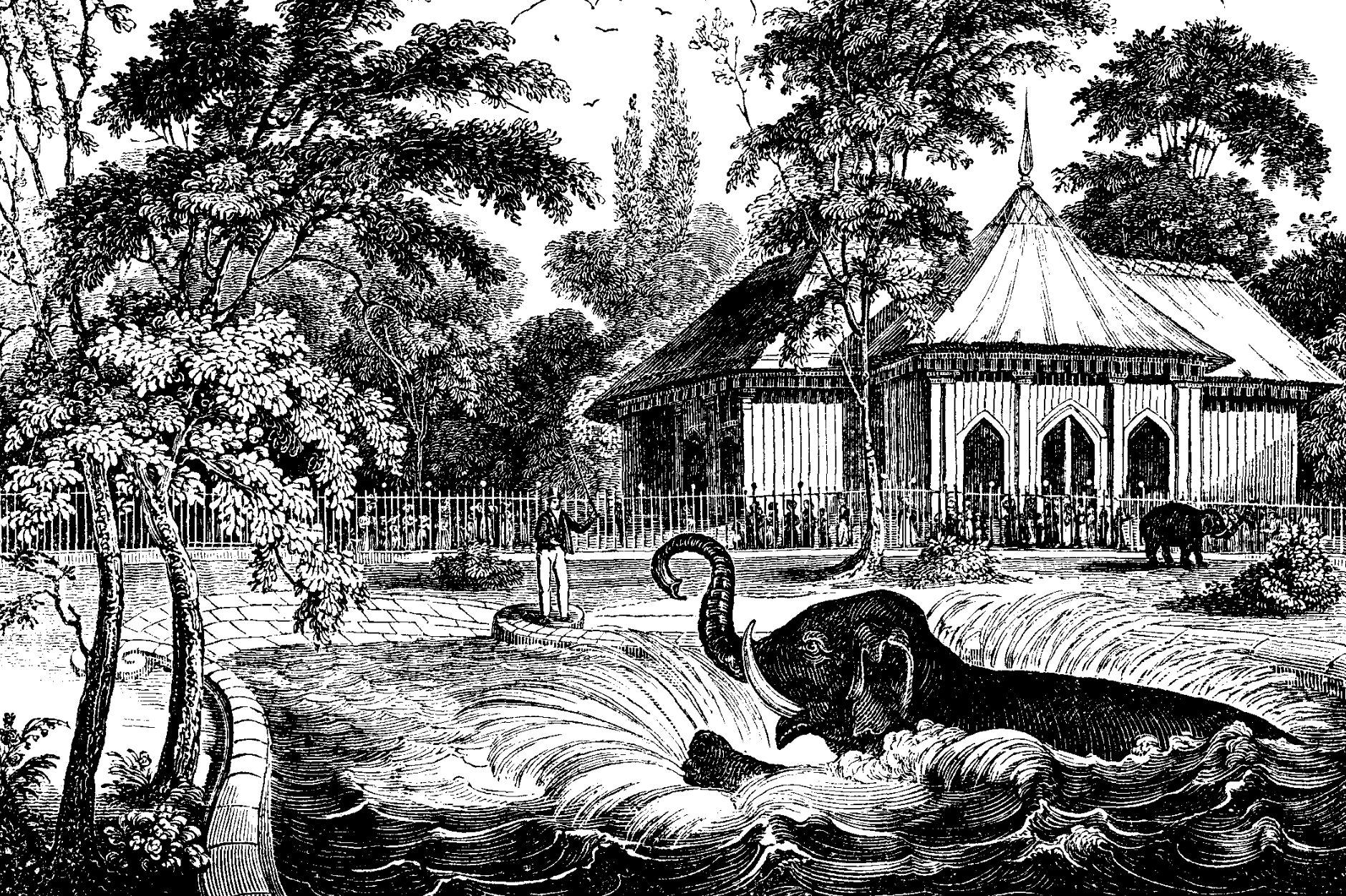
The elephant in his bath at Regent's Park, from

The elephant in his bath at Regent’s Park, from The Mirror of Literature, Amusement and Instruction, Vol.20, No. 530 4 August 1832 http://www.gutenberg.org/files/11705/11705-h/11705-h.htm

Elephants were clearly seen as a desirable and necessary requirement for a menagerie and two were quickly acquired by the Zoological Society for Regent’s Park. They lived in what was claimed to be “luxurious accommodation” of “capacious dimensions”, but  “built in a style of inappropriate rusticity”.   They also had  “a  little park or paddock. The fence is of iron, and light but substantial. Within the area are a few lime-trees, the lower branches of which are thinned by the Elephant repeatedly twisting off their foliage with his trunk, as adroitly as a gardener would gather fruit.”  But it was a large pool where “In hot weather he enjoys his ablutions …with great gusto, exhibiting the liveliest tokens of satisfaction and delight. Our artist has endeavoured to represent the noble creature in his bath, though the pencil can afford but an imperfect idea of the extasy of the animal on this occasion.” (The Mirror of Literature, 4 August 1832].
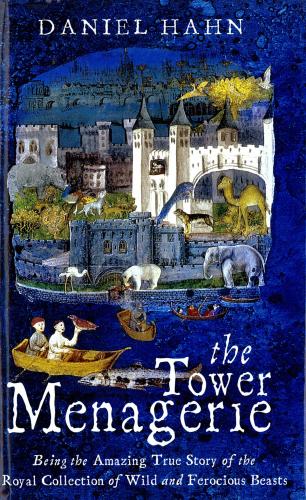
Hahn_Daniel_The_Tower_Menagerie_49The full story of the royal menagerie can be found in Daniel Hahn’s  The Tower Menagerie (2003).

When I initially started writing this post I didn’t really expect to find much research to draw upon, and so thought  it might lead to just one or two more short posts about menageries and aviaries in parks and gardens over the coming weeks and months.  How wrong could I be? There is, in fact, a lively group of researchers out there – archaeologists, zoologists, cultural historians, as well as a few garden historians who have produced some really interesting work over the past few years. The best place to start if you are interested in knowing more is the Bartlett Society, named in honour of Abraham Bartlett, the great nineteenth-century superintendent of the Zoological Society of London’s gardens at Regent’s Park:

http://www.zoohistory.co.uk/home

The historical research that really got me excited was a recent PhD thesis (Manchester 2010) by Christopher Plumb on exotic animals in 18thc England.   It’s erudite, fascinating and rather macabre by turns, and amazingly, Dr Plumb has made it freely available on the web, although he is also turning it into a book.  If you are interested in man’s evolving relationship with animals or in topics such as “The Queen’s Ass”, “Exotic animals as luxury ingredients”, or “Eroticising the eel” then I strongly urge you to take a look.

http://christopherplumb.files.wordpress.com/2011/05/plumbthesis2010.pdf

And there’s a whole chapter on elephants in Britain 1675-1830!   So expect some more posts over the coming months about keeping animals in our gardens and parks.
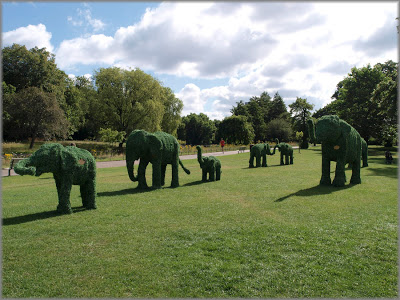
fromhttp://londonselephants.blogspot.co.uk Regents Park July 2008

fromhttp://londonselephants.blogspot.co.uk Regents Park July 2008
← Back

Thank you for your response. ✨

Warning
Warning
Warning
Warning

Warning.


Posted in Uncategorized | Tagged , , , , , , , , , , , , , , | 1 Comment

Mechanical elephants….

I know that Britain’s parks and gardens are amazing places, and that some of them had  aviaries and small menageries in them – indeed a few still do – but it was still a surprise to discover this piece of film footage from 1949.

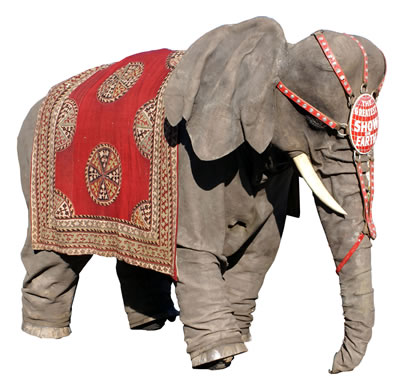
Jumbo is a pretty impressive piece of engineering and  so obviously I wondered what he/she/it was doing in a public park in Hull.    Unfortunately I haven’t been able to discover much more because the local newspaper online archive doesn’t go back that far , and although the Hull History Centre has a webpage devoted to the city’s parks and gardens, including a short entry on Pickering Park, there’s no mention of Jumbo anywhere. Unfortunately our database can’t help either, because try as we might, we  still haven’t got entries on every park in Britain yet and Pickering Park is one that still needs some research, so if you know anything about it please get in touch.

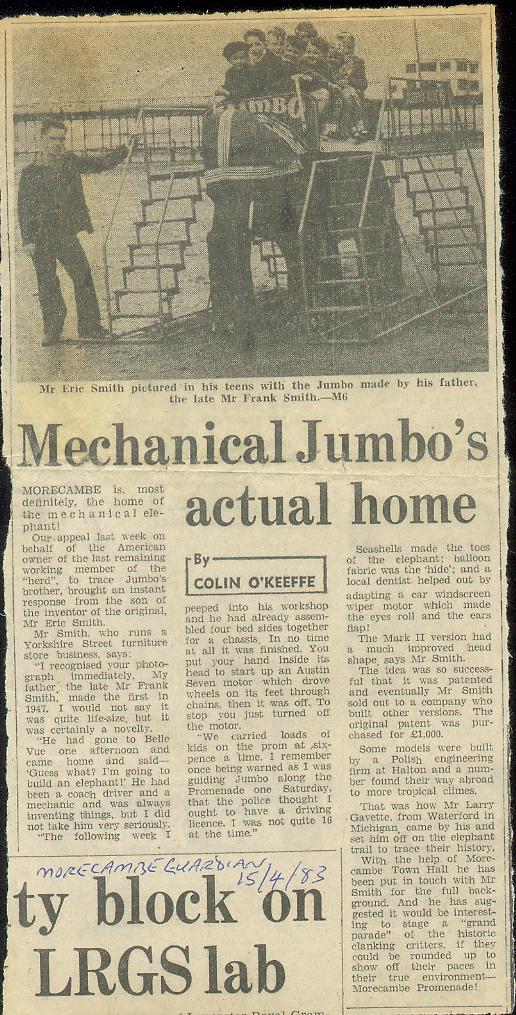
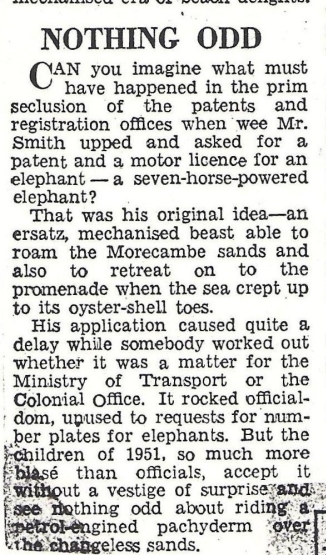
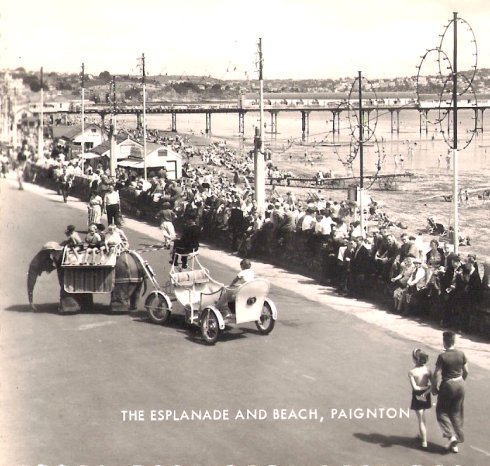
Jumbo was the brainchild of Frank Smith, a mechanically-minded coach driver, and  his real home wasn’t  a park in Hull but a garage in Morecambe!   Here he is, being led by Mr Smith’s son Eric along the  seafront promenade.  Indeed Morecambe became the home of a whole herd of mechanical pachyderms as Mr Smith then sold the patent to a local company who went into mass  – perhaps even mammoth  – production.  One of them has just been restored and was back at work recently:

Elephant returns to Lancashire

The whole story of Frank Smith and his invention is fascinating and can be found in various press cuttings & photos as well as a long letter written by his son which can be found on a wonderful website devoted to all things to do with early robots and cybernetic animals.

http://cyberneticzoo.com

Morecambe Gazette 15th April 1983 from: http://cyberneticzoo.com

Morecambe Gazette 15th April 1983
from: http://cyberneticzoo.com

Smith-mechanical-elephant-MkII-no 3-x640I don’t want to steal all their thunder or all of the many surprises and eccentricities that you’ll find on cybernetic zoo but can’t resist sharing an extract from just one more cutting… and just how British is this?


Frank Smith’s home-made elephant was, however, by no means unique. A rival company existed  in Essex at about the same time and produced much larger “electrophants” which according to the manufacturer were taken around all the seaside resorts in the country.

You can find the full story of Frank Stuart and his elephants recorded in a lengthy article for the local newspaper, the Essex Chronicle in 2012,

http://www.essexchronicle.co.uk/Man-mechanical-elephants-went-world/story-15294792-detail/story.html

But in brief: the original developments took place at Thaxted in the late 1940s and early 50s which produced a Ford petrol engine driven version of which up to 25 full size and half-size models were produced.Unfortunately there was a slight design fault and the exhaust fumes emitted from the elephant’s trunk caused the children riding on the back to choke. A later model was electrically driven using conventional car batteries but it too suffered from design problems: poor distribution of weight between the batteries and the riders caused one to topple over.  But Stuart and his colleagues were undaunted and eventually Bertha the Bionic elephant appeared on Blue Peter in 1967:

The elephants were also sold abroad, especially America, where one apparently was ridden by General Eisenhower at the Republican Party Convention in Atlanta in 1952:

Mechanical Elephants in America

Another, called – surprise surprise – Nellie,  ended up in Adelaide where it still leads the Christmas Pageant! There’s a short video clip showing how she works at:

http://www.salife7.com.au/adelaide/places/historical/nellie-the-elephant

and if you want to see how they move take a quick look at Jeremy Clarkson riding one down a country lane – and you can probably imagine what he has to say about the need for an MOT certificate on a 60 year old mechanical elephant.

Paignton-Mechanical-Elephant-1950s-detailUnsurprisingly there’s lots more where all this came from!  Its one of the great joys of garden history that one ends up exploring wonderfully diverse by-ways, so if you’re interested in following up the myths and realities of robotic elephants or other creatures,  from ancient indian stories or the life-sized mechanical elephant that featured in a mediaeval feast right through to Jules Verne’s Steam House tales set in the Indian Mutiny, or the latest Pneubots then the best place to start is undoubtedly:

http://cyberneticzoo.com/

http://www.globalgiants.com/archives/2007/02/index4.html

The enormous ‘walking’ mechanical elephant that was ridden by President Eisenhower at the 1952 Republican National Convention which was sold at auction in 2007 http://www.globalgiants.com/archives/2007/02/index4.html

And finally have you any idea which four sites on our database have mentions of elephants?

Thought not!


← Back

Thank you for your response. ✨

Warning
Warning
Warning
Warning

Warning.

Posted in Uncategorized | Tagged , , , | Leave a comment

Gardens in the sky….

Royal Brough of Kensington and Chelsea Local Studies Library

Royal Brough of Kensington and Chelsea Local Studies Library

From the underground delights of cemeteries and burial plots of the last couple of posts to something more uplifting and airy!

One of things I like about researching anything but particularly gardens and their history is the way one can get so easily diverted by  endless possibilities and choices…. and very soon an afternoon that was intended to be devoted to tracking down a reference or a single piece of information has become an afternoon spent idly widening ones knowledge and finding another twenty things to research further next time!   That’s what happened to me recently when  I discovered this short piece of film footage whilst looking for something completely different….

that led to this…

and  this:

and then this:

5842024998_8bdc3cdab7_zand of course I got hooked, forgot my original project and spent the next few hours looking at roof gardens instead!

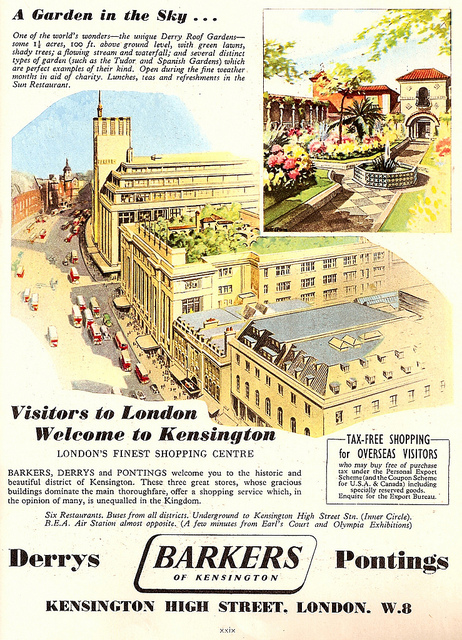
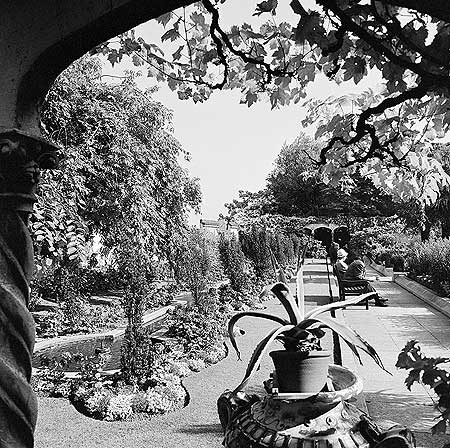
The Derry & Toms gardens were, of course, those constructed between 1936-1938 by Ralph Hancock, covering 0.6 hectares on the roof of the former Derry and Toms Department Store in Kensington High Street.The tripartite gardens (Spanish, English and Tudor) formed an integral part of the design concept of the building. Hancock had previously designed the Garden of the Nations at the Rockefeller Centre in New York.

Royal Brough of Kensington and Chelsea Local Studies Library

Royal Brough of Kensington and Chelsea Local Studies Library


Trevor Bowen's plaque in the gardens Tom Hannen, 2007

Trevor Bowen’s plaque in the gardens
Tom Hannen, 2007

The gardens were the idea of Trevor Bowen of Barkers of Kensington, the department store group which owned Derry & Toms, and he wanted them to outdo the roof gardens not only of Barkers themselves but those of their great rival Selfridges as well.    Derry & Toms closed in 1971 and the building briefly, but famously became the home of Biba.  It is now split up between several chain stores but the roof garden remains intact as a restaurant and club in Richard Branson’s empire.

More interestingly is that the garden is a thriving concern, runs a gardening club, has exhibited at Chelsea this year and is currently fundraising to build a children’s garden in Beirut.  More details on their blog:

http://vlog.virginlimitededition.com/category/blogs/the-roof-gardens/green-fingers

sunpavilionderrygardens

There is a short  history of the gardens on our database:

http://www.parksandgardens.org/places-and-people/site/2837/history

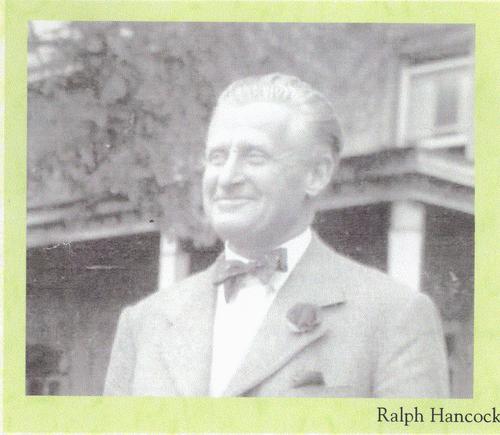
Ralph Hancock, from a flyer produced by Neath Port Talbot College PGDS 602

Ralph Hancock,
from a flyer produced by Neath Port Talbot College PGDS 602

I also discovered the informative and comprehensive website devoted to Ralph Hancock.  I’m ashamed to say  I had never heard of him until last week so I was quite taken aback by the range and quality of his work in both Britain and America.  The website illustrates many of his gardens and has good links to other film and video footage as well as radio and TV clips. It is well worth taking a long look.

http://www.ralphhancock.com

Hancock ‘s gardening ideas  are set out in When I make a Garden, published in 1935.


There are several other blogs which have detailed posts on aspects of the gardens so rather than “borrow” their material I’ve included links here.  I hope enjoy you enjoy meandering your way round them as much as I have. If you have access to back numbers of the RHS magazine The Garden then Ursula Buchan wrote an article about Hancock called “The Final Storey” in the October 1993 issue.

There are a lot of early black and white photos of the gardens in this blog from Kensington & Chelsea’s local studies library which covers the use of the gardens as a site in MichaeL Moorcock’s fiction:

https://rbkclocalstudies.wordpress.com/tag/derry-and-toms-roof-garden/

the 75th anniversary is covered in: http://universityofglasgowlibrary.wordpress.com/2013/09/20/derry-and-toms-roof-gardens/

and the BIBA days – 1971-1973 – are covered in:

Uriah, the Big Biba Roof garden Derry and Toms 1973.

← Back

Thank you for your response. ✨

Warning
Warning
Warning
Warning

Warning.

The Spanish Garden on the roof of the Derry and Toms Building in Kensington High Street. © English Heritage.NMR Reference Number: AA084998

The Spanish Garden on the roof of the Derry and Toms Building in Kensington High Street. © English Heritage.NMR
Reference Number: AA084998

The Tudor Garden on the roof of the Derry and Toms Building in Kensington High Street, 1971 © English Heritage.NMR Reference Number: AA084999

The Tudor Garden on the roof of the Derry and Toms Building in Kensington High Street, 1971
© English Heritage.NMR
Reference Number: AA084999

Posted in Uncategorized | Tagged , , | Leave a comment

John Claudius Loudon…and cemeteries continued

The tomb of Loudon's father in Pinner Churchyard . Image from ledgeoflondon.com/curiosities.html

The tomb of Loudon’s parents in Pinner Churchyard .
Image from http://www.knowledgeoflondon.com/curiosities.html

John Claudius Loudon had been fascinated by death and burial for many years before he began designing cemeteries.

His first, and probably most bizarre, work was the monument he designed for his parents’ grave in the churchyard of St John the Baptist’s church at Pinner in Middlesex.  It bears the inscription: “Sacred to the memory of William Loudon of the original stock of the Loudon family, of the parish and county of Midcalder. He died 29 December AD 1809. This monument, set up by John Claudius Loudon, the eldest of his sons, stands as a witness of his piety”.    Loudon’s mother, Agnes, died in 1841 and her inscription, on the other end of the coffin can be seen here:

The inscription to Agnes Loudon image from http://www.pjbartlett.co.uk/Pinner%20History.htm

The inscription to Agnes Loudon
image from http://www.pjbartlett.co.uk/Pinner%20History.htm

Local historian Walter Druett in Pinner in History [1937] records the folklore behind it: “Pinner churchyard contains a monument that is probably unique. It consists of a tall pyramid, through the middle of which protrudes a stone coffin. It was raised to the memory of William and Agnes Loudon whose bodies lie in the coffin. William Loudon and his wife inherited some money under a will which stipulated that they should receive a certain sum so long as their bodies were above the ground. By burying his parents above the ground, a son sought to keep a bequest in the family”.  In fact, they are more mundanely buried in a vault beneath.

Despite his evident interest Loudon does not seem to have been involved in the design of any of the great early 19thc cemeteries.  Indeed he only had 3 commissions and they all date somewhat ironically from the months immediately before his own death in 1843.

Alternative designs in Gothic and Italian style for the entrance lodges, from John Claudius Loudon, On the Laying Out, Planting and Managing of Cemeteries, 1843

Alternative designs in Gothic and Italian style for the entrance lodges, at Histon Road from John Claudius Loudon, On the Laying Out, Planting and Managing of Cemeteries, 1843

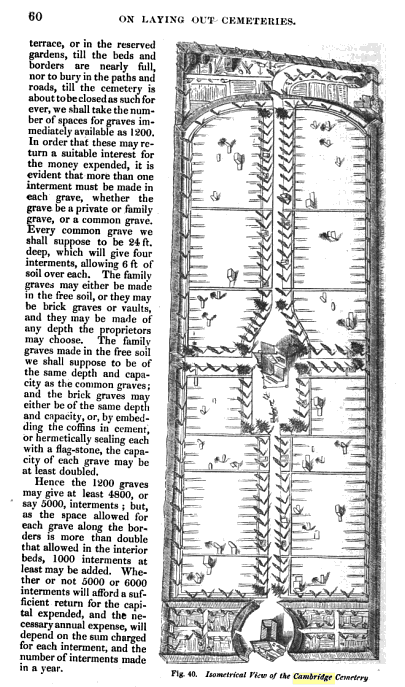
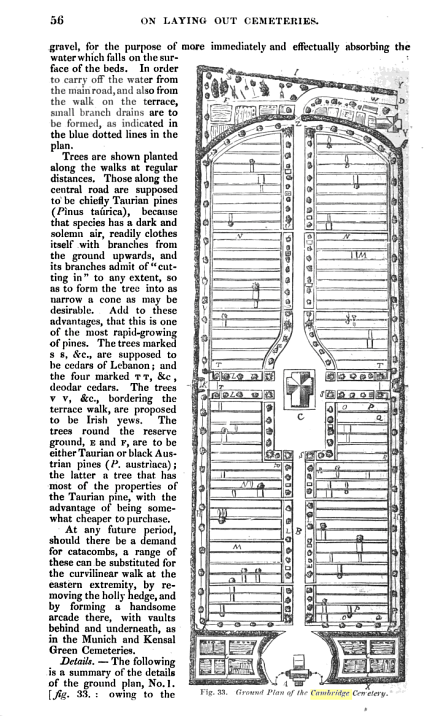
The first was the small non-denominational  Histon Road Cemetery in Cambridge set up by a group of non-conformist businessmen who established  the Cambridge General Cemetery Company Ltd in 1842. Here Loudon worked with the architect Edward Buckton Lamb. His ideas, and detailed alternatives to them, were not merely submitted to the company but also used as an exemplar in his book On the Laying Out, Planting and Management of Cemeteries in 1843.

They cover everything from the site plan and the buildings right through the preparation of what we would now call a business plan for the cemetery. His calculations covered several pages of notes and included mortality rates, the types of burial and coffins to be allowed, and the depth of graves and vaults, as well as the costs of trees and shrubs in his planting schemes.


Histon Road Cemetery, Cambridge From John Claudius Loudon, On the Laying Out, Planting and Managing of Cemeteries, 1843

Histon Road Cemetery, Cambridge From John Claudius Loudon, On the Laying Out, Planting and Managing of Cemeteries, 1843

Histon Road Cemetery, Cambridge From John Claudius Loudon, On the Laying Out, Planting and Managing of Cemeteries, 1843

Histon Road Cemetery, Cambridge From John Claudius Loudon, On the Laying Out, Planting and Managing of Cemeteries, 1843


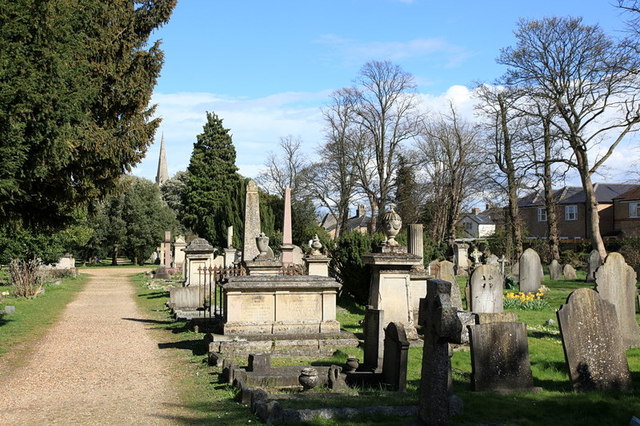
Histon Road Cemetery © Copyright Rob Noble & licensed for reuse under Creative Commons Licence

Histon Road Cemetery
© Copyright Rob Noble & licensed for reuse under Creative Commons Licence

Now closed,  it is cared for by Cambridge City Council working closely with the Friends of Histon Road Cemetery. As one of the best preserved examples of Loudon’s work the Cemetery is English Heritage grade II* listed.For more information take a look at our database entry and the website of the Friends of Histon Road Cemetery:

http://www.parksandgardens.org/places-and-people/site/1754

Home

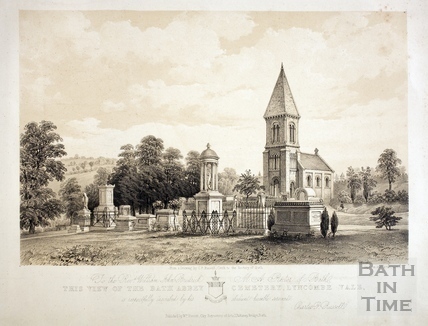
Whilst Loudon was working on his designs for Cambridge his next cemetery commission –  an ‘overflow’ burial ground for Bath Abbey- arrived.

233053

From a drawing by C.P. Russell, Clerk to the Rectory of Bath,.c1850 http://www.bathintime.co.uk/image/233053/view-of-the-bath-abbey-cemetery-lyncombe-vale-1850

The new Bath  cemetery was to be nowhere near the Abbey itself. Instead, in line with contemporary practice, it was set out on a hillside on the rural fringes of the town.  Built in Anglo-Norman style by local contractors it did not open until 1844 after Loudon’s own death but  it still used his designs and embodied his  principles:  to dispose of the dead in a hygienic manner,  to improve the morals and taste of society, by its architectural quality and botanical riches, and to serve as a historical record for future generations. Loudon also said that the Cemetery should be conspicuous from a distance, be an ornament to the surrounding countryside and an impressive memento to mortality. Even today, perched high on a hill  it has wonderful views back over Bath. The cemetery continued to be used as a place of burial until 1995, when it was formally closed and handed over to the care of the Local Authority.

For more information see our database, the website of the abbey itself, or the  local community association:

http://www.parksandgardens.org/places-and-people/site/4/summary

http://www.widcombeassociation.org.uk/abbey.html

http://www.bathabbey.org/history/abbey-cemetery

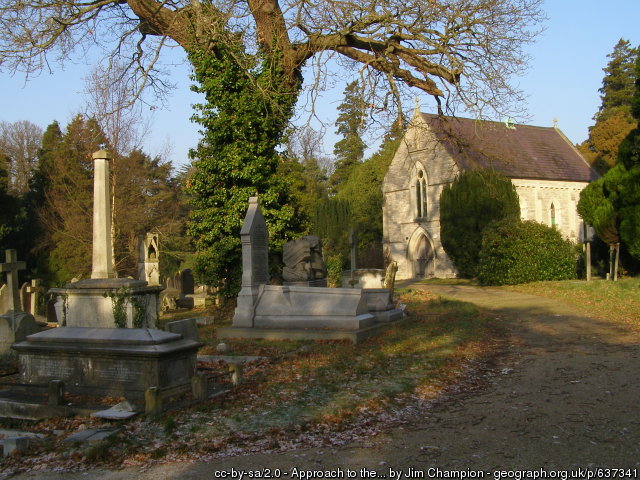
The former non-conformist chapel at Southampton OLd Cemetery © Copyright Jim Champion and licensed for reuse under this Creative Commons Licence

The former non-conformist chapel at Southampton OLd Cemetery © Copyright Jim Champion and licensed for reuse under this Creative Commons Licence

His final commission, in every sense, was at Southampton. Although he was normally based in at his villa in Bayswater Loudon had been staying on the Isle of Wight whilst his wife , Jane Webb Loudon [of whom more at some point in the future] was writing another book. [She was almost as indefatigable as John Claudius himself]  The damp sea air aggravated his rheumatic fever and he decided to take temporary lodgings in Southampton to recover.  The local council had just received Parliamentary approval for a new cemetery on former common land and asked him to submit a design scheme, paying him £37 for it.  Loudon set to work and suggested amongst other things two chapels – one Anglican and one non-conformist – equal in size & side by side.  He then died before such scandalous ideas were rejected out of hand by the Bishop of Winchester.  After that alternative schemes were commissioned for much of the work from local contractors.

For more information see our database or the website of the Friends of Southampton Old Cemetery:

http://www.parksandgardens.org/places-and-people/site/3013

Home

Even though he was only responsible for the plans of three burial grounds – and they were only built in a substantially altered form – his importance for the design of Victorian cemeteries was immense.  The great semi-rural necropolis at Brookwood, as well as London’s Ilford Cemetery are amongst the best examples of this influence.


For a heavyweight discussion of his significance see:Peter Johnson, J.C.Loudon’s ideal cemetery which is downloadable at:

Click to access 4.3-modern-cemetery-pdf2.pdf

Unfortunately Loudon, despite his more than 4 million published words,  has largely been forgotten, probably because  as John Gloag suggests his ideas… ‘those bright oases of creative thought” got lost in “a huge grey desert of intolerable verbosity……..” [Gloag,  Mr Loudon’s England: The Life and Work of John Claudius Loudon, and his influence on architecture and furniture design, 1970].  Perhaps the time has come to resurrect him!

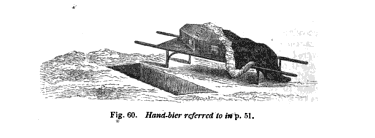
Bier

From John Claudius Loudon, On the Laying Out, Planting and Managing of Cemeteries, 1843

Finally…..the thing that has struck me most forcibly while researching the last couple of posts has been how much fascination there is for information about cemeteries, burials and death-related customs.  Here are just a few to get you going… but let us know if you find anymore that you think would be of interest to other readers.

http://www.derelictlondon.com/cemetery–churches.html

http://www.cemeteryfriends.org.uk

http://londoncemeteries.co.uk

← Back

Thank you for your response. ✨

Warning
Warning
Warning
Warning

Warning.

Pauper-funeral-500x349

Posted in Uncategorized | Tagged , , , , , , | 1 Comment

John Claudius Loudon…and cemeteries

From John Claudius Loudon, On the Laying Out, Planting and Managing of Cemeteries, 1843

From John Claudius Loudon, On the Laying Out, Planting and Managing of Cemeteries, 1843

Maybe it’s not the cheeriest of subjects but  as another birthday approached my thoughts turned to immortality – or rather the lack of it – and so I planned to write about some of the history of cemeteries and burial grounds, and more importantly how their use and value has changed so that, apart from their obvious use,  they have also become some of our most important historic parks and landscapes.

A measure of their significance, especially to the urban landscape, is that when I checked our database it gave me over 400 ‘hits’ ranging from Abbey Cemetery in Bath to the York Cemetery Trust.

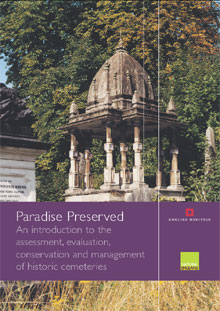
Paradise Preserved English Heritage, 2002

Paradise Preserved
English Heritage, 2002

Of course, I should have known that somebody would already have done a simple and  succinct history of burial grounds and their changing role better:  in this case it was English Heritage in a well illustrated report called Paradise Preserved that was published in 2002.

It’s available as a free download at:

Click to access paradise_preserved_20081010174134.pdf


John Claudius Loudon, unknown artist, National Portrait Gallery

John Claudius Loudon, unknown artist, National Portrait Gallery

John Claudius Loudon, the great Victorian garden writer, designer and theorist, merits a lengthy mention in it because he was the first to write at length about cemetery design. That might sound a bit strange:  after all a cemetery is surely simply a place to bury our dead and shouldn’t require much designing.  In fact the layout and planting of cemeteries has been a matter of considerable debate since the 17th century.

John Evelyn, by Robert Walker, 1648, National Portrait Gallery

John Evelyn, by Robert Walker, 1648, National Portrait Gallery

John Evelyn, for example, argued “that there none so fitt places to bury in, than our Groves and Gardens, where our Graves may bedecked with…fragrant flowers… verdures, & perenniall plants, the most naturall Hieroglyphicks of our future Resurrection and Immortalitie; besides what they will conduce to meditation…and we might worthily declaime against our Custome of interring our dead in the body of our churches, as both undecent [&] unhealthy.” [Elysium Britannicum, p.157].

Sir Christopher WRen by Edward Pierce, Ashmolean Museum

Sir Christopher Wren
by Edward Pierce, Ashmolean Museum

Meanwhile his friend Christopher Wren suggested something much more formal. Burials should be “in Cemeteries seated in the Out-skirts of the Town… This being inclosed with a strong Brick Wall, and having a Walk round, and two cross Walks, decently planted with Yew-trees, the four Quarters may serve four Parishes, where the Dead need not be disturbed at the Pleasure of the Sexton, or piled four or five upon one another, or Bones thrown out to gain Room.” [Letter of advice to the Commissioners for Building Fifty New City Churches,  1711]


The Poor Man's Burial by Marcellus Laroon, 1687

The Poor Man’s Burial by Marcellus Laroon, 1687

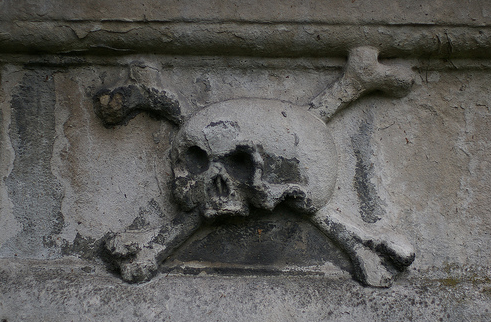
Skull and crossbones from a tombstone in the Huguenot Burial Ground, Wandsworth http://londoncemeteries.co.uk

Skull and crossbones from a tombstone in the Huguenot Burial Ground, Wandsworth
http://londoncemeteries.co.uk

By the early 19th century most urban churchyards were a scandal.  Graves were constantly re-used, bodies not properly buried, bones often lying scattered around, and to make matters worse body-snatching was rife.   As the Penny Magazine of August 2nd 1832 noted: “There are many church-yards in which the soil has been raised by several feet above the level of the adjoining street by the continual accumulation of mortal matter; and there are others in which the ground is actually probed with a borer before a grave is opened! Many tons of human bones are sent each year from London to the north, where they are crushed in mills contrived for the purpose, and used as manure.”  See more on this at:

http://londoncemeteries.co.uk/2011/07/24/the-very-evil-custom-of-interring-the-dead-in-towns/#more-1663

For those of you interested in such things – which I suspect is most of us secretly – there is an excellent -and witty -analysis of 18th/19th century pauper burials in London by Jeremy Boulton.  Called “How to be duckfood” its available as a downloadable powerpoint presentation:      Howtobeduckfood

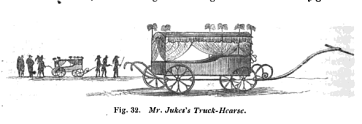
from Loudon’s On the Laying Out, Planting and Managing of Cemeteries, 1843

Parliament was driven to act. It legislated to  allow the construction of new burial grounds by both private companies and local authorities,  outside the built-up areas, and eventually closed many churchyards for further burials. And all the time the debate on the design of the new burial spaces was still raging.

But what had this got to do with Loudon?

In 1813 Loudon had undertaken an extraordinary journey.  In the midst of the Napoleonic wars, and in the immediate aftermath of the disastrous French retreat from Moscow he had set out to cross the continent and visited Poland, before going along the Baltic coast to  St Petersburg and then moving on to Moscow.  Apart from the obvious horrors of seeing countless unburied soldiers rotting in roadside ditches,  he explains in the Preface to On the Laying Out, Planting and Managing of Cemeteries and on the Improvement of Churchyards which was eventually published in 1843, that…

Loudon.cemeteries.preface

As a result he  set down his own ideas in print, firstly in his own journal, The Gardener’s Magazine, and then in his book which is available to read or download at:

https://archive.org/stream/onlayingoutplan00loudgoog#page/n10/mode/1up

loudon.cem2

from Loudon’s On the Laying Out, Planting and Managing of Cemeteries, 1843

Loudon was a practical man with a great concern for efficiency, morality and ‘taste’.   His ideas for improving cemetery design were usually extremely down to earth [if that isn’t too awful a pun].

They included ‘burial boards’ [streamlined ways of getting coffins into the ground – &  if that intrigues you then see pp. 31-36 for more details], better drainage and ventilation systems [think about it],  the outsourcing of monument making from expensive city masons to those in rural and stone quarrying areas, and even more mundane things such as better ways of keeping records of burials in ledgers.

But for Loudon the practical went hand in hand with the aesthetic and he also suggested a range of ‘geometric’ layouts for burials,  as can be seen in this illustration from the book.  Planting was critical too: note his mention on the page shown above  of Abney Park in Hackney. This was  the first arboretum cemetery, laid out in the former 18thc landscape gardens of  two suburban villas, but when the cemetery was opened it  was according to Loudon, “highly ornamented” since it was planted out with virtually the entire content of Loddiges’ nursery catalogue. [Actually that’s hardly surprising since George Loddiges was a shareholder in the company and organised the planting].

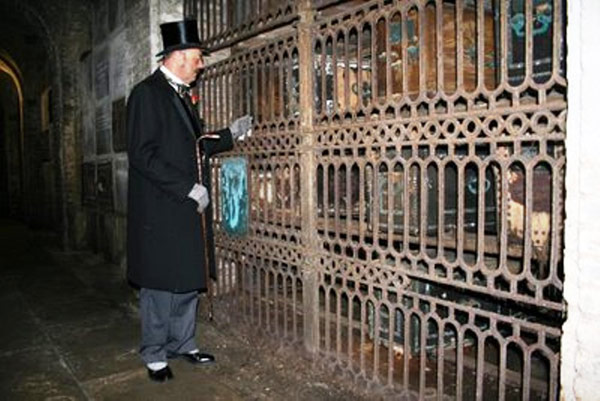
The catacombs at Kensal Green © rayfrenshamworld.blogspot

The catacombs at Kensal Green © rayfrenshamworld.blogspot

pic_4

Warstone Lane Cemetery, Birmingham (Photo: Jonathan Lovie) from http://www.buildingconservation.com/articles/designed-landscapes/designed-landscapes.htm

But Loudon wasn’t content with making positive suggestions. He liked to ladle out the criticisms too and in his usual trenchant style.  For example he condemns the  “practice of exposing the coffins to view in catacombs” as “disgusting … and dangerous to the living” because of the “suffocating effects of the effluvia of decomposition”.  Amongst other unpleasant side effects – such as exploding bodies [see page 4 of the book for the macabre details] he thinks this is why grave diggers always have “pale and ghastly countenances.”   Burial in this manner – “the disgusting boxing up of dead bodies, in defiance of the laws of nature” is not “in good taste”, should be heavily taxed and not allowed under any place of public assembly.

Catacombs had become newly fashionable.  Our database lists 23 cemetery sites that had them, including Birmingham’s Warstone Lane, Anfield in Liverpool, Church Cemetery Nottingham and the General Cemeteries in Manchester, and Sheffield as well as most of the major London ones – Highgate, Abney Park, Brompton, Nunhead, Norwood and Kensal Green. Some were commercially successful while others like those in St Bartholomew’s Churchyard in Exeter were a financial disaster: there, only 11 burials took place in the grand Egyptian style vaults built into the hillside, out of the more than 17500 interments there during the century the burial ground was open.  It was as Loudon sharply notes”a serious drawback to the profits of the shareholders.”

The Catacombs, St Bartholomews Churchyard, Exeter © Copyright Chris Allen & licensed for reuse under Creative Commons Licence.

The Catacombs, St Bartholomews Churchyard, Exeter © Copyright Chris Allen & licensed for reuse under Creative Commons Licence. For more information see: http://www.exeter.gov.uk/index.aspx?articleid=1964

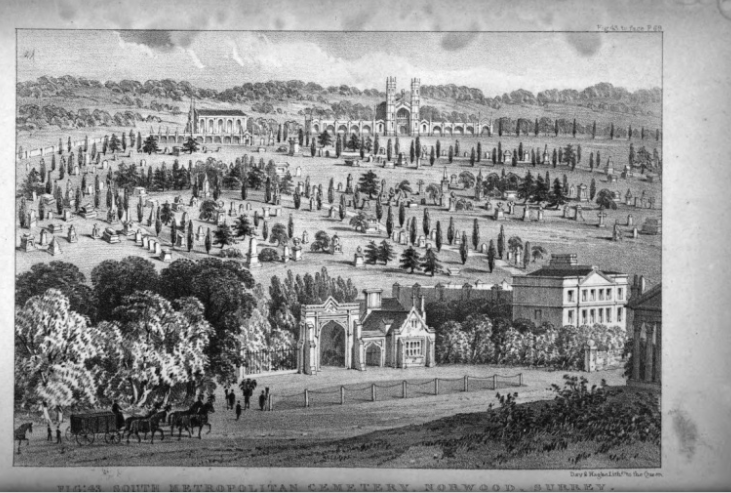
But it was not just catacombs that Loudon objected to. At Norwood, one of the earliest private cemeteries, designed by William Tite for the South Metropolitan Cemetery Company and opened in 1837, there were indeed spectacular catacombs set under the Anglican chapel.  They came complete with a silent hydraulic catafalque to lower the coffins through the chapel floor.  For images and more details including how to visit them see:

http://www.westnorwoodcemetery.com/under_cemetery/

If this wasn’t crime enough in Loudon’s eyes,  the 40 acres of grounds were laid out in a naturalistic style, with glades and groves of deciduous trees.

Loudon.cem4

from Loudon’s On the Laying Out, Planting and Managing of Cemeteries, 1843

“It is too much in the style of a common pleasure-ground, both in regard to the disposition of trees and shrubs and the kinds planted.”  Loudon argued that the planting tree s in belts and clumps like this was wholly inappropriate because cemeteries do no\t “require shelter and shade; because nothing is more desirable as to have a free current of air and admit the drying influence of the sun; and because it is impracticable to form graves in clumps and belts.” Instead trees should be “scattered” singly to make the most efficient use of the land, and used to line the roadways so that shade was cast for mourners walking along them, or to form a “foreground to the scenery beyond”  He even objected to the deciduous trees used “since th.ey formed light-foliaged bulky heads” preferring instead “fastigiate conical dark needle-leaved evergreens [which] shade much less ground, produce much less litter when the leaves drop, and by associations, both ancient and modern are peculiarly adapted for cemeteries.”

Loudon.cem5

Loudon’s “Improvements” to Norwood Cemetery, from  On the Laying Out, Planting and Managing of Cemeteries, 1843

To make sure everyone understood he then published his own version of the cemetery company’s image. Leaving the foreground and distance untouched h.e confined his alterations to the main cemetery planting, changing deciduous trees for his preferred “dark-foliaged fastigiate and conical trees”.

Which do you prefer?  Are you a person of taste and judgement? And watch out what you think or you too will be subject to Loudon’s censure since… “We do not say that everyone who compares the two pictures will prefer ours to the others, because we do not allow everyone to be a judge in this matter, but we do expect that all will ackno|wldge there is a distinctive character in our view.”  He claims his approach is not only in keeping with contemporary continental design but also with the historical tradition of ‘the ancients’ who used trees like cypresses extensively in burial sites, and also of oriental cemeteries.  To reinforce the point he adds images of a Chinese cemetery, although strangely one named the Vale of Tempe which is a classical site in Thessaly!

Loudon.cem.china

from Loudon’s On the Laying Out, Planting and Managing of Cemeteries, 1843

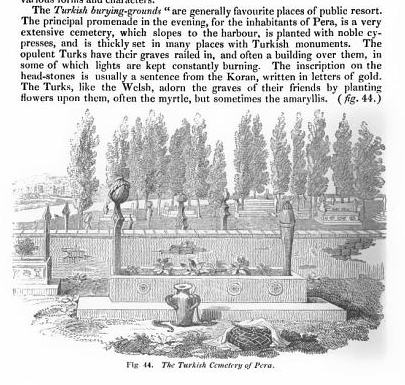
Instead he wanted cemeteries to be considered as gardens with walks laid out round them. They should either be planned like this in the first place, or existing churchyards and other burial places could be converted later.  His book gives examples of where this has been done, including rather exotic ones from Turkey and Persia,

The cemetery at Pera in Istanbul, from on the laying out of cemeteries, 1843

The cemetery at Pera in Istanbul, from Loudon’s On the Laying Out, Planting and Managing of Cemeteries, 1843


The

TheCemetery at Hafiz in Persia , from Loudon’s On the Laying Out, Planting and Managing of Cemeteries, 1843

but Loudon then suggests how it was possible to create walks even in a churchyard which had not originally been laid out in a planned way.


Loudon.cem.walks

from Loudon’s On the Laying Out, Planting and Managing of Cemeteries, 1843

And of course Loudon tried to put his ideas into practice….but since I have already written 2000 words the pleasure of hearing about that will have to wait until next time.

← Back

Thank you for your response. ✨

Warning
Warning
Warning
Warning

Warning.

gas

Improved ventilation from Loudon’s On the Laying Out, Planting and Managing of Cemeteries, 1843


Posted in Uncategorized | Tagged , , , , , , , | Leave a comment