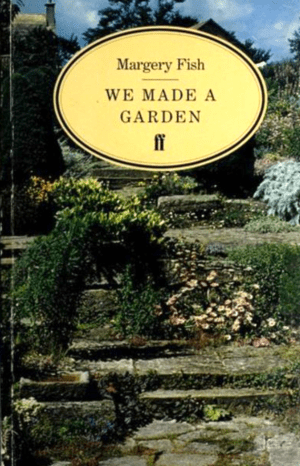
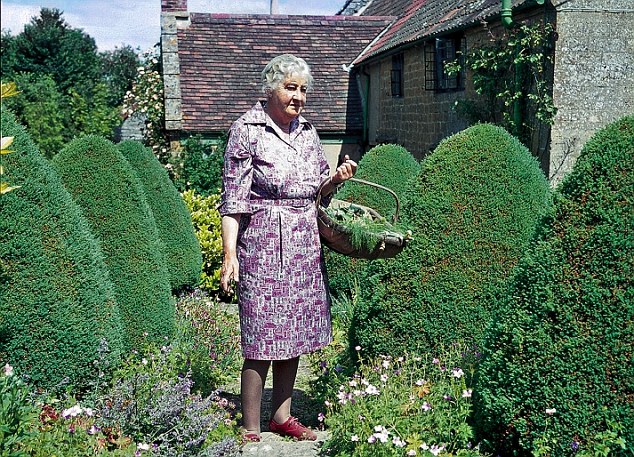
 Although I knew the name Margery Fish I didnt really realise how significant a character she was until I heard Catherine Horwood talk about her in one of the Gardens Trusts on-line lectures earlier this year. Catherine recommended Margery’s first book – We Made a Garden published in 1956 – as a good starting point for understanding how and why she had such influence. John Sales, the former head of gardens at the National Trust was even more emphatic, arguing as early as 1980 that “in the development of gardening in the second half of the twentieth century no garden has yet had greater effect” than her garden at East Lambrook in Somerset. In 1992 it was listed by English Heritage as Garde 1, ie as being of international significance.
A second-hand copy was duly ordered and was read in just two short sittings. It’s an easy read, with amusing anecdotes and insightful – and honest – comments on the whole process of creating- and maintaining- a garden, especially when you disagree strongly with your dogmatic partner!
But more than that, while most gardening books tell us how to prune or sow We Made a Garden gives a fascinating insight into the marriage of Margery and Walter Fish… which is perhaps why this post is called A Gardener’s Revenge?
Continue reading →
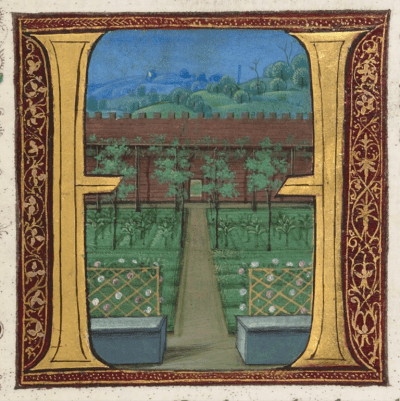

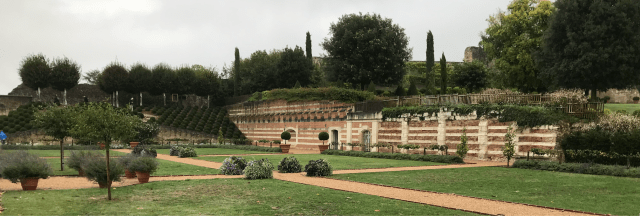
 I helped lead a Gardens Trust tour last autumn round gardens of the Loire Valley. Almost our last port of call was the great early Renaissance chateau of Amboise where a series of new gardens have been installed in recent years. It’s not often these days that money can be found for new garden projects like this especially in such a sensitive historic site. The chateau is former royal residence and overlooks a UNESCO World Heritage site, but its grounds were rather neglected until the great storm of 1999 wreaked such havoc that was no choice but a total rethink. It took a while to decide what to do but it was worth the wait and the new gardens have already been listed as being of national significance.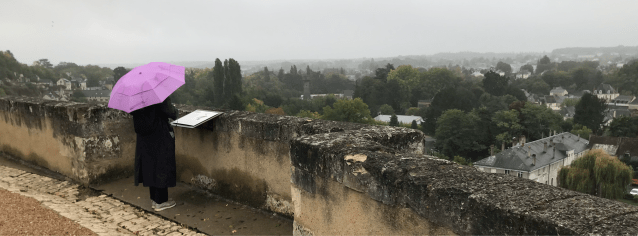




 The Garden History Blog
You must be logged in to post a comment.