Queen Adelaide

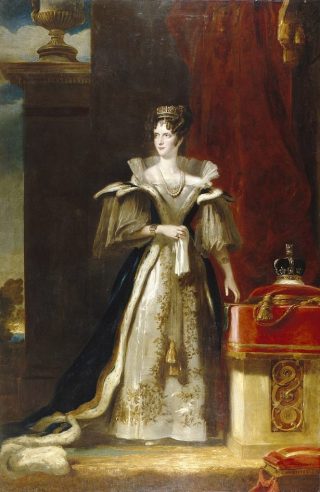
Let’s start today with a pub quiz question.  Who was Queen Adelaide? Did you even know Britain once had a Queen Adelaide?   Would it help if I told you that before her engagement to a royal duke she was Her Serene Highness Princess Adelheid Luise Therese Caroline Amalie of Saxe-Meiningen?

If you have heard of Adelaide it’s probably because of the capital city of   South Australia or one of the many pubs and streets round the country which were named after her.   Still not a clue?

And in any case what’s Queen Adelaide doing in a blog about gardens?
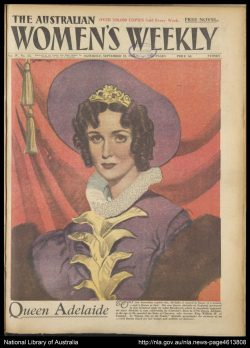
In fact she’s already made a passing appearance in seven  earlier posts : those about the early growers of money-puzzle trees,  the career of Charles Macintosh,  James Bateman’s giant book of orchids,   the charitable work of George Glenny, the story of the Other London Zoo,    the botanical artist Augusta Withers and most recently in a post about Belvoir. That might suggest that she had some interest in gardens and flowers, as indeed she did.

This post is going to explore that a bit further…

Continue reading

Posted in Uncategorized | Leave a comment

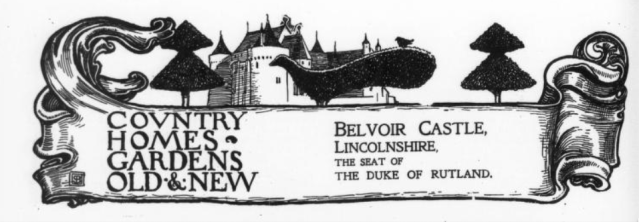
Belvoir: “a treat few places in England can supply”

This week’s post is going to continue the story of the gardens at Belvoir from the rebuilding of the castle in the early 19th century through to the current ambitious restoration project.

Historic England’s  description of the site gives no indication of anything much of significance happening at Belvoir for the rest of the 19th century. In fact there was more going on  than is usually acknowledged because the Dukes of Rutland were  lucky enough to have at least three head gardeners who  deserve much better recognition. And although things slowed down for most of the 20thc they have taken off again in spectacular style under the auspices of the present Duchess of Rutland.

Continue reading

Posted in Uncategorized | Leave a comment

Belvoir: Part 1: “the ornament of the castle”

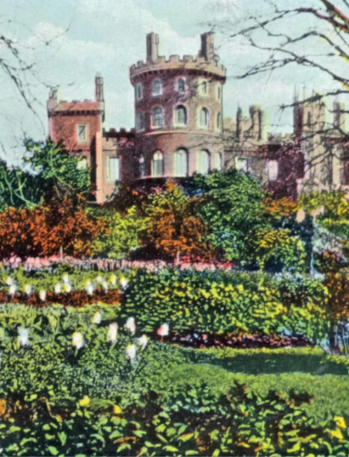
The Castle from the Rose Garden, DM August 2022

Alan Titchmarsh calls  Belvoir “everyone’s idea of what a castle should be”.  However, while it might look like an impregnable fortress in fact it’s  a “fake” stronghold, built in the mediaeval style in the early 19thc. It is the fourth castle on the site which has  been home to the Manners family, earls and later dukes of Rutland,  and their ancestors, since 1247.

Described by Gardeners Magazine around the time of its completion  as “a magnificent castellated structure on the summit of a lofty hill” it  appears to be surrounded by thick woodland but again that’s a slightly false impression because there are also a  series of interesting gardens terraced down the slopes.   The whole castle complex is set in a much wider landscape, partly designed by Cabability Brown whose plans were never fully completed.

In the last decade a huge renovation and improvement project has been taking place overseen by the current Duchess who you may have seen on the telly a few years ago with Alan Titchmarsh, explaining how  more of Brown’s plans were  being implemented even if about 250 years late!  But  as you’ll see she’s not the first of the Manners  family to take a big interest in the estates gardens, plants and landscape.


Continue reading

Posted in Uncategorized | Leave a comment

Unicorns in the Garden

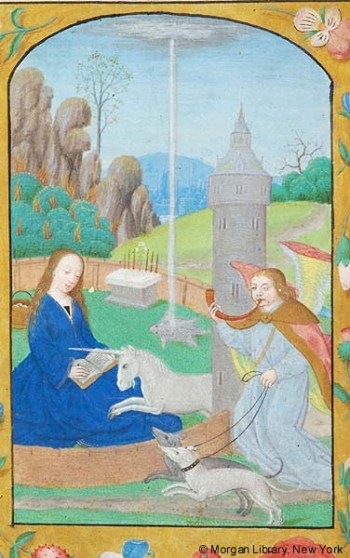
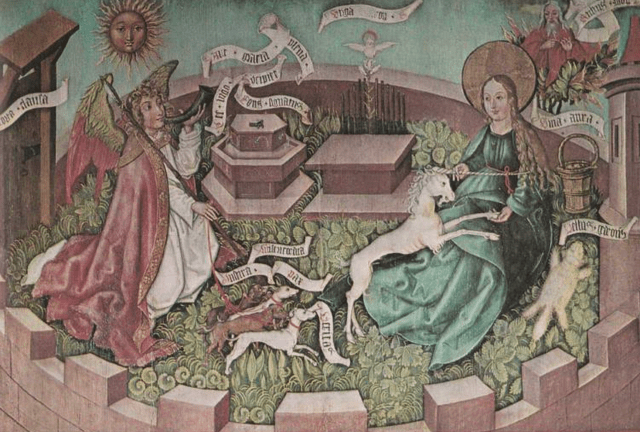
Last week’s post ended with this rather strange picture of the Virgin Mary sitting in a garden with a unicorn in her lap and the Angel Gabriel dressed as a hunter chasing after it with dogs.


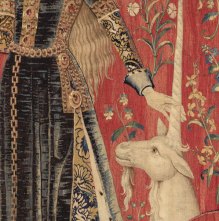
I asked what was going on, and this week I’m going to try and explain the story, as well as show how and why unicorns had a place in the mediaeval garden and beyond, including on the wall.

Continue reading

Posted in Uncategorized | Leave a comment

The Hortus Conclusus

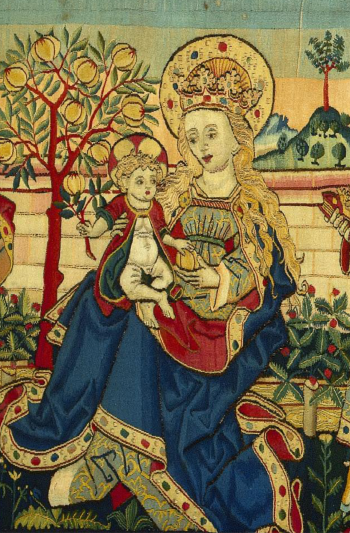
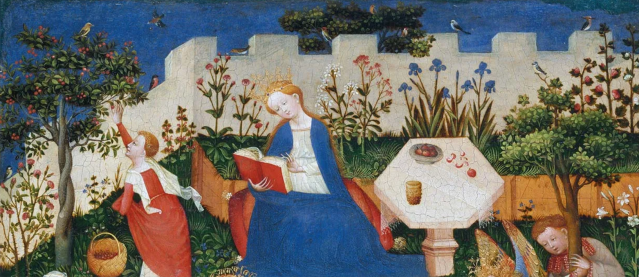
If I asked you to think about mediaeval gardens  I’m sure a few things would quickly come to mind…. monks, monasteries and herbs and then if you recall paintings you might have seen  on Christmas or greetings cards you might remember seeing people – particularly the Virgin Mary – sitting in a walled or hedged garden.

That walled or hedged garden is  often referred to as a Hortus Conclusus which is simply Latin for an enclosed garden.

But is it what mediaeval gardens were really like? Is it really a garden style?  Or maybe it has symbolic meaning instead?

Continue reading

Posted in Uncategorized | Leave a comment