Fontainebleau

France is famous for its  grand gardens such as Versailles, Vaux le Vicomte and Fontainebleau  which  are the living proof of the superiority of man over nature and -only half in jest – of France and the French over everybody else.

I’m a Francophile but even I sometimes wonder whether some of these gardens are almost “too great and grand for their own good” and need to be re-assessed afresh.


I visited Fontainebleau again earlier this week with a group of Gardens Trust members as part of a tour looking at important French gardens mainly in the Loire Valley. Fontainebleau was our first port of call. It’s just over 30 miles [55km] south east of Paris and is unusual because its gardens, created over  the last 500 or so years,  include examples of most of the most important stylistic developments in garden design.  Unsurprisingly Fontainebleau is  not merely  a national monument but a UNESCO World Heritage site.But is what you see today anything like they were when they were  created and are they worth their reputation?

Continue reading

Posted in Uncategorized | Tagged , , , , , , , , , | Leave a comment

EVB

Any idea who or what EVB might be?

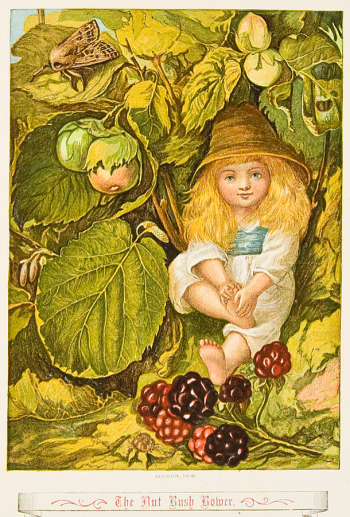
I’ll save you the trouble of googling it – and tell you its not a German rail and bus company, nor an electric vehicle battery or an empirical valence bond whatever that might be. Instead it’s the name used by an aristocratic woman who wrote and illustrated books but used her initials rather than her own name as she was afraid such work would be considered beneath her status. Although most of her early work was for children, the last thirty or so years of her life she turned her attention to gardens and gardening books.

So read on to find out more about EVB : Eleanor Vere Boyle.


Continue reading

Posted in Uncategorized | Tagged , , | Leave a comment

The Company’s Garden

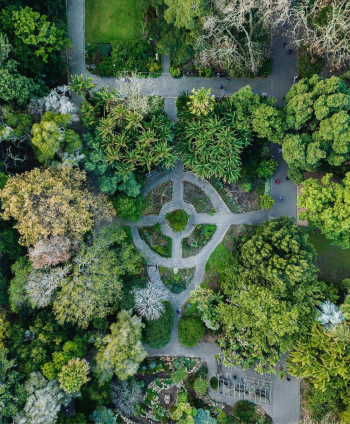
I’m writing this post in Cape Town the home of the oldest European garden in Africa.  Known as The Company’s Garden it  lies near the heart of the modern city just four hundred metres south of where Jan van Riebeeck and his party from the Dutch East India Company  landed on Table Bay in 1652 with plans to establish the first European  foothold at the Cape. Apart from a fort for defence and shelter, laying out the garden was their first priority. But, of course, that was for food not flowers.

Transformed from purely a utilitarian  garden to a much more horticulturally interesting one in the 18thc  it became one of the most significant gardens in the world, before sinking into decline under British rule in the 19thc when much of the original ground was appropriated for grand institutional buildings.

What survives today, although listed as a national monument, is a much smaller modern  public park but it still contains many historic trees  and the re-imagining of a small fraction of the original Dutch kitchen garden. And as we’ll see in another post soon it has been the inspiration behind one of grandest new gardens in the world.

Continue reading

Posted in Uncategorized | Tagged , , | 4 Comments

Gibside

The Orangery ruins

I wonder what George would have made of the children picnicking or playing football on his lawn?  He’d probably be more concerned that both his house and orangery lie in ruins and wonder how his wonderful estate came to such a sorry state.

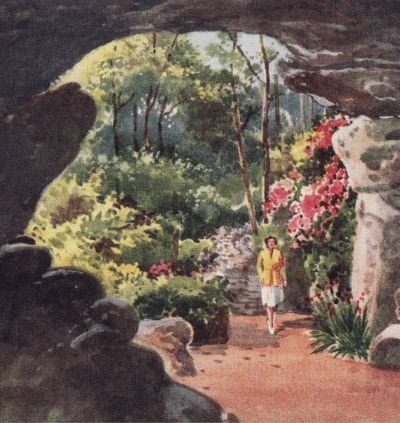
That was my first thought on my second ever visit  to Gibside  – the first was about 40 years ago when I was almost the only person there, and  very little was accessible or even visible of  what is one of just a handful of grand – indeed outstanding – 18th-century designed landscapes in Britain.  This time it was teeming with people. What had happened?

Gibside, August 2022

Continue reading

Posted in Uncategorized | Tagged , , , , , , , , , , , | 1 Comment

Pulham on the Prom

The early seaside promenades  I wrote about last week were artificial creations, designed to separate land and sea, and often ornamented or disguised with  gardens and other features.

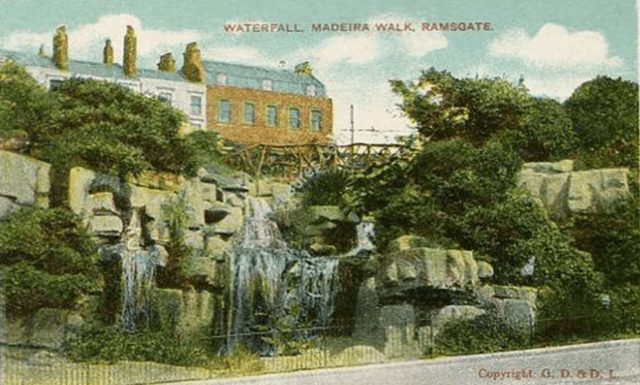
Later in the 19thc another form of artificiality began to make its appearance there: the mock rock invented by James Pulham and by the early 20thc this was being used to create seaside landscapes on a grand scale.

Continue reading

Posted in Uncategorized | Tagged , , , | Leave a comment