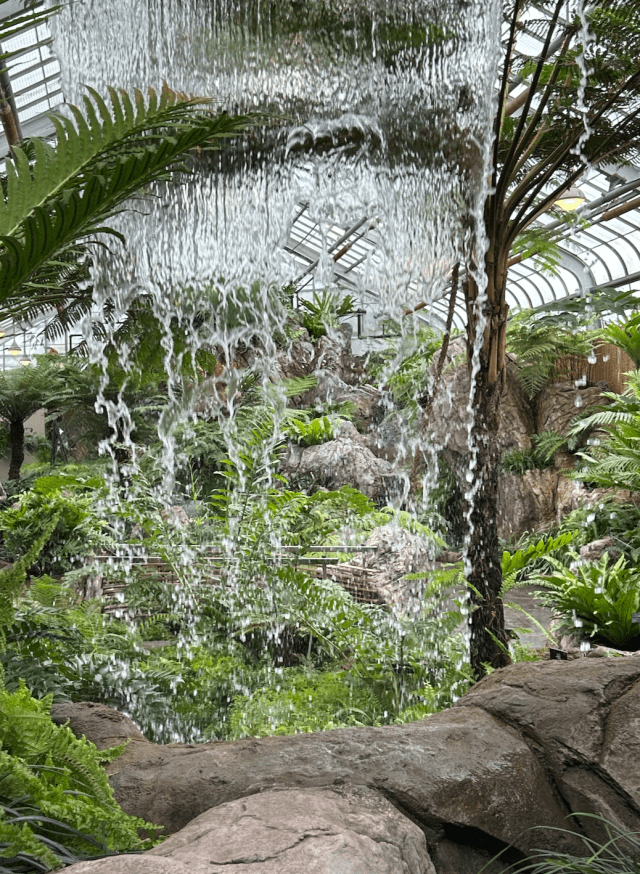
Montreal Botanic Garden and its origins

Montreal  is home to one of the great botanic gardens of the world. You might be forgiven for thinking  that since Canada was once part of the British Empire that the garden was one of the wide network linked or founded by Kew in the 19th century.  But it wasn’t.  

Instead, like the gardens at Niagara I wrote about last week, it was only set up in 1931 in part as response to unemployment caused by the Great Depression. Its great protagonist   was a Catholic monk, enthusiastic botanist, and Quebec nationalist, Brother Marie-Victorin.

He was a charismatic and persuasive figure and after a long campaign convinced the authorities that laying out a new botanic garden would not only be a good way of providing employment but also bring in tourists and of course be good for encouraging research and interest in plants and botany.

Continue reading

Posted in Uncategorized | Leave a comment

Niagara

Parr of the School of Horticulture building in Niagara Botanical Gardens

What is Niagara doing on a blog. about the history of  parks and gardens?

Well, if,like me until last  week, you thought that Niagara meant only the world famous Falls and nothing else, you might be surprised to know there are other less heralded, indeed almost unknown, important sights within easy distance of the Falls:  the area’s gardens and parks – many of them historic.  They are some of the best planted and maintained examples of public planting I have seen anywhere, a mix of the high quality and very colourful Victorian-style bedding  and modern sustainable planting, often using indigenous plant. There’s also a historic floral clock, a 99 acre [44 ha] botanic garden, and a world class horticultural college, as well as a whole range of nature conservation and environmental stewardship projects.

I should confess that I’d mentioned one of these gardens  in a post way back in June 2023 but had completely forgotten about it until I walked into it last week on holiday in Canada!  So give yourself a gold star if you remember who designed the garden in the photo below, otherwise read on to discover more…

Continue reading

Posted in Uncategorized | Leave a comment

The Decline and Fall of Moorfields

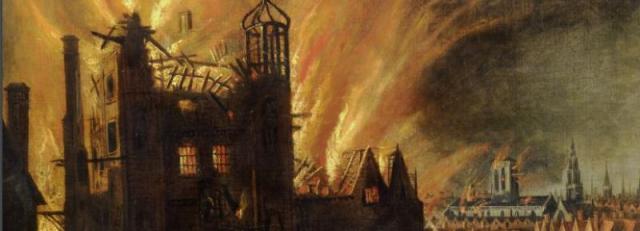
Last week’s post ended on a gloomy note and said worse was to come. And there couldn’t have been much worse than the Great Fire of London of 1666 which  burnt 80% of the old walled city. In the aftermath  Moorfields was quickly overrun.  People set up shelters and tents, then wooden sheds and then shops until one of the walks became known as New Cheapside and was paved over.  The rails and trees were used as firewood and there was even debate about whether to allow brick-makers to dig for clay  “to incourage the more free and plentifull supply of Bricks for rebuilding”. It was nearly ten years before Moorfields were clear again and replanting and repair could begin.

After that although there was constant renewal of the walks it was against a background of threats of development and neglect, before, at the end of the 18thc, the builders eventually won the battle and most of Moorfields disappeared.

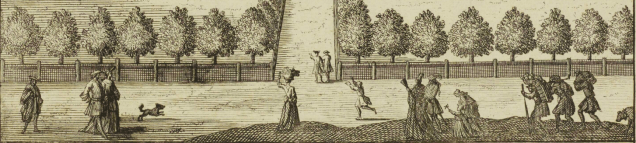
The booksellers of Moorfields using the rails of the walks as their counter, detail from an undated early 18th century print, private collection

Continue reading

Posted in Uncategorized | Leave a comment

Britain’s first public park?


Which is the oldest public park in Britain? Most books and websites will tell you that the first  funded from the public purse was Birkenhead Park which opened in 1845.  Others claim that the honour goes to  Derby Arboretum opened in 1840, although that was funded by a private benefactor. However there’s a strong case to be made for somewhere that was laid out well over 200 years earlier at Moorfields.

Say Moorfields to anyone in London and they’ll probably think of the country’s leading  eye hospital or maybe confuse it with Moorgate, the nearby busy tube station. In fact both the station and hospital were built on  parts of a series of planned public walks  just outside the capital’s Roman walls and only a few minutes walk  north from Guildhall, the centre of the City of London’s civic life.

Between 1606 and 1618 the three fields that made up The Moor  were laid out as “princely” public walks  as a symbol of  civic power and pride, following the latest European fashion.  However, things didn’t always go according to plan and  these days all that’s left  are two small open spaces: the sadly shabby “modernist” mess of Finsbury Square and the more sedate tree-filled green sanctuary of Finsbury Circus.


Continue reading

Posted in Uncategorized | Leave a comment

Rocambole: Art in the Garden

Art has always had a place in gardens.  Historically statues, columns, obelisks, urns, murals and even gnomes have all been very popular additions but more recently there’s been a trend to create sculpture gardens of a different kind, exhibition spaces where the garden provides a setting for contemporary work often on a temporary basis.
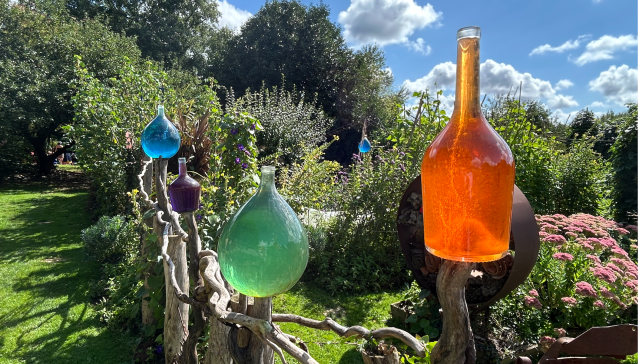
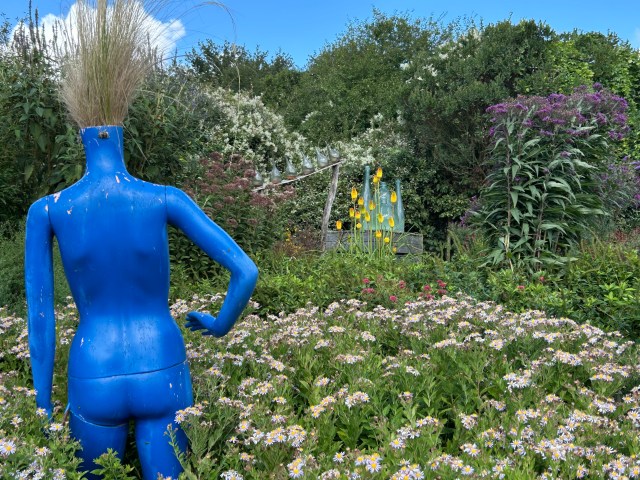
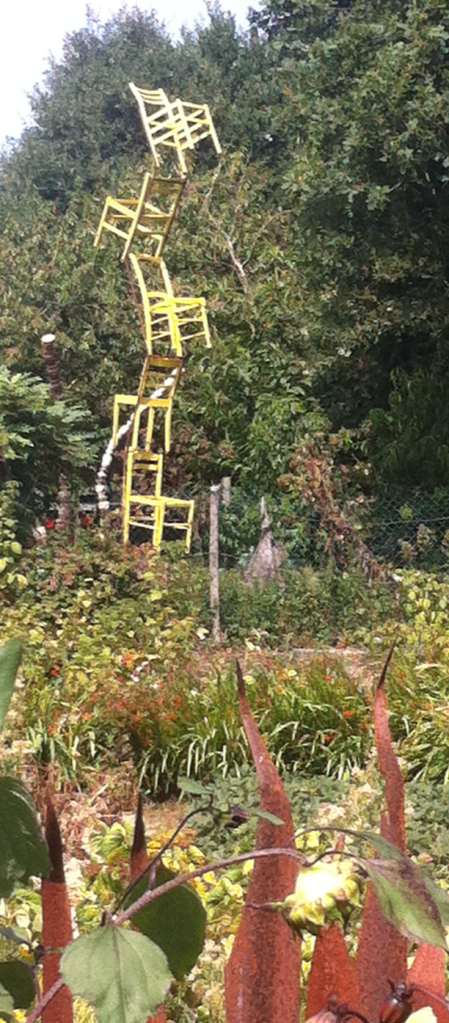
Sometimes such gardens can be rather quirky and today’s post is about a garden where nothing is quite as expected. It started life as a commercial market garden producing fruit and vegetables for the local markets, but has evolved over the past 20 years into a garden where although edibles still play a major role  the lead is now taken by art, but not of the conventional sort, and it’s even got its own cartoon book to explain its origins and purpose

For once I’m going to let images rather than words do most of the work this week  because the history of this garden is short and simple but  it typifies a growing trend of mixing horticulture with education and even entertainment,  with the garden as a destination for more than seeing some nice flowers and colourful vegetable beds.

Even its name makes a statement of intent..

Continue reading

Posted in Uncategorized | Leave a comment