West Wycombe & Sir Francis Dashwood

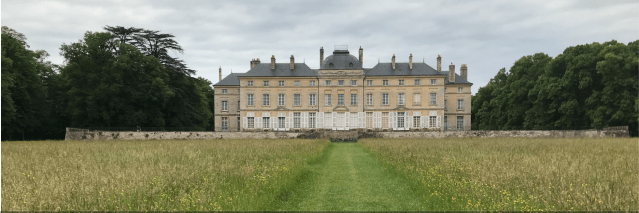
It’s very rare indeed to find a seemingly unspoilt designed landscape, especially one dating from the mid-18thc. Yet a few do exist, although I suspect none are as convincing,  despite the changes that have inevitably taken place, as West Wycombe Park in Buckinghamshire.

Created by the dilettante art collector, libertine and libertarian, Sir Francis Dashwood – clearly a man with a sense of humour – it is an impeccable Georgian estate, smaller in scale than  Stowe which is not far away, but equally special and if anything even more engaging.  It was my birthday treat visit recently…and what a treat it proved to be.


Continue reading

Posted in Uncategorized | Tagged , , , , , | Leave a comment

An Artistic Admiral

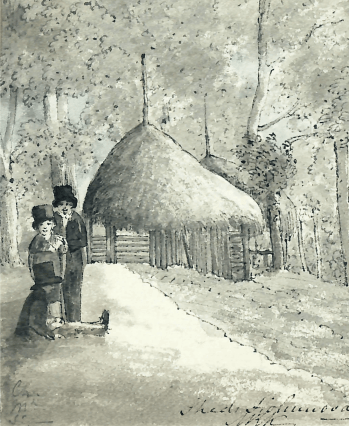
When Rupert Murdoch bought a new house for his [apparently soon-to-be-ex-] wife Jerry Hall in 2019 I wonder if he knew much about its history. Holmwood in the village of Binfield Heath near Henley cost over £11 million which might have surprised the person who lived there in the late 18thc/early 19thc,  Mark Kerr.

Apart from being the son of a marquis and having a distinguished naval career Kerr was also a talented amateur artist and seems to have had a particular interest in sketching gardens and landscapes including his own at Holmwood. While his work isn’t as colourful or witty as that of his contemporary Diana Sperling who I wrote about recently they still give a real insight in to a garden of the time.

Continue reading

Posted in Uncategorized | Tagged , , | Leave a comment

Floral Clocks

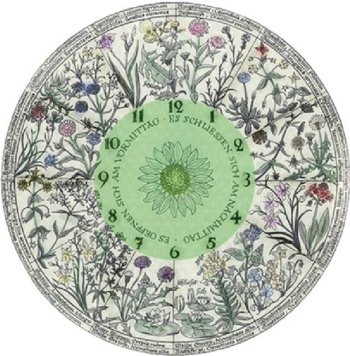
Travelling as I do often between the UK & France it’s easy to get confused about the time. Maybe it would be easier if I was using the clock invented by Carl Linnaeus the great Swedish botanist. He’s most famous of course for creating the  system  by which we we classify our plants but in 1748 he also devised a 24 hour floral clock.   I wonder if he knew that 144 years later a floral clock of a completely different kind would amaze the public in Paris, with others soon doing the same in Detroit and Edinburgh. It wasn’t long before municipal parks all over the world  were the places to go to get the correct time.

Continue reading

Posted in Uncategorized | Tagged , , , , , , , | Leave a comment

Sherlock Holmes and her Noah’s Ark

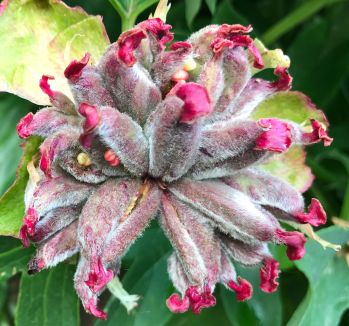
Any idea what plant this is? If you grow them you probably know but if you don’t why not have a guess

Yes its an extraordinary title for a post but it’s about an extraordinary project.   Just before Britain celebrated the Platinum Jubilee garden lovers in France were celebrating the re-opening of an amazing garden which itself only celebrates one family of plants.   Housed in the grounds of a huge 18thc chateau it is  the brainchild of one woman who has been building her collection – now the largest in the world – for  less than 20 years and only made it public in 2016.  To make matters more unusual it’s only open a few weeks each year.

Any ideas of Who? What? Why? and Where?

Continue reading

Posted in Uncategorized | Tagged , , | Leave a comment

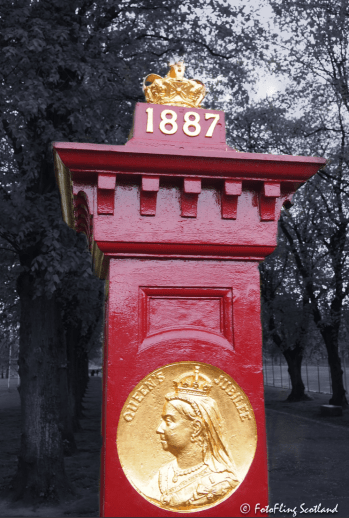
Victorian Jubilations

The Victorian  age saw public parks springing up all round the country. Rapid urbanization and industrialization led to poor housing, grinding poverty and fears of social unrest.   Parks were seen, by reformers, as one way of diffusing potential problems as well as improving the health and lives – to say nothing of  the morals-  of their working-class users.

Increasingly too, the creation of new parks  became a symbol of civic pride.

It was also the age of empire with years running up to the First World War  marking the high point of Britain’s imperial power.  These three factors coincided neatly with Queen Victoria’s Golden and Diamond Jubilees in 1887 and 1897.


Continue reading

Posted in Uncategorized | Tagged , , , , , , , , | Leave a comment