Reimagining Kirby

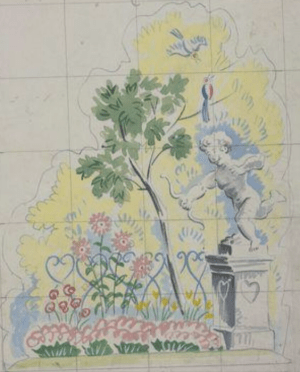
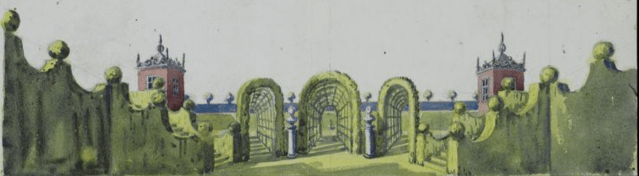
Gardens are ephemeral creations and surely impossible to recreate once they’ve gone. That hasn’t stopped a lot of people trying.  This is a trend that’s first noticeable in the early 19thc when it  tended to be a romanticised view of  past gardens that were installed.  But the first real evidence-based attempt happened at Kirby, the great Elizabethan mansion in Northants, when in the 1930s  archaeological techniques were used to discover and then try to recreate the early 17thc garden.

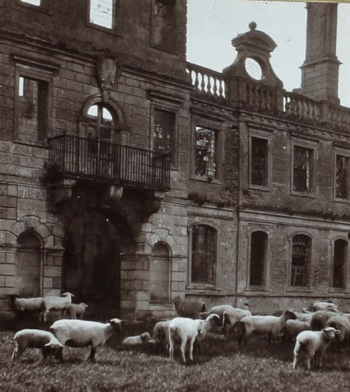
That wouldn’t have been necessary of course if Kirby hadn’t fallen first  into decline and then ruin, so let’s begin the story of how Kirby has been re-imagined with and why it had to be done in the first place!
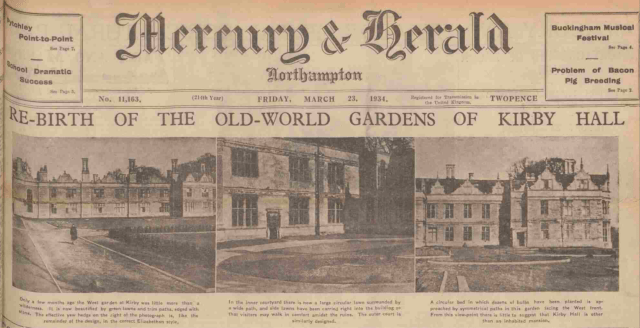
Northampton Mercury 23rd March 1934

Continue reading

Posted in Uncategorized | Tagged , , , , , , , , | Leave a comment

More Monkey Puzzling

Last week I  looked at the  discovery of the Monkey Puzzle tree by Europeans and at the very first specimens introduced to Britain by Archibald Menzies, and today I’m going to look at how it was introduced to British gardens on a grand scale.

Contrary to what you may have read elsewhere it doesn’t really have that much to do with William Lobb and the famous Veitch nursery of Exeter despite all their self-publicity.

I’ll also look at where it got its common name from –  especially since  there are no monkeys in Chile who might be puzzled by it.


Continue reading

Posted in Uncategorized | Tagged , , , , , , , , , , , , , | 2 Comments

The Monkey Puzzle

If there is one unusual tree most of us will be able to name without much botanical knowledge or any reference books  it surely must be the monkey puzzle. They became very popular in the mid-late 19thc   and whenever you see a large monkey puzzle tree in Britain you can be pretty sure that’s when it was planted, but how and why did they become such an obvious symbol of Victorian taste? And why on earth are they called  monkey puzzles?

Believe it or not it is all supposed to have begun with a banquet given in April 1795 by the wonderfully-named Ambrosio Bernardo O’Higgins, and an unusual dish that he served!

But of course you should never  believe everything you’re told…

Continue reading

Posted in Uncategorized | Tagged , , , , , , , , , , , | Leave a comment

Christopher, Charles and Kirby

After a recent post about the creation of the house and gardens at Kirby Hall in Northamptonshire today’s is going to look at the garden in its late 17thc heyday.

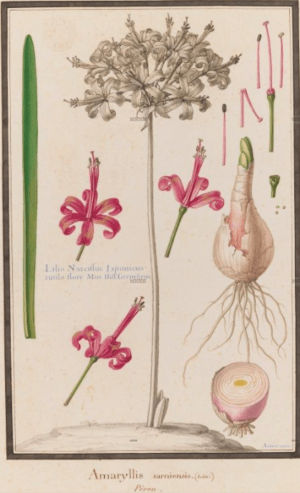
The Guernsey Lily at Kirby today

The reason we know so much about the garden at Kirby and what it contained is because  Charles Hatton was an inveterate correspondent. The British Library holds hundreds of letters from him to his brother Christopher, Lord Hatton, at Kirby – often 2 or 3 a week – which are full of political and family news but often with some mention of plants. Between them the brothers created what a visitor in 1692  called  “ye finest garden in England”.

What made it so special?

Continue reading

Posted in Uncategorized | Tagged , , , , , , | Leave a comment

The Occasional Garden…

I’ve been having an occasional week.  My partner started it with a joke about an  occasional chair, wondering what they were the rest of the time, and then I heard Todd Longstaffe-Gowan give a lecture about 18thc Town Gardens which included a nice anecdote about “an occasional garden” in a short story by Saki.  I’d heard of Saki and many years ago must have read some of his stories, because there’s a “complete” edition on the bookshelves  but I didn’t remember any occasional garden…

…so what had I missed?

Continue reading

Posted in Uncategorized | Tagged , | 3 Comments