The Ryder Cup for Gardening

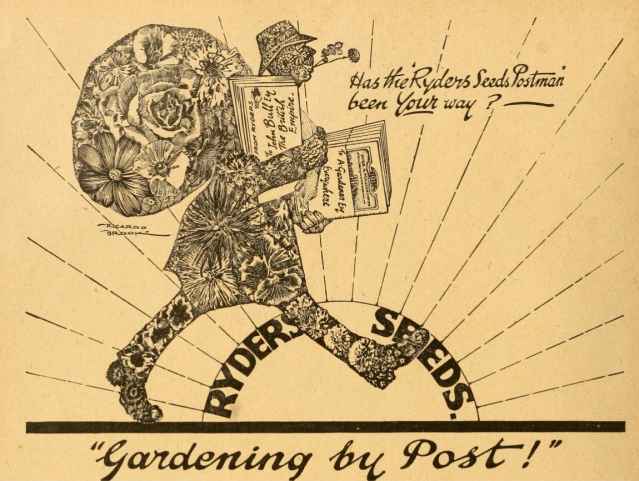
Pre-Covid I was looking for material for a post on Winifred Walker, the botanical artist and discovered that one of the companies who commissioned her flower paintings was Ryders of St Albans.  That name sounded familiar but  didn’t ring any horticultural bells so I set off down a side-track to see what was known about them too. It was well worth the detour.

Looking back it’s a pity that my brother, a super-keen golfer,  wasn’t with me because he’d have told me immediately why the name Ryder was familiar. I decided to leace reporting what I found until the next time  the other Ryder Cup happened which apparently it did last week….
 

Continue reading

Posted in Uncategorized | Tagged , , , | Leave a comment

Anne’s Grand Tour

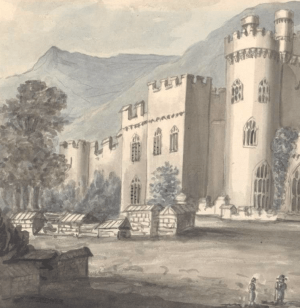
We’re all familiar with the idea of the Grand Tour, where young elite men were sent to finish their education touring the great classical and Renaissance sites of Italy. This had been going on since the mid-17thc but the Napoleonic Wars bought most European travel to a halt.  Suddenly many people turned to a home tour and began to discover their way round Britain instead.

And now it wasn’t just rich young men who went touring. So did quite a few women, including  Anne Rushout, a wealthy aristocrat and amateur artist, whose life I looked at a few months ago.  She sketched her way through north Wales as well as keeping an account on her journal.  It wasn’t her first trip  to the principality, nor was she a rare example of a female tourist.

detail of Ann’s painting of a trip down the Wye in 1802

Continue reading

Posted in Uncategorized | Tagged , , | Leave a comment

John Glover & his “hideous fidelity to Nature”

WELCOME TO OUR 400th POST!

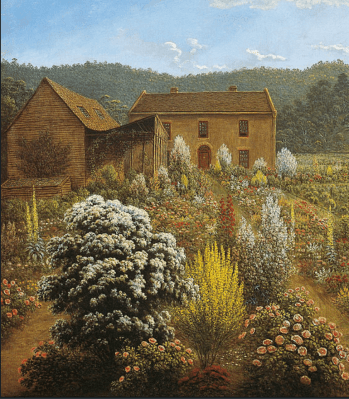
This is an artist’s painting of his own house and garden. Any idea of where it might be?

The artist was John Glover who was born near Leicester in 1767 but, despite the very English blue sky and  cotton wool clouds, does it look  like Leicestershire?


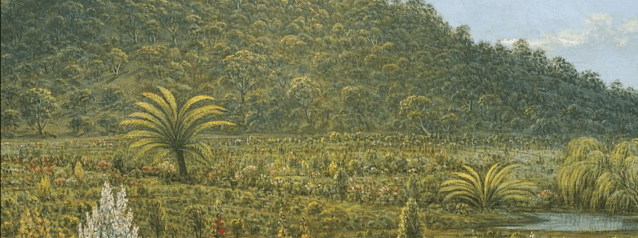
If it helps I think there are pink roses in the foreground, red hollyhocks in the centre and yellow mulleins  on either side but you might stand a better chance of guessing if you look at the another detail of the same painting. Still not sure? Better read on to find out!

Continue reading

Posted in Uncategorized | Tagged , , , | Leave a comment

The Gardener’s Year

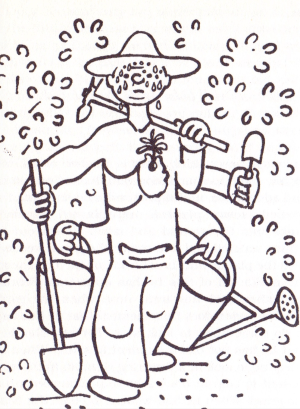
“There are a number of ways of laying out a garden. The best is by taking on a gardener.” So opens a delightful book on gardens by the Czech writer Karel Čapek. Published in Prague in 1929 with  illustrations by his brother Josef, it was first translated into English in 1931.

Normally gardening books from that era are, let’s be honest, worthy but dull, good for a bit of period feel, quaint photos or funny adverts but otherwise not much use and cratinly not widely read any more.  The Gardener’s Year is different. It is both timely and timeless and worth reading every word, and smiling at every drawing.

Continue reading

Posted in Uncategorized | Tagged , , | 3 Comments

Electroculture

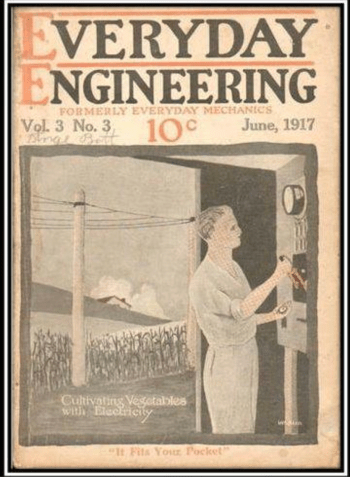
Did you know that the British Government spent the twenty years between the First and Second World Wars investigating the possibilities of electrifying plants?  And did so  in almost complete secrecy.  It means that last week’s perpetually electrified garden wasn’t quite the complete dead-end  I originally imagined and maybe not quite as hare-brained either.  In fact it was just the first sign of a complete new science or, as many others would have it, pseudo-science – Electroculture.

Although Benjamin Martin’s perpetual electrification machine that I wrote about last week disappeared without trace it clearly didn’t not stop  research and publication about the effects of electricity on plants continuing on both sides of the Channel…and  less than a hundred years later The farmer’s guide to Scientific and Practical Agriculture announced that “Electricity maybe classed among special manures”  and that was only just the start…

Continue reading

Posted in Uncategorized | Tagged , | 10 Comments