Here we go round the Mulberry Bush…

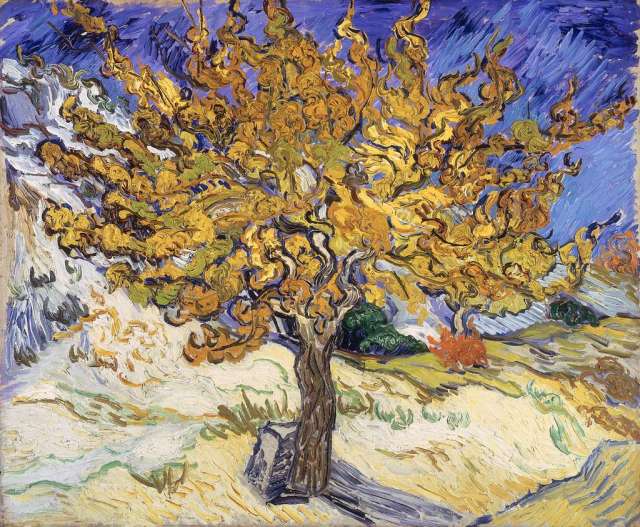
It was  here we go round the mulberry bush in my garden recently – or rather here we go under the mulberry tree. Mine is a Black Mulberry grown almost as much for its foliage and shape, as for its squishy sharp-flavoured dark red fruit which grow hidden from obvious sight beneath the leaves. Since its branches reach down to the ground collecting it  involves a lot of clambering about [and often a few curses] trying to avoid tripping over . But the effort is usually worth it.
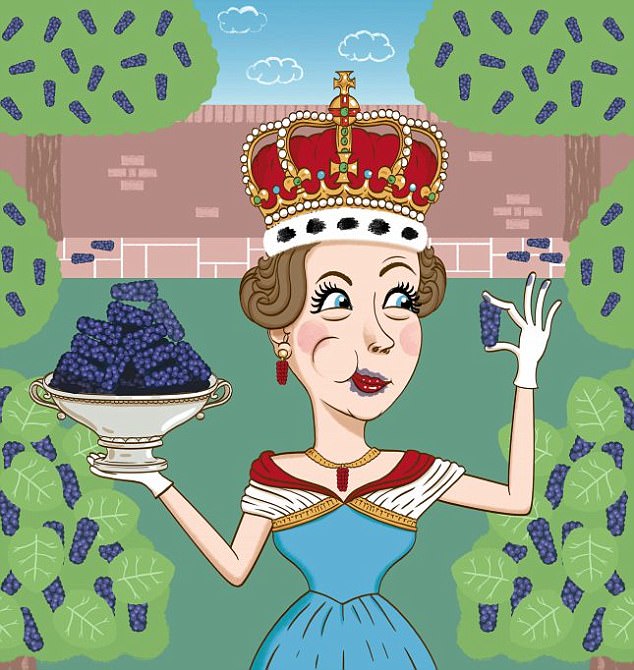
I also have a White Mulberry  whose  fruit don’t hide away under the foliage, but since they are  virtually tasteless  the ease of picking does’t come into  it because I don’t bother.   However the leaves would  be really useful if  I wanted to keep Bombyx mori, because they are the preferred food of their caterpillars,  better known as silkworms.

Both sorts have long histories in the garden and that’s what today’s post is going to explore BUT  what’s it got to do with the famous nursery rhyme, the murder of St Thomas à Becket and the late Queen Elizabeth?

 

Continue reading

Posted in Uncategorized | Tagged , , , , , , , , , , | Leave a comment

Joseph & Florence Pemberton and their roses

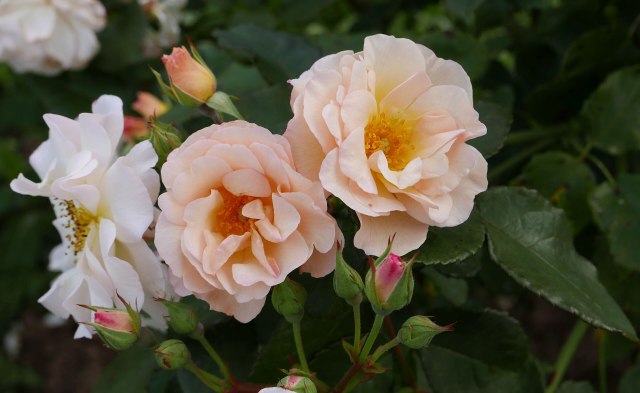
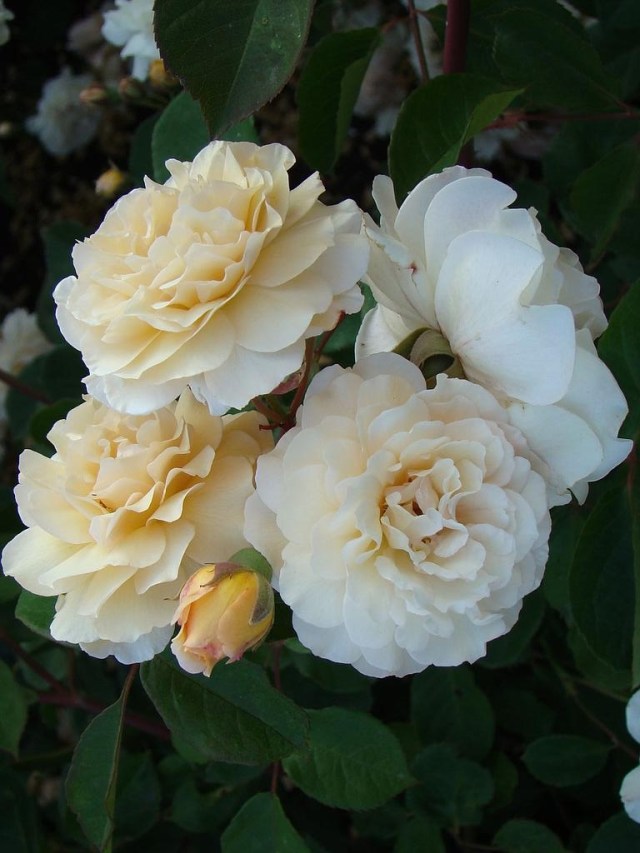
At one of our open garden days recently visitors were admiring a group of “Buff Beauty” roses which, despite the scorching heat and  weeks of drought, still managed to show a few flowers, and were asking about their origins. I confess to not having known that much so went away to find out.

It turns out they along with several others in my garden including “Penelope” and “Cornelia” are Hybrid Musks, a group developed about a century ago by an Essex clergyman and his sister, and which, although they weren’t that popular then, have not only stood the test of time but become extremely popular and robust additions to the garden.

So today’s post is about that vicar, the Rev Jospeh Pemberton, his sister Florence, and their gardeners Jack and Ann Bentall who were later to carry on their work creating a complete new family of hardy roses.

Continue reading

Posted in Uncategorized | Leave a comment

Edward Lear and his floral inventions

A tiger lily made of tigers

Years ago, in another life,  I was head teacher of a school in north London.  Our playground was on the site of the birthplace  of Edward Lear, so the children and I got to know a lot about him when  the centenary of his death  occurred in 1988.  I hope his work is a good subject for another  post about garden-related humour.

Most people will know Lear as the wonderfully eccentric writer of limericks and  nonsense verse where he invented characters such as the Quangle-Wangle, the Pobble Who Had No Toes and of course the Owl and the Pussycat.   What is perhaps less well known is that he was a gifted artist, especially of landscapes and  natural history. I wrote about him on here over ten years ago but  thought this would be a good opportunity to return and write about his onsense botany.

Continue reading

Posted in Uncategorized | Tagged , , , , , , , , , , | Leave a comment

How to Make A Garden Grow as suggested by William Heath Robinson

Welcome to my 600th post! And to celebrate such a momentous occasion I’m turning today to  the second of my garden-related  humour posts  and the genius of  William Heath Robinson.

I was both surprised and delighted to discover that he was born just a few hundred yards from where I live in London, although admittedly he went up in the world, moving several times before ending up in Highgate, a mile or so  [and several levels of social strata] up the hill from me.

As far as I know he’s also the  only artist  whose name has entered the English language with expressions such as  “It’s All a bit Heath Robinson”. That came about because of the popularity he gained from the  hilarious and implausible contraptions  he conjured up to carry out simple tasks and which led to him in the 1930s being dubbed  “The Gadget King”. But there was more to him than just wonderful book illustrations and humorous drawings, and one of those things was gardening.

Continue reading

Posted in Uncategorized | Leave a comment

Academic Research and Professional Networking in Garden History

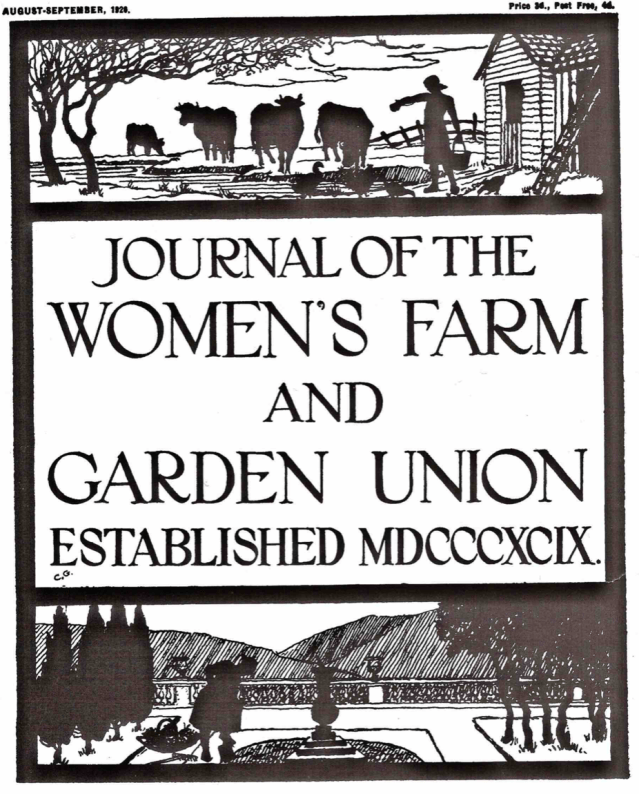
An early example of professional networking by women gardeners

I know that I normally only publish a new post on Saturday mornings but there a couple of things coming. up soon that I thought some of you might like to know about which justifies breaking my habit.

The first is a free on-line introduction to the MA and PhD opportunities in Garden History at the University of Buckingham for the academic year starting in October.

A RECORDING OF THE INTRODUCTION IS NOW AVAILABLE AT

https://us06web.zoom.us/rec/share/BOXjZHWUTGUocMlrgZRx3F3T_aiZj7YbRDjwMb5S8g1t1S0y33FVjDKFbDUmhAya.KNFnZuda9RGfTU2F?startTime=1755538172000

YOU’LL ALSO NEED THE PASSCODE
Passcode: ^^p&ed8C

The other is a survey organised by the Gardens Trust to see if there is interest in  establishing a network for those who  work, study or volunteer in historic gardens and related sectors, or are thinking about doing so.

Some of the MA students on a list to Eltham Palace in 2024. with Christopher Weddell, Senior Gardens Advisor at English Heritage


Continue reading

Posted in Uncategorized | Leave a comment