

Trees by Bernard de Lassus
I paid my annual trip to the International Garden Festival at Chaumont-sur-Loire last week. As a laboratory for contemporary garden and landscape design for nearly 30 years, and still full of weird and whacky ideas, Chaumont fits the idea of the Silly Season perfectly.
The theme this year was Biomimicry – and don’t worry I had to think what that meant as well. But actually it’s a really interesting concept because as the organisers say “Understanding and imitating living systems and, in particular, natural ecosystems is one of the keys to our future.”
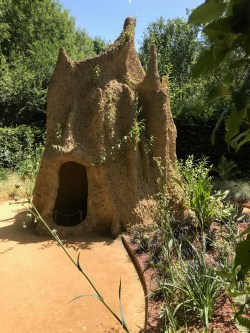
What’s a termite nest doing in a contempoary garden?
Biomimicry sees Nature much more than just a resource or a constraint but a source of inspiration for human progress : “Whether you look at the silk of spiders, the organisation of termite mounds or the tendrils of the Virginia creeper or burdock, there are a thousand opportunities to take a leaf out of nature’s book and apply its techniques to the garden” and beyond.
Now that all sounds very serious and worthy so what’s it got to do with the Silly Season? I think that will become clear when we look at some of this year’s temporary gardens but ask yourself first where do dinosaurs lay their eggs and what would it be like to sit inside a lemon squeezer ?

What species are these exotic looking birds?
 August traditionally marks the start of the silly season so in that spirit…..We’ve all heard of tulip mania in the mid-17thc and most will know about orchid-mania and the fern fever in the mid-19th but what about a gooseberry craze? I like gooseberries myself and grow a lot of them but I don’t think I’d describe myself as a gooseberry fanatic and hadn’t realised until I started researching this post that they could be the subject of intense passion. Yet for well over a hundred years they were, and there still are a small band of enthusiasts for whom that continues to be the case.
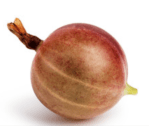 And if you want to know why then you should have been in Cheshire last week or be getting ready to go to North Yorkshire on Tuesday afternoon. These were/will be very serious occasions and anything but the silly season. Nevertheless in popular culture gooseberries often have strange assocations …




 The Garden History Blog
You must be logged in to post a comment.