Swans

The report of the deliberate killing of a swan in my local park got me thinking, not just about the brainless slaughter of an innocent creature presumably for “fun” but about why it was there in the first place.

Swans have a very special place in  history and there are all sorts of myths and stories about them – from the story of Leda and the Swan to Lohengrin and the mystery of the Swan Song, so I decided to do a bit of research about their place in our historic gardens and parks…and unfortunately kitchens as well. [But of course you can skip that bit!]

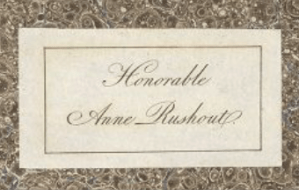
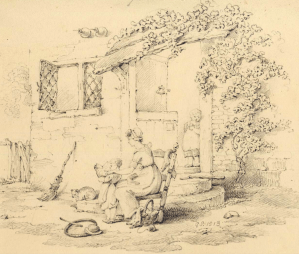
And what’s it all got to do with these strange late 16thc drawings?

Continue reading

Posted in Uncategorized | Tagged , , , , , , | 2 Comments

Austerity, Car Parks and Concrete

October in Bedford Square
George Salter (active c.1956–1959)
Camden Local Studies and Archives Centre

detail from Leicester Square proposals from Illustrated London Life xxx

I looked last week at the fate of London’s  squares during wartime, and one might have thought that things couldn’t get much worse.  Unfortunately, as in many other areas of post-war life they did.  There was no quick recovery and austerity hit harder than bombs. Part of the problem was that in the drive to rebuild, the normal standards of care and concern didn’t seem to apply.  Economic growth and regeneration and the need to rehouse large numbers of people took precedence over most heritage and environmental issues. And leading the way in all that was dependence on the motor car.  Many London squares were on their metaphorical knees at the end of the war and continued to have a rough time at the bottom of the priority list for decades….


Continue reading

Posted in Uncategorized | Tagged , , , , , , , | 2 Comments

The Square at War

This post is another in my series about London squares and will look at what happened to them during  the war.  They were dug up for allotments and bomb shelters, used as bases for barrage balloons and most famously had their railings pulled down to be recycled into munitions.

However I discovered very quickly that while some of this was easily provable, an urban myth had grown up about others, particularly the fate of the railings.  There is now a “standard” internet version of the story, recycled with the help of  Mr Google from website to website,  but is it actually true?


Continue reading

Posted in Uncategorized | Tagged , , , , , , , | 1 Comment

Gardening Good Taste…according to The Studio

Some people [including me] are lucky enough to have found a second career after retirement by turning their hobbies into work or at least almost full time voluntary activity.   One such was Charles Holme who, after a successful career  in textiles, took early retirement and founded The Studio: an illustrated magazine of fine and applied art, which first appeared in  April 1893.  

One of the applied arts he and the magazine  took an interest in was gardening, and in the years between 1907 and 1911 there were three special editions devoted to English gardens which amount to a summary catalogue of  what Holme thought was horticultural good taste at the time.  He was, as you will see, a man of decided views!

Continue reading

Posted in Uncategorized | Tagged , , , , , , , , | Leave a comment

Mornington Crescent and beyond

Our series of posts about the London Square has now reached the turn of the 20thc and the dawning recognition of their  importance.  So why Mornington Crescent?  

I’d guess that for most people all that  Mornington Crescent means is the zany panel game without rules on I’m Sorry I Haven’t A Clue.  Although no-one knows why the name was chosen   it may have been because of  its reputation as a downmarket slice of inner north London, wedged in between a major road  and the main railway line into Euston station, and served by a rather dilapidated tube stop on a branch of the Northern Line.  Unlike  the panel game it probably  wasn’t the destination  everyone aspired to reach.   

That hasn’t always been the case.  In the early 19thc when the area was being developed Mornington Crescent was a lot grander and had 3 grand curved terraces laid out around about large communal gardens and overlooking fields at the rear.  Later, after going into decline  it became home to a colony of artists.  Unfortunately the story ends with  developers building all over the gardens, but the one upside of what happened was that it served as a warning and helped saved the rest of London’s urban green spaces. Continue reading

Posted in Uncategorized | Tagged , , , , , , , | Leave a comment