A picture is worth a thousand words: Drawing Tudor Royal Gardens…

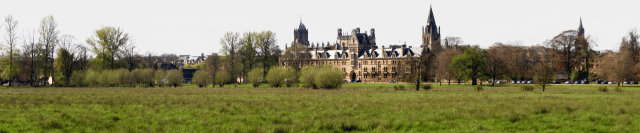
detail from Wyngaerde’s drawing of Richmond Palace, 1562

At Christmastide 1497 a great fire broke out in Henry VII’s private chambers in the mainly wooden mediaeval palace at Sheen in Surrey. It burned for 3 hours destroying a large part of the building  but it was reported that the king “does not attach much importance to this loss. He purposes to build… all in stone, and much finer than before.”

Henry did just that.  His new palace became his favourite home and was used by successive monarchs up until Civil War.   Then, along with all the other royal estates it was confiscated and sold. The new owners rapidly demolished it for its building materials.  There is now almost no trace of it left and if it wasn’t for one man we wouldn’t really have a clue  what this spectacular Tudor palace and its gardens  looked like.

I’m mid-way through running a course on Tudor Gardens for the Gardens Trust and when preparing it I was reminded of  how much we owe to this one individual not just about the  appearance of  Richmond, but also the palaces and gardens at  Hampton Court and to a lesser extent Oatlands and Westminster as well of the entirety of the  city of London at this time.   So today can I introduce you to him:  Antonis van den Wyngaerde…and please don’t be put off by his unpronounceable name

His signature on the drawing of Richmond Palace, 1562

Continue reading

Posted in Uncategorized | Tagged , , , , , , | Leave a comment

King Herod the Gardener

Sometimes you read something in the newspaper and have to do a double take or ask yourself if you’ve lost track of time and it’s really April Fool’s Day. Today’s post  was about one such occasion. It was a fortnight ago and I was reading a newspaper on-line over breakfast, when I spotted a headline which read “King Herod’s history of biblical massacres and bonsai trees”.  That was weird enough but intriguing, so having finished the article I begun to investigate the story behind it by tracking down the researchers involved.  The story gradually went from being jokily incredible to being absolutely fascinatingly incredible.  

See what you think!

The illustration that accompanied the article by Mark Bridge, History Correspondent of The Times Saturday January 16 2021,


Continue reading

Posted in Uncategorized | Tagged | Leave a comment

More on Lyveden

Last week’s post looked at the background to the building of Lyveden New Bield by Sir Thomas Tresham in the very last few years of Elizabeth I’s reign.  We began a tour of the garden and ended having reached the terrace at the top of the orchard and looked backwards, down the hill over the Old Bield.

Today we’re going to continue the tour round the other part of the garden and ending up at Sir Thomas’s extraordinary garden lodge, before going on to look at the more recent history of Lyveden.


Continue reading

Posted in Uncategorized | Tagged , , , , , , , , , , | Leave a comment

Lyveden

We all know that houses and gardens are the product of their creators, sometimes almost inextricably so. But we also know that houses get altered, rebuilt or even demolished from time to time while gardens are even more ephemeral and apart from the obvious seasonal changes of planting and growth, are often altered with every successive generation.

So today’s subject is extraordinary because in so many ways it doesn’t fit into that pattern. It was the product of one man’s imagination, passion and faith and it was abandoned when he died.

It helped that his family had little spare  money and  the estate was remote, so it has remained basically unchanged, except for the normal decay and change caused by time and the ploughing of some sections for agriculture.   No-one has ripped up his planting, rearranged the  layout or added new features. The relationship between house and garden is unaltered until very recently when attempts have been to recreate the very few things that have changed since his death over 400 years ago.

Lyveden in Northamptonshire is an almost incredible  survival of a late  Elizabethan garden, and its story  is inseparable from the story of  its creator Thomas Tresham.


Continue reading

Posted in Uncategorized | Tagged , , , , , , , , , , | Leave a comment

The Hanging Gardens of Nineveh?

Last week’s post looked at the evidence for the Hanging Gardens of Babylon, and ended with archaeologists excavating Babylon in the late 19th/early 20thc  unable to find any real sign of them.

Today’s is going to continue the story and end by suggesting that the Hanging Gardens of Babylon probably ought to be renamed following a complete re-examination of the sources and finds by Stephanie Dalley, formerly of the Oriental Institute in Oxford,  whose book The Mystery of the Hanging Garden of Babylon: An Elusive World Wonder Traced published in 2013 I finally read over the Christmas holidays and which inspired me to write about – and reassess -the fabled gardens.

Continue reading

Posted in Uncategorized | Tagged , | 2 Comments