Alice through the Garden Door

I was told off last week for writing a “teaser” post by mentioning Alice but not including much about her and nothing about Wonderland but today’s I hope will make up for that.

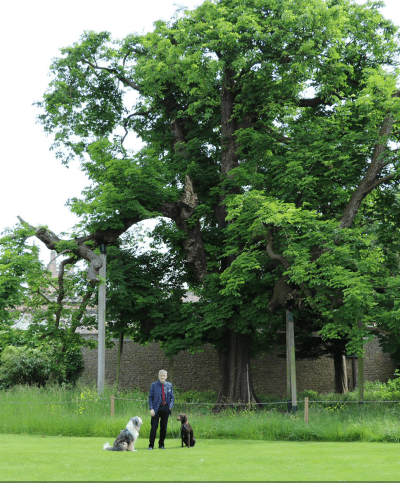
There are two gardens  at Christ Church which have Alice connections. The first  is the Cathedral Garden which was originally part of the precinct of St Frideswide’s, the  priory shut down by Cardinal Wolsey when he founded his college.

The other is the adjacent Deanery Garden, which was then and remains now the private garden of the Dean, who runs not only the cathedral but is also the head of  Christ Church itself.

What were these gardens like?  Is either of them Wonderland? Continue reading

Posted in Uncategorized | Tagged , , , , , , , | 2 Comments

Alice in Gardenland

I started this post a while back following a a visit to Christ Church for the Gardens Trust conference in Oxford in September 2019.  The visit had special significance for the Gardens Trust because Christ Church was once home to Mavis Batey the driving force behind the foundation of the Garden History Society – now part of the Gardens Trust -way back in 1966.  Her husband Keith was the Treasurer of Christ Church and she obviously fell in love with the city and Christ Church in particular.

Amongst her many other achievements, including being one of the leading codebreakers at Bletchley Park,  she also wrote about the most well-known literary figure associated with the college and the city: Alice Liddell, who was the inspiration behind Lewis Carroll’s Alice in Wonderland and Alice through the Looking Glass.

I got so far with my research and then it slipped down the agenda until recently when I saw that the V&A were planning an exhibition about Alice which was supposed to open next week but luckily is scheduled to run until Christmas.  So that was a good excuse to go back and look again at the world of Alice in Gardenland….

Continue reading

Posted in Uncategorized | Tagged , , , , | 2 Comments

Swans

The report of the deliberate killing of a swan in my local park got me thinking, not just about the brainless slaughter of an innocent creature presumably for “fun” but about why it was there in the first place.

Swans have a very special place in  history and there are all sorts of myths and stories about them – from the story of Leda and the Swan to Lohengrin and the mystery of the Swan Song, so I decided to do a bit of research about their place in our historic gardens and parks…and unfortunately kitchens as well. [But of course you can skip that bit!]

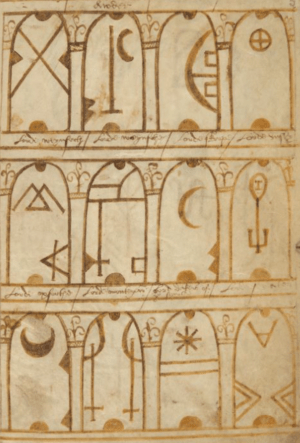
And what’s it all got to do with these strange late 16thc drawings?

Continue reading

Posted in Uncategorized | Tagged , , , , , , | 2 Comments

Austerity, Car Parks and Concrete

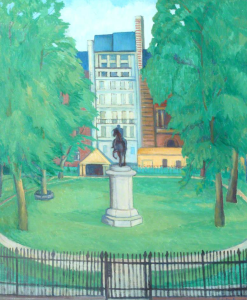
October in Bedford Square
George Salter (active c.1956–1959)
Camden Local Studies and Archives Centre

detail from Leicester Square proposals from Illustrated London Life xxx

I looked last week at the fate of London’s  squares during wartime, and one might have thought that things couldn’t get much worse.  Unfortunately, as in many other areas of post-war life they did.  There was no quick recovery and austerity hit harder than bombs. Part of the problem was that in the drive to rebuild, the normal standards of care and concern didn’t seem to apply.  Economic growth and regeneration and the need to rehouse large numbers of people took precedence over most heritage and environmental issues. And leading the way in all that was dependence on the motor car.  Many London squares were on their metaphorical knees at the end of the war and continued to have a rough time at the bottom of the priority list for decades….


Continue reading

Posted in Uncategorized | Tagged , , , , , , , | 2 Comments

The Square at War

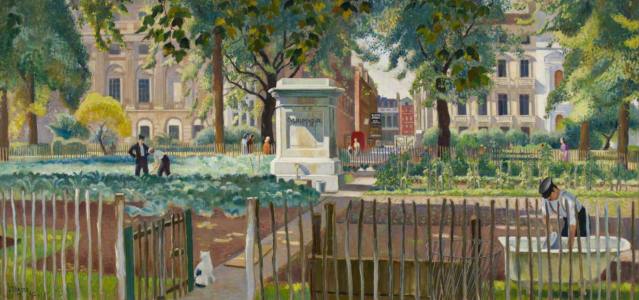
This post is another in my series about London squares and will look at what happened to them during  the war.  They were dug up for allotments and bomb shelters, used as bases for barrage balloons and most famously had their railings pulled down to be recycled into munitions.

However I discovered very quickly that while some of this was easily provable, an urban myth had grown up about others, particularly the fate of the railings.  There is now a “standard” internet version of the story, recycled with the help of  Mr Google from website to website,  but is it actually true?


Continue reading

Posted in Uncategorized | Tagged , , , , , , , | 1 Comment