

Our series of posts about the London Square has now reached the turn of the 20thc and the dawning recognition of their importance. So why Mornington Crescent?
I’d guess that for most people all that Mornington Crescent means is the zany panel game without rules on I’m Sorry I Haven’t A Clue. Although no-one knows why the name was chosen it may have been because of its reputation as a downmarket slice of inner north London, wedged in between a major road and the main railway line into Euston station, and served by a rather dilapidated tube stop on a branch of the Northern Line. Unlike the panel game it probably wasn’t the destination everyone aspired to reach.
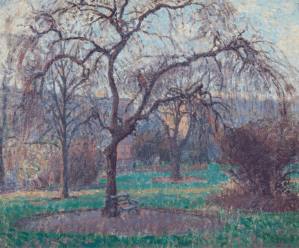
That hasn’t always been the case. In the early 19thc when the area was being developed Mornington Crescent was a lot grander and had 3 grand curved terraces laid out around about large communal gardens and overlooking fields at the rear. Later, after going into decline it became home to a colony of artists. Unfortunately the story ends with developers building all over the gardens, but the one upside of what happened was that it served as a warning and helped saved the rest of London’s urban green spaces. Continue reading







 The Garden History Blog

You must be logged in to post a comment.