Lyveden

We all know that houses and gardens are the product of their creators, sometimes almost inextricably so. But we also know that houses get altered, rebuilt or even demolished from time to time while gardens are even more ephemeral and apart from the obvious seasonal changes of planting and growth, are often altered with every successive generation.

So today’s subject is extraordinary because in so many ways it doesn’t fit into that pattern. It was the product of one man’s imagination, passion and faith and it was abandoned when he died.

It helped that his family had little spare  money and  the estate was remote, so it has remained basically unchanged, except for the normal decay and change caused by time and the ploughing of some sections for agriculture.   No-one has ripped up his planting, rearranged the  layout or added new features. The relationship between house and garden is unaltered until very recently when attempts have been to recreate the very few things that have changed since his death over 400 years ago.

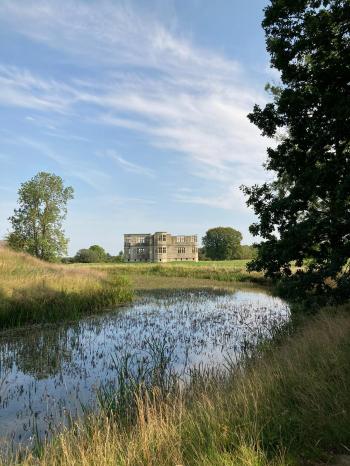
Lyveden in Northamptonshire is an almost incredible  survival of a late  Elizabethan garden, and its story  is inseparable from the story of  its creator Thomas Tresham.


Continue reading

Posted in Uncategorized | Tagged , , , , , , , , , , | Leave a comment

The Hanging Gardens of Nineveh?

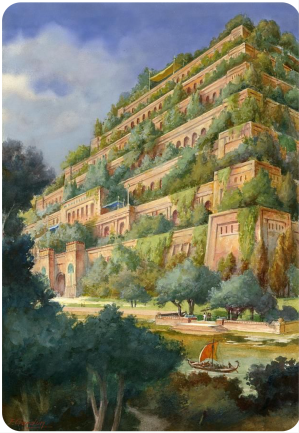
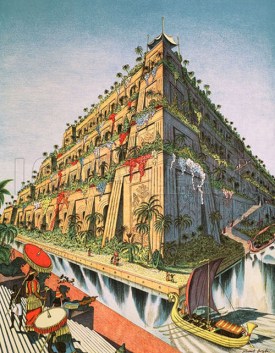
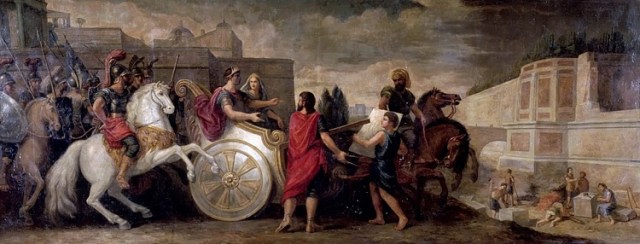
Last week’s post looked at the evidence for the Hanging Gardens of Babylon, and ended with archaeologists excavating Babylon in the late 19th/early 20thc  unable to find any real sign of them.

Today’s is going to continue the story and end by suggesting that the Hanging Gardens of Babylon probably ought to be renamed following a complete re-examination of the sources and finds by Stephanie Dalley, formerly of the Oriental Institute in Oxford,  whose book The Mystery of the Hanging Garden of Babylon: An Elusive World Wonder Traced published in 2013 I finally read over the Christmas holidays and which inspired me to write about – and reassess -the fabled gardens.

Continue reading

Posted in Uncategorized | Tagged , | 2 Comments

The Hanging Gardens of Babylon

HAPPY NEW YEAR!

History is always changing.  The kind of history I did at school, kings and queens, great battles and the stories of great men [and occasionally women] has given way to a much more broadly based picture of the past.  We now see things from more than one perspective and look at the stories of more than just a few rich and powerful people.  But some things don’t change. Our fascination with certain events, places and ideas is never-ending and, for example, I suspect most of us are  fascinated by great monuments and how and why they were built.

Who, for example, didn’t learn all about the Seven Wonders of the World at school?  Although it might be hard to  remember them all [answers at the bottom of the post!] I bet that there are at least a couple that everyone recalls because they were so fabulous and almost unbelievable. I’d guess we’d all think immediately of the Great Pyramid of Giza but I wouldn’t be surprised if not far behind came the Hanging Gardens of Babylon.

But what do we actually know about them?

You’d think that being the Hanging Gardens of Babylon we’d at least  know where they were, but unfortunately we don’t – indeed we can’t even be sure  they actually existed at all.  So read on to find out if there’s any the evidence  or if the whole idea is just a romantic myth…

Continue reading

Posted in Uncategorized | Tagged , , | 3 Comments

2020 on the blog…and the Annual Quiz

The quirks of the calendar mean that this is the last blog of 2020 and  that the blog has now been running for 7 years.  Like all 7 year olds it’s still growing, and at a pretty staggering rate.  This year there have been about almost 100,000 hits, [as I’m about to publish at 8.46 this morning it’s 98,569, so maybe it will get there by midnight on New Year’s Eve] virtually double last year’s 55,000, with the average number recently being well over 300 a day. There have been about  56,000 visitors, over double last year’s 26,000.

Thanks to the statistics provided by WordPress I’m also able to tell you that this is the 362nd post which in total contain 788,059 words, with this year’s posts averaging about 2500 words each.

As always, thank you  for your loyal support and the nice comments. Please keep  telling your friends about the blog and get them to join the mailing list.  Just  go to the very bottom of any post and  enter an email address and each new post  will appear, as if by magic, early on Saturday morning in good time for breakfast.

And now read on to test your memory with the 6th annual quiz based on this year’s posts.

Continue reading

Posted in Uncategorized | Leave a comment

“Oh, a dainty plant is the ivy green…”

Mr H in festive mood [courtesy of my brother Nicholas]

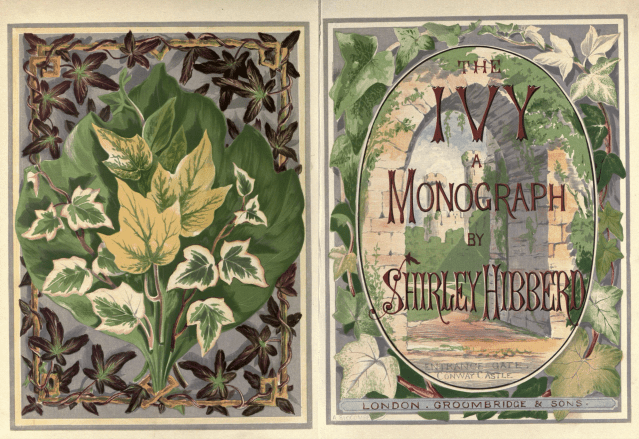
Writing a post for Christmas is never easy… unless there is an obvious  monstrosity to write about as there was in 2017 [check it out if you have managed to blank it from your mind!]  It would be easier  if I chose to be trite and write about the same things as everybody else desperately trying to be seasonal. But I don’t like being banal so  nothing about Christmas trees, and as far as plants go I’ve already written about mistletoe, poinsettias, the Glastonbury Thorn, and   amaryllis.  I’ve also written about  James Shirley Hibberd, the great Victorian garden writer and populariser of suburban gardening who loved artificial flowers at Christmas. 

Then I remembered that Hibberd also published  a whole book about a well-known , although now rather less popular, Christmas stalwart, and since I’ve already got pictures of him dressed up in the spirit of the season , today’s  post  will, in his words, “present to public notice a few particulars of the history, habits, and uses of that well-known plant, the Ivy”.

Continue reading

Posted in Uncategorized | Tagged , , , , , , , | Leave a comment