Transplanting Trees


A 250 year old wild pear tree hit the news headlines recently [Oct 20th 2020] for the second time in recent years.  In 2015 it was voted Britain’s Tree of the Year but the latest mention was no cue for celebration. The tree at Cubbington in Warwickshire had the misfortune to be growing on the route of HS2.  It faced the axe  despite all attempts by the local community to save it. It was dismembered  in apparent disregard of a ministerial announcement  that the removal of ancient woodland  would be halted  while a  review into the HS2 project was undertaken unless ‘absolutely necessary to avoid major cost and schedule impacts.’

But this post is not just about the fate of the pear tree but more about what HS2 proposed to do with it, and how that possibility has evolved.
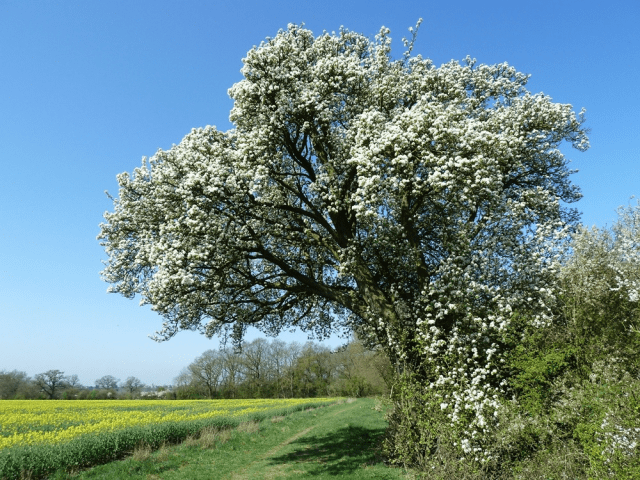
Artist Stella Carr documented the pear tree and you can see more of her work on Instagram stellacarr.artlandscape and on the website of the Cubbington Action Group

Continue reading

Posted in Uncategorized | Tagged , , , , , , | 2 Comments

The Bloedel Reserve

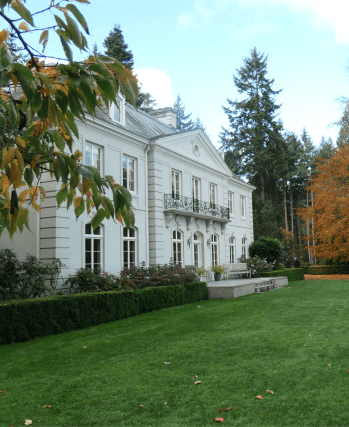
Doesn’t time fly?  This time last year I was lucky enough to visit this beautiful house and its even more beautiful garden.  Despite appearances it’s not an elegant little 18thc chateau in France but  a 1930s building  on an island in the middle of Puget Sound, about half an hour by ferry from Seattle.
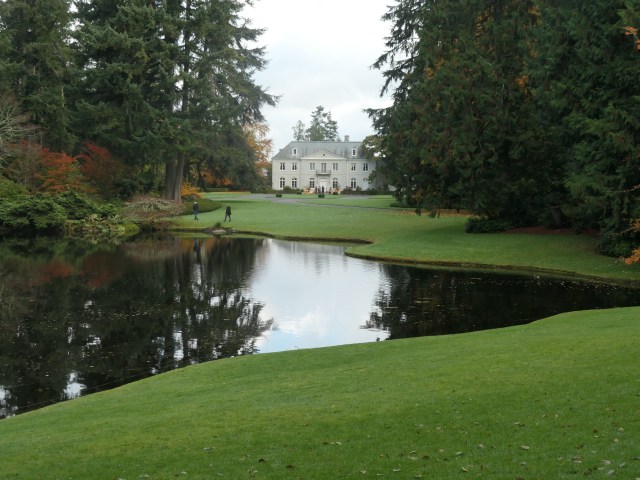
It was bought in 1951 by a timber magnate Prentice Bloedel and his wife Virginia.  Their vision was  both ambitious and unique, and led to the creation of what is now  known as the Bloedel Reserve. It was a true case of poacher turned gamekeeper, because the Bloedels took on a place that had been logged and turned it into a place of forest conservation.

It is not by any stretch of the imagination “a place of horticultural exhibition, but a place of contemplation that renews the spirit.” And while it’s difficult to convey the atmosphere  I hope the photos will help show how the Bloedels captured “the genius of the place.”

Continue reading

Posted in Uncategorized | Tagged , , , , , , , , | 4 Comments

The March of Bricks and Mortar

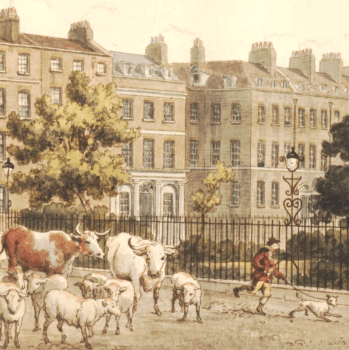
More on London squares. A couple of weeks ago I looked at the beginning of Rus in Urbe – the idea of the countryside  being  bought into the city and the way that it changed their layout and planting. What I didn’t say then was that in some ways the mixing of urban and rural wasn’t such a strange concept to Georgian Londoners.  Elements of the countryside were ever-present. As can be seen from contemporary images animals were still a frequent sight on the streets – and not just going to the markets or butchers. There were sheep in Cavendish Square and cows in St James Park where visitors could buy fresh milk direct from the dairymaids.

However by the end  of the 18thc  this was beginning to change and today’s post continues the story of London’s squares into the 19thc when the city expanded rapidly in what George Cruikshank satirised as the March of Bricks and Mortar. He could easily have added the march of shrubberies, iron railings, locks and keys.


Continue reading

Posted in Uncategorized | Tagged , , , , , , , , , , , , , , | Leave a comment

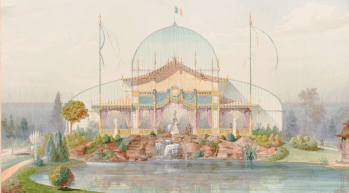
The Crystal Palace of Paris

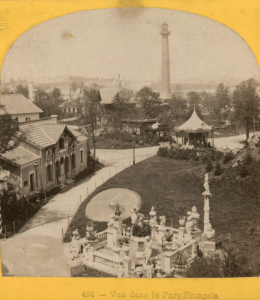
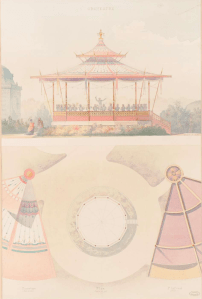
Last week’s post looked at the background to the 1867 Paris Universal Exhibition, and in particular at its parkland setting.  It was the first world fair to give horticulture a major role with one section of the park covering about 3ha [7.5 acres] set aside almost exclusively for it. This was known as the Jardin Reservé  which roughly translates as the Private Garden. At its centre was a large conservatory known as the Grande Serre or the Palais Cristal.

The Universal Exhibition had plenty of English visitors including William Robinson, writing for the Gardeners Chronicle and  the Rev TC Brehaut writing for the Journal of Horticulture. Both blew hot and cold over what they saw but Brehaut decided eventually that it was all “most skilfully and tastefully laid out, producing the finest landscape effects which undulating grounds, water, rock work, grottoes, trees and shrubs are capable of.”

Continue reading

Posted in Uncategorized | Tagged , , , , , , , , , , , , , , , , , , | 1 Comment

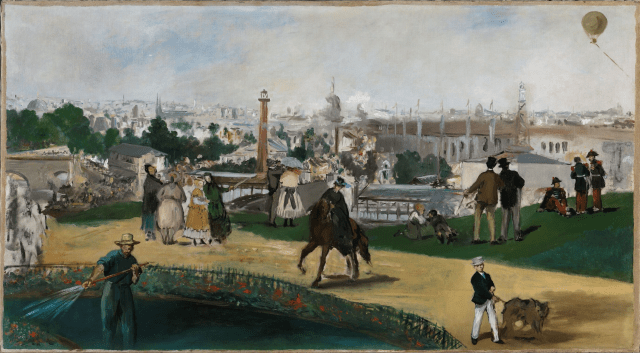
The 1867 Paris Expo

I had a lot of comments about the recent posts on the RHS gardens in Kensington which were used as the centrepiece for the 1862 International Exhibition.  The concept of a world expo was then comparatively novel. There had only been the Great Exhibition of 1851 and France’s attempt to outdo that with the Exposition Universelle in Paris in 1855. The Kensington show sparked Napoleon III’s interest in planning another, grander event. Napoleon’s aim for the exhibition was, apart from the glory of Napoleon,  the promotion of France as a world power, and Paris as the cultural capital of the world. 

The city  was in the middle of being transformed dramatically. Baron Haussmann was rebuilding and replanning  much of the old city, and incidentally creating an extensive and well-funded municipal park system. The Exposition universelle d’art et d’industrie was designed to complement his work and  showcase new modern France.

The Imperial  government commissioned   some of the best artistic, literary and scientific talent in France to promote the exhibition, including Victor Hugo.  In his introduction to the guide to Paris for 1867 Hugo asked : “What is a World’s Fair?  The world as neighbours. We talk a bit together. We come to compare ideals.  An apparent confrontation of products, in reality a confrontation of utopias.”  [remember that when you get to the end of the post]

Gardeners Chronicle covered the exhibition in considerable depth because as their correspondent in Paris, none other than William Robinson, wrote : “The world has seen some great shows of this kind, but this is the first instance in which horticulture has received the attention it deserves in connection with what purports to be an all embracing display of human work, art and taste.”

Continue reading

Posted in Uncategorized | Tagged , , , , , , | Leave a comment