

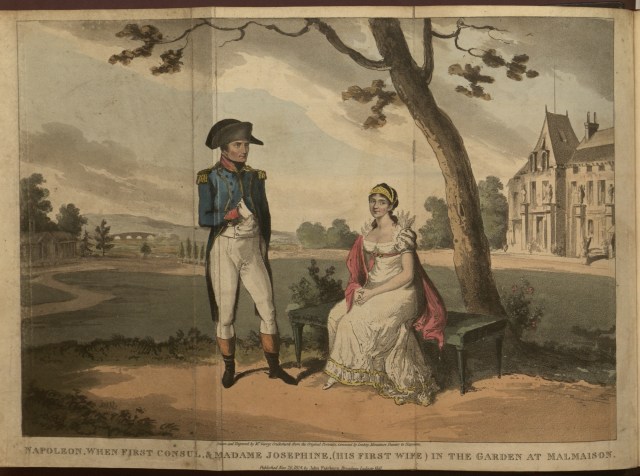
The story of how a 32 year widow from Martinique escaped the guillotine and then met and fell in love with the a young Corsican general during the French Revolution is the stuff of romantic novels. It’s one of the great celebrity love stories of history. Most gardeners and art-lovers will also know of Josephine’s passion for roses and the famous book about them with its illustrations by Redouté. But there’s a lot more to Josephine’s interest in horticulture and natural history than that.
Marie-Joseph-Rose de Tascher de la Pagerie married Napoleon in 1796, and they bought Malmaison with 60ha of land in 1799. She rose to power alongside him and Malmaison effectively served as the seat of government between 1800 and 1802.
Josephine was crowned Empress in 1804, and although Napoleon divorced her 5 years later for dynastic reasons [there was no the heir – and Napoleon wrote of his new wife that he had married a womb”] she maintained her rank and her title of Empress, and she kept the Malmaison estate together with all of its collections. There she devoted herself to natural history, particularly botany, becoming in some ways France’s answer to Joseph Banks and turning Malmaison into a miniature version of Kew.
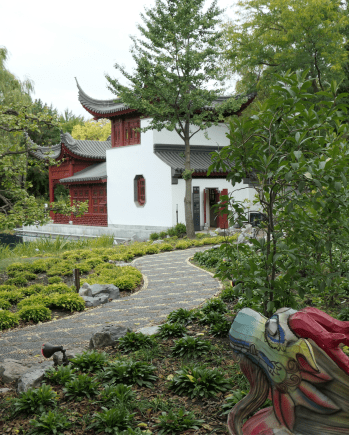 It was just about the last thing I expected on a short visit to Montreal last October: a Chinese Garden. In Europe we’ve been used to Chinoiserie for over 300 years but while some examples are genuine imitations [if that makes sense] most are really just, at best, bastardised forms of Chinese architecture and design, whilst at worst they are comical misuses of the form and details…. and none of them are gardens.
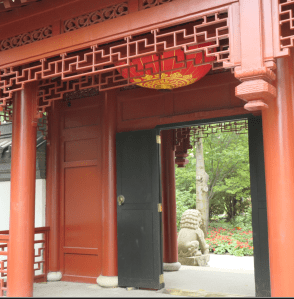 I should say at the outset too that I knew nothing about Chinese gardens, and even now I still only know next to nothing. After all, while we have plenty of Japanese gardens in Britain I can’t think of a single Chinese one.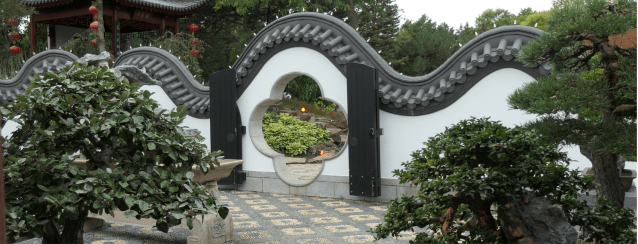
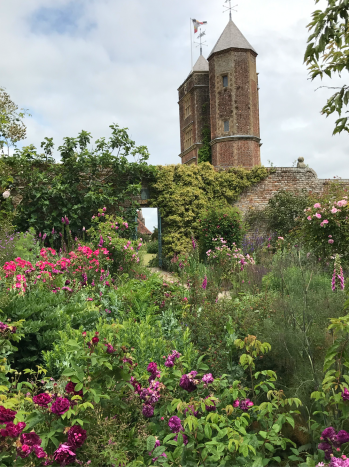 The very word Sissinghurst conjures up the glories of the English garden. It must be the most photographed and written about garden in the country and it’s certainly the most popular of the National Trust’s gardens. In fact it’s been talked about almost since the day Harold Nicolson and Vita Sackville West bought the remains of the Tudor castle and began their transformation. As John Sales, the former head of Gardens for the National Trust noted “no garden had greater influence in the second half of the twentieth century.”
 I wrote a few months about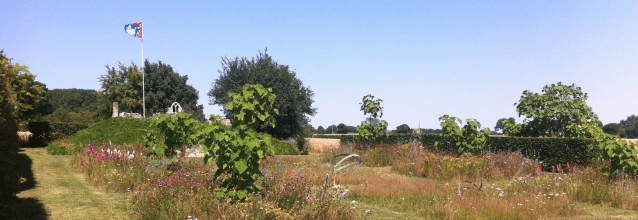
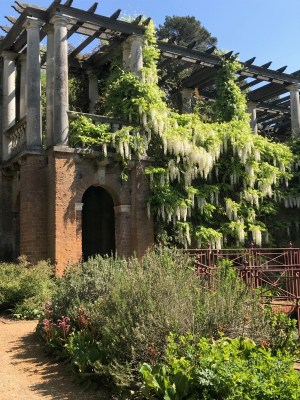 My favourite garden in London is very sadly currently out of bounds to the public because of covid19, although I have just taken advantage of the slight relaxation of the lockdown to walk around the outside. But if I can’t get inside I can at least, as a poor substitute, write about it. It’s an Edwardian extravagance of the first order: a wonderful mix of the impressively grand and the elegantly romantic, and shows just what could be done with a bit of vision and a lot of money! Its also a case study in how quickly even a well-built and well-maintained garden can fall into disrepair and be threatened with destruction, but fortunately, also how with a bit more vision and a lot of money it can once again surprise and delight the visitor.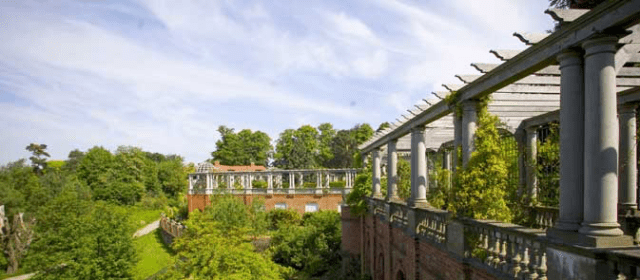


 The Garden History Blog
You must be logged in to post a comment.