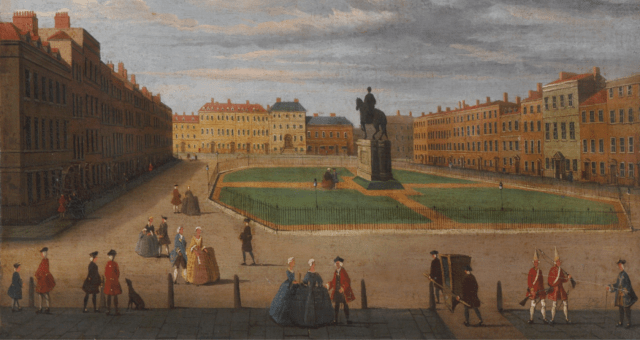
We think our public parks are suffering from neglect but even after years of austerity and poor maintenance they haven’t quite fallen into the same state of decay as the well-known public space being described here in a book named Gaslight and Daylight, published in 1859 by George Augustus Sala, a friend of Charles Dickens and a contributor to his magazines.
“There was no grass, but there was a feculent, colourless vegetation like mildewed thatch upon a half-burnt cottage. There were no gravel-walks, but there were sinuous gravelly channels and patches, as if the cankerous earth had the mange. There were rank weeds heavy with soot. There were blighted shrubs like beggars’ staves or paralytic hop-poles…on their withered branches, strange fruits- battered hats of antediluvian shape, and oxidised saucepan lids… The surrounding railings, rusty, bent, and twisted as they were, were few and far between. The poor of the neighbourhood tore them out by night, to make pokers. In the centre, gloomy, grimy, rusty, was the Statue – more hideous (if such a thing may be) than the George the Fourth enormity in Trafalgar Square – more awful than the statue of the Commendatore in Don Giovanni.”
That’s a bit of a difference from this painting of the same place just a few decades earlier! You might be surprised to find out where it was.
Continue reading →



 We all have our favourite gardening books, whether for the quality of the illustrations, -usually the first thing one notices when flicking through – the quality of the writing – which takes more time to appreciate or perhaps for the style and approach the author takes. My favourite scores highly on all three counts, and I wasn’t surprised to find it was also a favourite of several other people when I ran a course about garden writing recently. Published in 1977 and in print ever since it’s The Pleasure Garden by Anne Scott-James and Osbert Lancaster, and if you haven’t read it I hope by the time you’ve finished this post you’ll rush out and buy it immediately.
 I’m amazed to think that the blog has now been running for 6 years, and like all 6 year olds it’s still growing. This year there have been about 55,000 hits, made by about 26,000 visitors. I’m also amazed that this is the 310th post which means I’ve probably written well over six hundred thousand words of wisdom. Be warned that there almost as many more in the pipeline – some just a title, others a series of notes or images, while a few are nearing completion. Ideas are always welcome for other possibilities, especially if they are offbeat, slightly quirky or humorous.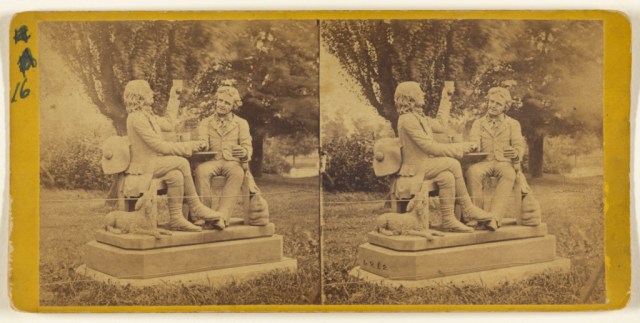


 The Garden History Blog


You must be logged in to post a comment.