

detail of Beaudesert from Repton’s Fragments on the Theory and Practice of Landscape Gardening, 1816
Beaudesert is/was an enormous estate in Staffordshire’, its name probably coming from the French for the surrounding landscape – “beautiful wilderness”. It has a reasonably well recorded architectural and contents history up to the demolition of the great Elizabethan mansion in 1937 but the story of its gardens and grounds is much less well known.
I started this post last year during the Repton celebration because the great man had prepared a magnificent set of designs for the grounds in a Red Book presented to the owner in January 1814. However as I began to research further I discovered that very little definite seems to be known about his impact so abandoned the effort because there were other things to do. BUT a little more time has meant that I could a little bit more research so read on to find more …


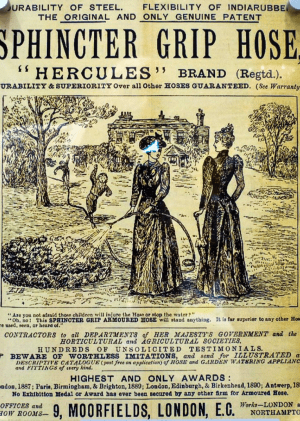 I was sitting in the garden a while back enjoying the weather and discussing politics with a group of family and friends when the subject of a piece in a well-known newspaper came up and my niece said to my mother: “Sorry, Nan, I don’t EVER want to read an article in the Daily M***, I rather read anything…anything …even a history of hosepipes” So to make sure she always has an alternative here it is!
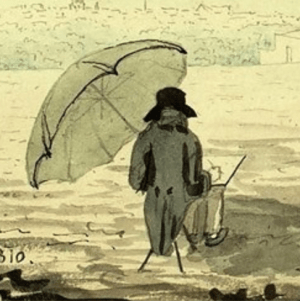
 Even though the job didn’t in the end materialise, Burchell was to remain there for 5 years and wrote up his extensive journeys in Travels in the Interior of Southern Africa, published in 1822-24, a readable and detailed account of his 4,500 miles of exploration and collecting. Apart from giving”a faithful picture of occurrences and observations… even to the minutest particular” on every aspect of life, it is illustrated with his lively sketches and watercolours.

 The first person to attempt an inventory of its natural history was William Burchell, a Londoner, who emigrated there in the early 19thc and tried to establish a botanic garden, before moving on to South Africa and becoming probably “the most prolific collector of botanical and zoological specimens” the world had then known.


 The Garden History Blog
You must be logged in to post a comment.