George Glenny grumbles on…

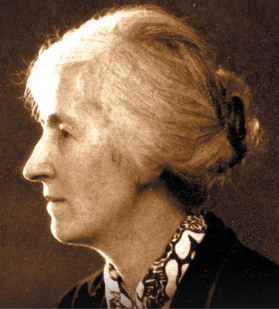
George Glenny – looking slightly less grumpy and beardy than in the earlier post about him
image taken from Brent Elliott’s History of the RHS

Last week’s post left George Glenny bankrupt in 1839. But, horrible though this must have been, in some ways this was the making of him. He had to sell the Gardener’s Gazette and his exhibition hall and turn back to the one thing he knew best – writing.

He found new routes into journalism, although there were plenty of rivals, and started the country’s first weekly gardening column. Combining his skill with words with his passion  for flowers he also began writing gardening books which were aimed at a new market, and spreading the  popularity to gardening to the  working class.  But as you’d expect after last week’s barbs once a hornet always a hornet.


Posted in Uncategorized | Tagged , , , , , , , , | 1 Comment

George Glenny- perhaps the most cantankerous Victorian gardener imaginable

George Glenny: more than just another Victorian beardy?

If you were asked to name a great Victorian garden writer I bet John Claudius Loudon, William Robinson, or Shirley Hibberd would spring  to mind immediately- but what about George Glenny? He was as prolific as the rest of them, started and edited several gardening [and other] magazines, was the first to have a gardening column in a popular newspaper, wrote a large number of gardening books, was connected [albeit rather grumpily!] with the Horticultural Society and even had green fingers himself winning countless cups and medals at horticultural shows.

So why isn’t he better known?

Maybe it’s because he was a man of decidedly strong views who fell out spectacularly with the horticultural establishment, was incapable of being collaborative and developed a razor sharp and often vitriolic tone. So who was this strange mixture?  and is Will Tjaden’s description of him  as  “a horticultural hornet”  deserved?   [W.L. Tjaden,  “George Glenny, The Garden (1986) 111 pp. 318–23].  Read on to find out. Continue reading

Posted in Uncategorized | Tagged , , , , , , , , , , , , , , , | 2 Comments

Joseph, Victoria and the amazing leaf

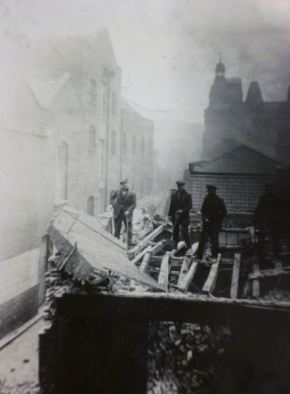
Photo taken in Adelaide Botanic Gardens 1910
State Library of South Australia

Picture the scene. A small group of well dressed people stand around a room with a large pond in the middle watching a serious looking man and a  9 yr old girl. Everyone watches in silence as he lifts her up and swings her out over the edge of the water.  You must have been able to  hear the proverbial pin drop as  he slowly lowers her down onto a plank of wood that was itself sitting on top of a large floating leaf. The hush soon turns into gasps and then a round of applause as the girl, instead of sinking under the surface, takes a hesitant step  and smiles.  The leaf hasn’t buckled even under the 15lb weight of the plank and the 42lb weight of the child. Not a tiny fraction had gone under the water. Her shoes aren’t even wet.  The serious looking man had not just wowed his audience but was about to transform British architecture as well inspired by the strength of that leaf.

Continue reading

Posted in Uncategorized | Tagged , , , , , , , , , , , , | 3 Comments

Mrs Delany’s Petticoat

Firescreen with embroidery design attributed to Mary Delany [then Mary Pendarves] c.1740

I write about all sorts of strange things on this blog but can’t think of much more obscure than this week’s starting point which is a Georgian firescreen which turns out not to be just a firescreen but part of a  panel for a dress.   If you’re wondering why then take a careful  look at the workmanship.  It was so fine that when the owner died her heirs took the dress apart, divided it up and framed the best sections.

But what’s that got to do with garden history?  Quite simply the dress was designed by Mary Pendarves [later Mrs Delany], the heroine of a recent post about her botanical art in cut paper form, and the dress – strictly speaking a petticoat  for a court mantua – shows that her botanical knowledge and craft skills were immense, so the dress has, according to garden historian Mark Laird,  “the most accurate horticultural detailing of any work I’ve seen from this period.”

Continue reading

Posted in Uncategorized | Tagged , , , , , , , , , , , , | 1 Comment

Another victory for Houghton

Houghton Hall in Norfolk (which I wrote about last week) hit the headlines in the arts pages earlier this year because it is playing host in a spectacular way to an exhibition of paintings and sculptures by Damien Hirst.  The roads for miles around were splashed with  posters featuring Hirst’s spotty paintings enticing visitors to go and see them in the state apartments  where the family portraits normally hang . So while last week’s post was a potted history of this great 18thc estate in Norfolk this week’s is about what’s happened to it in very recent times.

There were two main reasons why I wanted to go to Houghton now. One was to see the Hirst and the other was to see  the garden created in memory of the marquess’s grandmother Sybil Sassoon.

One was worth every penny of the £18 admission charge. The other wasn’t.

Continue reading

Posted in Uncategorized | Tagged , , , , , , , , , , , , , , , , , | 4 Comments