Repton, movement and the double page spread…

I looked a few weeks ago at the techniques that Repton used in his Red Books, particularly his  trademark flap or overlay to show his proposed improvements. This week I  want to turn  to another aspect of the Red Books and his printed works which rarely attracts much comment… and that is only marginally to do with flaps and slides. It’s the way that Repton uses the double-page spread  to show the full extent of a landscape.   Is that significant? Why did he do it?

from the Red Book for Endsleigh, 1814

Continue reading

Posted in Uncategorized | Tagged , , , , , , , | Leave a comment

Edward Adveno Brooke and “The Gardens of England”

One of my favourite places to work and take students is the Lindley Library, part of the Royal Horticultural Society. It’s  interesting when taking groups there noticing how different things attract and appeal to different people. One book however always causes an intake of breath and a look of amazement: The Gardens of England by Edward Adveno Brooke.

Published in 1856 it’s a large format account of 19 of the grandest gardens in the country at the time. But it’s not the text that creates the wow factor, although when you read it it’s certainly  not merely  drily documentary, it is the images. These are based on Brooke’s own paintings and they show an innate sense of place, coupled with a romantic, even theatrical streak.  It’s no wonder they’re regarded as some of, if not, the best evocations of the spirit of great Victorian gardens.

So I thought Brooke would obviously be well documented and researched. But like other  “minor” artists,  including some like Beatrice Parsons who I have written about here  – I soon realised I was mistaken. Although his name crops up  occasionally in art or garden history books  it is almost always only in connection with The Gardens of England  his only published work. So this really isn’t a post about Brooke, as I’d intended, but instead one about his magnum opus which is what will keep his name alive.  Continue reading

Posted in Uncategorized | Tagged , , , , , , , , , , | Leave a comment

The Picturesque Traveller discovers Wales

The Bard, by John Martin 1778, Yale Centre for British Art

A few months ago I wrote about the change in attitudes to ‘wilderness’ and ‘untamed’ landscapes in the 18thc in a post concentrating on the Lake District.  This week  I want to turn  to Wales which became another 18thc scenic landscape ‘discovery’.

In the main, up until the mid-18thc, the principality had largely been considered remote and inaccessible to travellers, especially English ones.  No-one was interested in, or  went to,  ‘wild places’ so why should they go to Wales?   The answer was provided by Thomas Gray in his poem The Bard written in 1757  about the conquest of Wales by Edward I  in the 13thc whch effetively extinguished Welsh independence.  Gray  researched medieval history and literature and consequently The Bard – albeit rather long-winded and flowery to modern ears – helped overturn ignorance and  formed one of the foundations of both the Romantic movement and the Celtic Revival  in Britain.

The Bard, by Thomas Jones, 1774  National Museum Wales

This  new appreciation of landscape was part of the  revival of interest in both British and specifically Welsh history.  Just as the British ‘discovered’ their Saxon roots so the Welsh ‘discovered’ their supposed links to the ancient Britons. It led in 1751 to the foundation of The Honourable Society of Cymmrodorion [from ‘cyn-frodorion’ or ‘earliest natives’].  Antiquarians began seeking out historic sites and ruins, whilst ‘tourists’ sought out ‘sublime’ experiences  in Snowdonia and other mountainous areas, to rival those of the Alps. It all helped ensure that Wales became part of the itinerary of many British landscape painters.

Continue reading

Posted in Uncategorized | Tagged , , , , , , , , , , | 1 Comment

Eggscellent Eggsamples of Eggscentricity…

On Tuesday I suddenly realised that it was Easter this weekend, before then quickly realising that I had completely forgotten about writing a special festive blogpost. I could have chickened out  but I eggspect you’ll have guessed by now what I decided to  dooodle do.
It’s difficult to be original hens these fowl jokes and this poultry piece inspired by the feathered ladies who lived in my garden last summer. I decided to research where they might have laid their eggs  had they lived in the gardens or grounds of one of our great stately homes in the 18th or 19thc.

Of course this started out as a bit of good humour but I hope you’ll be surprised by some of the things I discovered about housing poultry in the garden. As Lucinda Lambton  commented:  “when building for animals, the builders imaginations could flourish  unbridled –  often with scant regard for architectural convention.”   Even Humphry Repton turned his hand to it!

Continue reading

Posted in Uncategorized | Tagged , , , , , , , , , , | 1 Comment

Cotehele: zinging in the rain

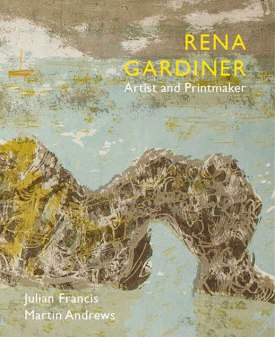
detail from “Cotehele House with daffodils on the Bowling Green”, by Rena Gardiner, National Trust

I realised what it was like to be an aristocratic landowner when I  visited Cotehele in Cornwall the other day.  There were no pesky visitors and apart from one or two staff scurrying rapidly from building to building my partner and I had the place completely to ourselves.  Admittedly it was immediately the site opened on a Tuesday morning in February but the main reason for the apparent lordly solitude was the fact that it was raining. And when it rains in Cornwall it rains. And when it wasn’t raining hard it was drizzling steadily through the thick and clinging mist. It was a case of water, water everywhere. But whereas I normally would be sensible and stay at home I was on holiday and determined to see the place…and suprisingly the weather didn’t matter, particularly when I recalled a letter about a garden visit that I’d read written by the Dowager Countess of Mount Edgcumbe in the summer of 1862: “Unluckily it began to pour (at Tavistock – where you know Charles II said it always rained) – & we walked about the charming gardens under umbrellas.”

Your intrepid hero…there is a view across the Tamar and some beautiful gardens behind me- honestl!

And it certainly wasn’t as  bad as  June 1872 when she wrote:” We had a great thunder-storm last Tuesday – with rain really like ramrods. …The rain came thro’ the ceiling of Ernestine’s room, & through the floor, into the Housekeeper’s room below – wetting her books, & soaking some clothes in a drawer. The carpet was taken up as quickly as possible, & hung up to drain – & the rain from the quadrangle ran down 2 steps into the lobby – & 3 buckets full of water had to be taken up before they could lift off the matting on the floor.”

So seeing Cotehele in the mist and rain is nothing out of the ordinary and just meant walking complete with a mac, wellies and an umbrella…and, even at such an inhospitable time of the year, the grounds which she helped create are so stunning it would been worth walking around even without them! Continue reading

Posted in Uncategorized | Tagged , , , , , , , , , | 3 Comments