What’s going on the Shrubbery? And what’s it got to do with Mr Repton?

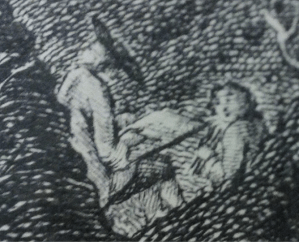
The Shrubbery Scene, from the Trial of the Rev. James Altham, 1785

This post started out life months and months ago as a draft piece on eroticism in the garden generally. I’d found some great images and references and was looking forward to surprising you, my readers, with a little naughtiness….surely not on a Parks and Gardens blog!

I  began compiling a list of snippets, references and images to include, and then  thought I’d discovered two unknown women garden designers when I read a paragraph in a 18thc newspaper which said that  “Lady Foley and Mrs Arabin have kindly undertaken to plan the intended shrubbery behind Gower Street – can anyone doubt their capability, who reflects with what art they displayed the beauties of nature in their own gardens.” [Daily Universal Register, 2 Sep 1785]  although that turned out not to be quite the case.

As one thing led to another I realised  there was far too much for a single post, and that there was a good concentration of stories from one particular period, SO here are some tales about what went on in the Shrubbery… and probably elsewhere too … in the late 18thc.

BUT what has all this got to do with this year’s hero Humphry Repton? Read on to find out


Continue reading

Posted in Uncategorized | Tagged , , , , , | 1 Comment

Camellias

Camellia donkelaaris from 
The Garden.  [ed. William Robinson], vol. 54: (1898)

Knowing that I was going to spend some time in February in  Cornwall looking at gardens  I realised I’d probably be looking at a lot of camellias.  I’ll probably upset or even irritate a lot of people by saying straight out that I’ve never been  their  greatest fan, partly because the flowers die so miserably, turning brown and refusing to drop, but more disappointingly because despite their glossy leaves, strong structural form, disease-resistance and vivid colours they just don’t smell. And that’s a hard fault to forgive.

Middlemist’s Red
Perhaps the world’s rarest Camellia cultivar

But on the bright side  a couple of weeks touring Cornwall and seeing them as the backbone of so many amazing gardens has made me reconsider.  So I’m going to pay  a visit to the annual Camellia Festival at Chiswick House Conservatory which runs until March 25th and that might just completely overcome my prejudice!

So read on to investigate their history in our gardens, and also to discover an excellent newish  blog by Siân Rees, a professional gardener, who  has written about them this week too…

detail from Single White Camellia / Single Red Camellia, from Samuel Curtis, A Monograph on the Genus Camellia, 1819, Museum of Fine Art, Boston


Continue reading

Posted in Uncategorized | Tagged , , , , , , , , | 4 Comments

Saltram: threats and popularity

We tend to think of properties owned by the National Trust as being protected in perpetuity. Their land is usually inalienable and their pockets to restore and maintain great houses are deep and usually well-filled. But this is not alway the case. Sometimes the threats come from an unexpected place: being too successful. If that sounds a bit crazy the example of Saltram, described by the executors of the 4th Earl of Morley, the last private owner  as a “white elephant”, might illuminate the point.

In August last year I visited Saltram House just outside Plymouth as part of the Gardens Trust conference.  I was in a group taken round by the Head Gardener, and was taken aback by some of the problems he reported, which were not caused by neglect or lack of vision but because of sheer success of the Trust’s policy of increasing revenue  and interest by attracting more and more visitors.

I had the opportunity to revisit a few days ago, and turned up 20 minutes after the gardens opened on a Monday morning in mid-February to find the car park almost full.  By mid-morning the FULL sign went up.  There was a temporary loo block in the entrance area, the small cafes had queues and the circular parkland walk is hard-surfaced in most places and at times was  a bit like a busy High Street in the sales.  So what’s Saltram got to offer that attracts so many people?

Continue reading

Posted in Uncategorized | Tagged , , , , , , | 1 Comment

Gardens on the Wall 2: The French Connections

detail from Les Jardins Francais, 1821 by Zuber

This is a very belated follow-up to a post about gardens on walls in 18thc England in 2016 which looked at the work of John Baptist Jackson and his contemporaries.  And by “gardens on the wall” I don’t mean “living walls” but wallpaper.

England and France were rivals over many things in the 18thc. Indeed they were at war for large parts of it. Apart from seizing large chunks of the French overseas empire England also took over the role of the world’s leader in gardening, but there is no doubt that the French took the lead in developing gardens on walls.  When, in 1753,  the French ambassador in London sent back some English wallpaper to decorate his home in France  he started a design  revolution nearly 40 years before the more famous one.

detail from Les Jardins Francais, 1821 by Zuber

When that started in 1789 it began more than 20 years of continuous warfare across Europe. This cut Britain off from a lot of continental cultural influences. In France it invigorated design and fashion with bold, clear and simple taking the place of elaborate, ornate and luxurious.  Wallpaper, bizarrely, was one of the best showcases for these dramatic changes in styles. It not only became political propaganda but in the process all manner of gardens and landscapes took to the walls of both public and private spaces in a completely different way to that we saw in 18thc England.

by Jacquemart et Bénard , Paris c. 1794/1797, Musee des Arts Decoratifs, Paris

So read on to find out more… Continue reading

Posted in Uncategorized | Tagged , , , , , , , , | Leave a comment

Amorous polygamy at Abbotsbury

No – it’s not south-east Asia but south-west Dorset!   Abbotsbury, a garden founded by the Strangways family in the late 18thc,  was my first point of call recently on an out of season tour of some gardens in the south-west.

In 1863 Henry Fox Talbot, the inventor of photography, must have been rather surprised by the contents of a letter he had just received from his uncle, William Fox Strangways, the 4th earl of Ilchester. The two corresponded regularly and often about gardens  but this time Uncle William was complaining about his elderly gardener not just chopping bulbs in two & trying to stick them together again but asking what he should do about “amorous polygamy”.  This was surely scarcely a subject fit for the pen of a Victorian gentleman so no wonder William said it had “left indelible impression in my memory.”

Amyris polygama
From: Dictionnaire des sciences naturelles. by Jussieu  &  Turpin.
 1816-1829, volume 5, plate 266

Actually its nothing as potentially scandalous as one might think. Uncle William’s  gardener was rather confused and asking what he should do with Amyris polygama,  more commonly known as the Chilean pepper tree, one of the rarer plants  in the garden. So sorry if you’d read this far expecting a bit of salacious gossip but read on to find out more about this amazing sub-tropical garden and its origins.

[All photos are my own from Feb 2018 unless otherwise stated] Continue reading

Posted in Uncategorized | Tagged , , , , , | Leave a comment