An unlikely Michaelanglo: John Buonarotti Papworth

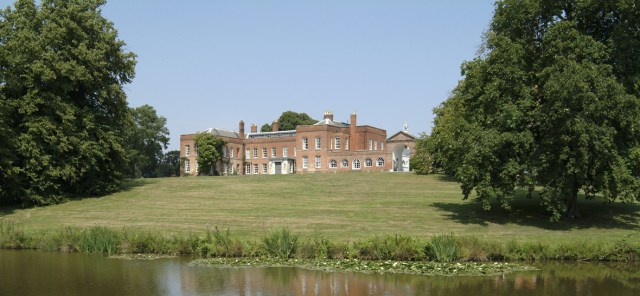
Sketch for a vase  for the pedestals of the gate piers, Oxford Lodge, Basildon Park, RIBA

The wonderfully named John Buonarrotti Papworth, was an architect , interior and garden designer and a near contemporary of John Claudius Loudon, Humphry Repton and Frederick Crace.  You may not have heard of him, or if you had, maybe like me you hadn’t realised how ubiquitous and influential he was. He spans the difference  in taste and fashion between the late Georgian and the  early Victorian periods  and  I hope this post will help raise awareness of his importance.

John Buonarotti Papworth
by William Brockedon, NPG


Papworth’s clients were, like Repton’s largely “new” men – bankers, industrialists, and businessmen— who wanted designs for  their estates, villas, and business premises. He was successful,  able to combine architecture with  internal furnishing and decorations and crucially, as far as we are concerned,   gardens.

Continue reading

Posted in Uncategorized | Tagged , , , , , , , , , , | Leave a comment

John Weeks: Horticultural Architect

Advert from Lodge’s The Peerage and Baronetage of the British Empire as at present existing.. 1861

I’m always amazed by the way that some now fashionable upmarket residential areas have a different, more working class past  often with horticultural connections. Belgravia, for example, is built on the site of the Neat Houses, once London’s largest concentration of market gardens. Chelsea too was once home to market gardens but also to a large number of commercial nurseries for ornamental plants.

I’ve already written about Joseph Knight’s Exotic Nursery on the King’s Road and today’s post was intended to be about another of these once great, but now largely forgotten, establishments, John Weeks and Co. However, as usual, the research proved diverting… and so, as usual, I allowed myself to be diverted Continue reading

Posted in Uncategorized | Tagged , , , , , , , , , | 3 Comments

Cardiff Castle

John Patrick Crichton-Stuart, 3rd Marquess of Bute (1847-1900),         Bute Museum

I hardly ever watch television but my eye was caught recently by a programme on John Patrick Creighton-Stuart, 3rd Marquess of Bute, who was one of the wealthiest men of his day, but one with a social conscience and a sense of humour  as well as an eye for beautiful things. He was responsible for commissioning William Burgess the eccentric architect and designer to help him create or redesign some of the most wonderful – and bizarre –  buildings in Britain including Cardiff Castle.

I’d visited a couple of years back with the Garden History Society but, as so often happens on organized trips, there just wasn’t enough time to explore it and neighbouring Bute Park  properly so the programme made me think its time to go back to Wales and take another look.

Read on to find out why…

screenshot from Bute: The Scot Who Spent a Welsh Fortune, BBC2 8th July 2017

Continue reading

Posted in Uncategorized | Tagged , , , | Leave a comment

Vertumnus and Pomona

Pomona (From Flora and Pomona), Figure design by Sir Edward Burne-Jones and a background design by John Henry Dearle
Merton Abbey Tapestry Works, 1906,      Chicago Institute of Art

It’s a sign of how seriously classical imagery and culture underlines western civilization that many of the characters  associated with gardens and gardening are derived directly from it.  A few like Flora and Ceres, who were major deities, are  widely  known but have you heard of Pomona? If you have  you’ll probably know she’s associated with orchards and fruit. She was actually a nymph,  famously beautiful and, because of that,  was pursued by many of the gods. However she was devoted to her orchard and spurned all their advances.

And what do you know of Vertumnus? I’d guess not much and if I tell you he was a minor Etruscan deity adopted, like so many others, by the Romans you’ll probably be none the wiser. In fact he was in charge of seasonal change, and generally associated with the growth of plants, gardens and orchards. He had one great advantage over most other gods:  he could change his shape and appearance whenever he wished.

So why am I writing about them? Why are they linked together? and who is the old lady in the picture below? Read on to find out…

Continue reading

Posted in Uncategorized | Tagged , | 3 Comments

Owen Thomas 2: from Chatsworth to Windsor.

Owen Thomas, from The Garden, 6th Oct 1900


This is the second part of the story of Owen Thomas, the son of an Anglesey labourer who rose to the peak of the horticultural profession and became Queen Victoria’s gardener at Windsor and Frogmore.  Last week’s post finished with his time at Drayton Manor, the home of Sir Robert Peel and his family.  Read on to see how Owen  became everything a Victorian head gardener was expected to be, with the highest professional standards in all his work. He took a wide ranging interest in every aspect of gardening, hybridizing and selecting new strains of fruit and vegetables, training young gardeners, serving on RHS committees and being involved in charitable work and finally after his retirement,  writing  and judging. Continue reading

Posted in Uncategorized | Tagged , , , , , , , , , , , , , | 2 Comments