Peter Smithers: Plantsman, Politician & Floral Pornographer

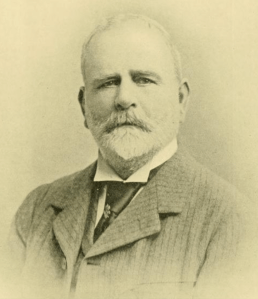
Sir Peter Smithers, in 2003. Credit Karl Mathis/Keystone, via Associated Press

Sir Peter Smithers [1913-2006] was an intelligence officer, a Tory politician, diplomat and above all a great gardener.

“I regard gardening and planting as the other half of life, a counterpoint to the rough and tumble of politics,” he wrote.

During his lifetime he laid out several gardens, notably Colebrook House in Winchester in the 1950s and 60s, and  then from 1970 onwards Vico Morcote in Switzerland. He was also responsible for much of the tree planting in the cathedral close at Winchester.   Photography was another lifelong passion and after his retirement he became an extremely successful as, in his own words,  “a floral pornographer”.

All the quotes come from his memoirs unless otherwise credited. So read on more to find out more about this unsung, generous and outstanding horticulturist.

Continue reading

Posted in Uncategorized | Tagged , , , , , , , , | Leave a comment

Hulne Priory

Sometimes you visit a historic house or garden and think to yourself…. I could live here. Sometimes you have second thoughts and add …if only it wasn’t so remote or inhospitable a setting.  That was certainly my reactions on visiting Hulne Priory in Northumberland.  It was a bright summer’s day and the site was glorious but it was pretty obvious that would be bleak and windswept in the midst of a Northumbrian winter.  That would have suited its founders down to the ground becasue they were Carmelite Friars who deliberately sought out isolated locations for their communities. Now, along with the rest of Hulne Park,  it is part of the Duke of Northumberland’s Alnwick estate and still used by the Duke  as a base for shooting, and inevitably as a wedding venue! 

Continue reading

Posted in Uncategorized | Tagged , , , , , , , , , | Leave a comment

Sussex by La Manche?

Gertrude Jekyll and Edwin Lutyens are one of the great combos of design history.  Their names automically trip off the tongue in the same breath,  and they created a whole series of magificant houses and gardens all across the Britain. Yet they  made just one joint foray working together on a house and garden abroad.  

Standing on top of the Normandy cliffs just outisde Dieppe is what  gardening and wine writer Hugh Johnson once described  as a “Sussex garden on vacation on the French coast”. 


It might not be on our database, but it’s still, for the most part,an English garden…so read on to find out more about Bois des Moutiers…

[all photos are by David Marsh, May 2017, unless otherwise credited] Continue reading

Posted in Uncategorized | Tagged , , , , , , | Leave a comment

The Sky Garden

The creation of a new public garden should be a cause for celebration, perhaps in these days of austerity,  even amazement. When it’s in the very heart of the City of London then the amazement should be unconfined.  So what to make of the Sky Garden  at 20 Fenchurch Street?

According to its website  it is “a unique public space that spans three storeys and offers 360 degree uninterrupted views across the City of London. Visitors can wander around the exquisitely landscaped gardens, observation decks and an open air terrace of what is London’s highest public garden.”

The entrance, Gillespies

It opened in January 2015 and I took friends to see it a few days ago. [All the photos were taken then by me unless otherwise credited.] There’s no doubt the  concept is exciting, and some of the claims are true but other bits of the hype are almost enough to cause hyperventilation as you will discover as you read on… Continue reading

Posted in Uncategorized | Tagged , , , , | Leave a comment

The Vegetable Sermon

St Giles Cripplegate
David Marsh, June 2017

Thomas Fairchild, the 18thc London gardener and subject of a recent post, was more than just a great London nurseryman and striver for professional unity and strength, he was also highly  inquisitive – or what his contemporaries would have called “curious”. He combined his intellectual curiosity with a strong religious faith and in his will he bequeathed £25 to the churchwardens of St Leonard’s Church in Shoreditch for an annual lecture to be given on the Tuesday after Pentecost.  He specified two possible subjects:  “The wonderful works of God in Creation” or “On the certainty of the resurrection of the dead, proved by certain changes of the animal and vegetable parts of Creation,” and this has resulted in the event being sometimes nicknamed the “Vegetable Sermon.”

The Arms of the Worshipful Company of Gardeners from the 1616 Charter

After a somewhat chequered history it is now organized by the Worshipful Company of Gardeners, and this year was held at St Giles Cripplegate.

I was honoured to be asked to give this years lecture, which nowadays isn’t quite a Georgian length sermon, but a short address, and I opted to talk about Fairchild’s intellectual curiosity and how it related and perhaps clashed with his religious beliefs.

This post is based on the text of the sermon.

Continue reading

Posted in Uncategorized | Tagged , , , , , , | 3 Comments