I was looking for a lighthearted piece to counter some of my more recent serious ones, and shortly afterwards happened to be passing the house where Marie Lloyd, the music hall star, used to live. One of her set pieces was the sentimental song “Come into the garden Maud” and I thought it might be fun to research that a bit more and find out why Maud was being invited, and indeed if she ever did end up at the garden gate?

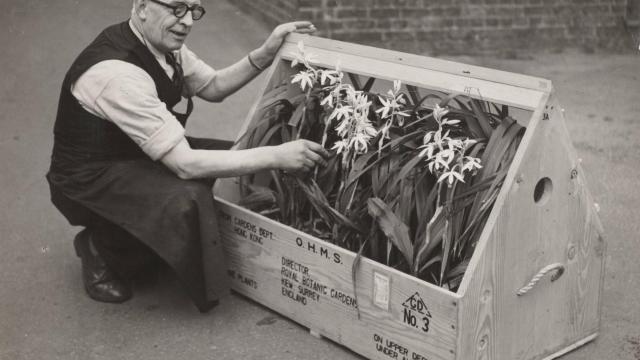
The author…but not their usual look. Any idea who?
Whatever was I thinking? Light-hearted is the last word you would use to describe the background to Maud. It’s not about wannabee illicit cuddles in the shrubbery as one might imagine from the better known song extracts, but a story based around insanity, sexual frustration, hallucinations, premature death and even murder amongst other joyful themes. Read on if you want to be depressed by the real story behind the song, although there are also some more cheerful comments about the author’s garden.

from an 1877 edition of Maud, anon artist


Marion travelled widely writing about gardens abroad as well as Britain in 15 gardening books, and also produced a couple of novels, and assorted other books.
The British galleries in the Victoria & Albert Museum hold many treasures but probably none more interesting to lovers and historians of gardens than two large early 18thc wall hangings from Stoke Edith in Herefordshire. They show elaborate formal garden scenes in the Anglo-Dutch style of late 17th century.
It is tempting to think that the hangings depict the actual gardens that London designed for Paul Foley, who was Speaker of the House of Commons, and if one believes family tradition that they were made by the women of Foley’s family that would be more than a possibility. Unfortunately this view, which used to be shared by Historic England, has been disputed more recently by experts at the V&A who believe that the sheer scale of the hangings, and the consistently high quality of the workmanship suggest that this was unlikely to have been an amateur affair. They argue instead that the hangings were bought from a professional workshop and probably represent a pastiche of contemporary fashionable garden features rather than Stoke Edith itself. There is certainly evidence of the purchase of other hangings for the house [Country Life, 9 Aug 1956].


You must be logged in to post a comment.