Gardens on the Wall part 1: John Baptist Jackson

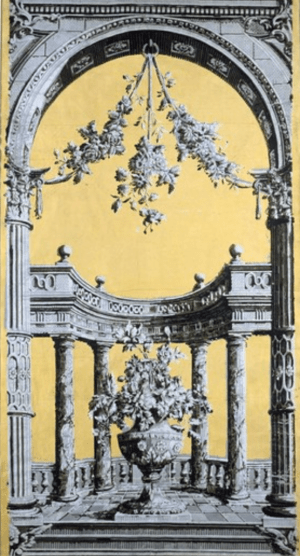
Classical 'arch and pillar ' pattern 1760s, Bourton V&A

Classical ‘arch and pillar ‘ pattern 1760s,V&A

There are several ways of gardening indoors and several of gardening on walls but this post is about a way of doing both at once: wallpaper.

Wallpaper has long used floral motifs. We’re all familiar with flowery wallpaper – some good, some indifferent and some hideous enough to give you nightmares.  We’re probably all familiar too with the wonderful Chinese wallpapers featuring exotic flowers and birds imported by the East India Company in the 18thc, but did you know that there is also a long tradition of  landscapes and garden features being depicted on other wallpapers?

It’s amazing any of these have survived  because wallpaper is so fragile, ephemeral and its so easy to replace it or paint over it  to keep up with trends in fashionable decor. The vast majority of old wall hangings have disappeared without trace or can only be glimpsed as the background in a print or painting, so perhaps as a result  the V&A believes that wallpaper usually been has been the poor relation of the decorative arts.
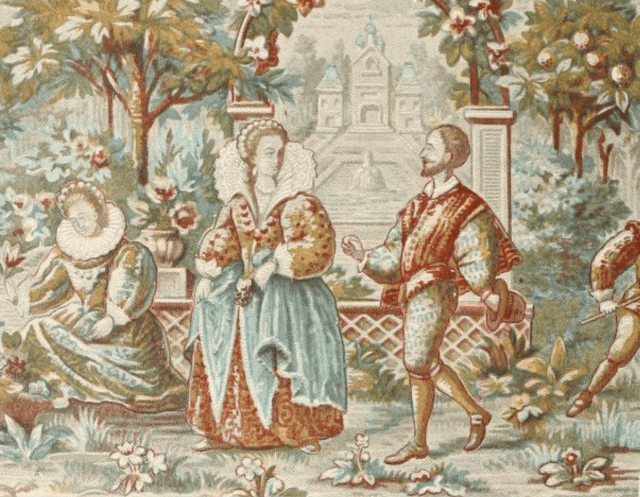
from Old time wall papers, by Kate Sanborn, Kate, 1905

from Old time wall papers, by Kate Sanborn, 1905, https://archive.org/details/oldtimewallpaper00sanb

Read on to find out more, especially what wallpaper can tell us about our gardens! Continue reading

Posted in Uncategorized | Tagged , | 1 Comment

Westonbirt & the Holfords

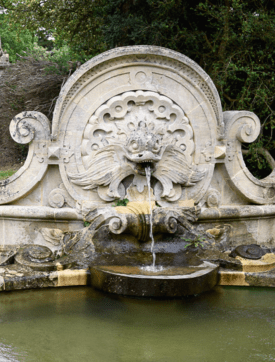
The Italian Garden http://www.ngs.org.uk

The Italian Garden
http://www.ngs.org.uk

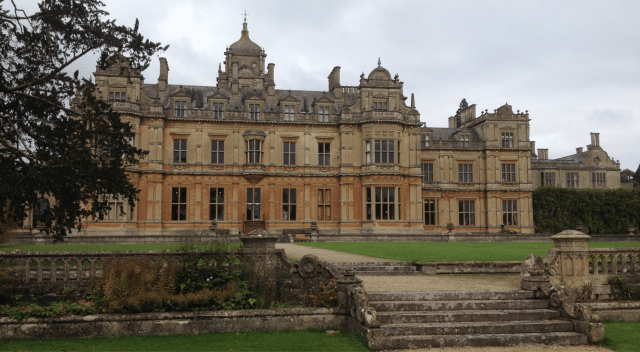
Everyone’s heard of Westonbirt Arboretum, one of the most extensive and beautiful collections of trees in the country. But how about the other gardens at Westonbirt? Perhaps not. Yet like the arboretum they were created by the same visionary, Robert Stayner Holford,  are just across the road and are open to the public, although they now form the grounds of Westonbirt School.

I had the chance to see  them when I went down to Gloucestershire for  a day conference – Protecting Historic Parks and Gardens: ‘It’s a Piece of Cake’ – organized by the Historic Landscapes Project which is part of The Gardens Trust. It was held in the school and because the Historic Landscapes Project is such an impressive  resource [despite being run on a shoestring] I’d have signed up for the day even without the cake!

The programme was lively and informative [with the cake an added bonus] and  included a tour of the grounds led by Margie Hoffnung, The Gardens Trust’s Conservation Officer, who had also been the leading volunteer in the gardens at Westonbirt.   What an eye-opener that proved to be. Westonbirt was, and largely still is, a Victorian masterpiece and it’s no wonder that the gardens as well as the house are Grade 1 listed.

David Marsh, Oct 2016

David Marsh, Oct 2016

I’m very grateful to Margie for letting me have access to her notes and for checking through the post – any errors are mine and not hers. Continue reading

Posted in Uncategorized | Tagged , , , , , , , , , , , , , , , , , , | Leave a comment

Peas, perfect peas

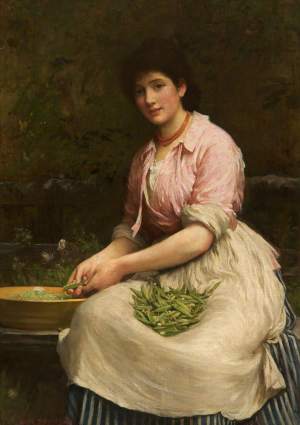
Fildes, Luke; Girl Shelling Peas; Warrington Museum & Art Gallery; http://www.artuk.org/artworks/girl-shelling-peas-104014

Girl Shelling Peas, by Luke Fildes, Warrington Museum & Art Gallery; http://www.artuk.org/artworks/girl-shelling-peas-104014

Move over Capability Brown, you have to share your year of fame with peas!  It has probably slipped your notice (as I confess it did mine) but the United Nations has declared 2016 to be the ‘International Year of Pulses’ (IYP) , so here’s a post to celebrate one of our most popular vegetables.screenshot


In the search for perfection modern peas have, like so many other plant crops, been industrialized.  Varieties have been selected that ripen at the same time, and grow on dwarf plants that are easy to harvest mechanically.

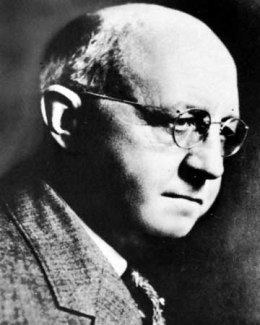
Clarence Birdseye from Britannica.com

That has advantages of course, especially in terms of economics, but the downside is that it means that most people will never have the chance to sample the  huge variety of tastes and textures that once existed on a commercial scale but now only cling on as heritage varieties.

And if you don’t recognize the man  in the photo or know what he has got to do with peas then read on…

screenshot

Continue reading

Posted in Uncategorized | Tagged , , , , , , , , , , , , , , | 3 Comments

Bodiam Castle


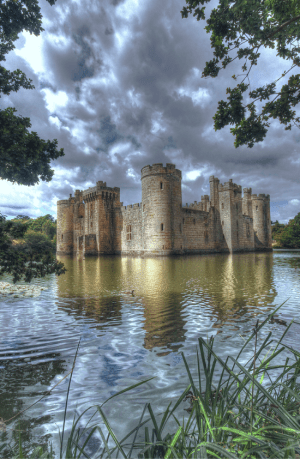
from flickr, copyright irezumi13 2010

Bodiam                                                                        from flickr, copyright irezumi13 2010

Bodiam in Sussex has been described as the most written about and photographed  castle in the whole of Britain. This is not just because it’s a wonderfully photogenic site with opportunities to show off even an amateur’s camera skills.

Bodiam doesn’t  figure on our database because its not a park or garden in the traditional sense but for the last 30 years it has been at the centre of a vigorous academic debate as to its purpose and function which is perhaps not as obvious as you might think.  In short its been a debate about whether Bodiam is just a castle in the traditional sense or something much more elaborate and significant: an entirely artificial mediaeval landscape.

Read on to find out more…

Aerial photo of Bodiam Castle , from 1800 feet Creative Commons Licence [Some Rights Reserved] © Copyright Phil Laycock 2007 and licensed for reuse under this Creative Commons Licence.

Aerial photo of Bodiam Castle , from 1800 feet
 © Copyright Phil Laycock 2007 and licensed for reuse underCreative Commons Licence.

Continue reading

Posted in Uncategorized | Tagged , , , | Leave a comment
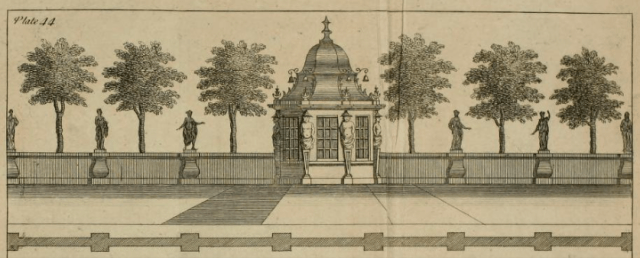
 a Building for the Termination of a Walk in the Chinese Taste, from rural architecture in the Chinese Taste.

A Building for the Termination of a Walk in the Chinese Taste, from Rural Architecture in the Chinese Taste.

It was hard not to smile when, whilst researching for a lecture on Chinoiserie in the garden, I flicked through the pattern books published by William Halfpenny,  a virtually unknown 18thc architect.  

Very little of his work appears to have survived, although what does is impressive and suggests that perhaps he has been under-rated. In particular the recent re-creation of the Chinese bridge that he designed for Lord Coventry at Croome Park is an elegant reminder of his ability.

But really his fame, such as it is, now mainly rests on a series of  books of architectural designs for garden structures and other features, which are often whimsical when they are not pure comic fantasy.  Halfpenny clearly had a vivid imagination so read on to find out more and, I hope, be at least mildly amused…

from Rustic ARchitecture in the Chinese Taste

Plan and Elevation of a Temple or Summer House on a Tarrass in the Chinese Taste, from Rural Architecture in the Chinese Taste

Continue reading

Posted on by The Garden History Blog | Leave a comment