

Two weeks ago I wrote about the history of biological controls in gardening and noted that these days they were once again most people’s preferred way of tackling disease and pests. However no one in Victorian England – or indeed most of the 20th century – would’ve believed the lengths to which many of us 21st-century humans go to protect the planet, the plants, other creatures and ourselves. Instead they relied on chemicals which were dangerous in the extreme.
Until 1851 you could buy arsenic, opium, or strychnine an almost any other poison you could think of from your local chemist. No questions asked. After all laudanum – a polite way of concealing opium – was the pain relief of choice, while arsenic was used as a cosmetic as well as for controlling rats and mice. Both they and many other poisons were often used mixed with other substances to form homemade pesticides. But if you thought that was bad were the 20thc answers to pest control such as DDT any better?
However one thing is for sure pests and diseases didn’t stand much chance against such an armoury , unfortunately nor did many humans.

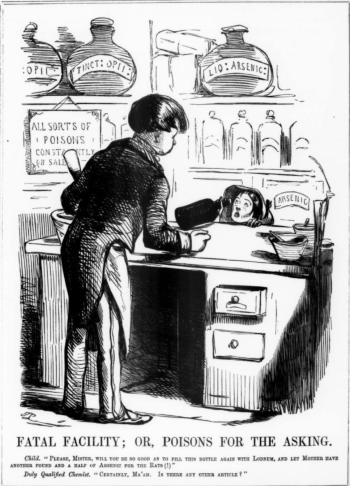
Child: Please Mr, will you be so good as to fill this bottle again with lodnum [laudanum]and let mother have another pound and a half of arsenic for the rats! Qualified chemist: certainly ma’am is there any other article? From Punch, 1849
He advocates many “natural” remedies and deterrents – made by grinding up seeds , leaves or roots or using a liquid made by soaking them in water but also used some easily obtainable basic chemical controls. The main underlying principle was simple. The gardener started a bonfire with whatever was to hand and then add other material such as dung, animal bones or horn, or even fish before throwing in minerals like brimstone [then the common name for sulphur] or lime to produce to create foul-smelling and often noxious fumes which would drift through an orchard or garden. It was thought that this would not only deal with problems like mildew or blight but also kill off insects pests.

Gardening books carried on repeating advice like Meager’s right through the 18thc. We can see from the work of John Claudius Loudon that not much changed bu the early 19thc either, although old remedies were slowly joined by a range of other poisonous substances. While Loudon recommend preventive measures such as companion planting and the introduction of predators, his two standard methods of pest control were noxious smoke and various kinds of “waters” now including “tar-water” and “tobacco-water”. Other substances which cropped up in magazines and books of the time were natural ones such as infusions of laurel, rhubarb or hellebore leaves, the oil from fir trees, whale oil and even dog dung, but also soapsuds, oil from trains, petroleum jelly and phosphorus paste.
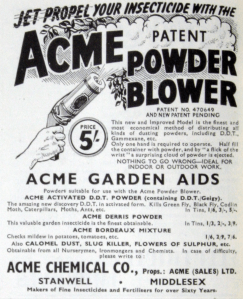
Nevertheless nicotine, the the toxin in tobacco was to become the chemical of choice for much of the 19thc. Not only were gardeners recommended to smoke when working in a greenhouse so the fumes would drive away aphids, but tobacco-water could be made easily from home grown tobacco. The recipe was simple: a pound of tobacco leaves mashed up in 4 gallons of water with some soft soap, then left for a while to develop before being filtered for use. Apart from spraying, the liquid could then be used to make tobacco-paper simply by soaking paper and then letting it dry out before burning.
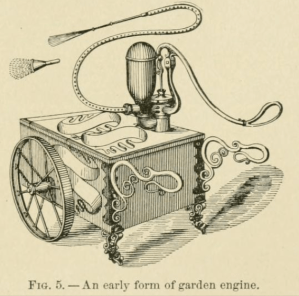
There was a whole industry in creating equipment to diffuse this smoke or to spread the waters. Loudon recommends the use of a “self-acting greenhouse-engine, a small vessel of cast-iron, one part of which is filled with air, highly condensed by a piston, and the other with water, which, by turning the cock, is let out by a spout either as a shower or stream.” Unfortunately he doesn’t include a drawing of the equipment but he does say “”The machine may be held in the hand, and the stream or shower directed against any particular plant.[and] will throw the water from thirty to fifty feet”

from Shirley Hibberd’s “Amateur Greenhouse and Conservatory”, scaned from Anne Wilkinson’s The Victorian Gardener (2006)
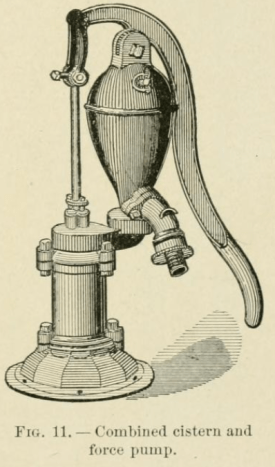
The “engine’ could also be used with tobacco smoke which could be “driven with great force to a considerable distance” so that ” a plant on the upper part of a greenhouse stage may thus be fumigated without touching it, or the operator being nearer it than the path.”
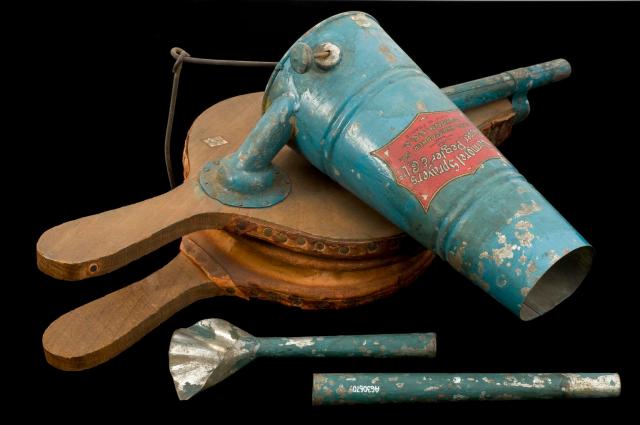
Alternatively you could use “fumigating bellows” or just to put some coal and tobacco paper in a flower pot, light it and waft the fumes over the affected plants. If you had several plants to fumigate then Shirley Hibberd suggested building a tent around them to help stop the smoke escaping too rapidly.

Tobacco paper was a very basic chemical treatment but in a sign of the changing times Loudon then includes a whole collection of chemical mix recipes. However, , he is still slightly cautious suggesting that “a chemical preparation is not to be resorted to till the effects of a sound, cleanly course of culture have been tried.”

Amongst them are Nicol’s recipe for the treatment of insects on pineapples. “Take soft soap, one pound ; flowers of sulphur, one pound ; tobacco, half a pound; nux vomica, an ounce; soft water, four gallons; boil all these together till the liquor is reduced to three gallons, and set it aside to cool. In this liquor immerse the whole plant”. As soon as the bugs are dead “whatever remains of the liquor on the leaves should be washed off with clean water.” Other gardener’s recipes he supplies are those of Messrs McPhail, Griffin, Baldwin, Miller and Knight, one of which recommends immersing the plant for 24 hours in tub of water containing a pound of sulphur for every pot. No wonder there was a warning not to use “such offensive materials over fruiting plants” and it “is not to be applied indiscriminately to exotics in a general stove, as it might make the more delicate leaves of shrubs drop off!”

But the things Loudon mention were child’s play compared with what was to come.


First up was a green crystalline powder first created in 1814 as a paint pigment. It gave a vivid green tone that could also be used in wallpaper, printing inks, fabric dyes and even for colouring the leaves of artificial flowers. Unfortunately it was also highly toxic both in use and manufacture because it was made of a mix of copper and arsenic compounds with an arsenic content of 43%.
Known as Paris Green, somehow it was also discovered to be a highly effective pesticide and from the 1860s it began to be used in the USA as a control for Colorado beetle which were devastating potato crops. It quickly became recognised as highly effective and was used across America, before being introduced for use as an insecticide by French grape growers.

1867 ad for Paris Green
Over the next few decades, Paris Green became the world’s first mass-produced chemical pesticide and its success led to many other arsenic-based pesticides being trialled. London Purple which was based on calcium arsenate was introduced from 1872, initially as a fabric colourant. In the 1890s lead arsenate joined them, because it supposedly had the advantage of being harmless to plants. As a result it became the chemical of choice for use on orchard trees.
Despite their undoubtedly popularity the toxicity of these arsenic based recipes was soon noticed. The sale of arsenic began to be regulated in Britain in 1851, while an 1857 report on the health of artificial flower makers showed that almost all suffered from the effects of arsenic poisoning from the Paris Green that was used to colour the leaves and stems. Thats hardly surprising because as later studies would show ingesting less than 1/8th of a teaspoon of arsenic could be fatal and they were working with it often using bare hands.


It was the health of orchard workers that was to cause even greater concern in the early 20thc, with studies suggesting links between exposure to arsenic based pesticides and cancer and other diseases. There was also a problem with arsenic residue on the fruit and worse still these pesticides did not break down but remained toxic in the soil for decades after their use.
In the post-war period this led to a rapid reduction in use although they were not banned formally until 1988. However water supplies and millions of acres of former orchard land are still contaminated which presents significant public health problems and means that often sites have to have the soil replaced before development can take place.
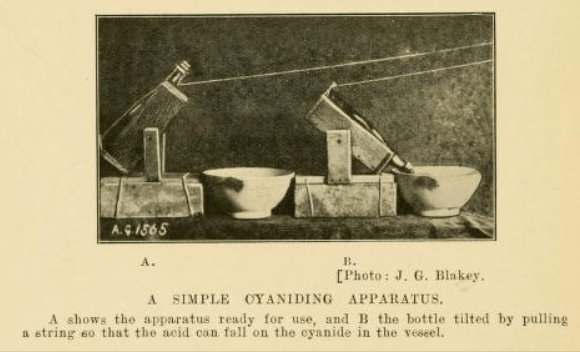
You might also be surprised to know that cyanide was added to potential chemical controls following tests in the early years of the20thc, although as Thomas Sanders admitted “the process is one which requires to be carried out with considerable skill, since the chemicals used or have a deadly poisonous nature.” I doubt many of us would be able to carry out the detailed instructions that followed but check them out here and see for yourself.
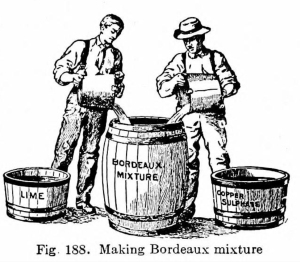
Another important early chemical control that was not considered that dangerous at first was Bordeaux Mixture. A copper sulphate based solution it was first devised in the Bordeaux wine growing region in the 1870s in response to the mildew and phylloxera which threatened to wipe out. France’s vineyards. It proved to be effective at controlling diseases of not only vines but all fruit and nut trees and many ornamental plants. Unfortunately it also causes long term harm to wildlife and. because it accumulates in the soil, even to worms. Worse still is that it can cause copper poisoning amongst the workforce. Bordeaux mixture has now been banned in most of Europe since 2015 although it’s still allowed allowed in organic farming to combat mildew. Cultivars resistant to the fungus are being developed.

Part of the display in the RHS Laboratory Building at Wisley, my photo Oct 23
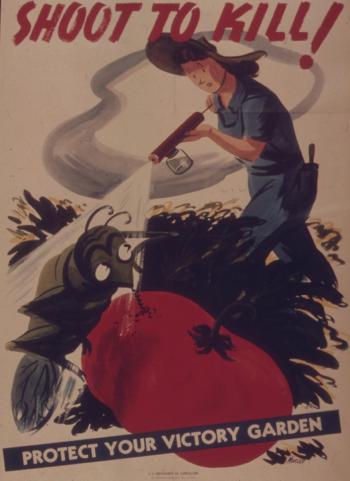
This first great wave of chemical nasties was bad enough but a second wave was on its way – all promising to be miracle cures but all ending up as environmental and health disasters.
First and perhaps worst was DDT or dichlorodiphenyltrichloroethane, a chlorine based compound which was first produced in 1873. It wasn’t until 1939 that Paul Müller realised its deadly effect on insects. It was quickly used to try protect military personnel in mosquito-ridden areas during the Second World War and because it was effective from 1945 it went on sale as an insecticide for use to agriculture and horticulture. Müller was awarded the Nobel Prize in medicine in 1948 for his work on DDT.

Through the 1950s, 60s and 70s millions of tons were being sprayed on crops every year with devastating effect on insect pests. However as was soon realised it also devastated the population of beneficial insects such as bees too, as well as affecting fish, birds, and other wild animals. DDT is persistent in the soil, neither breaking down easily or dissolving in water, it means it builds up in lakes and ponds as well as the soil. It does however dissolve in oily or fatty liquids and so tends to concentrate in the body fat of animals, including humans. In turn this means that, although DDT is not harmful to vertebrates in very low concentrations, it slowly became more concentrated higher up in the food chain.
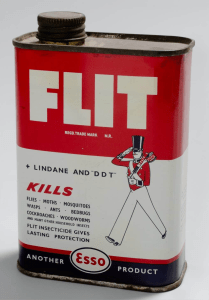
Nevertheless concern was raised about the side-effects of DDT from the very early 1950s. A group of scientists in 1959 talked of ‘understanding the ecosystem’ as a key underpinning of the concept of what was later to become known as Integrated Pest Management which aimed to severely limit the need for chemical intervention. It wasn’t until 1969 that this idea becomes formally recognised as a practical system.
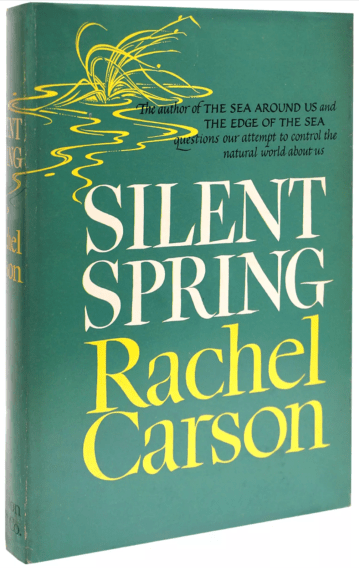
That recognition was probably prompted by the publication of Silent Spring by Rachel Carson in 1962. This profoundly shocking – in the true sense of the word – book marked a turning point.

Carson documented the already visible environmental impacts, particularly its effects on birds and other wildlife, and questioned the sense of the wide scale introduction of unknown and potentially dangerous chemicals into the environment without properly investigating their long-term effects. Her work led to a public outcry that ten years later led a ban on DDT use in the United States, with Britain following in 1986. An almost total ban globally came in 2004, apart from anti-malarial use where there is no practical alternative.

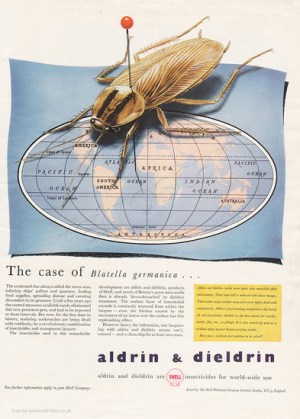
Alongside DDT another group of chemicals was banned around the same time. These were, if anything even more toxic. A group of hydrocarbons collectively known as the drins they were insecticides devised by Shell in the 1950s and given names such as Dieldrin, Aldrin, and Endrin. Extremely effective they were equally persistent in the food chain and Carson described their horrific effects. I’ll just quote her comments on one: “Endrin is the most toxic of all the chlorinated hydrocarbons. Although chemically rather closely related to dieldrin, a little twist in its molecular structure makes it 5 times as poisonous. It makes the progenitor of all this group of insecticides, DDT, seem by comparison almost harmless. It is 15 times as poisonous as DDT to mammals, 30 times as poisonous to fish, and about 300 times as poisonous to some birds. In the decade of its use, endrin has killed enormous numbers of fish, has fatally poisoned cattle that have wandered into sprayed orchards, has poisoned wells, and has drawn a sharp warning from at least one state health department that its careless use is endangering human lives”. What she only realised in part we now know in depth. These drins were all also causes of serious long term health problems in humans.
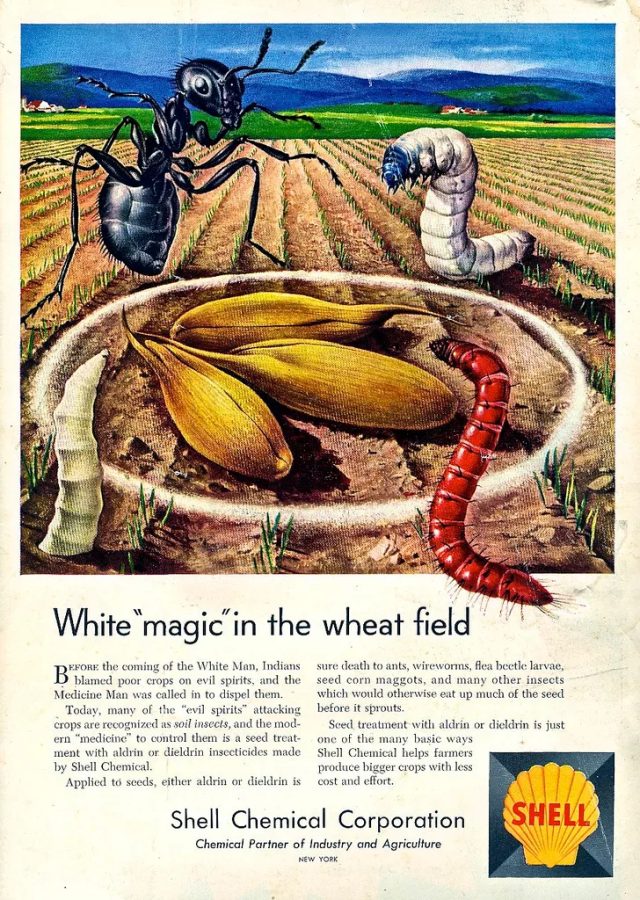
In an aside about how little had been learned after these drins were banned Shell buried its remaining stocks in what is now a national wildlife reserve, which inevitably devastated the the surrounding landscape and wildlife and led to years of legal battles about who should clean it up. [For more on that see Los Angeles Times 20th Dec 1988 and for the ongoing work see Rocky Mountain Arsenal]

Silent Spring kick-started a new environmental movement, and in 1967 the US government began officially monitoring pesticides in a new journal.
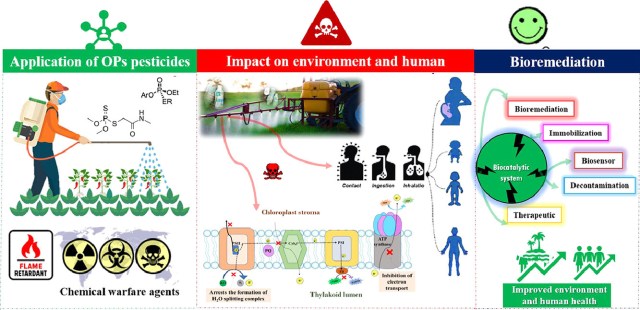
But just as one set of nasties got banned another set reared their ugly heads. These were headed by organophosphates which are much less likely to build up in the food chain because they are not persistent and break down naturally in the environment. However they are non-selective and cause major damage to nervous systems in particular as well as causing a range of other serious symptoms. Luckily they have not been approved for use in Britain and are being phased out elsewhere.
The other recent group of pesticides that are causing major problems are the neonicotinoids or neonics which were developed as substitutes for the banned drins in the 1980s. We’ve come full circle because these “new” controls are based like many old ones on nicotine. As you probably already know although they are less dangerous to most wildlife and humans they are very harmful to pollinating insects particularly honeybees. As a result they too have been largely banned across the EU although, unfortunately, not yet in the US or Britain.

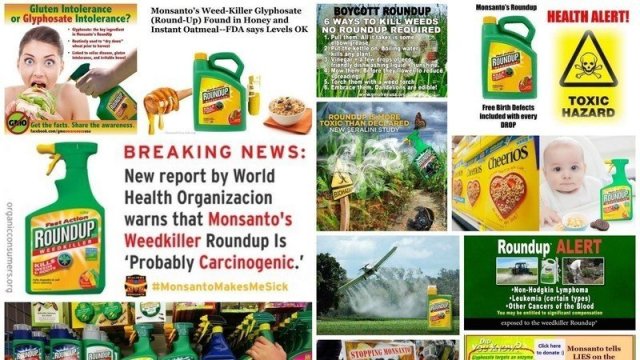
There isn’t time or space to go into the controversy over our current bete-noire: Glyphosate, the latest “miracle cure” that has slowly gone wrong. It might be the world’s most widely used herbicide but it has been found as a residue in many of the food products, as well as in water, wine and beer. It has also been found regularly in people’s urine and is probably carcinogenic. While its effect on wildlife is not so immediately obvious, because it is water-soluble it has had a disproportionate effect on aquatic plants, amphibians and fish. Although it has just a short period of persistence in soil it is thought it has stimulated the growth of fungal pathogens and caused mineral deficiencies in plants. There are as you probably know a large number of legal cases currently underway about its impact.
The history of all these pesticides over the last couple of hundred years been a story of a search for the ultimate chemical control. Virtually everything has been sold as “THE” perfect solution yet all of them have ended up causing unintended harm. Today’s emphasis is shifting very much back to Integrated Pest Management where plans can be created which are very specific to each site and its crops, with a stress on preventative action and minimal chemical use. As anyone who has been listening to the Archers recently will know Artificial Intelligence is going play a large part in this process. Let’s hope the rest of the world catches up with Ambridge soon.


 The Garden History Blog


Thank you so much for such an interesting and informative article. Just one thing: Bordeaux mixture is still allowed in organic farming in Europe to combat mildew. Cultivars resistant to the fungus are being developed. https://www.europarl.europa.eu/doceo/document/E-9-2020-002084_EN.html#def1
Thanks. I’ve updated to make that clear.