
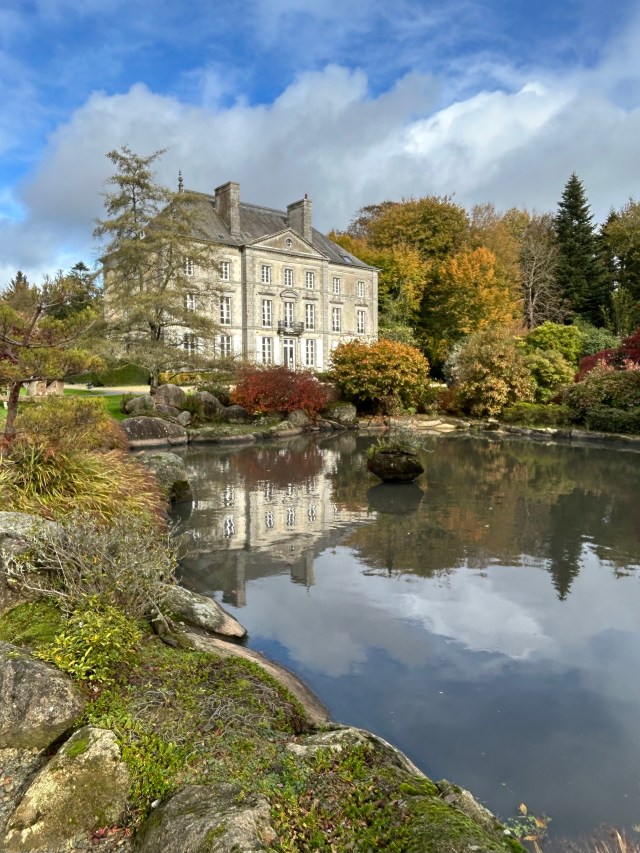
 There can’t be many owners of grand gardens who stumbled across their dream home completely by chance but that’s what happened to Alain Jouno in the early 1990s. Strolling through Paris on 24th May 1994 he flicked through a magazine on a newsstand and saw an advert for an unnamed property for sale in Brittany. He immediately recognised the photos from a holiday years earlier when, as a 15 year old, he had walked through the grounds of a semi-abandoned chateau and thinking how beautiful and romantic it was…. a fairy tale come true.
On seeing the advert he recalls knowing instantly that his life was about to change. A project began to form: “My mind was wandering, images of gardens were following one another… I envisioned a tour of a vast botanical park, although the property had been abandoned to brambles and weeds.” He rushed home to talk to his wife. Luckily she agreed and soon afterwards the Chateau de la Foltière became home to the Parc Botanique de Haut Bretagne. one of the outstanding sites amongst the many other great Breton gardens, and one which has a distinctly Japanese feel.
As usual the photos are mine unless otherwise acknowledged
La Foltière is hidden away in rolling wooded countryside near Fougeres, an impressive town on the former frontier between France and what was until 1532 the independent Duchy of Brittany. It began life as a simple country manor probably early in the 16thc, and during the French Revolution it became one of the strongholds of the royalist resistance. and in 1618 it was acquired by the d’Andigné family, who were wealthy landowners in the district, remaining with them until just after the Napoleonic Wars.
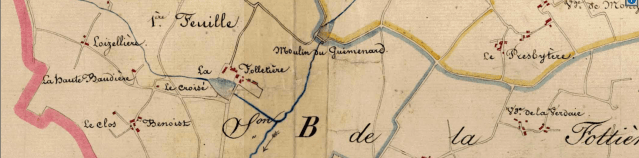
detail from the Napoleonic cadastral plan. The Manor House is just left of centre next to the lake
During the Revolution it became one of the strongholds of the royalist resistance but in 1815 the family estates were divided up between a number of heirs. The lucky one who got the chateau and its land quickly sold it. The new owner, Jean-Marie-Alexandre Frontin des Buffards, had served as a captain in Napoleon’s imperial guard and around 1830 decided to replace the existing manor with a new, if rather severe looking chateau designed by local master-builder Pierre Jourdin. Unfortunately he died in 1837 long before its completion, leaving the estate to his 13 year old son, Gustave-Marie, whose guardian promptly mothballed the half-completed building. As a result the chateau wasn’t finally completed and decorated until 1854 when Gustave-Marie reached the age of majority and could take charge himself.
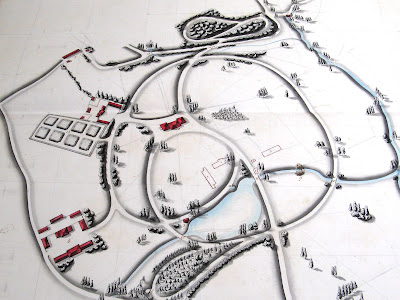
By the early 19th century the English landscape park had become the fashionable garden style in France, and Gustave-Marie followed suit. The chateau grounds were redesigned a l’anglaise by someone named Fontaine, who I tracked down locally to be a maître-terrassier, a contractor responsible for large-scale earth-moving and groundworks, who was clearly widening his range.
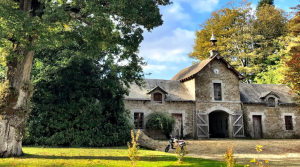
The Carriage House
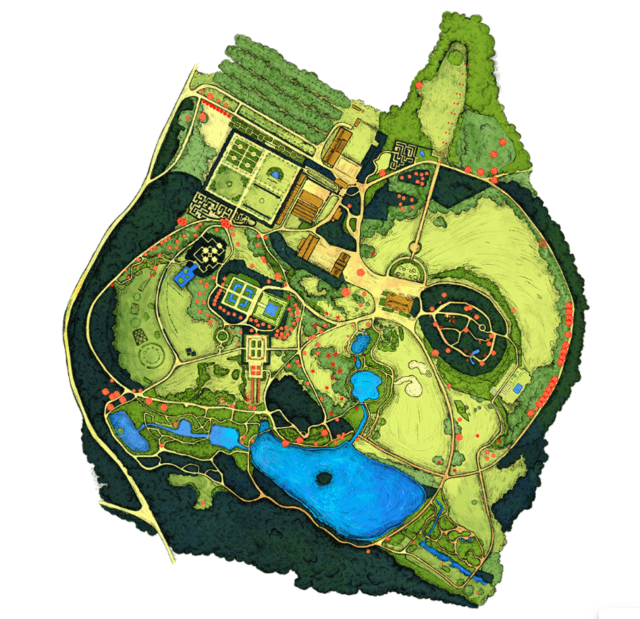
Top left on the plan above are the stables and carriage house, and the walled kitchen garden, which are still extant.There is a home farm but not precisely where shown on the plan. The existing formal lake was extended and informalised and he suggested laying out the immediate estate with winding avenues reminiscent of Repton’s circuitous carriage drives. These made the most of the gently undulating topography, and opened up long views out over the surrounding countryside. There was also a lot of new tree planting much of which survives and provides the background structure for the new gardens.
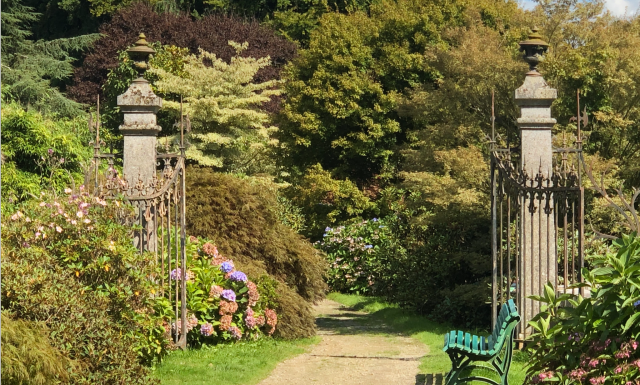
The entrance gates on the former main approach, now superseded
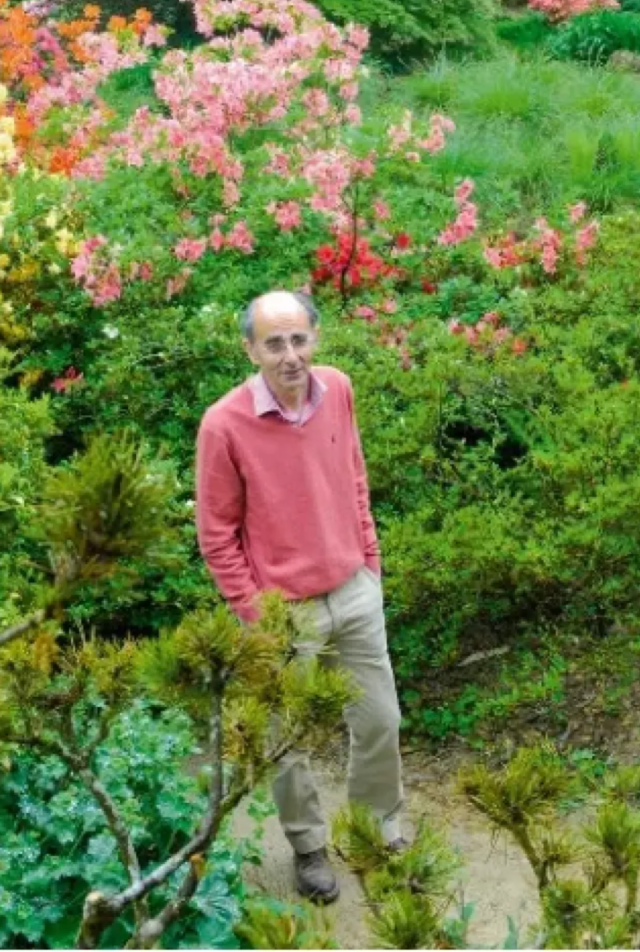
Alain Jouno
By the end of the 19th century La Foltière ceased to be the Buffards’ principal home and it became to fall into disrepair long before it was bought by the Jounos. Once they’d bought it they wasted no time and began work in September 1994 just a few months after moving in following their dream of transforming the overgrown 45 hectares into a botanical park. They gave themselves a very short deadline: opening to the public in just 18 months . This required very detailed project management because there were obviously lots of financial and time constraints.
They planned twelve thematic gardens laid out on a suggested circular route around the estate – perhaps in the spirit of the 18thc circuit garden or Louis XIV’s guide to how to view the gardens of Versailles.
 The themes chosen were, in a very philosophical French way, inspired by poems, the history of gardens or memories of distant journeys including I assume one to Japan. However it was recognised the various gardens would take several years to be sufficiently mature to impress early visitors so interim measures had to be put in place. The problem was that, for financial reasons, initially there was a team of just 3 gardeners.
There was little alternative in the early years to laying much of the ground to grass, with more “natural” [ie wild, if not overgrown!] areas on the periphery, together with some informal landscaping with basic ground cover and other plants requiring little maintenance. To avoid disappointing those first visitors – and getting lousy reviews – it was decided that the first wave of structural tree and shrub planting had to be done with specimens of a substantial size – at least 8 if not 10 years old. It worked and that first year the park attracted over 35,000 visitors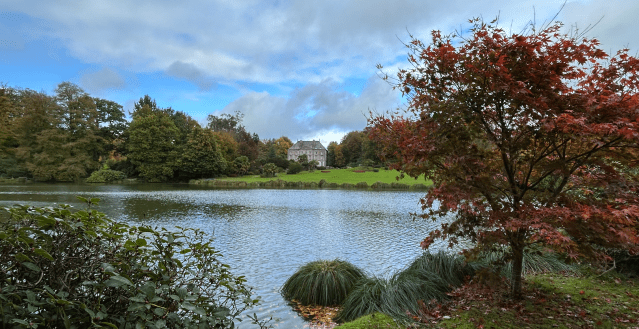
That work could just about be done with those three gardeners, but they couldn’t possibly be expected to do much else and so outside contractors were called in for one or two major jobs. Annoyingly I can’t track down any photos of the construction work but I gather from staff that one of these was the cleaning out of the lake which had largely silted up. Unfortunately it was an extremely wet winter with mud absolutely everywhere so the large-scale machinery frequently got stuck despite having log paths laid down to allow the caterpillar rollers to run more smoothly. Indeed even the gardeners got stuck especially when trying to rescue or transport plants around the site.
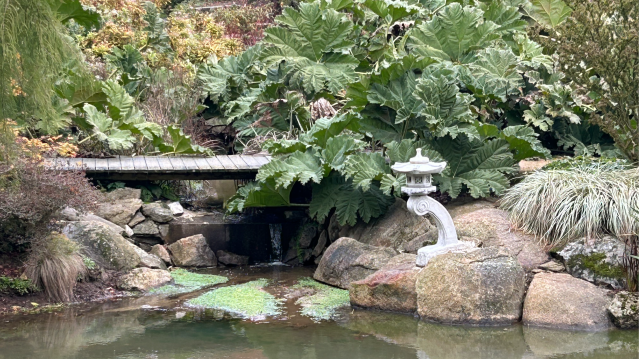
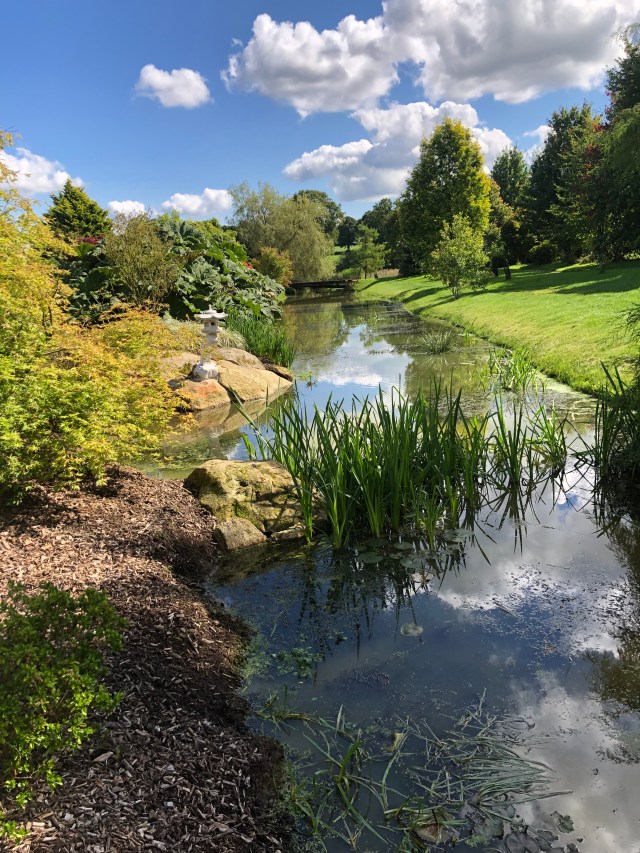 Work on the lake also involved the construction of other water systems and features. On the slopes leading down from the chateau, a stream with waterfalls was installed around and through immense granite boulders, while an enormous irrigation network also had to be installed to see the new plantations pf trees through their first few seasons.
Elsewhere the 6000 sq.m former kitchen garden had been completely overgrown with brambles and self-sown sycamore while its walls were thickly covered with ivy to the point it was hardly recognisable. To make matters worse the soil was found to be infected with a toxic fungus and had to be disinfected to make it suitable for re-use.
There were plenty of other setbacks – Covid cost 250,000 euros in lost ticket sales and the team of 5 gardeners were only allowed to work 2 at a time – despite the fact that the gardens cover 25ha!
Lets take a quick tour…and end up in Japan
from the gardens website
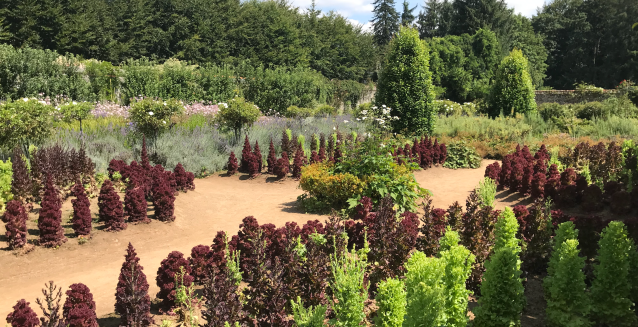
and yes they are lettuce
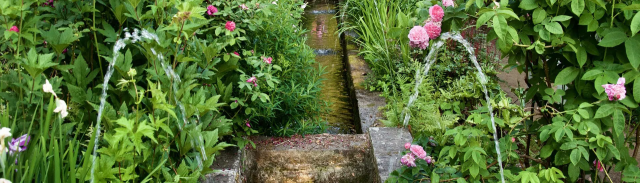
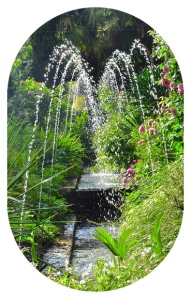
The first garden one enters was inspired another fairy tale that of Scheherazade and the 1001 Arabian Nights. It’s narrow and planted alongside a stone rill designed to lull the visitor with sound of running water, and the fragrances of jasmine, roses, daphnes and other strongly scented flowers.
It leads into the former enormous walled kitchen garden – now renamed as La Cité Antique after a section of Homer’s Odyssey. It’s divided into four quarters round a central circular section reminiscent of a traditional parterre and according to/ information board “evoking the garden of Cyrus” although I don’t see much sign of that myself, and the planting is definitely not connected!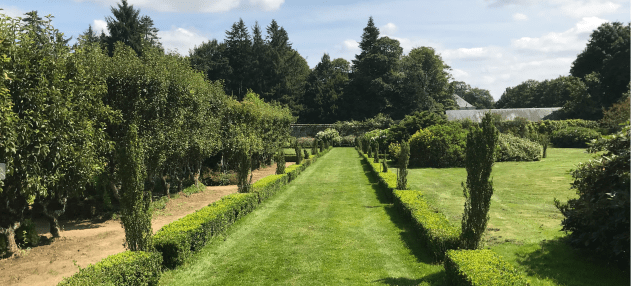
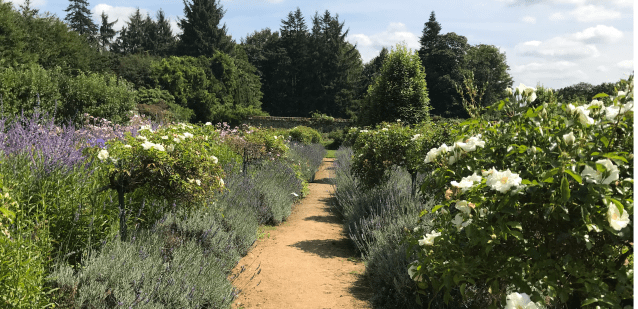
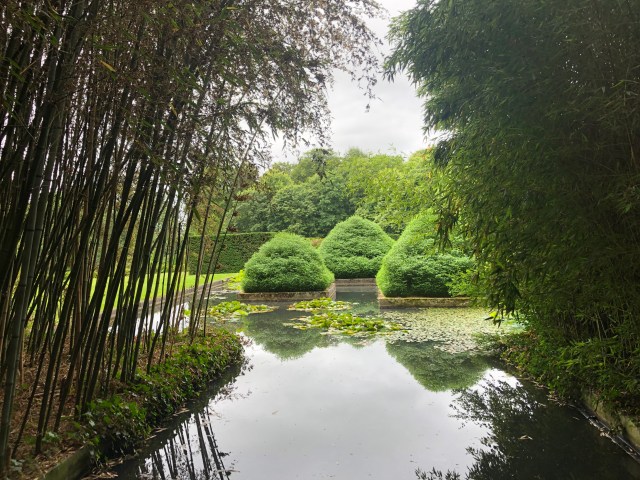
 Beyond that is a maze inspired by that at Knossos but made entirely of camellias – a joy to wander through in the right season [at least until you encounter the Minotaur] but otherwise passed by quickly en route to a bamboo forest. This is maze-like too, but with winding paths and more open areas, although the 30 or so species of bamboo used, have grown so densely that it’s almost pitch black in places. That maybe the intention, because its design is apparently based on the interior of the Pyramid of Khufu in Egypt. Just beyond it is a pond with three small islands covered by dwarf bamboo shaped into pyramids and filled in summer by lotus rather than waterlilies.
Round the corner hidden behind a belt of trees is “The Secret Garden”, based on the idea of the Italian ‘giardino segretto’.
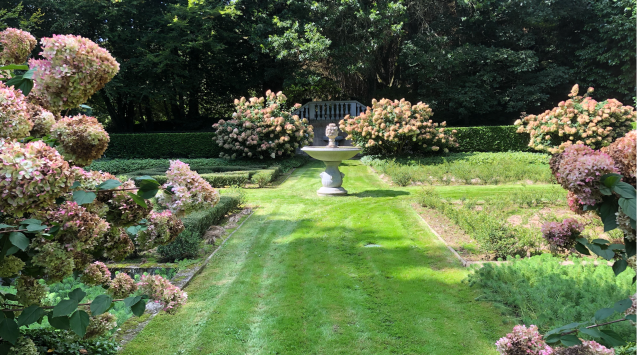
Entirely surrounded by a belt of woodland it’s divided into two sections by a wide central path. One side is a cabinet of greenery around a fountain, edged by great blocks of shrubby white/pink flowering hydrangeas, with a staircase leading to a terrace in the trees beyond.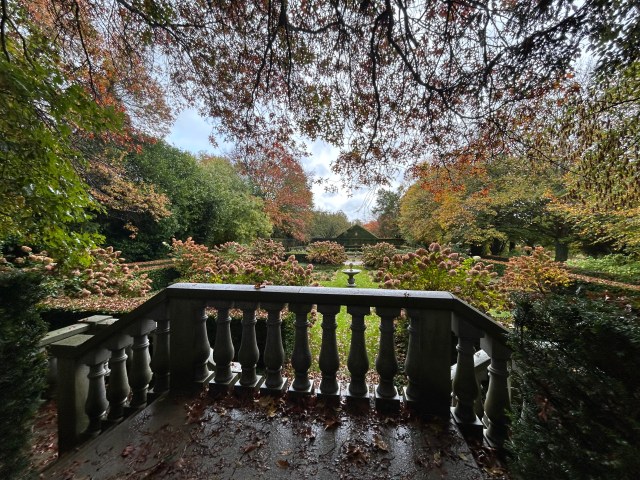
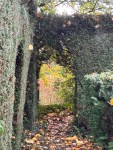 The other half of the garden is hedged with leyalndii – which sounds pretty awful – but in fact is the only half-decent use I’ve seen the monster tree put to. It has been formed into an arcade with a high central pedimented section which serves as a backdrop to the central pond and of course looks very photogenic in wedding photos. The only problem is that it requires very regular maintenance to keep it under control.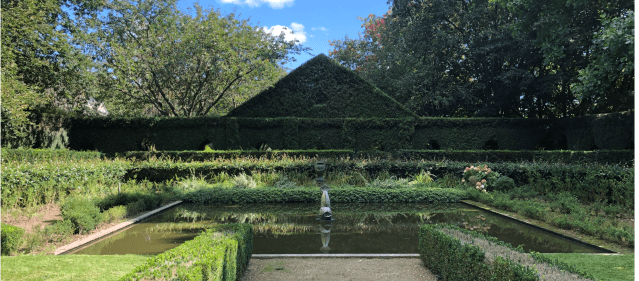
From there steps lead down to what the owners see as the site’s central feature – a garden apparently designed for viewing in the evening when you can admire the stars
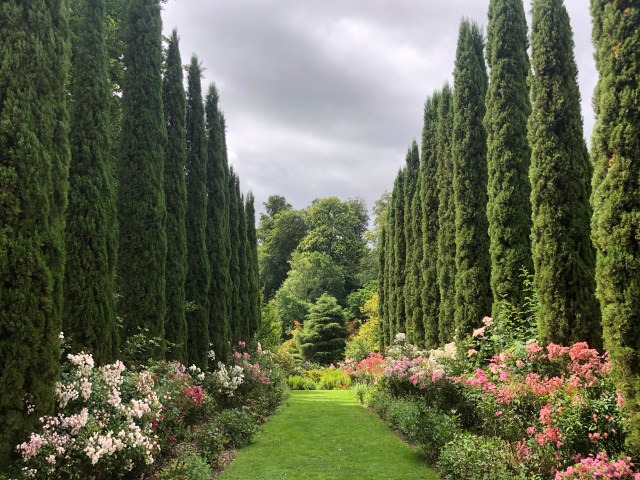
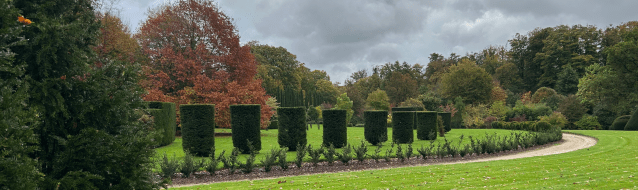
Cypress trees have been planted to form the plan of the Tetrapyle of Palmyra (the monument destroyed in Syria in January 2017 by the Islamic State) leading to a wide avenue of them. This is underplanted with roses and leads down a gentle slope to a small stone tower [actually an old water pumping station] that sits on a steep drop overlooking the lake beyond. These days unfortunately the view has been blocked by trees and what I suspect was the intended romantic effect has been lost.
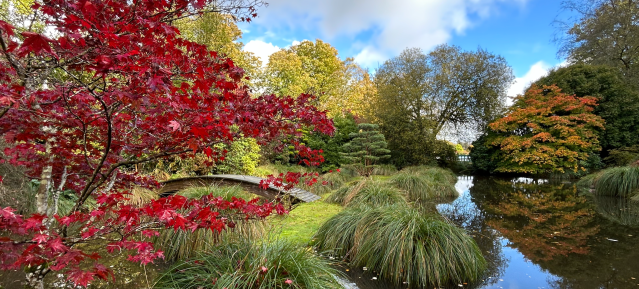
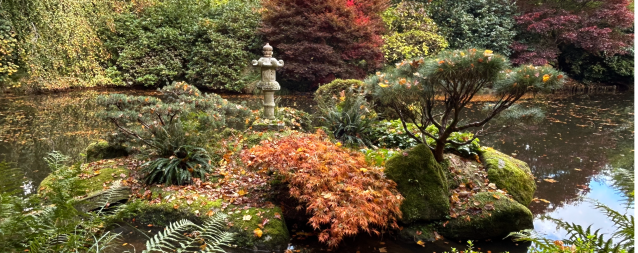
All these and the many other smaller spaces and gardens that link them are interesting but quite variable in terms of planting and maintenance. However down in the valley towards the southern edge of the garden is for me the stars of the show: the fairy-tale Garden of the Rising Sun. Like most other European Japanese gardens it is of course the western idea of what a Japanese garden should be like rather than any strict adherence to the real underlying principles. Nevertheless it has a special quality of its own.
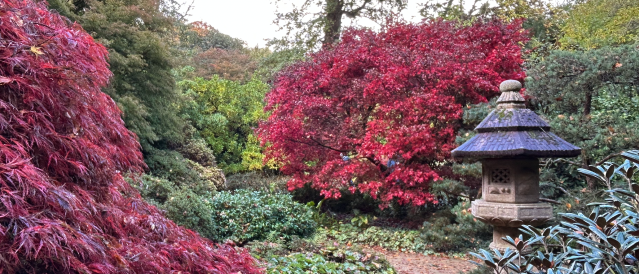
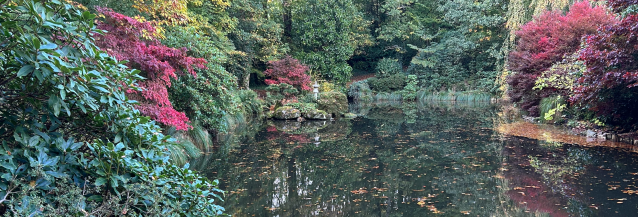
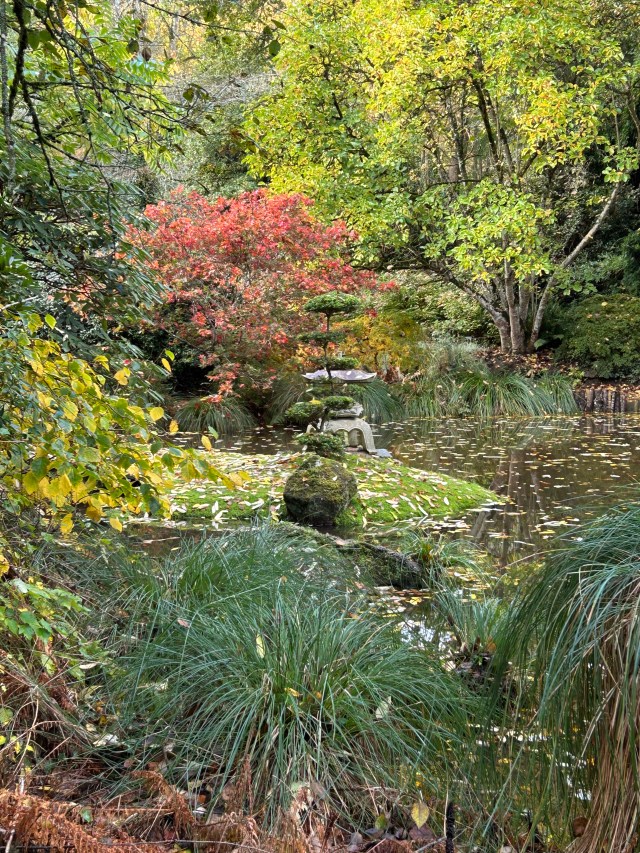 It’s laid out around on a steeply sloping site around a narrow extension to the lake. While it makes no claim to be authentic much of the ground is covered with carpets of moss, with outcrops of rough-hewn rocks. There’s a promenade-garden where trees and shrubs have been cloud-pruned, Graceful plants often hanging over water and there are plenty of stone ornaments, and several elegant bridges, including the almost obligatory red one to complete the picture.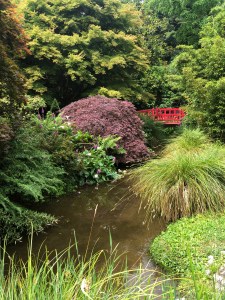
There is also a small dry garden designed to aid contemplation, which is without the distraction of flowers. Unfortunately when it was first laid out the designers underestimated the final size of plants and so now paths are often very narrow and overhung, with plants having to be cut back regularly to allow access.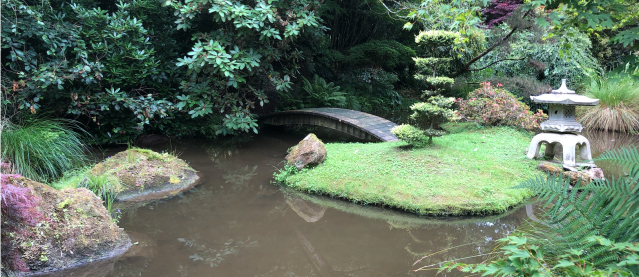
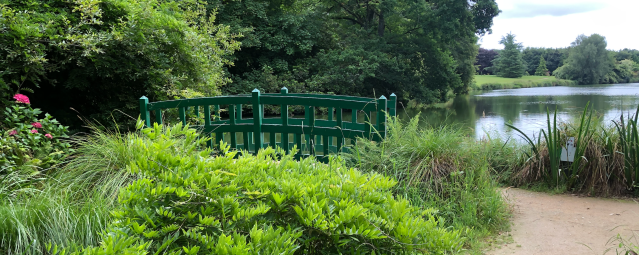
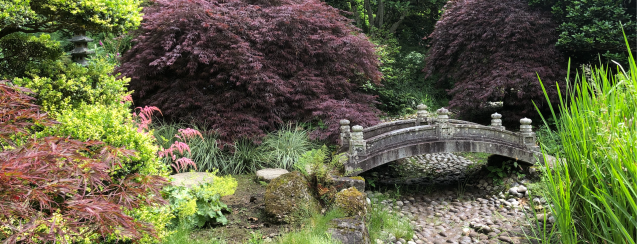
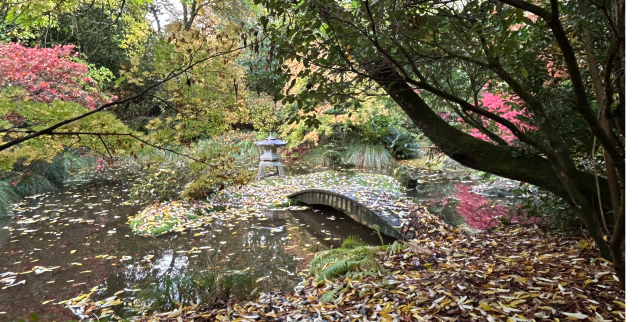
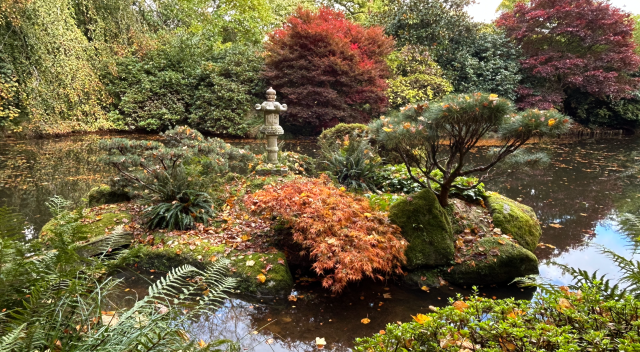
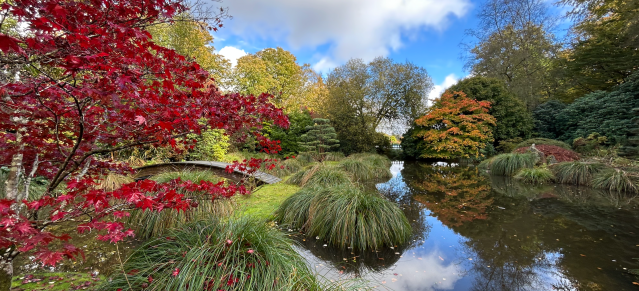
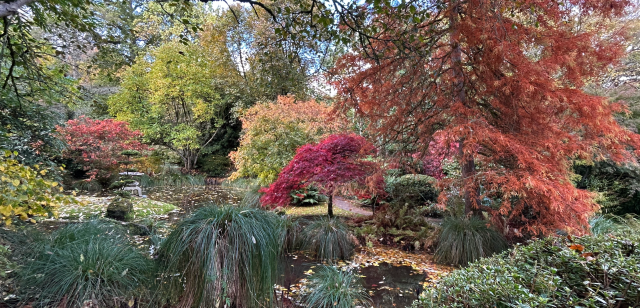
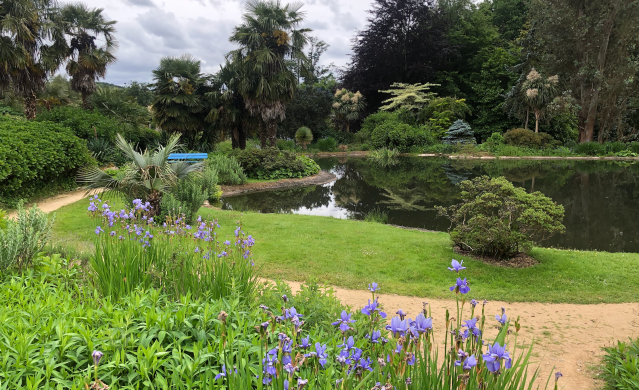
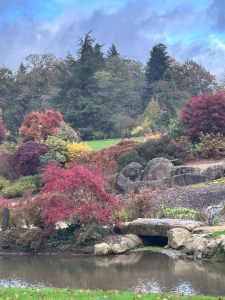 It leads in turn to the lake itself which has paths all round, offering nice views across the garden and towards the chateau. These eventually lead to a new orinetally-inspired area, planted in 2022, called the Garden of the Autumn Mist. Although still rather raw it appears to show a change in approach. The planting appears less planned or thematic, so it will be interesting to see how it develops. On the slopes there are plantings of Japanese maples and other shrubs for autumn colour, as well as large stands of gunnera [a plant now banned for new planting in France for being invasive – I just wish I could persuade ours to invade even a metre of adjoining waterfront]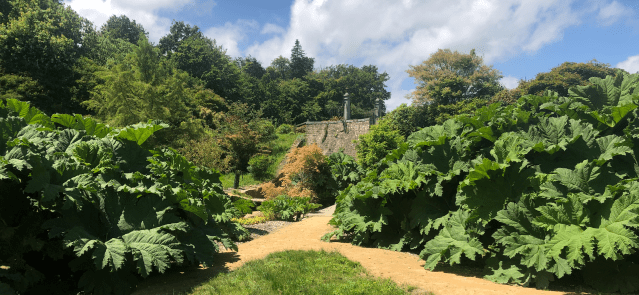
Alain Jouno, and his daughter Oriane who now runs the estate, clearly have a great interest in Japan because the oriental theme continues on the slopes leading up to the chateau itself.
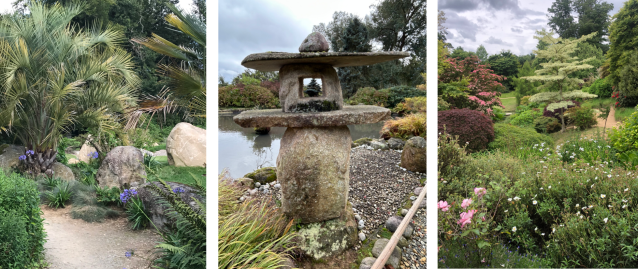
Once there its a bit of a surprise because whereas in Britain the house would be fronted by a sweep of lawn with views of the lake, or perhaps a formal parterre or terrace, here the approach is very different. At the time the chateau was built France was in the middle of a love affair with Romanticism and so instead its fronted by an informal shrubbery…
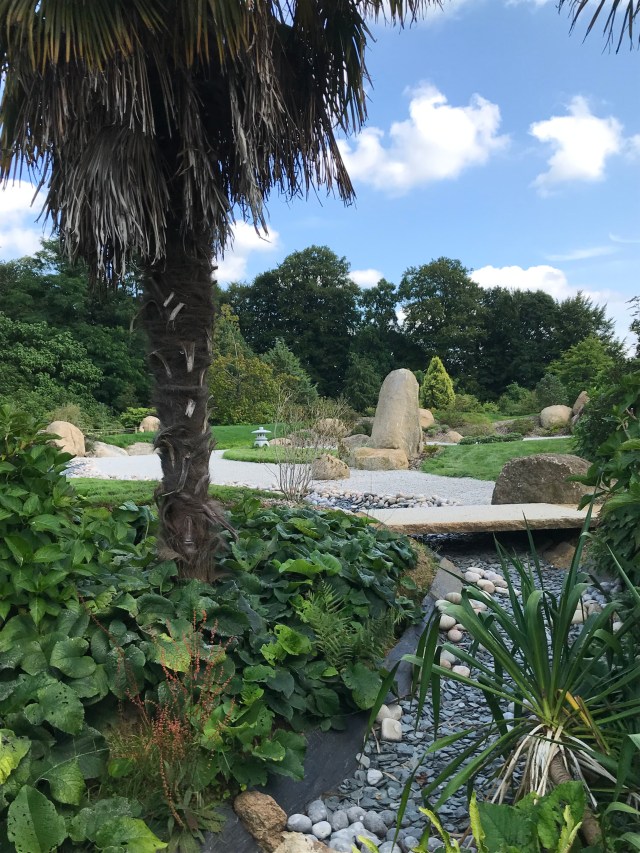
but one inspired by Japan. A pond and rocks fills the near ground with a “blue garden” beyond on one side and a Japanese inspired “mount on the other.” All perfectly OK in their own way – but sited elsewhere. Here they just don’t seem right to me – maybe it’s a sign of my advancing years!

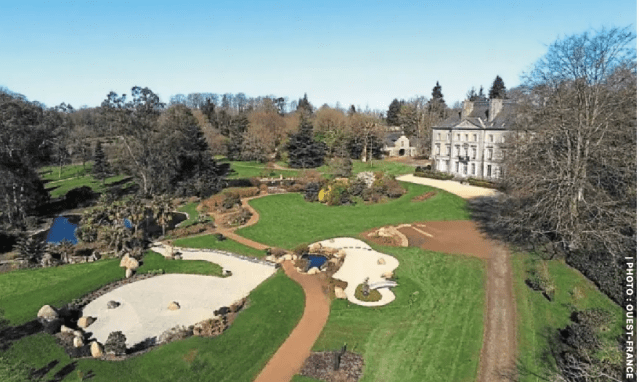
From Ouest-France 22nd March 2022
 La Foltière supplements its Japanese inspired gardens with a range of Japanese inspired events. They celebrate Hamani – the festival associated with viewing spring blossom -usually cherry – with tea ceremonies, calligraphy, cloud pruning classes, and games of all sorts as well as tours to see the trees in flower.
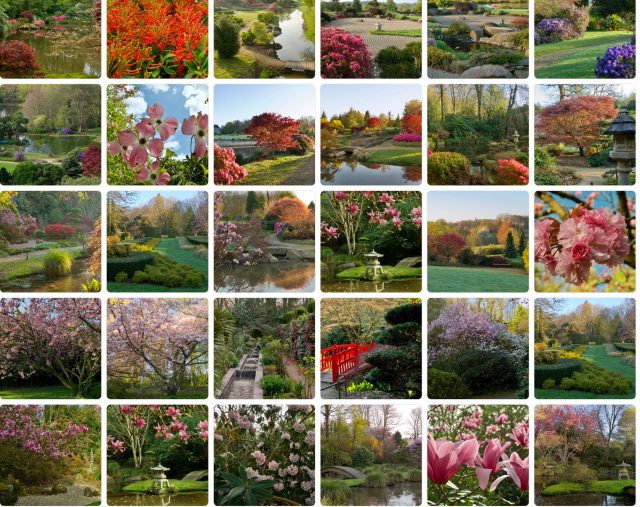
images of the spring blossom from their f Facebook page
There’s a lot more to La Foltière than I’ve shown but there’s only so much I can cram in! Its gardens are a major local attraction but also a way of keeping the estate alive and viable. Apart from up-market chambres d’hotes there is an increasing range of events – concerts, film nights, the most recent being a festival of autumn lights.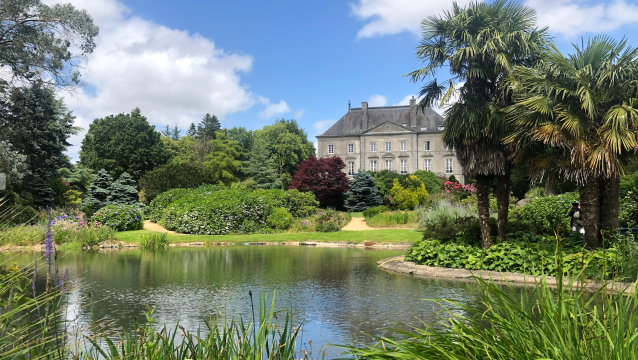
Although La Foltière isn’t a “true” botanic garden in the strict definition of the BGCI [Botanic Gardens Conservation International] which recognises ” institutions holding documented collections of living plants for the purpose of scientific research, conservation, display, and education” nevertheless its 7000 species contains impressive collections of many plant families – including for example 130 varieties of magnolia, 327 of rhododendrons and an extraordinary 520 sorts of camellia.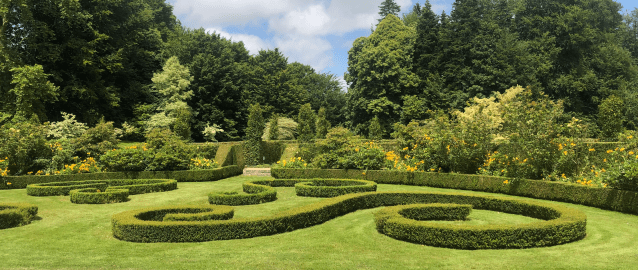
If you’re in western France it’s definitely worth a detour. We hold an annual season ticket even though it’s 90 minutes from home. That’s partly because of the quality of the planting – especially of species such as hydrangeas and camellias which thrive in Brittany’s damper cooler climate – and partly because of the excellent restaurant on site!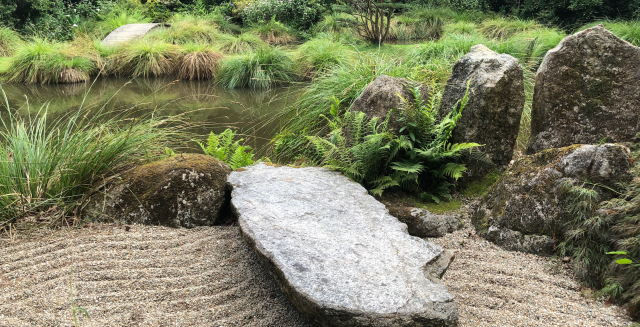
For more information check their website [much of which is translated intoEnglish] and Facebook page, and if you have access to PressReader an on-line service available for free through many public libraries you can trace the history of the development through French gardening magazines eg https://www.pressreader.com/france/detente-jardin/20160205/page/24
anan


 The Garden History Blog
Fascinating!
Wonderful