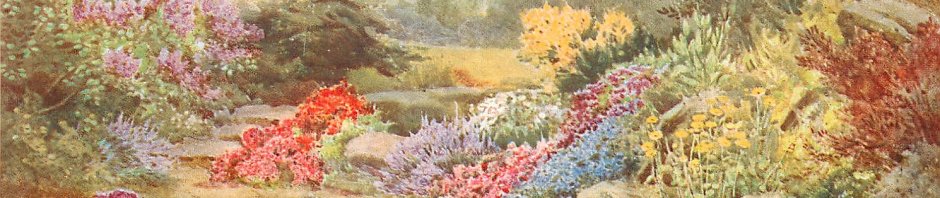
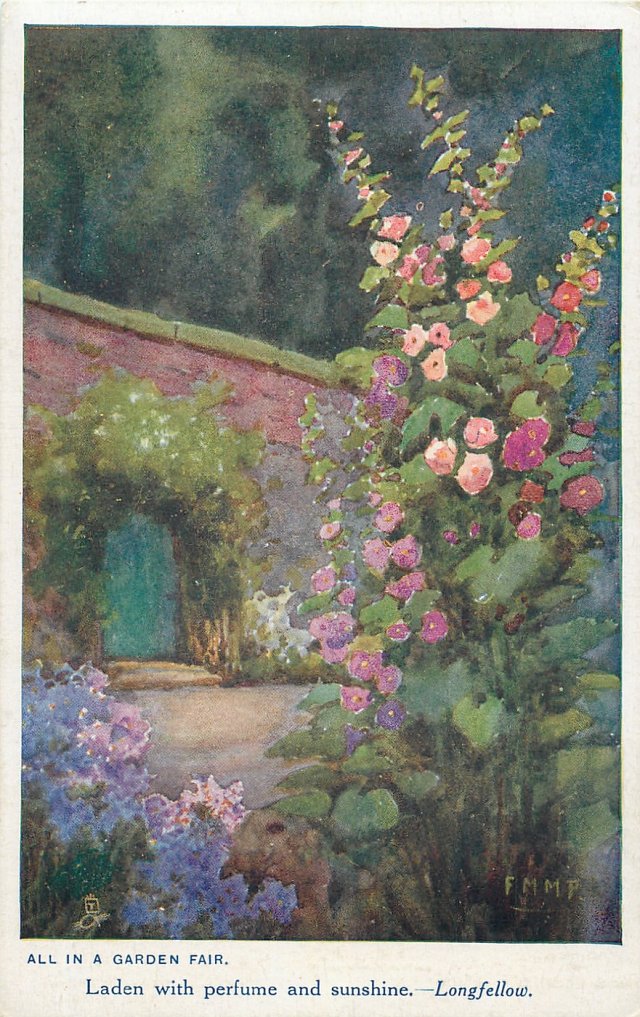
“Chocolate Boxy” is usually seen as a term of critical abuse in art history but I suspect most of us have a soft spot deep down for the overly romantic images that the term conjures up. One of the enduringly popular posts on here has been one I wrote many years ago about an artist named Beatrice Parsons, and another which attracts a lot of comments was about the gardens portrayed on Raphael Tuck postcards in the earlier part of the 20thc. All of which could have been used on chocolate boxes as well as cards, calendars and jigsaws.
I thought it might be interesting to find out more about the artists who painted for postcards and chocolate boxes, but by and large tried in vain. Their name or initials was often all that I had to go on. I didn’t even know if they were male or female and most seem to have left little trace.
I still haven’t come up with very much on any individual but I did find enough to introduce you to a handful of artists who I”ve been calling my Chocolate Box Ladies – and before I’m accused of sexism – there will be a few Chocolate Box Gentlemen soon.
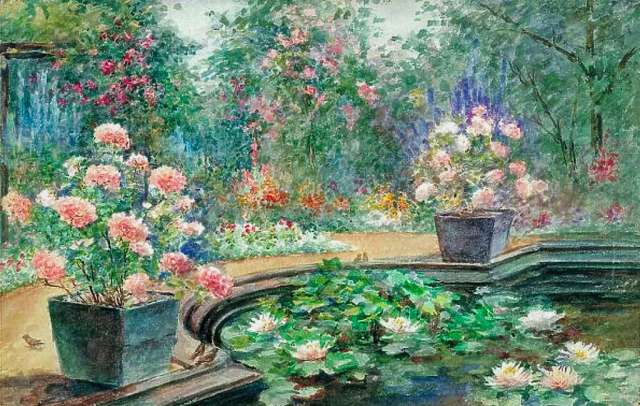
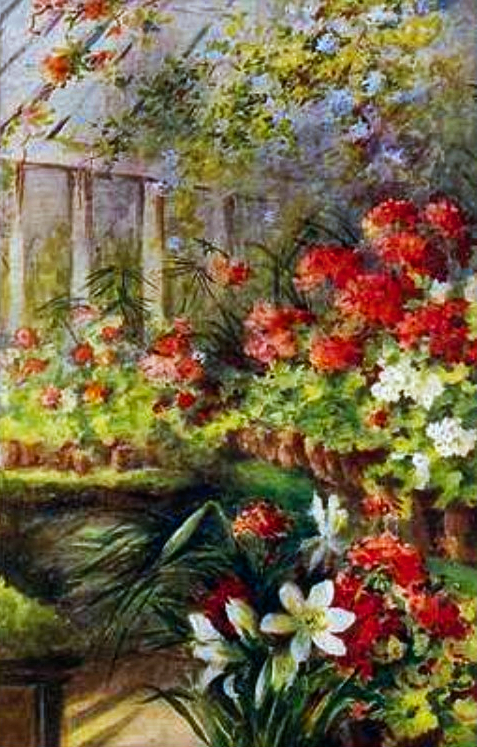
I originally started this research during Covid but without access to the British Library, the V&A Art Library or the Lindley I didn’t come up with very much on any individual and moved on to easier things to do. But the idea didn’t go away and eventually I started looking again.
What I very quickly discovered is that there’s probably a good reason why postcard artists are not very well-known. The printers/publishers of cards rarely used widely exhibited painters, presumably because of the higher prices they could command for their work. Instead they mainly used commercial illustrators or in-house artists. As a result not all cards carry a signature or even initials which makes tracing artists at times impossible. It didn’t help that the records of several major publishers, notably Tucks, were lost during the war while others have not yet been digitised.
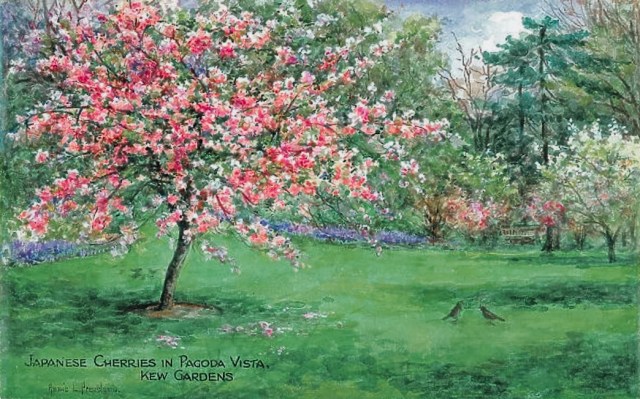
This means that research is largely being carried out by postcard collectors who are building databases for their own reference purposes and these, with the exception of Tuck’s, are not publicly available. As a result today’s post is very patchy on information, although there are a lot of images to make up for that!
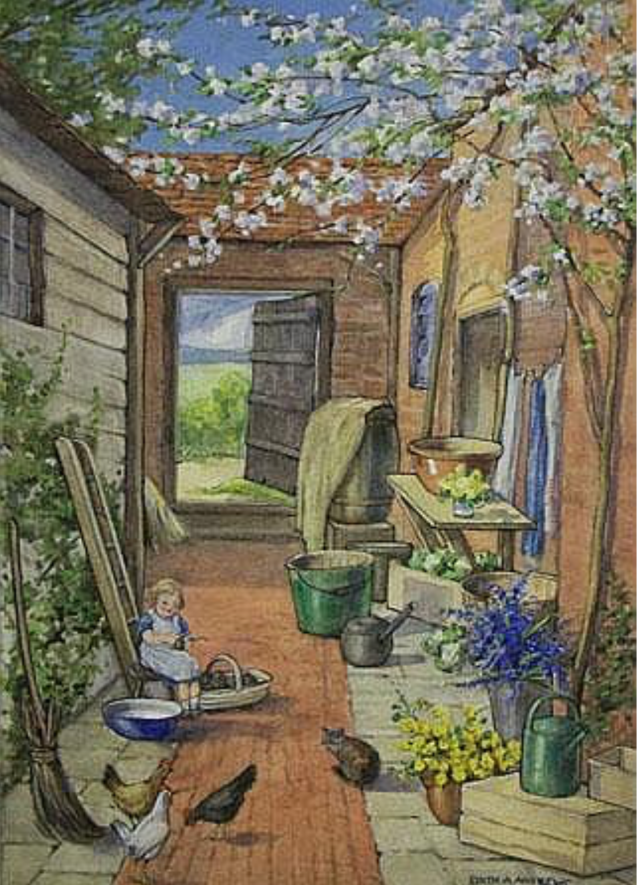
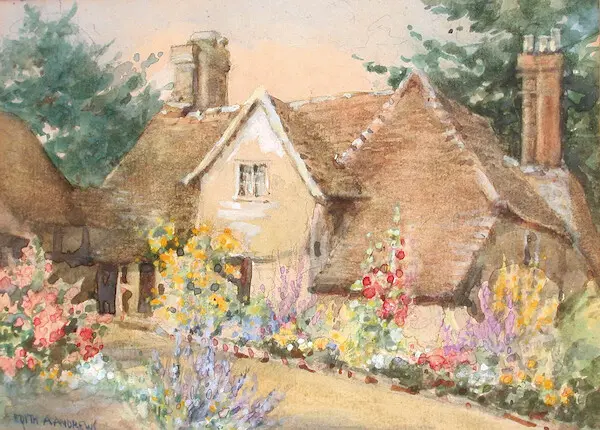
Edith Andrews is my first new “unknown”, although she is better documented than many. She was born Edith Alice Cubitt in 1873 in St John’s Wood London and studied at Goldsmith’s then an art college rather than fully fledged university. She won medals and began exhibiting her work, which often had garden or floral subjects, in 1896.
By the first decade of the 20thc she was living in Lewisham and exhibiting successfully including at the Royal Academy, the Royal Institute of Painters in Watercolours and the Paris Salon, as well in regional galleries. She began showing her work through the Society of Women Artists during the 1920s.
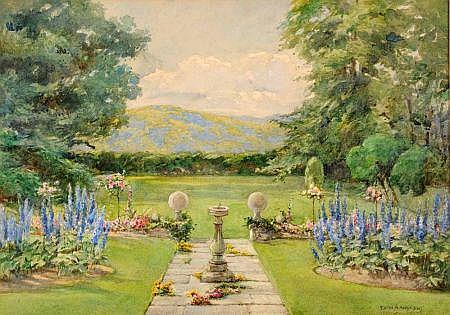
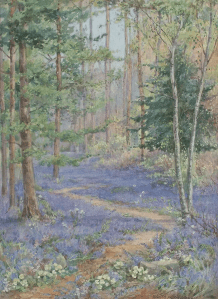
In 1912 she married George Andrews, a musician, and started a family in High Wycombe. After his death in 1929 she moved to Pembury in Kent and picked up her brush again, returning to the exhibition circuit. She was lucky enough to get an invitation to exhibit at the Chelsea Flower Show and this led to pictures being bought by Queen Mary and George V. They later commissioned her to design Christmas cards for them. [None are available via the Royal Collections Trust website.] She did not confine herself to garden and flower paintings but branched out into painting portraits and miniatures and most notably illustrating children’s books. Her style ranges from the clear almost crisp paintings above to the softer almost blurry approach that was more typical of the period [left and below]. She continued exhibiting at the RA until 1954, and died in 1962.
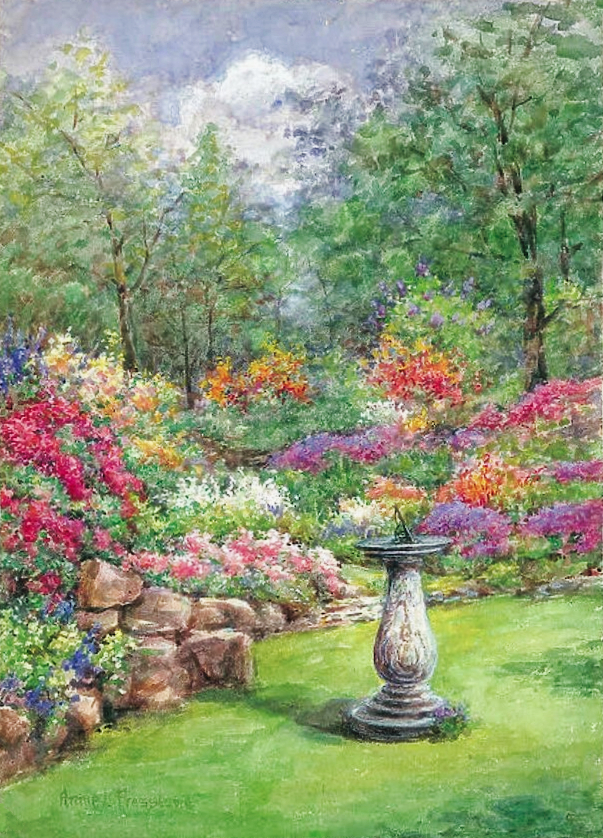
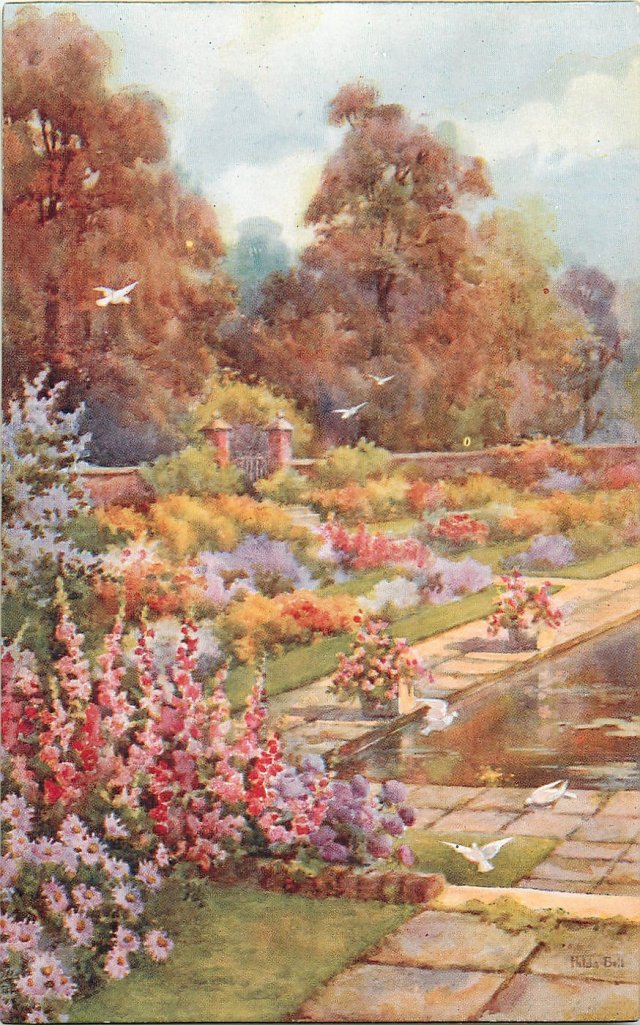
My next artist is Annie Louise Pressland who was born in 1862 in Brighton. Her family moved to London and she attended the Slade School of Art and exhibited between 1892 and 1923 at the Society of Women Artists, the Royal Institute of Painters in Watercolours, the London Salon and galleries in Liverpool, Birmingham and Manchester.

Later she moved to Sussex but spent a lot of time travelling around the country painting private gardens some of which were later turned into postcards. She made a success of a career as a commercial artist – usually being known as Miss Pressland – working for several of the major cards publishers including Tuck, Salmon and James Henderson. Her most notable paintings were a series of ten paintings of the gardens at Easton Lodge for Frances, Countess of Warwick, which provide a good historical record.
The Countess had commissioned Harold Peto to redesign the Gardens for her, and his designs drew on his extensive travel, including trips to Italy and Japan. Although the house and wider estate have undergone many vicissitudes since then, including divided ownership the gardens are in good hands and open to the public and well worth visiting.
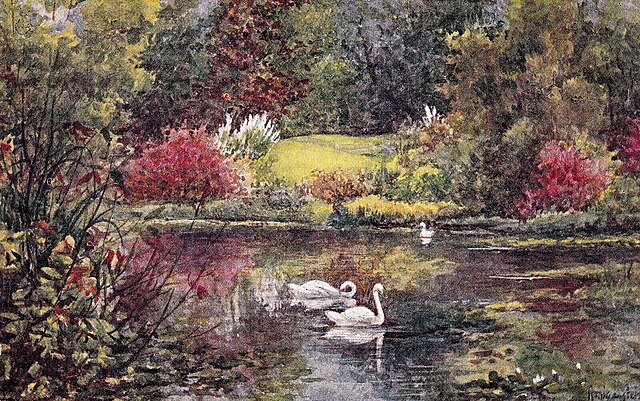
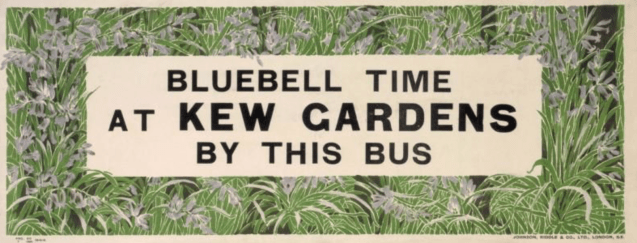
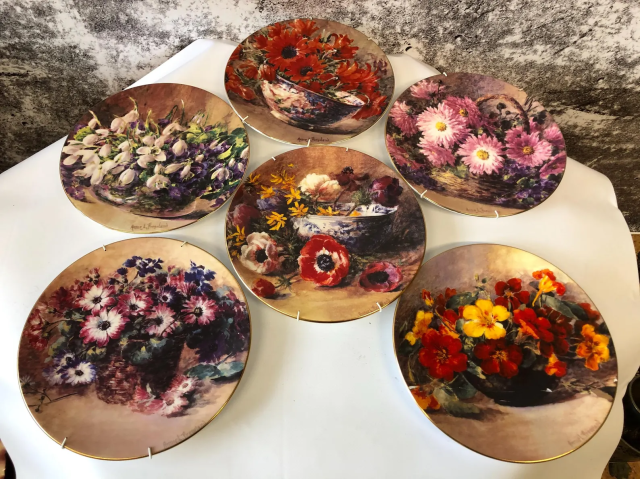
Miss Pressland seems to have been very prolific. Not only are there dozens of surviving postcard images but she also worked for London Transport where she designed a series of panel posters in the years before the First World War, and painted floral images for Royal Worcester porcelain. She died in 1933 in East Grinstead.
But if you thought those biographies were a bit thin I think you’ll be as disappointed as I was with those of some other female postcard artists I traced – or rather failed to trace.
I got very excited when I found a reference to my next artist, Lucy Hilda Bell. She’s described in a recent obituary notice for her nephew as being related to George Bell the publisher and as “one of only a handful of women who gained the honour of admission to the Royal Academy”. This source said she lived a very independent life and lived with a female “companion”.
The reality as far as I’ve been able to check is different, so as usual never take anything on trust. Born in 1860 Hilda Bell was a London based painter of miniatures, who specialised in flower subjects, and exhibited at all the leading London galleries from 1889. That may be true but most of the rest isn’t.
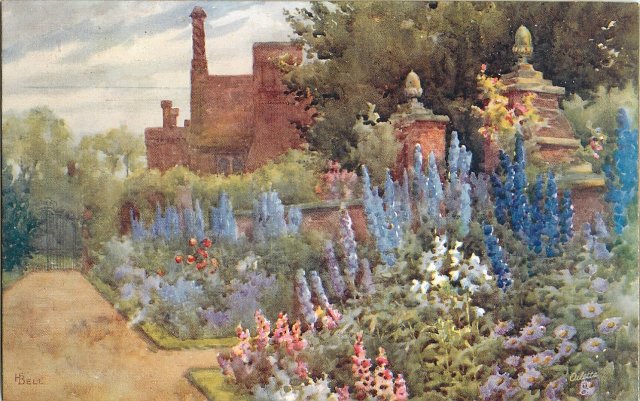
She is recorded in the 1901 census as living with her elderly father and is described as an artist binder, which I presume means book binder, and a companion/housekeeper. She wasn’t an Academician although she did show work at several RA exhibitions. Other than that I can’t track her in the census but can only assume she was relatively successful because she left £4700 when she died in 1925.
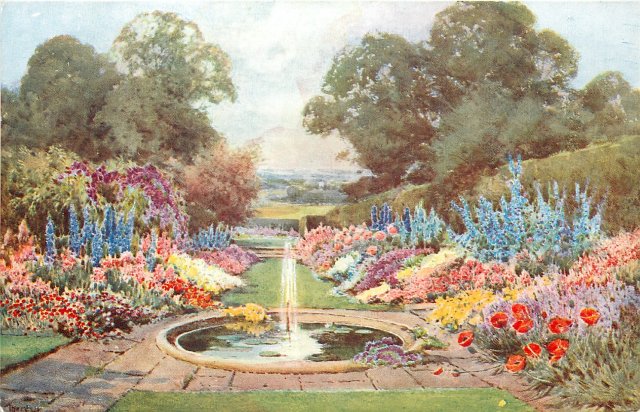
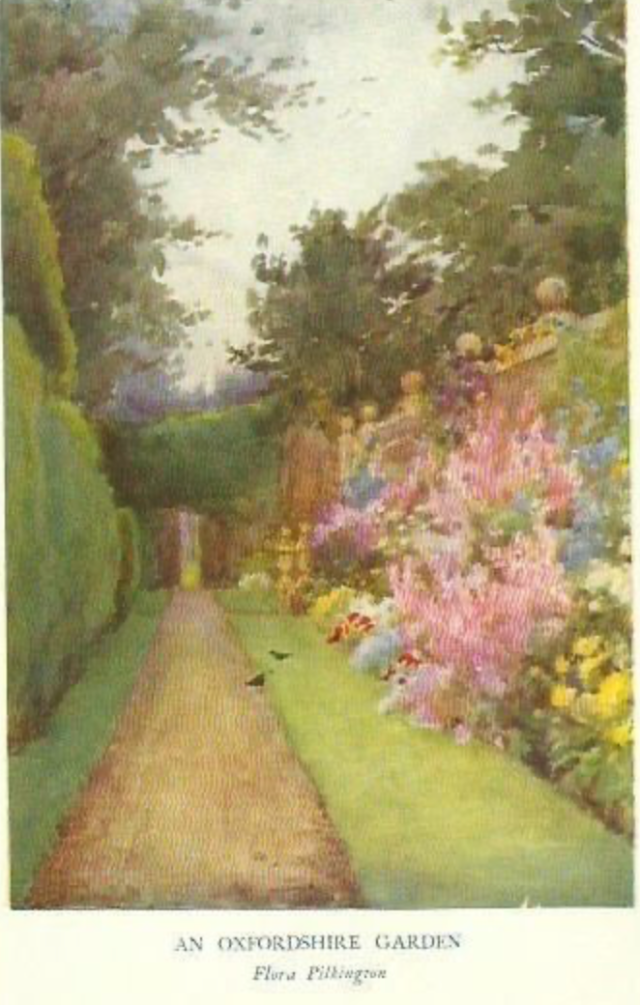
Florence [sometimes signing her work as Flora] Pilkington was an equally elusive character. There are several people with her name in the census records although I think she is the one born around 1865 in Wrexham. Nothing is known of her upbringing or training, but by 1901 she was living in London and presumably making her own way as a commercial artist.
She produced at least 36 postcard designs of gardens for Raphael Tuck and also worked for the Medici Society. This had been founded in 1908 to bring artists’ work to the appreciation of a wider public through technically cutting edge high-end colour reproductions, with subjects chosen for their artistic value, beauty or sentiment sold “for the lowest price commercially possible”. Most of what she painted were English garden scenes, floral studies or small landscapes.
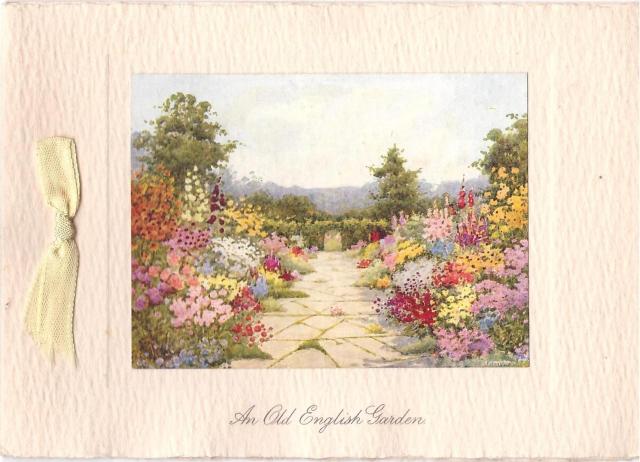
An Old English Garden with this message printed inside
“BY GRACIOUS PERMISSION THIS PICTURE IS PRODUCED FROM THE ORIGINAL CHRISTMAS CARD IN THE POSSESSION OF HER MAJESTY THE QUEEN PAINTED BY FLORA PILKINGTON”
She too was popular with royalty and again must have been fairly commercially successful as she lived in Holland Park Avenue [admittedly as a boarder] and left more than £2600 when she died in 1945.
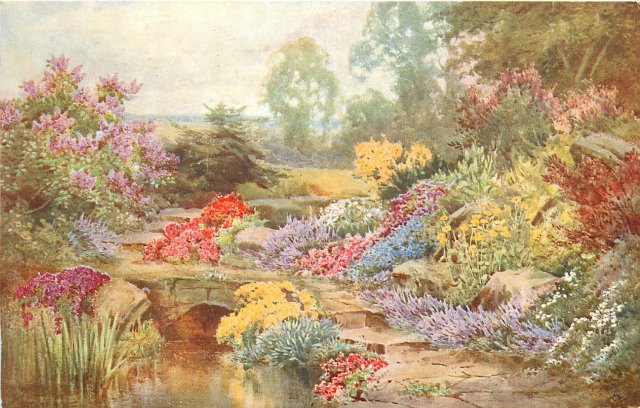
One female artist whose life story has completely defeated me is Ellen Bass- Smith who also worked for Raphael Tuck. One set of her paintings were of the garden at the wonderfully named Wiggie at Redhill in Surrey. That proved easier to trace than Ellen.
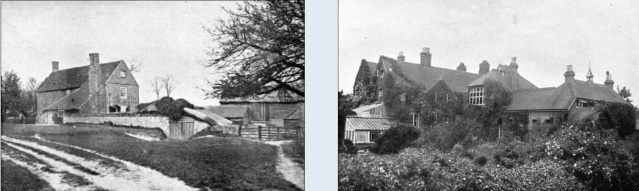
The garden was created by Arthur Trower in what had previously been a 19thc farmyard for a farm said to have been built on the site of a large ancient manor. The gardens were famous for their great abundance of yellow flowers including daffodils, narcissus and the ‘Wiggie strain’ of polyanthus. Trower described making the garden in his book Our Homestead and its Old World Garden (1910) which unfortunately doesn’t seem to be available digitally and it’s also referred to by Eleanor Sinclair Rohde who lived very close by, in her book The Scented Garden (1900).
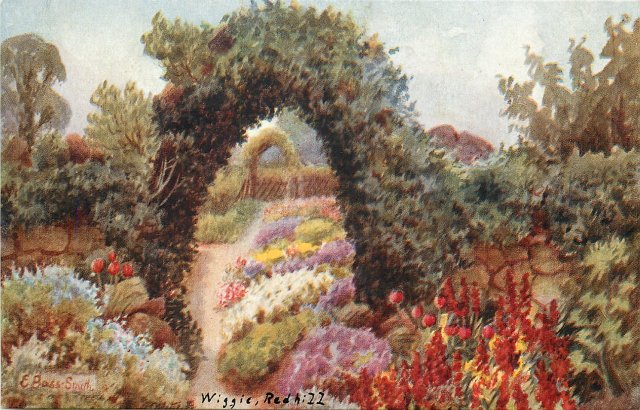
When the house was sold in 1938 after Trower’s death several paintings were listed in the auction catalogue, and these included at least two by Ellen Bass-Smith. There were also a lot of garden items listed including mowers, seats, tools and a large number of greenhouse plants.The house was demolished in 1977.
I couldn’t find any census records for Ellen Bass-Smith but for more on Wiggie see the Reigate Society’s webpage about it, which includes more paintings in the same style as the postcards, See also the local Historic Environment Record,
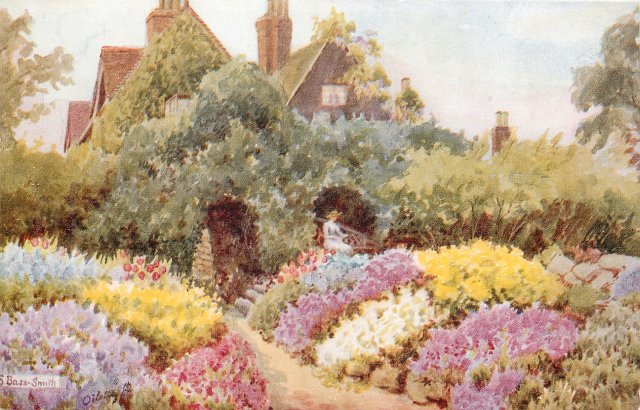
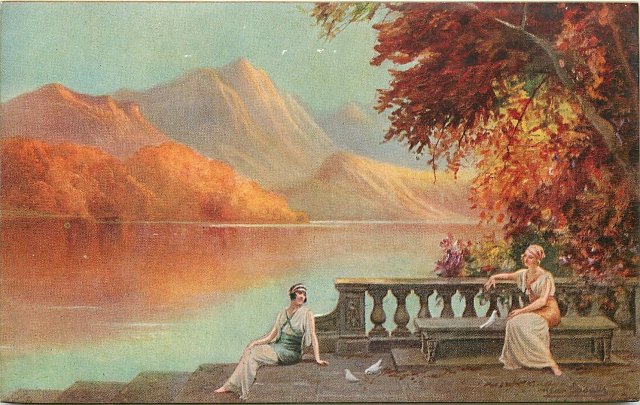
Finally there is artist named Jean Lasalle [who of course could be a French man rather than a woman] whose style is completely different to everything else we’ve seen so far, but again about whom I can find nothing. Lasalle painted at least 36 images for Tuck labelled with such titles as Dreamland Gardens Italian Lakes and The Blue Lagoon. They’d make an interesting post in themselves if only I could find some more information.
There are also a series of artists with no indication of whether they’re men or women, so all we have to go on are their cards and the entries in the Tuck or other catalogues, so if anyone knows anything about them – A Coates, V Norman, M Townsend, M Stirling – such as a fuller version of their names, any biographical information or other work please get in touch.
The result is that this post is much shorter than intended! Chocolate Box Men will appear when I’ve done a bit more research, with, I hope, a bit more success.


 The Garden History Blog


I love those images and am going to resist (for now) the temptation to try to find some of those postcards for sale.
(I also share your frustration with finding out about people who left a few mere fragments of their lives to discover today. I seek out those whom I call “lost ladies of garden writing” who wrote gardening books or even just articles in the late 19th and 20th centuries, but have been forgotten. Because I’m in the U.S., I focus on American writers that I can research through ancestry.com and newspapers.com and publish what I find on my Substack.)
This is very interesting, thank you. I would love to find images that are literally chocolate box for purely sentimental reasons. My mother used to buy very large boxes of mixed chocolates each Christmas and the lid design I remember most strongly is of a large fire with high mantelpiece in a baronial hall where two or three gentlemen just in from the hunt by the look of it are enjoying a tankard of something by the fire. I appreciate this has nothing to do with gardens but if you should stumble across something of this nature it would be a big memory lane moment for me. Thank you, Gwenneth