Many people are passionate about plants but today’s post is about a 19th gardener, author and editor who went one stage further, gave up his promising career as an academic and devoted much of his life to writing about plants and collecting, researching and spreading the word about just one group of them: cactus.
In the first decades of the 19th century large numbers of new species were being collected in the Americas, especially Mexico, and sent over to Europe sparking a wave of interest often called Cactus Cornucopia.
Sadly cactus didn’t bring him fame or fortune but I’m sure they bought him a lot of happiness.
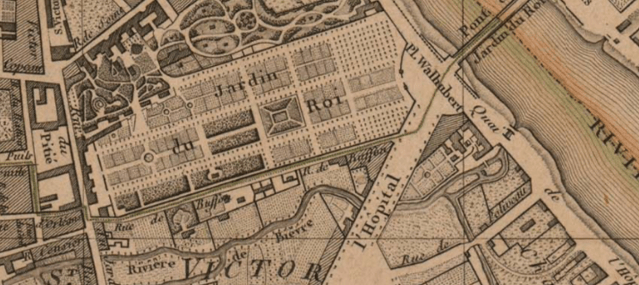
Charles Antoine Lemaire was born in Paris in 1800. His family were not that well-off but this was post-revolutionary France and so he was able to attend university in Paris and study philology [the study of language in written historical sources.] He was a good scholar, went on to teach the subject becoming an assistant professor with a solid academic career ahead of him. Fortuitously for horticulture he lived in Rue Buffon, one of the streets that faced the Jardin des Plantes, the former royal gardens which had re-organised and opened to the public. On one of his visits there he met a young horticulturist Joseph Neumann, who had just returned from three years studying in the botanic garden recently established on the French colony of Reunion, and who was working in the hothouses. The two must have got on well because philology was soon forgotten and replaced by botany.
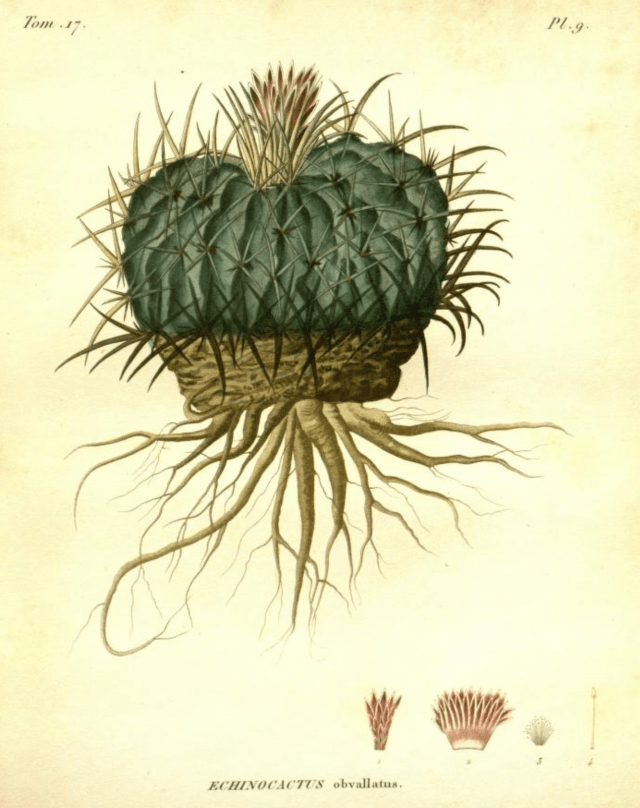
Also on the Rue Buffon was a nursery run by a Monsieur Mathieu and Lemaire got a job working there which must have been quite a switch. Mathieu was one Paris’s foremost plantsmen, and an early collector and propagator of cactus, a family of plants which must have been quite unusual to Lemaire because even the Jardins des Plantes did not have many.
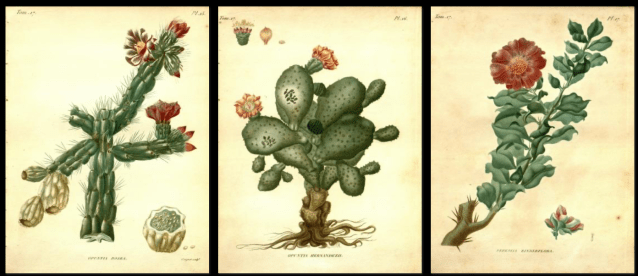
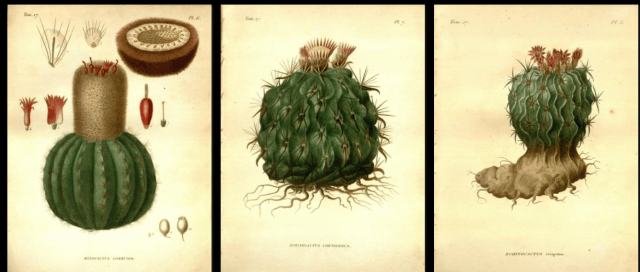
Unfortunately Mathieu’s catalogues do not survive but in 1829 the leading botanist Augustin de Candolle published an illustrated review of the cactus family Revue de la famille des Cactees avec des observations sur leur vegetation et leur culture which show the range of what was available. He followed that with another volume Memoires on more new or little known species in 1834.
Mathieu must have passed on his enthusiasm and Lemaire began to take a great interest a in cactus, and in the process began to research and then write about them. It’s pretty clear his love affair with cactus started early.
You can find more about Mathieu and his collections by trawling. through the Annales de la Société d’Horticulture de Paris, [ Journal of theParis Horticultural Society] between 1828 and the 1850s, altho its a slow process!
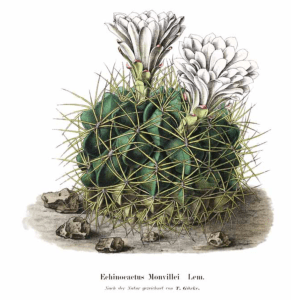
One of the keen amateurs was Baron Hyppolite Boissel de Monville a wealthy manufacturer living near Rouen, who had amassed an extensive collection of plants, especially cacti. Somehow Lemaire ended up cataloguing them and then in 1835 publishing Cactearum aliquot novarum ac insuetarum in horto Monvilleano cultarum accurata descriptio (“Accurate Descriptions of Several New and Unusual Cacti Cultivated in the Garden of Monville”), which was accompanied by a single engraving plate of a species which he named after the Baron: Echinocactus monvilleanus . Unfortunately Monville was almost bankrupted and was forced to sell off his plants a few years later in 1846 , so the catalogue is the only information on one of the most important early European cactus collections.
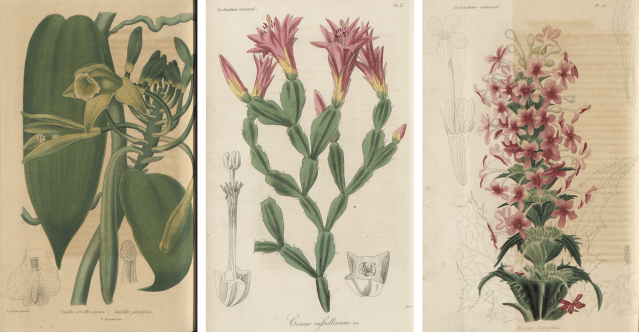
Vanilla, Cereus and Morina
Images from the first volume of L’Horticulteur Universel
Perhaps it was that publication that led to Lemaire being offered the editorship of a new horticultural journal L’Horticulteur Universel which ran from 1839-1847 and included original botanical descriptions, reports on new cultivars, and accounts of contemporary European horticulture. It also came with. hand-coloured plates a much higher quality than previously seen in French horticultural magazines.
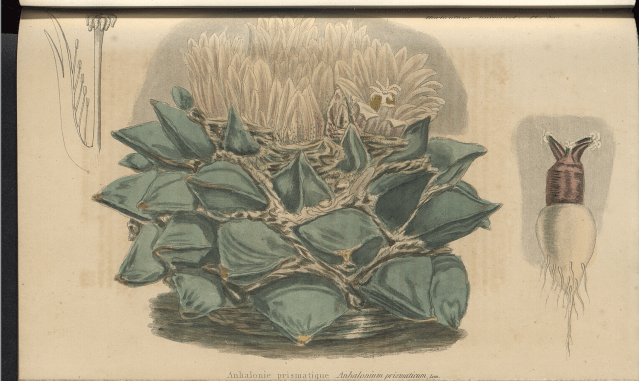
As a contemporary noted after his death “Lemaire possessed an exceptional sensitivity for producing representations that were at once scientifically exact and artistically refined. Under his direction, the quality of botanical illustration advanced decisively and dramatically.”
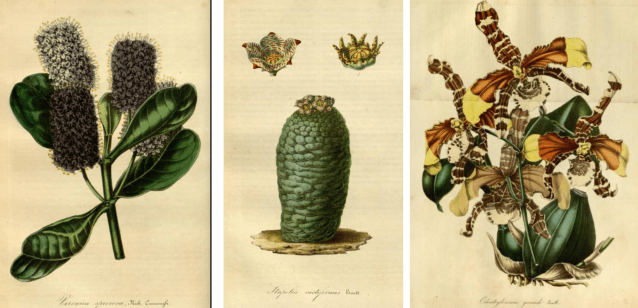
 L’Horticulteur Universel also attracted the attention of the Belgian Louis van Houtte, who had been plant hunting in South America, and founded a very successful nursery at Ghent. He invited Lemaire to edit another new journal Flore des Serres et des Jardins de l’Europe, which he did until 1851. This really meant moving from Paris to Ghent but with the loss of his patron Monville it must have seemed like a good move.
Flore des Serres had text in French, English and German and was not only the first “international” plant-related journal but was to become the major illustrated horticultural periodical of the 19th century but because most of the plants described were available for sale in van Houtte’s nursery, the magazine effectively doubled as a catalogue.
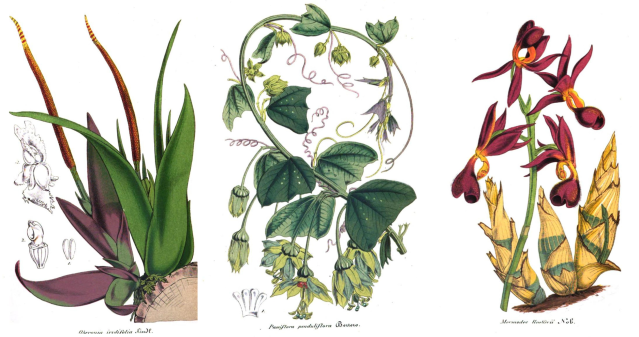
Oberonia irridifolia, Passiflora penduliflora, and Mormodes hookeri, Plates from Le Jardin Fleuriste, 1852
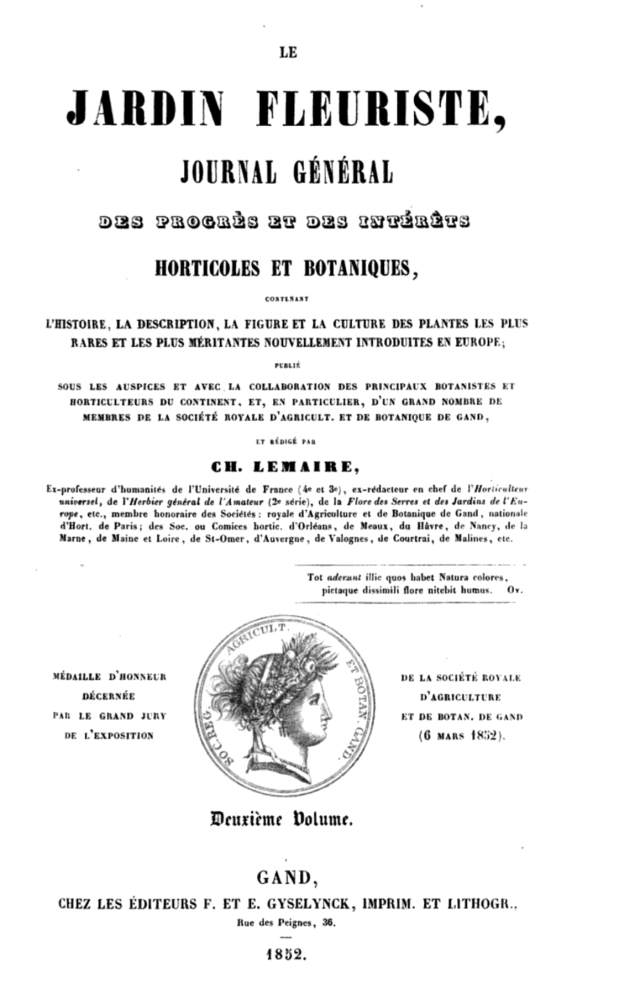
For reasons unknown Lemaire left Van Houtte in 1851 and set up on his own publication Le Jardin Fleuriste.He may have been financing this himself because the quality of images is so much poorer than in his earlier publications and it can’t have been a great financial success because it only ran for four years between 1851 and 1854.
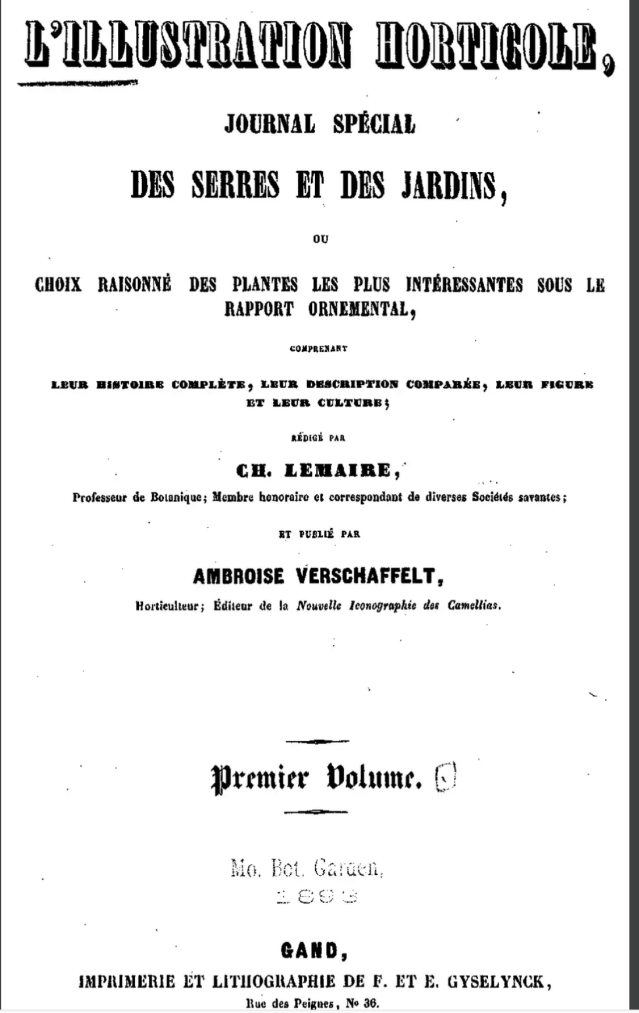
After it closed he was asked by another leading Belgian horticulturist, Ambroise Verschaffelt, effectively to restart it under a different title, L’Illustration Horticole, which he did, running it for about sixteen years and setting new standards in horticultural publishing, until he finally returned to Paris in 1870.
Its opening words reveal what the magazine would cover :”Je dirai comment l’art embellit les ombrages, L’eau, les fleurs, les gazons et les rochers sauvages” or “I will describe how art beautifies the shady groves, the water, the flowers, the lawns, and the wild rocks.”
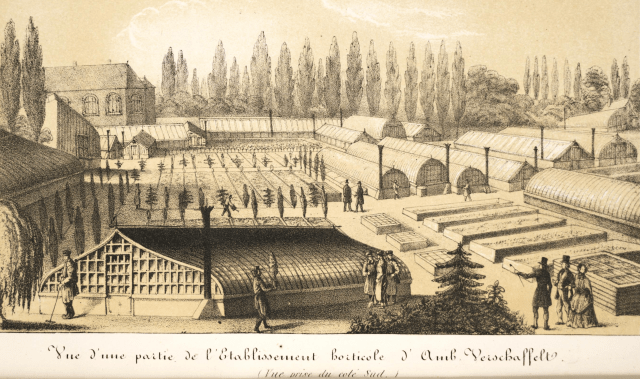
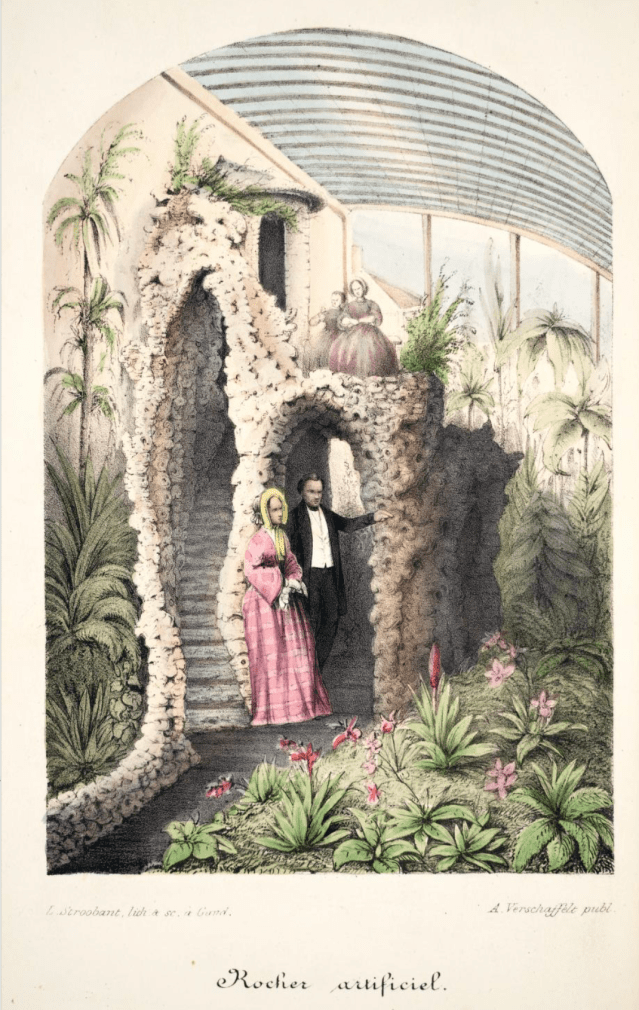
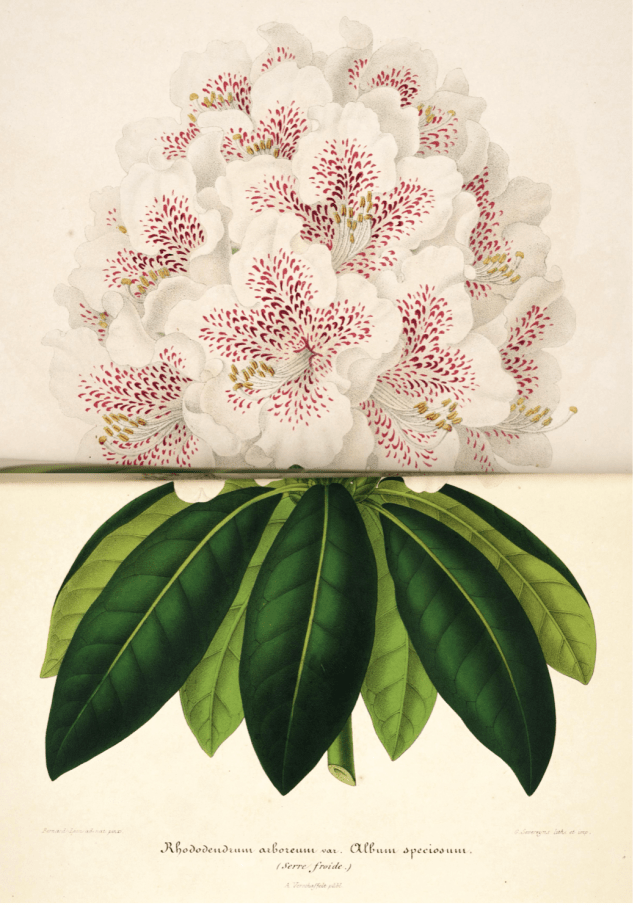
All of these journals were aimed mainly at professional or commercial gardeners or wealthy garden owners and they were based on the successful format long adopted by English botanical publications such as Curtis’s Botanical Magazine. However, those generally only included botanical descriptions, cultivation hints and suchlike basic information as well as the all-important hand-coloured plates, including some double page spreads. Lemaire took a broader approach including some more general articles and pieces about contemporary European horticulture and some good publicity for Verschaffelt’s own nursery.
Alongside all his editing Lemaire was also writing about plants.There was a treatise on growing newly fashionable flowers such as pelargoniums and calceolarias in 1842, another on the history and cultivation of bulbous plants in 1843, and a third on cold greenhouse plants in 1844
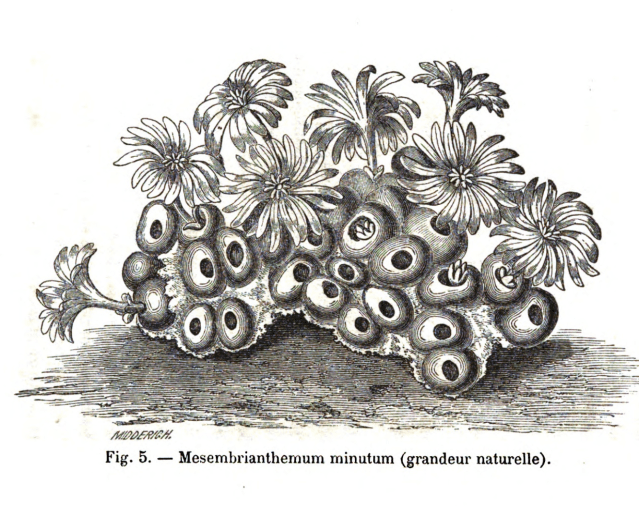
Between 1844 and 1847, leading a team of leading botanists from the Jardin des Plantes and elsewhere, he published the four volume Herbier general de l’ amateur which contained lots of coloured plates of new and interesting plants in less botanically demanding. language for a wider audience.
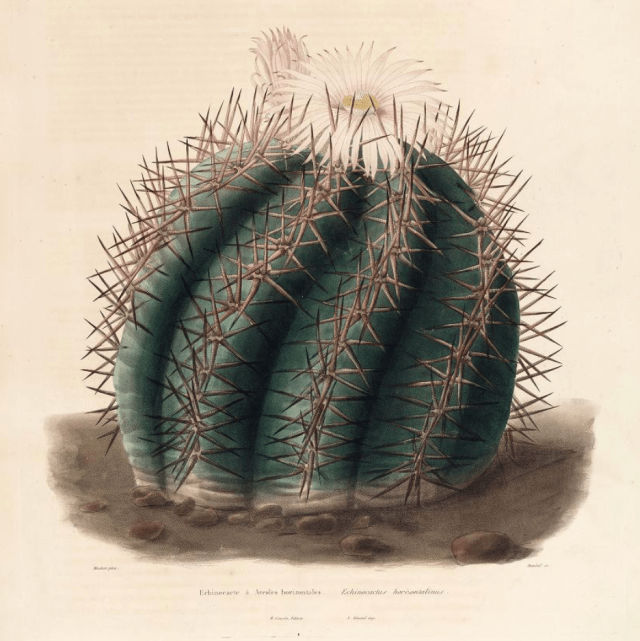
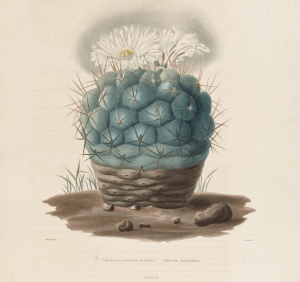
Yet while these were interesting it’s his work with cactus that is the most scholarly and important, even though it was never published on the scale it deserved.
Almost from the very beginning, and certainly following on from his short catalogue of Monville’s collection, he had the idea of producing a comprehensive monograph of the entire cactus family. This would have been monumental because he planned not only to describe every known species but illustrate most of them too.
The project was planned to be issued on subscription in at least 100 parts, with two folio plates in each plus text in both Latin and French. Each part would cost 5 francs and subscribers were promised that any plates published beyond the first two hundred would be supplied without additional charge.
Luckily for Lemaire he gained a new patron Friedrich Schlumberger, who also lived near Rouen, who he presumably met through Monville, and who also is known to have had a collection of cactus and succulents.
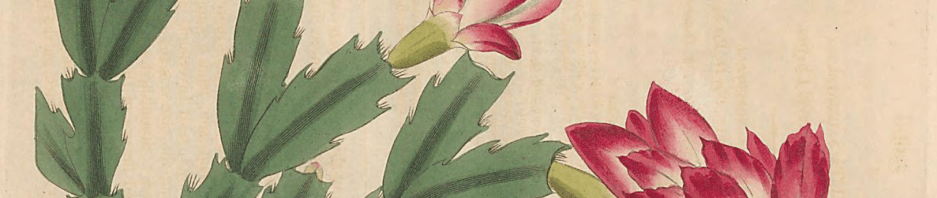
However while there are frequent grateful references in various articles throughout the 1850s it seems likely that Schlumberger was either unable or unwilling to underwrite Lemaire’s expensive larger publishing ambitions like the monograph. Nevertheless his collections supplied Lemaire with many of the new species described in the journals and in 1858 Lemaire named the genus of what’s commonly called the Christmas Cactus Schlumbergera his honour.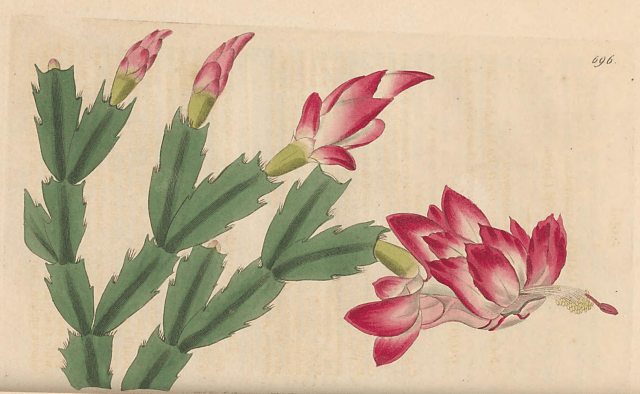
For more on that see the website of Schlumbergera enthusiasts and W. Tjaden’s article Charles Lemaire (1800-1871) and the Genus Schlumbergera in The Cactus and Succulent Journal of Great Britain, 1969,
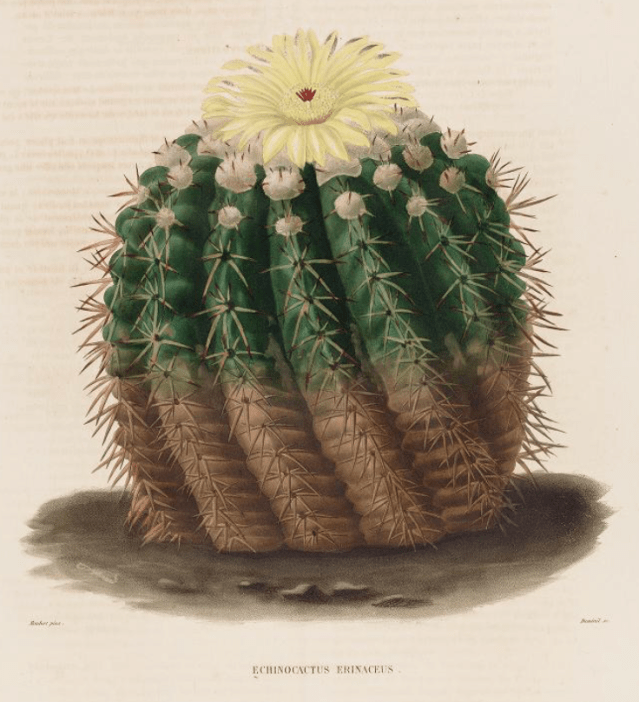
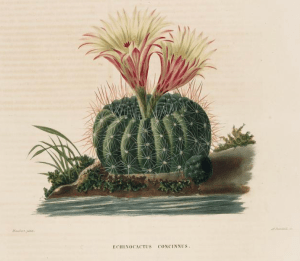
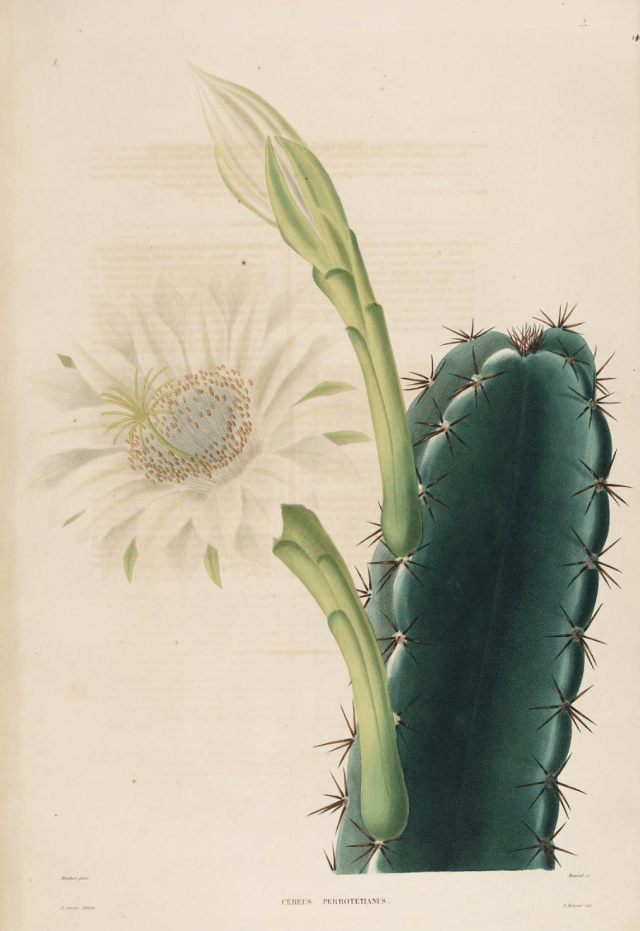
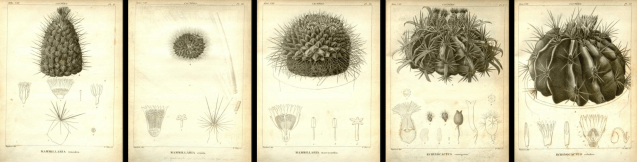
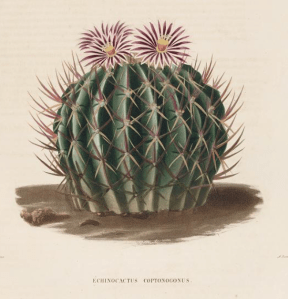
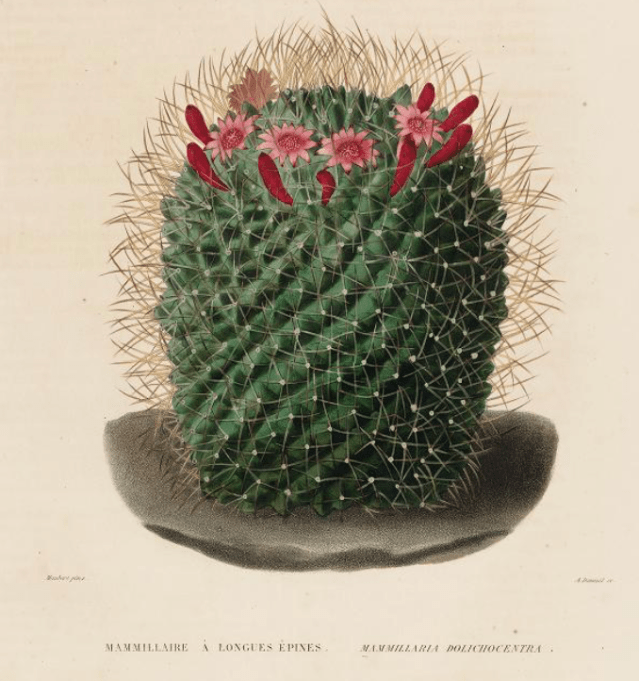
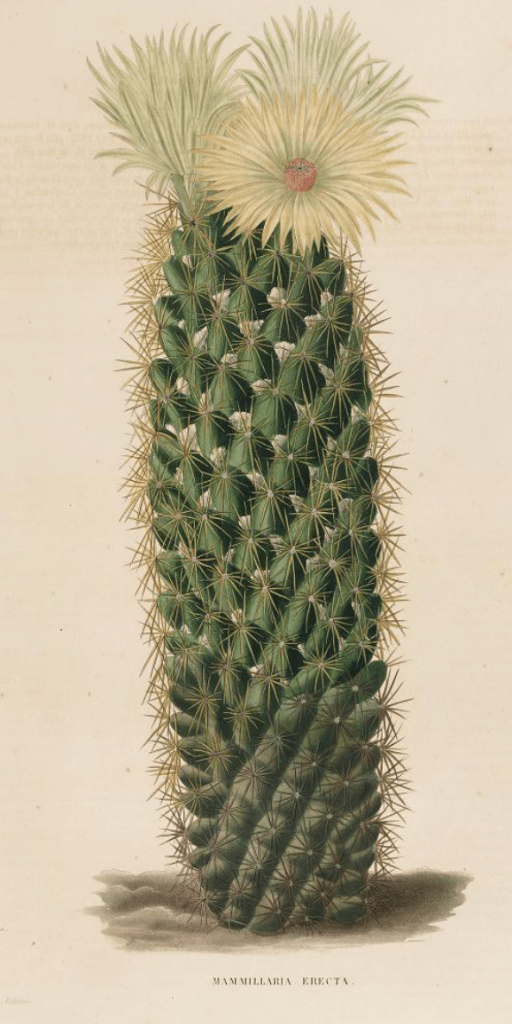
The first instalment of Iconographie descriptive des Cactées was published in 1842. Publication was extremely slow and it took another 5 years for the next 8 parts with a total of 16 plates to appear. Again, it clearly cannot have been a financial success because after that the project came to an end. Even so, as Karl Schumann a German cactus specialist wrote twenty years after Lemaire’s death: “I do not hesitate to rank this work among the masterpieces of botanical illustration. Indeed, after careful comparison, I am inclined to believe that, for cacti—and perhaps for any plant family whatsoever—no more beautiful illustrations have ever been produced. Although originals are very rare they were reissued in 1993 in facsimile.
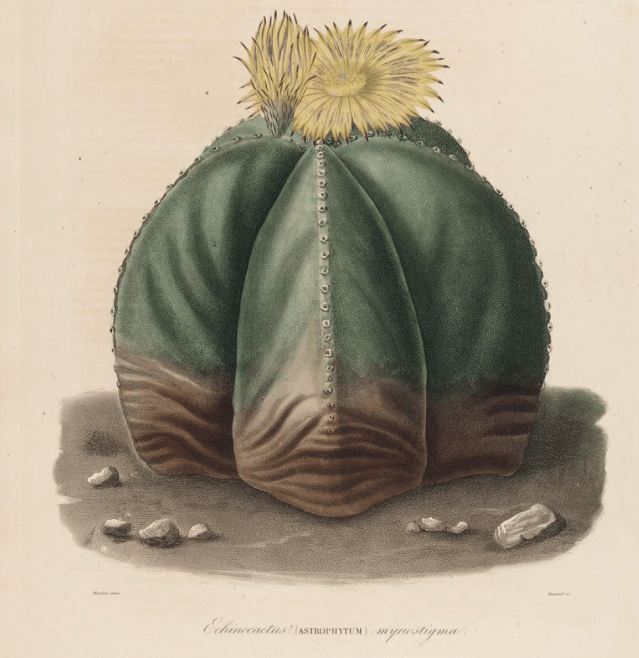
Echinocactus myriostigma
 Lemaire next played to the spread of interest in cactus with his modest manual for amateur growers, which appeared in 1845, and which was followed 13 years later in 1868 by Les Cactees -another growers’ guide, covering their history and cultivation which was modestly illustrated with eleven black and white engravings.
For more on that book see “One Hundred Years Back to Lemaire, by G. G. Leighton-Boyce in The Cactus and Succulent Journal of Great Britain, 1968
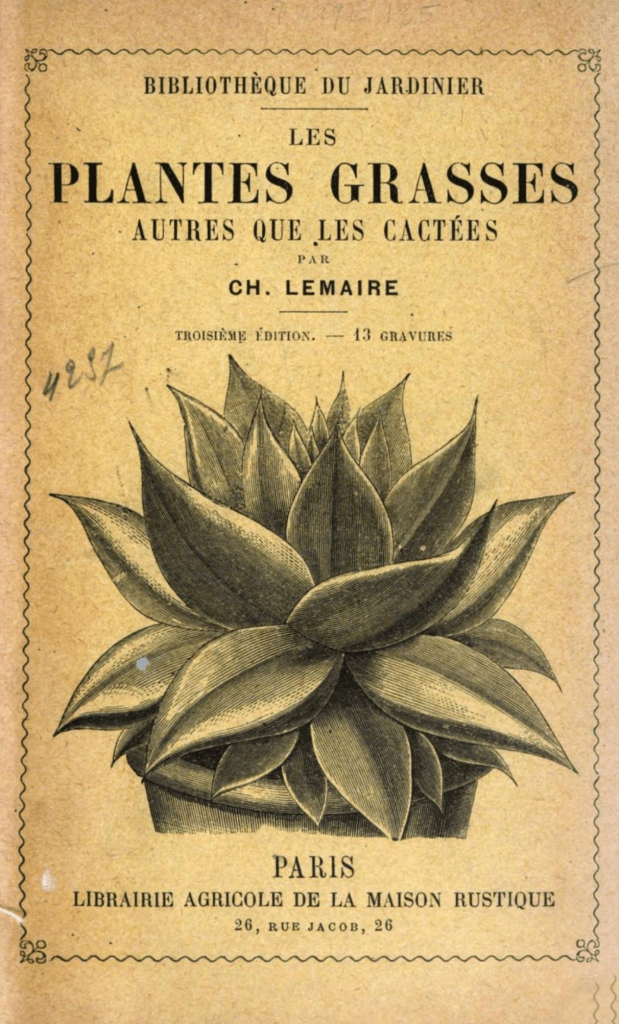
He then turned his attention to succulents with Les plantes grasses autres que les cactées: histoire, patrie, genres, espèces et culture, a manual about them and their cultivation in 1869, which was reissued posthumously in both 1879 and 1889.
By now there were rivals in the field notably Jean Labouret whose 700 page Monographie de la famille des cactées had no illustrations at all, and Frederic Palmer whose Culture des Cactées had illustrations largely copied from other writers including Lemaire himself.
For more on these books and their links with Lemaire see Colin Walker’s article “Palmer’s Culture des Cactées – a rare cactus book”.
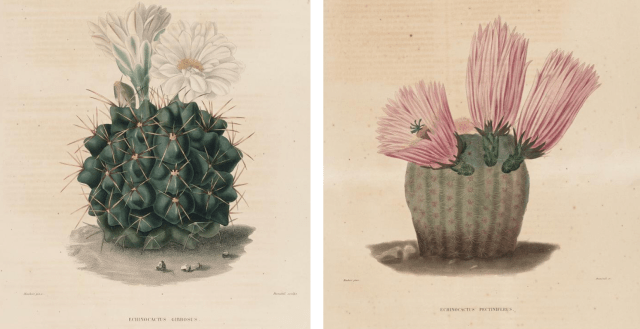
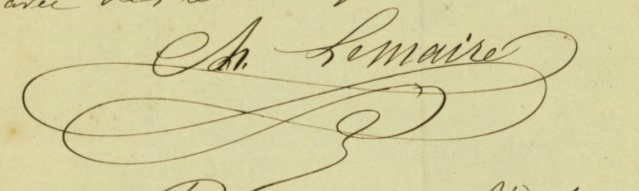
But it’s clear that Lemaire had not given up hope of producing his own long-planned monograph. Archive.org carries manuscript copies of letters to George Englemann, a German-American botanist and a fellow cactus enthusiast which make it clear that he was still intent on writing it. In 1857 he writes “many amateurs and correspondents are pressing me to recollect in one volume all what one knows about these plants” particularly because it would replace “an unfortunate book published by Mr. Labouret, where on each page and each line there are mistakes of all types.” He goes on to ask if Englemann would consider collaborating with him and exchange information and plants.
In the autumn of 1862 he tells Englemann that he’s been working on it for 4 or 5 years “con amore” and is about to leave for New York and “from there in a horticultural exploratory destination to Havana and Venezuela” to look for cactus “in their natural environment” again asking Englemann for help. Letters obviously got lost or delayed at various points perhaps because of the American Civil War but after his return to Ghent from his trip in May 1863 he suggests that Englemann “could be one of the patrons of my Monographic Review of the Cactaceas” because he says “you are a Cactographer!”
The correspondence obviously continued although most letters have been lost. The final letter I have seen suggest that despite what every other mention of Lemaire saying the work was never finished that in fact it was because he tells Englemann: “Since a long time I have finished my Monograph of Cactacea. But the editor was not interested in botanical works!!! | have tried to find another without Success.” and with his regret that no generous patron could be found willing to support the publication of his works. Incidentally this was not his only unfinished work because on the title page of Iconographie he describes himself as the author of a Dictionnaire Botanique that was “in the press,” but which likewise never saw the light of day.
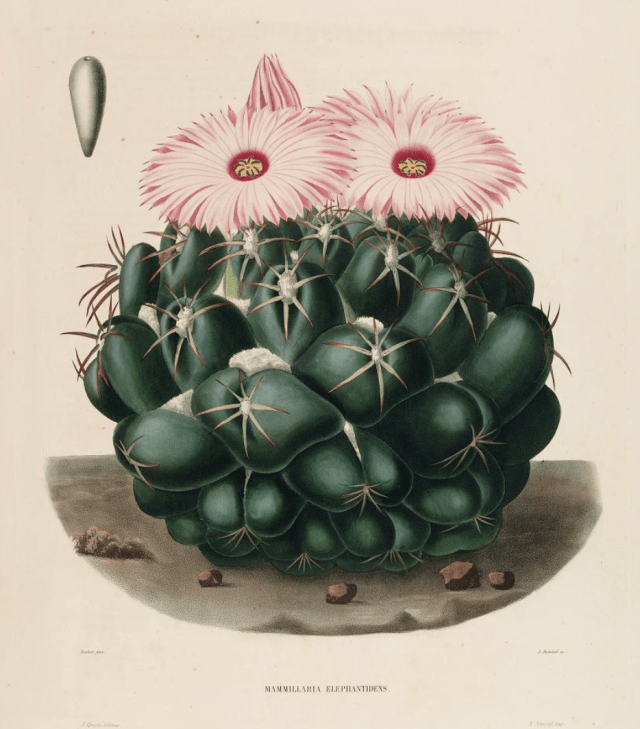
Mammilaria elephantidens
Lemaire’s return to Paris in 1870 coincided with the outbreak of Franco-Prussian War and the then the revolutionary Paris Commune and he died on 22nd June 1871 just a few days after the city was recaptured by the French government.
Lemaire was honoured in several obituaries which are all clear on several points.He had little interest in plant anatomy or physiology, and instead confined himself almost exclusively to descriptive botany. He was meticulous with his research, observations and identifications, and had as one noted “a devotion to terminological precision carried at times to excess:.” He was “industrious and tireless … indeed the greater part of the articles appearing in the journals he edited came from his own pen” yet —he “never succeeded in securing even a modestly comfortable position… and died in straitened circumstances, providing yet another example of the melancholy truth that scholarship may bring honour, while yielding only the smallest material reward.”
Once again it’s difficult to know what, other than the links in the text, to suggest if you want further information as very little has been written about him. However you can find almost complete runs of all of his journals on-line: L’Horticulteur universel 1839-1846; Le Jardin Fleuriste, 1851-1854; L’Illustration Horticole, 1854 -1896; Flore des serres et des jardins de l’Europe, 1845-80.
If you’re interested in the history of cactus and succulent collecting in Britain a good place to start is the website of the British Cactus and Succulent Society ;or you could try Jay Trett’s article , Some Early Collectors of Cacti and Succulents in the The National Cactus and Succulent Journal, 1978.
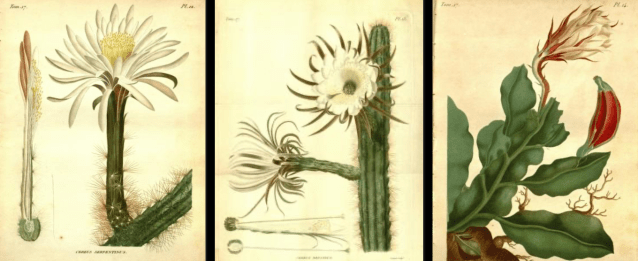
From Candolle’s Revue


 The Garden History Blog
You must be logged in to post a comment.