Mr McIvor and “the commodity that changed the world”

A few month ago I wrote about the Botanical Gardens at Ooty in southern India where the first superintendent was a Kew-trained gardener, William McIvor.   He arrived there in 1848 and spent the rest of his life in Ooty running the gardens

While that was an impressive achievement he became  much more famous in his own lifetime for his work growing  cinchona – which was to be “the commodity which changed the world.”

If you haven’t heard of cinchona you’ll definitely have heard of the product which is derived from its bark and, if you’re old enough, may even have benefited from it yourself if you’ve ever  travelled to the tropics.

Unfortunately his story doesn’t end that well and he died a disappointed man on June 8th 149 years ago.

Continue reading

Posted in Uncategorized | Leave a comment

Anne Pratt : “the popular writer on botany”

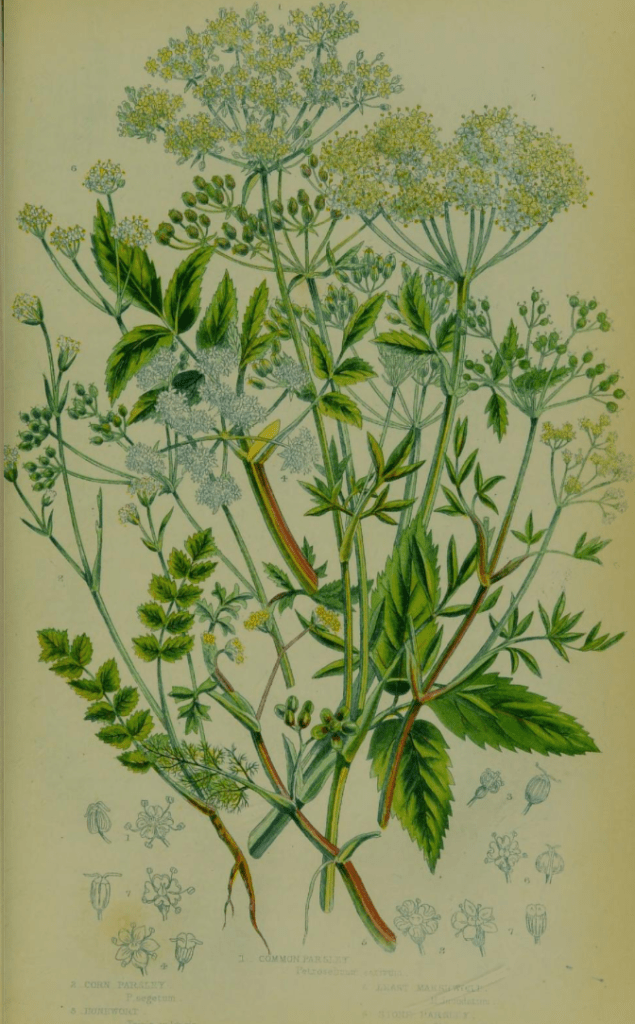
It was The Times that called Anne Pratt “the popular writer on botany” but I suspect to most of us [me included] she’s an unknown &  forgotten woman. Yet that’s  a bit strange given that  she was one of the most well-known botanical writers and  illustrators of her day, with 20 books to her credit, and apparently a favourite of Queen Victoria.

Anne  merits an entry in the Oxford Dictionary of National Biography, but for such an apparently prominent author she’s been quite difficult to  track down. Almost everything known about her – including the ODNB entry – comes from an obituary in The Journal of Botany, British and Foreign for July 1894 and even that starts off: “we briefly reported in this Journal the death of this lady who was known to several generations of children…but were then unable to give much information about her.”  However they eventually  “obtained some particulars of her early life from her niece, Mrs. E. Wells, and a short notice of her work seems desirable”.

So who was Anne Pratt?


Continue reading

Posted in Uncategorized | Leave a comment

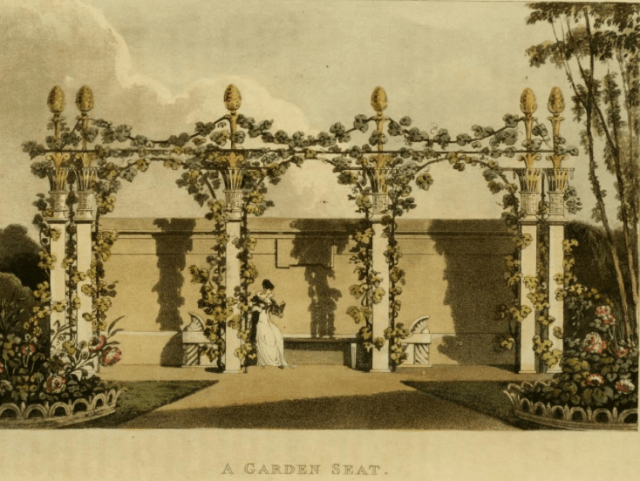
Regency Gardens in Ackermann’s Repository of Arts

Ever since I’ve been researching garden history, one of my regular sources  for information about gardens in the Regency period  has been Ackermann’s Repository of arts an illustrated monthly British periodical that was published between 1809 and 1828.

I was searching through a copy the other day looking for an image for a lecture and suddenly realised that not only didn’t I know much about the magazine and its garden-related articles and pictures, but I actually knew nothing about Ackermann himself.

So off down another research rabbit hole….


Continue reading

Posted in Uncategorized | Leave a comment

Philip Miller and his Gardener’s Dictionary

I wonder if you’ve heard of Philip Miller.  If you’re not a garden historian then probably not,  but he was  probably the most influential British horticulturist and garden writer of the eighteenth century, amongst other things  writing the first dictionary of gardening.  A member of the Royal Society, his reputation stretched not just across Britain, but its colonies and most of Europe.

Miller was also in charge of Chelsea Physic Garden for nearly 50 years,  turning it into the leading botanic garden and hub of horticultural knowledge  of the day. As a result he knew everyone of any importance connected with horticulture: aristocratic landowners, medics, scientists, plant collectors, and nurserymen,  both at home and abroad.

Continue reading

Posted in Uncategorized | Leave a comment

Wild Men

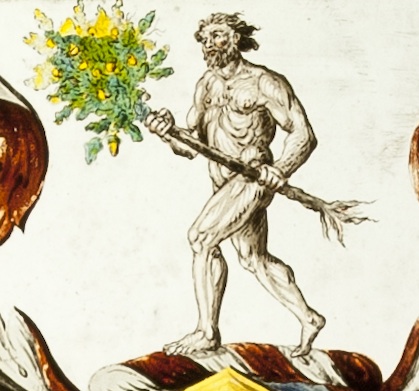
I did a double-take when I saw this relief carving on the house I stayed in at Ubeda in central Spain recently. Heraldry is symbolic but who or what on earth were the two figures supporting the coat of arms of the family who had once lived there? Were they athletic men in fur coats throwing frisbees or…?

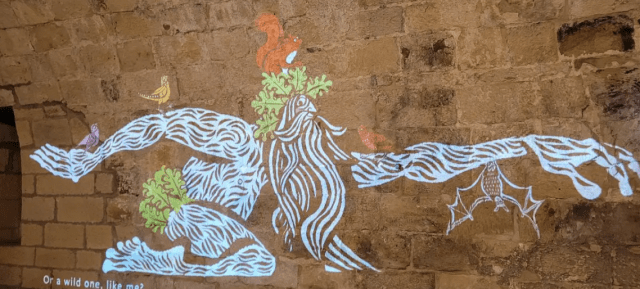
Of course, it didn’t take long to realise they were “Wild Men” one of the most delightful and fascinating inventions of the mediaeval imagination, and who persisted in popular culture right through until the late 18thc at least, and are now being used by English Heritage  to help visitors understand the landscape and gardens at Belsay Castle in Northumberland.

Continue reading

Posted in Uncategorized | Tagged | Leave a comment