Tredegar…Restoration grandeur and a dancing kangaroo

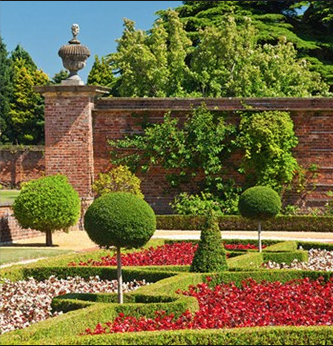
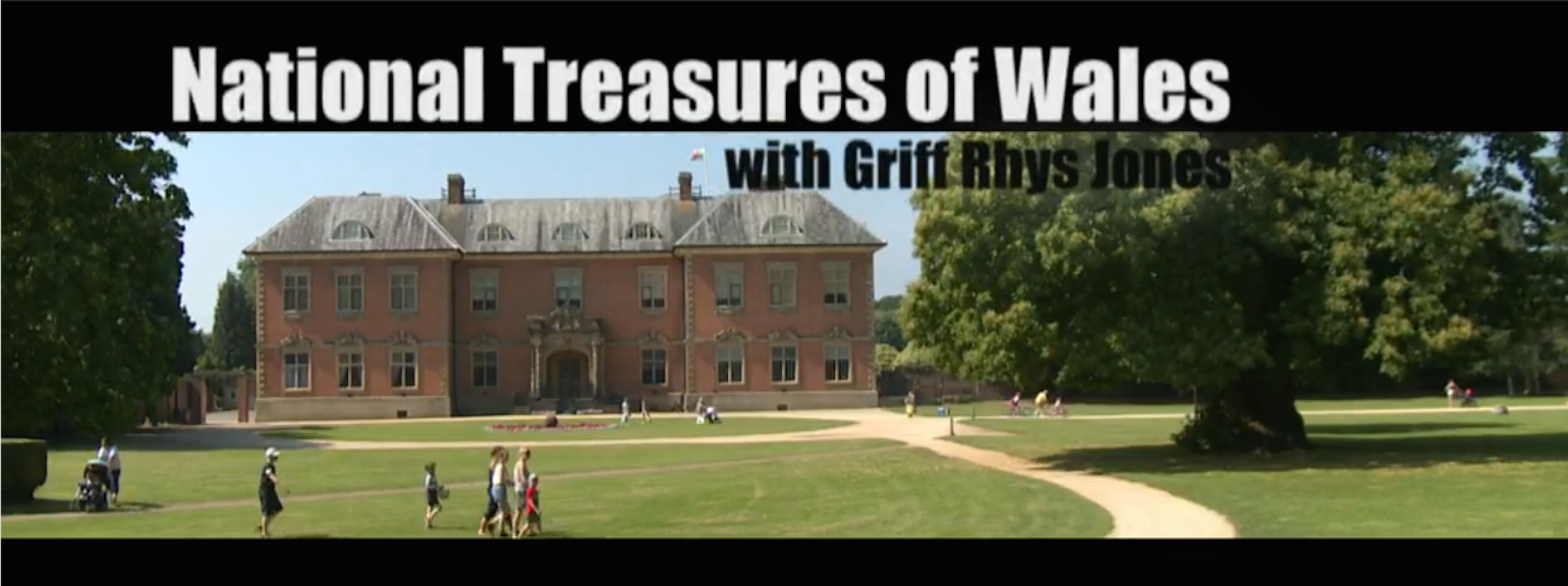
No sooner had I finished writing this post [many many months ago now] but Tredegar House was the subject of a TV programme with Griff Rhys Jones.  So, as I didn’t want to be thought a copycat, I decided to delay publishing …and inevitably it slipped off the radar. Which is a great pity because Tredegar deserves star billing!  It is probably the finest later 17thc building in Wales and, in the opinion of the late Giles Worsley, one of half dozen most important Restoration houses in Britain.

If you saw the broadcast then I hope this will be a slower and more in-depth account …but if you didn’t, then read on and maybe this will inspire you to find out more about Tredegar and the Morgan family or even go and visit!

screenshot
Continue reading

Posted in Uncategorized | Tagged , , , , | Leave a comment

The further adventures of Francis Masson – the man with itchy feet

Massonia depressa with seed capsules, Paul Cumbleton 2007. Wisley Alpine Log. http://www.srgc.org.uk/wisley/2007/071107/log.html http://www.srgc.org.uk/wisley/2007/071107/log.html

Massonia depressa with seed capsules, Paul Cumbleton 2007. Wisley Alpine Log. http://www.srgc.org.uk/wisley/2007/071107/log.html

Last week’s post finished with Francis Masson returning to Kew in 1775 after a  successful plant collecting expedition to the Cape of Good Hope.  But he was clearly a man with itchy feet so the following year he was off again “undertaking an extensive plan of Operations” to “The Spanish Main”. However, the Caribbean wasn’t the Cape, and that was clearly where his heart lay. He eventually  returned to southern Africa for another 10 years, although there were still more transatlantic adventures to come.

Massonia echinata L.f. [as Massonia angustifolia L.f.] Curtis’s Botanical Magazine, t. 693-739, vol. 19: t. 736 (1804) [S.T. Edwards]

Massonia echinata                                         [then known as Massonia angustifolia] 
Curtis’s Botanical Magazine, t. 693-739, vol. 19: t. 736 (1804)

Masson’s success at getting seeds, bulbs and even living plants back to Britain set off what can only be described as a mad craze for Cape plants.  Linnaeus even named a genus of rather strange South African bulbs Massonia in his honour for doing this.

More significantly he is, according to Sir James Smith, the founder of the Linnean Society, the man responsible for the “novel sight of African geraniums in York or Norfolk” and for the fact that “now every garret and cottage window is filled with numerous species of that beautiful tribe and every greenhouse glows with the innumerable bulbous plants and splendid heaths of the Cape.”

There was just one problem with all this globetrotting: the late 18thc was a time of almost continual worldwide warfare with its consequent political upheavals, and plant hunting was, unsurprisingly,  not exempt from its influences.

Massonia cordata Jacq. Jacquin, N.J. von, Plantarum rariorum horti caesarei Schoenbrunnensis descriptiones et icones, vol. 4: t. 459 (1804)

Massonia cordata
from von Jacquin,  Plantarum rariorum horti caesarei Schoenbrunnensis… vol. 4: t. 459 (1804)

So….read on to find out more about the adventures and discoveries of one of Britain’s greatest, if least well-known, plant hunters…

Continue reading

Posted in Uncategorized | Tagged , , , , , , , , , , , , , , , , , , , , , , , , , , , , , , | 1 Comment

How Francis Masson found the world’s oldest pot plant…and a few other things

Francis Masson, G. Garrard, Linnean. Society.

detail of a portrait of Francis Masson, by George Garrard, Linnean Society.

“The country is encompassed on all sides with very high mountains, almost perpendicular, consisting of bare rocks, without the last appearance of vegetation; and upon the whole, has a most melancholy effect on the mind.”   So wrote Francis Masson just after starting out on his first plant hunting mission in 1772.  But, contrary to what you might think,  he was not exploring a botanical wilderness but one of the richest plant habitats in the world.

Read on to find out where he was and why he spent nearly 12 years of his life there, exploring, recording, collecting and dispatching seeds, bulbs and plants back to Kew including what is now the probably the world’s oldest pot plant!

High in the Cederbergs. photo by Arne Purves, 2012 http://www.arnepurves.co.za

High in the Cederbergs. photo by Arne Purves, 2012
http://www.arnepurves.co.za

Continue reading

Posted in Uncategorized | Tagged , , , , , , , , , , , , , , , , , , , , , , , , | Leave a comment

Queen Square, Bloomsbury

Detail from Queen Square, in Ackermann's Repository of Arts, 1812

Detail from Queen Square, in Ackermann’s Repository of Arts, 1812

Queen Square in Bloomsbury is a little oasis hidden away close to the very heart of London. Now largely surrounded by hospitals, and often full of hospital patients and visitors, you can also spot a few surviving early 18thc houses on part of one side, amidst the institutions, hotels and outposts of  medical  empires.

The square itself is now not much more than a small public park with inscribed benches , statues and other  memorials. But it has not always been like that. Indeed when it was built Queen Square was  a prestigious residential address and remained so for well over a hundred years.


The view over Queen Square from the northern end, www.rightmove.co.uk

The view over Queen Square from the northern end, http://www.rightmove.co.uk

Read on to find out more about the history of one of London’s oldest squares:  its foundation, slow decline and  new role as a place of calm and quiet for Londoners today, as well as being virtually synonymous with The National Hospital for Neurology and Neurosurgery.

Continue reading

Posted in Uncategorized | Tagged , | 2 Comments

Wentworth Castle – the feud continued

https://www.flickr.com/photos/54087782@N00/3263713695/in/photolist-5YponM-747kuX-8c7k9G-5YpeqM-8taRvZ-5YtzMs-e49XfL-5Yu7a3-awhx7P-b6aHNt-oCt2V9-5YtHSC-9eVCTD-5Yua8G-bYsdE9-kYSrNt-5YpnrP-8udide-5YpY3T-sHM8bN-5YuthG-9FhToh-8ud4TT-b6aFTZ-aperDU-aj2NWR-r3t8Ro-75iL6C-r2g4cy-7m6cae-hDUcfe-8ug9QU-5vsnZT-hgcvEK-5YpBLH-bYsdn5-8qdmxt-8udkfr-iurgSJ-hdZt9k-5Ytph3-9eYN9Y-iuqGNL-8ugkv3-7ErSRE-bFvQ2c-eALeik-8f1dU3-wC5785-5Yp892

Photo by ManaCee, 2009 https://www.flickr.com

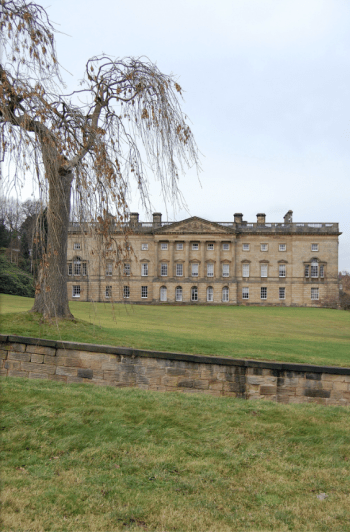
Wentworth Castle, one of the products of the acrimonious family feud discussed in last week’s post, is one of the wonders of Yorkshire, indeed of the whole country. Now a grade 1 listed mansion and a Grade 1 listed landscape, like so many other great estates it was almost lost in the 20thc.

Highlighted in the 1986 Victoria and Albert Museum’s exhibition “The Country House in Danger”, the great landscape that Horace Walpole had lavishly praised in 1780 was described then as  “disturbed and ruinous”.  Now, after about 15 years in the hands of the Wentworth Castle Heritage Trust it is being returned slowly but surely  to its previous grandeur. And what a wonderful job they are making of it!

Normally I manage to write about a garden in one post, or if it’s particularly historically interesting in two. I managed to exceed my own word limit threefold when researching Wentworth, so since I didn’t want to bore you with a horticultural War and Peace I’m going to be spreading my words of wisdom over no less than 3 posts. Read on to find out why Wentworth Castle is so special! Continue reading

Posted in Uncategorized | Tagged , , , , , | Leave a comment