The Wentworth Feud…

The dragon finial from the staircase in the newly restored Stainborough Castle in the grounds of Wentworth Castle David Marsh, April 2016

The dragon finial from the staircase in the newly restored Stainborough Castle in the grounds at Wentworth Castle
David Marsh, April 2016

It’s rare that family disputes give rise to anything positive but Wentworth Castle is the  exception that proves the rule.  The story might appear a bit confusing but it’s a pretty impressive piece of trying to outdo your rivals and led, in the next few decades, to the building of two magnificent houses, Wentworth Woodhouse and Wentworth Castle, and the creation of two magnificent gardens to match.

The  initial row was over the inheritance of the childless William Wentworth, 2nd Earl of Strafford in 1695, and in particular the Wentworth family seat at Wentworth Woodhouse.  From the next few generations  the two sides of the family competed for social status and political power.

Thomas Wentworth, 1st Earl of Stafford (2nd Creation) Image Date: 2006 Period: 18th century Country: ENGLAND, UK Display Creator: RYSBRACK, Michael

Thomas Wentworth, 1st Earl of Strafford, as a Roman general, Michael Rysbrack, c.1740
http://shimmer.shu.ac.uk/luna/servlet/detail/SHU~3~3~590082~168404:Thomas-Wentworth,-1st-Earl-of-Staff

But by the mid-20th century the Wentworth Castle estate, like so many others, had fallen into disrepair and in 1948 was split up.  The mansion became a teacher training college, the outbuildings were largely abandoned and, as the guide book says, “nature reclaimed the carefully planned vistas and the designed elegance of the gardens.”
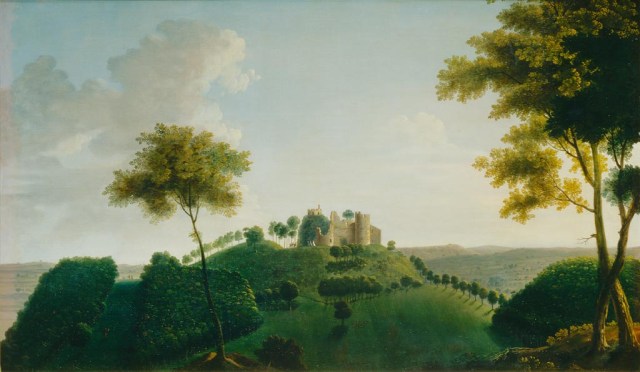
Thomas Bardwell (1704-1767) TitleStainborough Castle, Folly in the Grounds of Wentworth Castle Date 1745 Government Art Collection http://www.gac.culture.gov.uk/work.aspx?obj=11156

Stainborough Castle, Folly in the Grounds of Wentworth Castle
Thomas Bardwell, c.1750.   Government Art Collection
http://www.gac.culture.gov.uk/work.aspx?obj=11156

Read on to find out more about the early history of the gardens and landscape at Wentworth Castle, which I’ll continue in another post shortly, when you can take heart from the amazing restoration programme that has been underway since 2001. Continue reading

Posted in Uncategorized | Tagged , | 3 Comments

Gardeners’ Chronicle 150 years ago …

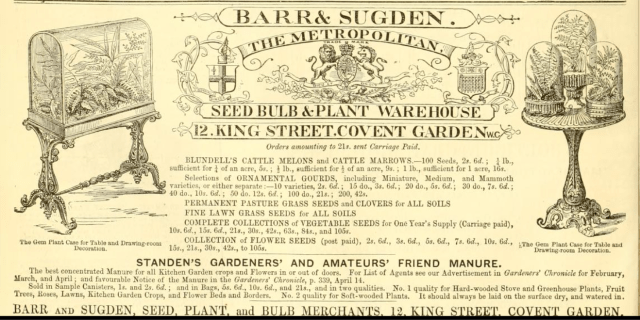
screenshotWhen I’m researching garden history I often find myself thumbing through the pages of Gardeners’ Chronicle, probably the most famous horticultural magazine ever published. It’s the best source for everyday life in the gardening world in the 19th and early 20th centuries. Today was no exception, except that I got side-tracked from my planned piece when I realised that I was looking at the volume for 1866 and thought it might be fun to see what was going on in the horticultural world 150 years ago.screenshot
 

Continue reading

Posted in Uncategorized | Tagged , | Leave a comment

Henry Essenhigh Corke : pioneer plant photographer

 Japonica (Japanese Quince),Cyedonina japonica, from Beautiful Flowering Shrubs, 1922

“Japonica (Japanese Quince), Cydonia japonica”, from Beautiful Flowering Shrubs, Gertrude Clarke Nuttall, 1922 https://archive.org/details/beautifulfloweri00nuttrich

Yes! There really are two people called Essenhigh Corke worth writing about on a garden history blog.

Today’s is Henry, son of Charles  who was the subject of a  post last month. Henry was even more talented than his father  and gained a formidable reputation as a pioneering photographer. He was also a keen botanist and a Fellow of the RHS, and managed to combine his two passions in the beautiful photography for gardening books including several for Harry Higgott Thomas, who was subject of last week’s post. In fact it was through researching  Harry Thomas’s work that I discovered Henry in the first place.

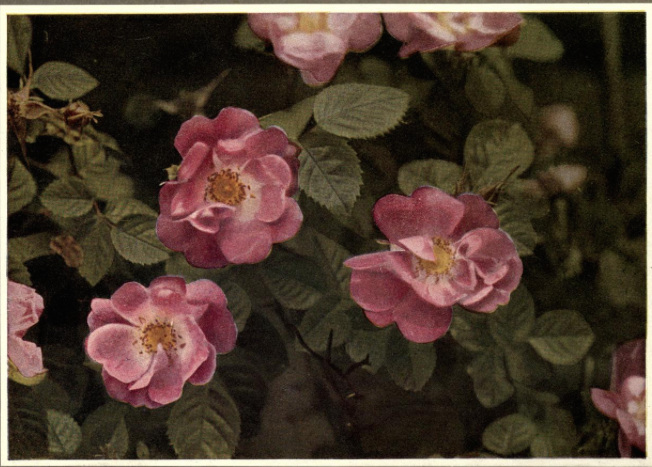
Penzance Briar, from Beautiful Flowering Shrubs, by Gertrude Clarke Nuttall, 1922

Penzance Briar, from Beautiful Flowering Shrubs, by Gertrude Clarke Nuttall,1922 https://archive.org/details/beautifulfloweri00nuttrich

Sadly, as was the case with his father ,very little seems to be known about Henry’s personal life, and there are no known photographs, which is a bit odd considering several of his family were professional photographers and ran a photographic studio, but read on to find out what I have managed to discover…

Continue reading

Posted in Uncategorized | Tagged , , , | 1 Comment

Harry Higgott Thomas

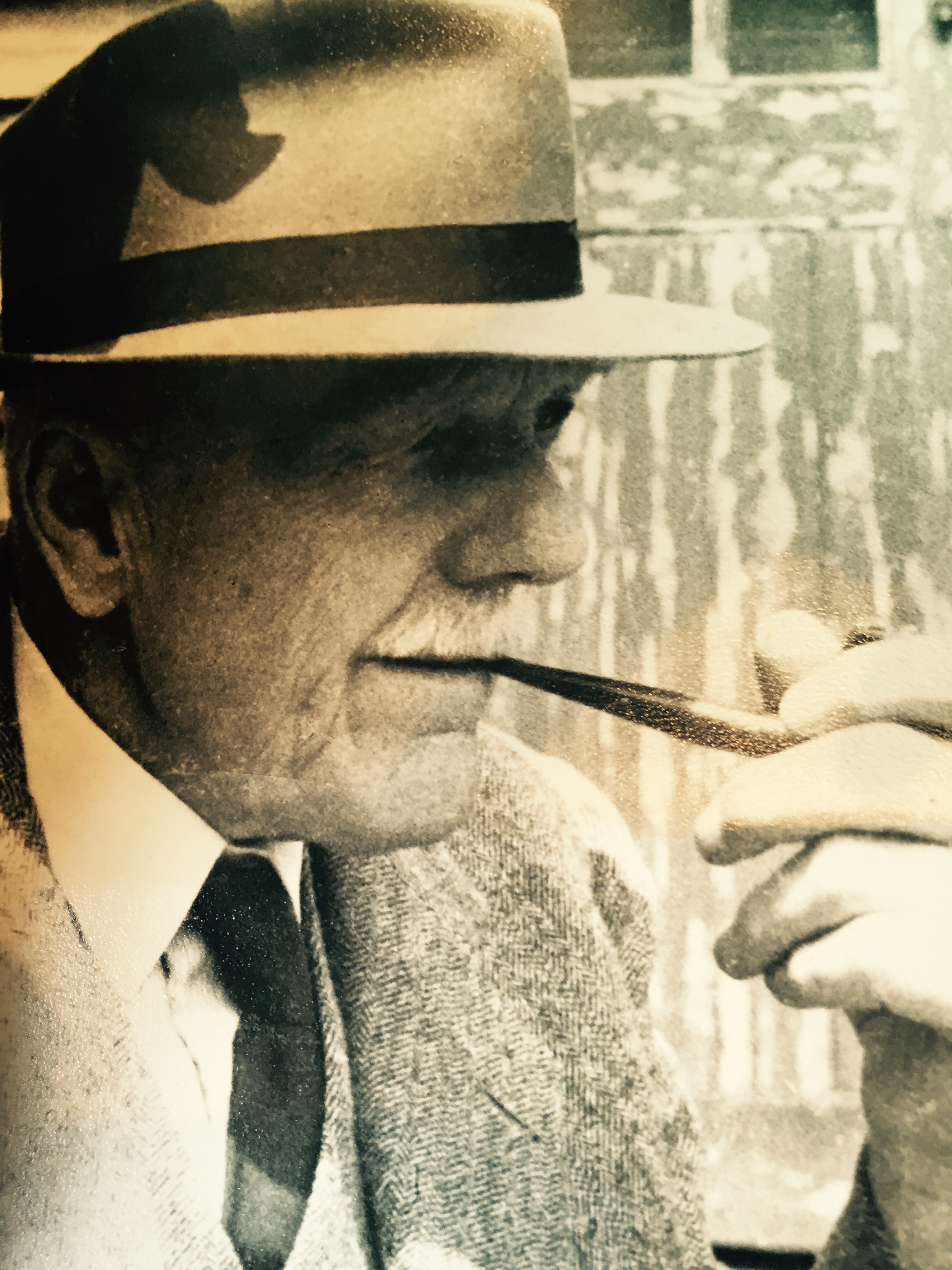
Harry Higgott THomas photo courtesy of Jeremy Thomas

Harry Higgott Thomas
photo courtesy of Jeremy Thomas

Harry Higgott Thomas was a man you probably haven’t heard of. If he’d stuck to his first career choice – working in a bank – there’s no reason why you ever would have done.  But, he changed careers, went to train at Kew and  50 years ago had become one of the best known names in garden writing. Not only was he a prolific author of horticultural books, but he worked with Gertrude Jekyll, edited Popular Gardening for more than 40 years,  became the first regular gardening columnist on the Daily Telegraph, was awarded the RHS Victoria Medal of Honour and elected president of the Kew Guild.

Read on to find out more … Continue reading

Posted in Uncategorized | Tagged , , , , , , | 3 Comments

Capability Brown and Africa… did you really say Africa?

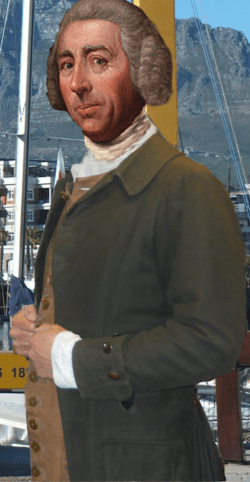
/Users/davidmarsh/Library/Group Containers/Q79WDW8YH9.com.evernote.Evernote/Evernote/quick-note/drdavidmarsh___EverCapability Brown - but where is he?photo courtesy of Nicholas Marsh

Capability Brown – but standing where? photo courtesy Nicholas Marsh

I’ve just returned from a month in southern Africa and was bowled over by the range of plants and landscapes that I encountered in the western Cape and Namibia.  I can’t stop enthusing about what I saw but wondered how on earth I could legitimately fit that excitement into a blog that’s about historic parks and gardens in Britain.

Then I hit upon the answer.  I’d link it to everyone’s man of the moment – Lancelot ‘Capability’ Brown.

Up until now I’ve rather avoided writing much about him because of his ubiquity. You can’t open a serious newspaper or magazine this year without someone famous mentioning Brown and his genius, Brown and his influence on land sculpture or art or the English imagination, or almost anything else for that matter.  Up until now, because I couldn’t think of anything original to say, I thought probably best to keep my mouth shut….until a couple of my fellow P&G trustees suggested I ought at least to try. After all we at P&G are going to play host to the Capability Brown Festival archive when the tercentenary is over.

So here goes. I’m going to write about the links between Capability Brown and Africa. Will such a harebrained scheme work? Can I find 1500/20 words of wisdom to inform or amuse? Well read on to find out… Continue reading

Posted in Uncategorized | Tagged , , , , | 2 Comments