Another side of Gertrude…

screenshotWe probably all have a vision of Gertrude Jekyll based on the famous photos of her in later life – a dumpy but formidable old lady with dark clothes reaching to the ground and walking in a garden with the aid of a stick. But that is not how she saw herself and there was definitely another side to her: “I ought to know I am quite an old woman. But I can still –  when no one is looking –  climb over a five-barred gate or jump a ditch.”

screenshot

Gertrude Jekyll 1843-1932, possibly taken at in her Munstead Wood garden. Country Life Picture Library


In 1908 she wrote a lot about her own childhood in a book on basic botany and horticulture  for young people called simply  Children and Gardening.screenshot        The quotes and the rest of the images in this post all come from that. There is a  link to the full text at the end of the post.
Read on to find out more about an unexpected side to one of Britain’s best known and loved gardeners.


Continue reading

Posted in Uncategorized | Tagged , | 1 Comment

Bunnies – but not chocolate Easter ones!

detail from the Queen Mary Psalter, BL Royal 2 B VII  f. 156 

detail from the Queen Mary Psalter,       c.1310-20, BL Royal 2 B VII  f. 156 

I was at Kew the other day and encountered a large branded golden bunny on the lawn: a symbol of how commercial everywhere, however historic and significant, has had to become in recent years.  One of the greatest botanic gardens and scientific research centres  in the world, reduced to reminding us that “Chocoholics of all ages can follow an Easter trail around the Gardens to collect clues before heading over to one of the on-site shops or gates to pick up their chocolate treat.”

detail from the Queen Mary Psalter, BL Royal 2 B VII  f. 156 

detail from the Queen Mary Psalter,       c.1310-30BL Royal 2 B VII  f. 156 

I suppose, in these days of austerity, it could be a lot worse, and there are obviously two sides to everything. Kew are able to tie it in with some good educational work, and yes maybe  it might help  introduce future generations to the joys of horticulture and history.  Nevertheless, despite the fact that I know I am a grumpy old  cynic, it’s hardly a lesson in national pride in the Year of the Garden.

But apart from a sigh of exasperation at the levels to which Kew has to go to raise cash it alerted me to the fact that it’s Easter and that I hadn’t planned anything remotely appropriate for this week’s post. So, rant over, bunnies it is – although non-chocolate ones! Continue reading

Posted in Uncategorized | Tagged , , | 4 Comments

Artificial Stone 2: Eleanor’s enterprise

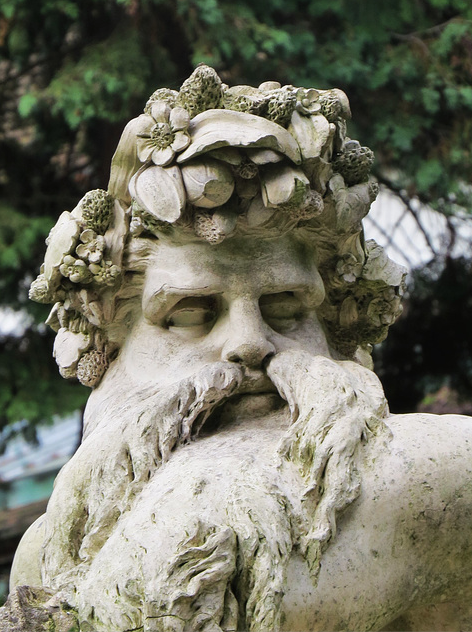
The River God from the terrace at Richmond etc etc

The River God, a Coade stone sculpture by John Bacon, Ham House, Richmond, National Trust

Monty Don has done it again.  A couple of months ago I wrote a post about scything and lawns and he then immediately demonstrated how to do it on The Secret History of the British Garden.   Next, I was writing this post about Eleanor Coade and before it was finished Monty talked about her in his next programme.   So, not only have I delayed posting this for a while, but  I’m keeping quiet about my plans for future posts  in case he has a spy in my office!images

I hope if you saw his brief introduction to Eleanor Coade it won’t spoil this more in-depth coverage of a fascinating 18thc businesswomen.   I’m also pleased that he didn’t know, any more than I do exactly how and why  the daughter of an 18thc Devonian wool merchant and bankrupt ended up running a busy industrial operation in London, nor how she managed to make such a success of the artificial stone that carries her name.   Continue reading

Posted in Uncategorized | Tagged , , , , , , , , , | 2 Comments

Hardwick Park – the Circuit Walk

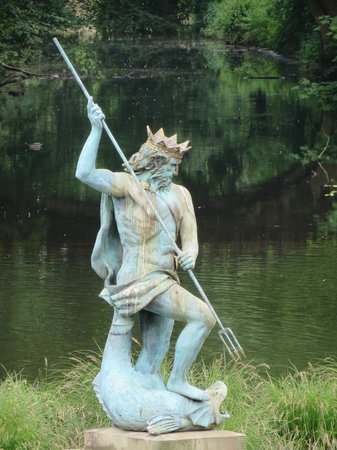
Neptune on the serpentine river from https://www.tripadvisor.co.uk/Attraction_Review-g940865-d2487051-Reviews-Hardwick_Park-Sedgefield_County_Durham_England.html#photos;geo=940865&detail=2487051&ff=67648446&albumViewMode=hero&albumid=101&baseMediaId=67648446&thumbnailMinWidth=50&cnt=3&offset=-1&filter=7

Neptune on the serpentine river from https://www.tripadvisor.co.uk

This is a follow-on from last week’s post about Hardwick Park in County Durham, one of the great 18thc circuit walk gardens, now in the later stages of a very successful restoration programme.

There are several descriptions of the circuit walk, the first dating from 1770. It was later described  in William Hutchinson’s  History and Antiquities of the County Palatine of Durham, published in 1794. This was just after William Russell had acquired the estate from John Burdon, [Extracts from it are in italic]. There is also a guide dating from 1800. Links to them are given at the end of the post.   Images referenced as from  Reawakening are taken from the dvd about the restoration The Reawakening of a Sleeping Beauty, produced by the Friends of Hardwick Park.  Read on to find out more….

Continue reading

Posted in Uncategorized | Tagged , , , , , , , , , | 2 Comments

Hardwick Hall Park

David Marsh, July 2015

View through one of the openings on the Serpentine Bridge, Hardwick Park,                  David Marsh, July 2015

First things first. No…. this post is not about THAT Hardwick Hall but the one in County Durham. Maybe not so many famous connections, and definitely not such an interesting mansion but with much more interesting grounds which include the largest collection of structures designed by James Paine, the great 18thc architect. I visited in July 2015 with Catherine Grezo, the Project Officer for the County Council , and Tony Smith, the  Council’s Countryside Manager, and met James Paine himself even tho he died in 1789…. intrigued to know how?  …then read on!

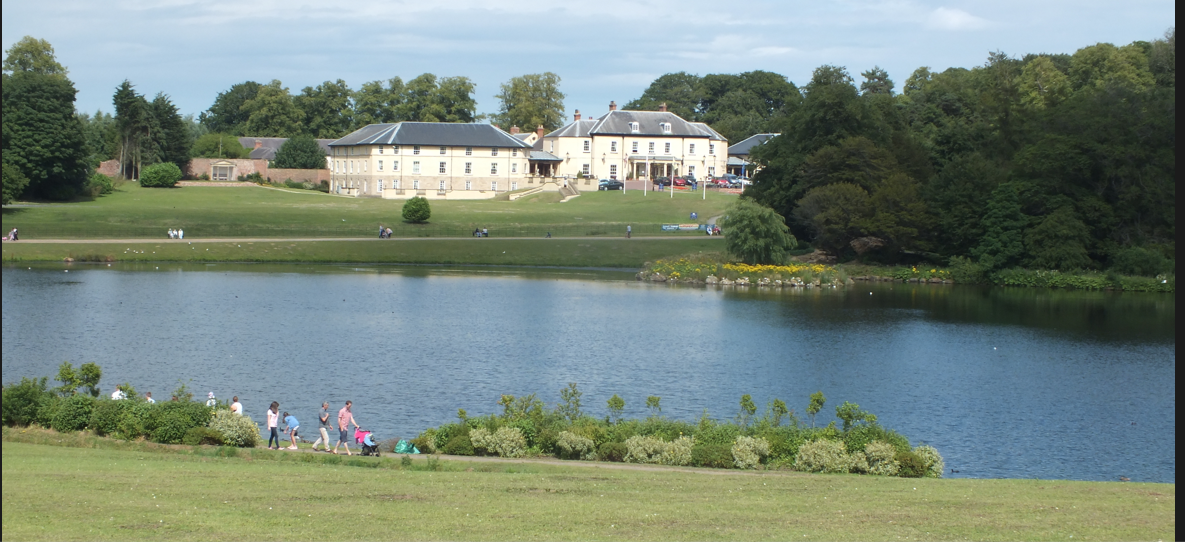
Hardwick Park Hotel with the Grand Terrace in front, from the south side of the lake David Marsh, July 2015

Hardwick Park Hotel with the Grand Terrace in front, from the south side of the lake
David Marsh, July 2015

Posted in Uncategorized | Tagged , , | Leave a comment