
Capability Brown and Africa… did you really say Africa?

/Users/davidmarsh/Library/Group Containers/Q79WDW8YH9.com.evernote.Evernote/Evernote/quick-note/drdavidmarsh___EverCapability Brown - but where is he?photo courtesy of Nicholas Marsh

Capability Brown – but standing where? photo courtesy Nicholas Marsh

I’ve just returned from a month in southern Africa and was bowled over by the range of plants and landscapes that I encountered in the western Cape and Namibia.  I can’t stop enthusing about what I saw but wondered how on earth I could legitimately fit that excitement into a blog that’s about historic parks and gardens in Britain.

Then I hit upon the answer.  I’d link it to everyone’s man of the moment – Lancelot ‘Capability’ Brown.

Up until now I’ve rather avoided writing much about him because of his ubiquity. You can’t open a serious newspaper or magazine this year without someone famous mentioning Brown and his genius, Brown and his influence on land sculpture or art or the English imagination, or almost anything else for that matter.  Up until now, because I couldn’t think of anything original to say, I thought probably best to keep my mouth shut….until a couple of my fellow P&G trustees suggested I ought at least to try. After all we at P&G are going to play host to the Capability Brown Festival archive when the tercentenary is over.

So here goes. I’m going to write about the links between Capability Brown and Africa. Will such a harebrained scheme work? Can I find 1500/20 words of wisdom to inform or amuse? Well read on to find out… Continue reading

Posted in Uncategorized | Tagged , , , , | 2 Comments

Temple Newsam

The Sphinx Gateway, David Marsh, April 2016

The Sphinx Gateway,
erected during Capability Brown’s involvement at Temple Newsam, c.1760 based on designs by Lord Burlington published in 1738.                                                                David Marsh, April 2016

A trip to Yorkshire for a wedding gave me a great opportunity to visit a garden I’ve always wanted to see: Temple Newsam, a wonderfully rambling imposing mansion  just a couple of miles from Leeds city centre.  Best known for its magnificent collections of furniture, ceramics, paintings, silverware and textiles,  it also has gardens that make a visit worthwhile on their own.

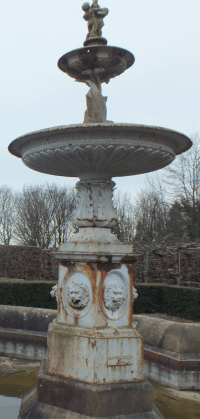
The Victorian cast-iron fountain in the South Garden, David Marsh, April 2016

The Victorian cast-iron fountain in the South Garden, David Marsh, April 2016

To add to the interest there is currently [until 30th October 2016] an exhibition called Visioning the Landscape about the history of the estate from 1622 to 1922.  Odd dates to choose you might think, but 1622 is the date when the estate, then in a parlous state, was bought by Sir Arthur Ingram for £12,000, and 1922 the year that Edward Wood, Earl of Halifax, handed it over to Leeds City Council who still own it today. The exhibition explores the different ways that the landscape at Temple Newsam was perceived during those 300 years.

DSCF3239

The house and end of the stable block.          David Marsh, April 2016

Read on to find out more…

Continue reading

Posted in Uncategorized | Tagged , , , | Leave a comment

Charles Essenhigh Corke

West View, Hever Castle, Hever painted by Charles Essenhigh Corke - 1904

West View, Hever Castle,   1904

For garden and landscape historians some of the more obvious sources for knowledge of what a site  was like, and how it has developed, are paintings and, more recently photographs.   So it’s quite surprising that the name of  Charles Essenhigh Corke is not better known.  Although he never moved from his home town of Sevenoaks where he was born in 1852 and where he became a professional studio photographer, in his spare time  he also enjoyed painting. His preferred subjects were the great houses and gardens  of west Kent including Hever, Ightham, and Penshurst, but above all Knole. Many of his paintings were used to illustrate books or turned into highly popular postcards.

screenshot

Italian Garden, Hever Castle, c.1910

Little is known about Charles, and I cannot even find a photograph of him, despite his profession,  and even stranger considering that his son and daughter followed him into the profession.  But read on to find out what I have managed to unearth…

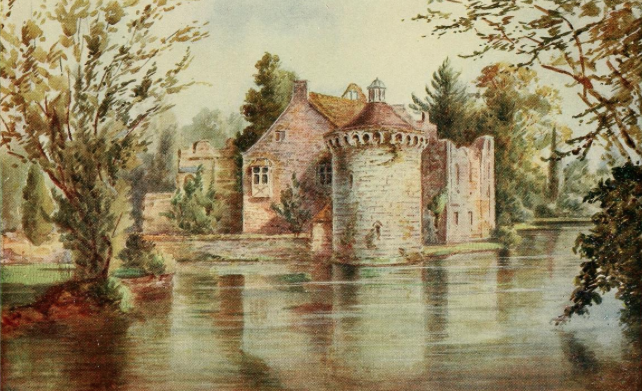
Scotney Castle

Scotney Castle

Continue reading

Posted in Uncategorized | Tagged , , , , , , , , | 2 Comments

Melbourne Hall

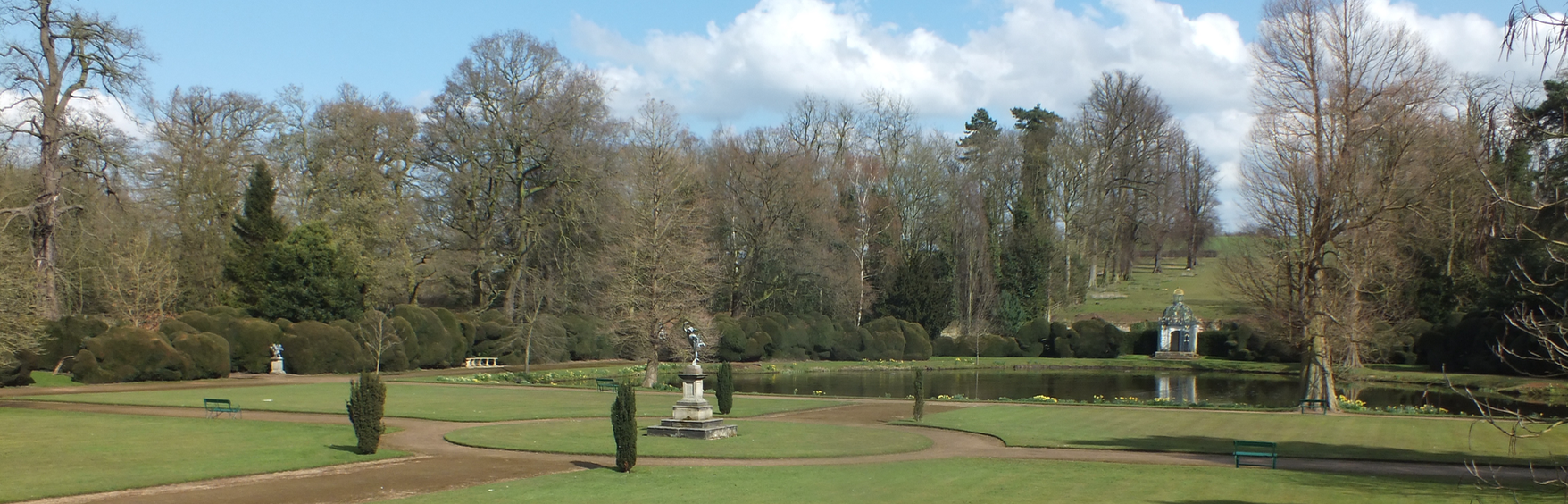
DSCF3463I’ve just found a new favourite garden.  Every so often, like most of us I suspect, I  visit a garden and go…wow I could live here but maybe I’d just alter this, move that, add a few of this or thats and so on… but a couple of weeks ago I discovered somewhere that is well-nigh perfect.   And I’m clearly not the only one who thinks that.  The garden’s website proudly banner-headlines Philip Ziegler’s comment that “Melbourne Hall was, and mercifully is, one of the most exquisite of the smaller stately homes of England, while the formal gardens… are as close to perfection as any in the country…“.

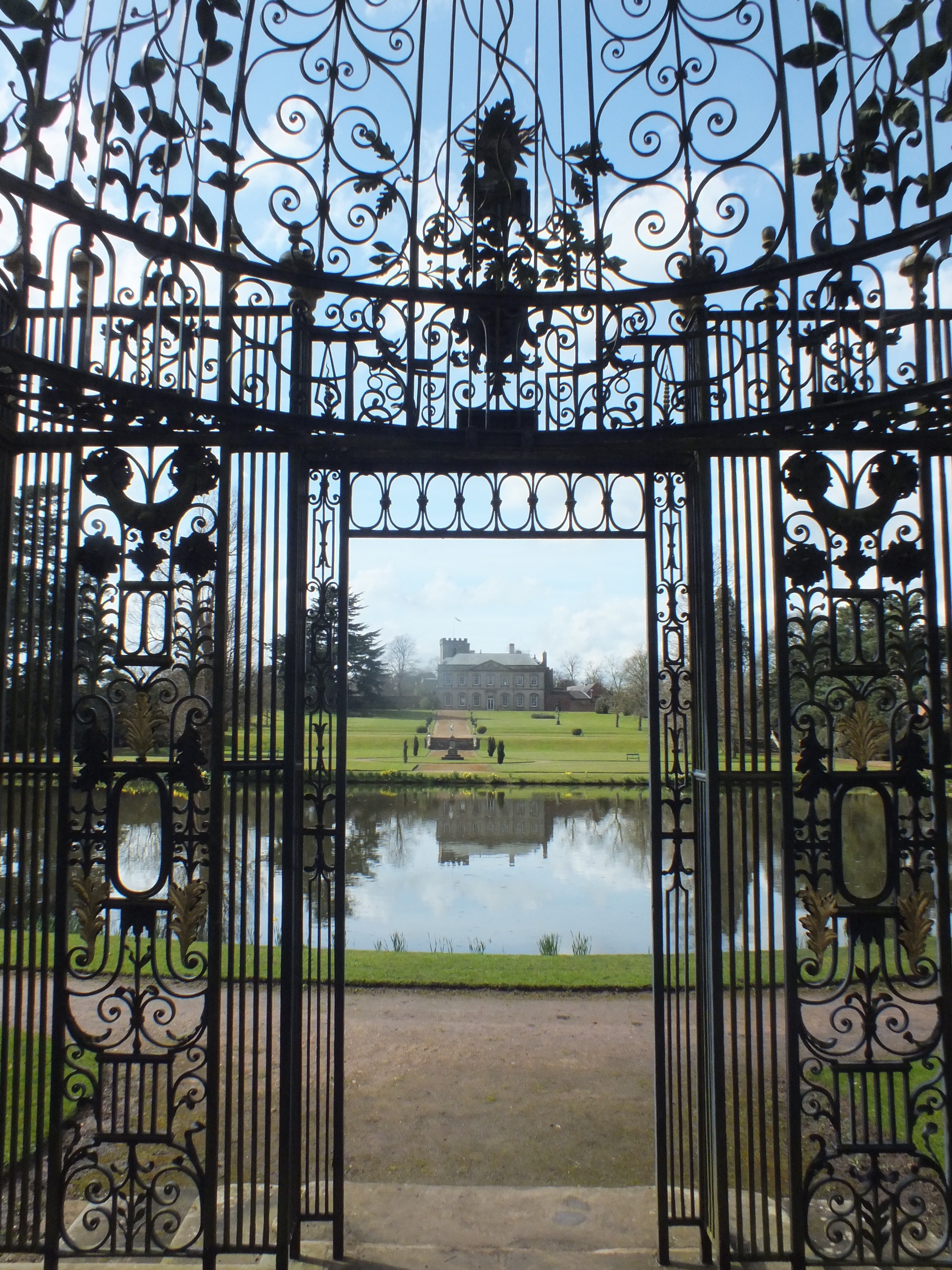
DSCF3537The gardens at Melbourne Hall are probably the best surviving example of their period, classically formal in an Anglo-French Baroque mix.  Of course, as Robin Lane Fox put it in a recent article “a hectare or so of enclosed garden is hardly Versailles in Derbyshire, but the use of space is extraordinarily interesting.”  The layout while seemingly simple, is subtly complex, making it a precis of all that is best in the gardens of the time.  And to make it more interesting still, the gardens have continued to evolve, adding touches of colour to the range of greens that otherwise dominate.  So perhaps it’s not surprising that more than 20 garden features are Grade I listed including  the intricate metalwork gazebo that I mentioned at the end of last week’s post on Treillage. So read on to find out more…screenshot

Continue reading

Posted in Uncategorized | Tagged , , , | Leave a comment

Treillage

from a Book of HOurs, worksho of Jean Colombe, Bourges, late 15thc.

from a Book of Hours, workshop of Jean Colombe, Bourges, late 15thc.

Treillage is just a posh [and French] word for trellis!  Its one of the oldest forms of garden structure and in medieval and Tudor times was often called ‘carpentry work’.  Although the idea of trelliswork sounds simple and rustic,  in its Baroque heyday it could be immensely sophisticated and complex.

from John James translation of Dezalliers Theory and Practice of Gardens, 1712

from John James translation of Dezallier’s Theory and Practice of Gardens, 1712

Later it was generally superseded by either a return to more rustic woodwork for garden structures or, for more elaborate work, by  wrought and cast iron. Read on to find out more about this art form which must be due for a revival!

Continue reading

Posted in Uncategorized | Tagged , , , , , , , , | 2 Comments