Dr Stukeley & the Druids


'An Arch Druid in His Judicial Habit', from "The Costume of the Original Inhabitants of the British Islands" by S.R. Meyrick and C.H. Smith (1815)

‘An Arch Druid in His Judicial Habit’, from “The Costume of the Original Inhabitants of the British Islands” by S.R. Meyrick and C.H. Smith (1815)

HAPPY NEW YEAR!

Believe it or not this is my 100th post – and coincides nicely with the end of  my second year writing this blog. Suitably for the time of year  its the second one about mistletoe, following on from last week’s discussion about sacred groves, and this time exploring the Druid connection.

Despite images like this, or pagan festivals celebrating summer solstices at Stonehenge, or bards reciting at eisteddfods, the place of Druids in our national history is surprisingly recent.mistletoe

The link between mistletoe, sacred groves and the Druids actually begins in the 1stc AD with writings of Pliny the Elder, and Tacitus but it doesn’t really begin to affect our national consciousness until the 16thc.  After that the boundary between fact, conjecture and invention is blurred. Myth begins to pile upon myth and legend upon legend until eventually in the 18thc the story of the Druids develops a life of its own with the ‘discovery’ of archaeology.  From then on the story takes a romantic faux historical twist and becomes even more difficult to distinguish fact from fiction. But read on and I’ll try…. Continue reading

Posted in Uncategorized | Tagged , , , , | Leave a comment

Christmas & Birthday Quiz

mistletoeHappy Christmas!

It’s also two years since I started writing this blog, and I seem to have settled into a comfortable pattern of posting early on Saturday mornings. Some readers have obviously got used to that because I’ve had emails, if for any reason I’m a bit later than 9.00, enquiring what’s happened to their weekly garden history fix!  So the fact that its Boxing Day would not be considered an excuse for missing a week or even for being a minute or two late. mistletoe

Although there are only 105 ‘followers’ who receive each post in their email, readership is now running at around 500 a week with occasional spikes when a post gets picked up and circulated by other groups on Facebook or Twitter etc.  mistletoeOverall readership for 2015 should reach 25,000 ‘hits’ by the end of the year  [its 24,707 as I write] – compared with 6,900 for 2014.  That’s from just over 10,000 visitors compared with 2,890 in 2014.     So thank you to everyone who has been reading the posts, telling their friends and passing the blog on.  Please keep up the enthusiasm and the comments.

And now, in the post-Christmas lull, you can test your memory of things the blog has covered this year…

"My Mistletoe Memories." Illustrated London News [London, England] 20 Dec. 1851: n.p. Illustrated London News. Web. 23 Nov. 2015.

“My Mistletoe Memories.” Illustrated London News [London, England] 20 Dec. 1851: n.p. Illustrated London News. Web. 23 Nov. 2015.

Continue reading

Posted in Uncategorized | Leave a comment

The Golden Bough

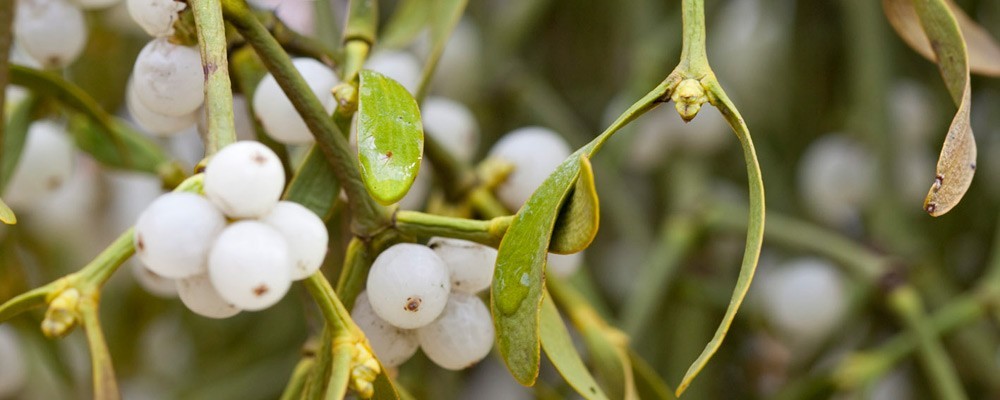
Week-51-10-viscum-album-1000px
mistletoeChristmas wouldn’t be Christmas without Mistletoe would it?

So this is the first of a couple of posts about this  mystical  plant and the traditions surrounding it which are, according to Richard Mabey, ” amongst Northern Europe’s last surviving remnants of Plant Magic”.  mistletoeWhen you see  mistletoe silhouetted against the fading light at the end of a long winter’s day it’s quite easy to imagine how it acquired this reputation.      mistletoe

It is a plant without any obvious source of food, without roots, that grows way above the Earth but is not blown away by the wind, that stays green when its hosts have lost their leaves, and that seems capable of spontaneous reproduction and continuing life. It must have been an extraordinary sight to those without our knowledge of its botany and ecology.

And it has a part to play in our parks and gardens.

Read on to find out more….Week-51-10-viscum-album-1000px Continue reading

Posted in Uncategorized | Tagged , , , , , , , , , , , , | Leave a comment

The colour of carrots

The Carrot, Willem Frederik van Royen, 1699, Märkisches Museum, Berlin

The Carrot,
Willem Frederik van Royen,1699,
Märkisches Museum, Berlin

Monty Don has done it again. I write a post about scything and lawns and he demonstrates how to do it on The Secret History of the British Garden, then I began writing a post on Eleanor Coade and before I had time to finish Monty talked about her in the next programme.  Paxton was on my list too but he covered him this week so I can only assume he has a spy in my office!

So instead a post about carrots….

A whole post about those dull & tasteless orange roots? Why on earth would that be interesting? Well…. although it started as a bit of a joke, I discovered there’s a lot more  to the story of the carrot than you might imagine.  carrotsDo you know where they come from [apart from Sainsbury’s in a plastic bag], or how  and when they became  grown for food?  Or what colour they are naturally?  And did you know there is a carrot museum?  I certainly didn’t ….so to  get to the root of the colour of carrots… read on!

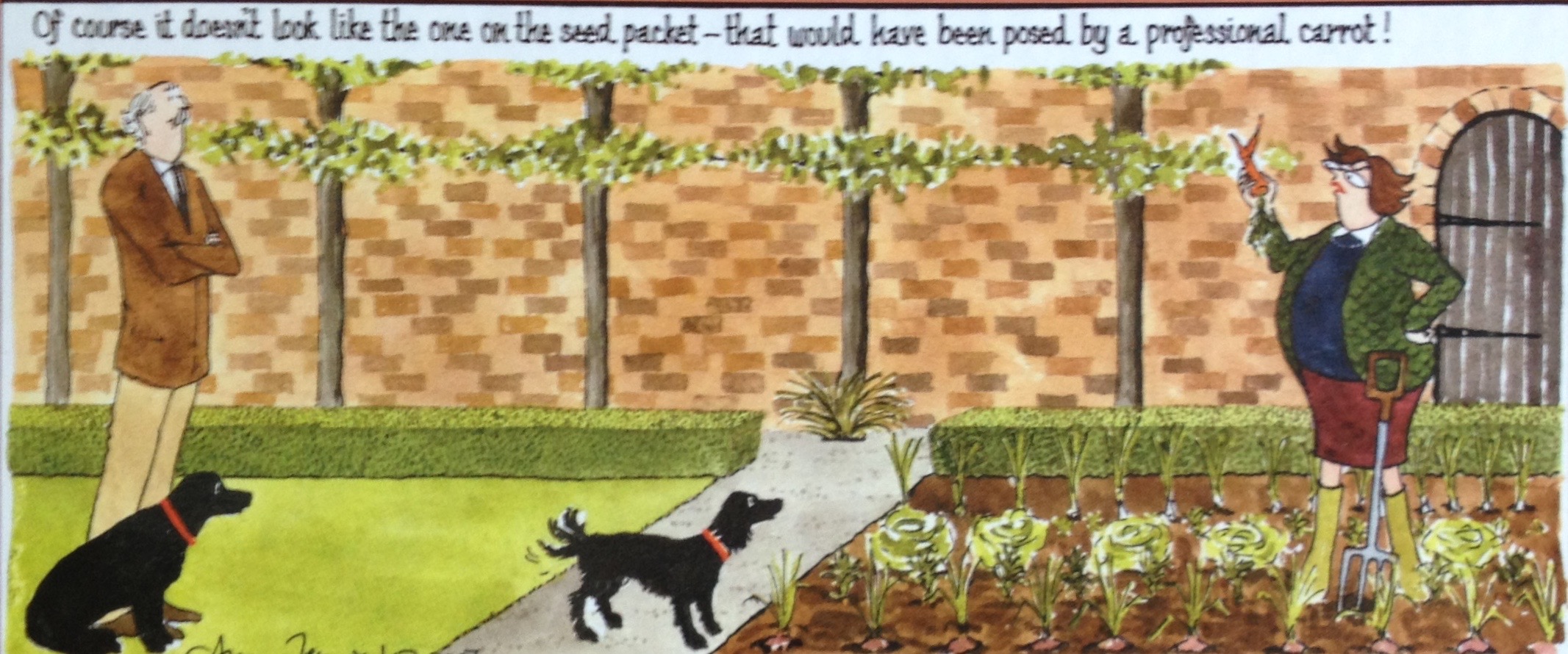
From Annie Tempest, In the Garden with the Totterings

From Annie Tempest, In the Garden with the Totterings

Continue reading

Posted in Uncategorized | Tagged , , , , , , , | 1 Comment

The faithful pencil of Mrs Withers

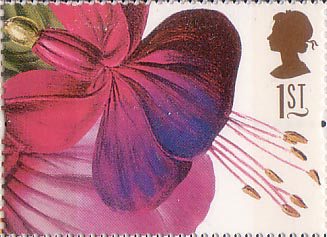
 Fuschia Princess of Wales (Augusta Withers) -http://www.collectgbstamps.co.uk

Fuchsia ‘Princess of Wales’, by Augusta Withers  one of the 1997 range of 19thc flower painting stamps                             http://www.collectgbstamps.co.uk

The more I explore botanic art the more I realise how underestimated it has been as an art form, and the more I realise how underestimated botanical artists have been.  Of course part of the reason for that may well have been that many, if not the overwhelming majority, have been women. 

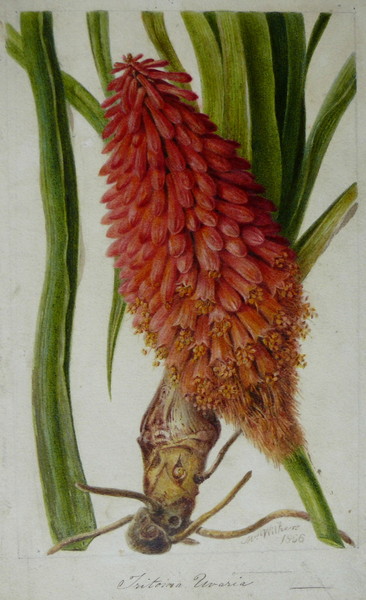
AUGUSTA INNES WITHERS (c.1793-1870) Tritoma Uvaria, Torch Lily or Red Hot Poker (1866English)

Tritoma uvaria, Torch Lily or Red Hot Poker (1866)

Our old friend John Claudius Loudon helps explain why: “to be able to draw Flowers botanically, and Fruit horticulturally, that is, with the characteristics by which varieties and sub varieties are distinguished, is one of the most useful accomplishments of young ladies of leisure, living in the country.” He then goes on: ” It is due to Mrs Withers of Grove Terrace, Lisson Grove, to state that her talents and teaching these objects are of the highest order.”   So who was this Mrs Withers?  What did she do to win Loudon’s praise? Why has she, like so many other  women artists of the time, virtually been forgotten?screenshot

Continue reading

Posted in Uncategorized | Tagged , , , , , , , , | 3 Comments