

When asked what is a “blackberry”, apparently 82% of people aged 16-24 instantly imagined a mobile phone rather than a fruit, according to a 2013 survey for YouGov. They don’t know what they’re missing!
This glorious late summer weather [OK… this was written last week!] means that there’s still time to gather wild blackberries from the hedgerow, the fruit being the one upside of an otherwise aggressive colonising thug of a plant.
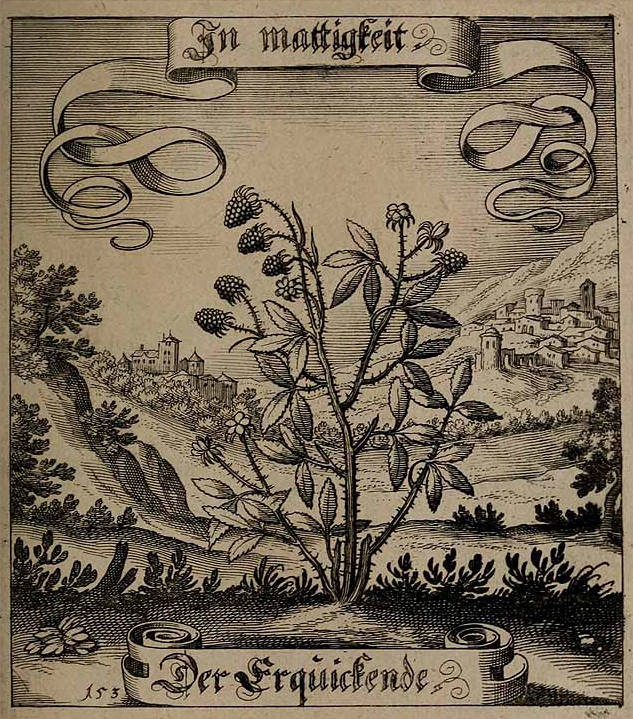
Rubus
from Der Fruchtbringenden Gesellschaft, t. 153 (1646)
Mind you that’s running counter to folklore which says that October 10th the former Michaelmas Day [ie before the change from Julian to Gregorian calendars] should be the last day to pick blackberries because that was the day that Lucifer was expelled from Heaven. He is said to have landed on a blackberry bush, and unsurprisingly roundly cursed it. In other versions of the legend, he spat or even urinated on it! Of course like so many myths it has an underlying scientific basis: blackberries contain a high concentration of tannins which accumulate in the fruit over the season making later picked berries prone to bitterness, and of course the weather is also likely to be much wetter so the berries contain more fungus spores and are more liable to rot. For more on the story listen to this clip:
http://www.bbc.co.uk/programmes/p032hzkr
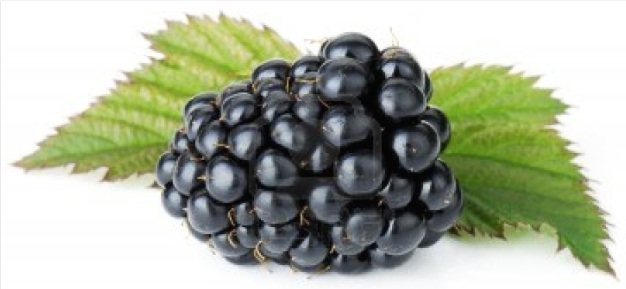 Blackberries have a long history of being eaten by humans, but a surprisingly short history in cultivation. Read on to find out more of the story behind the one of our favourite soft fruits.

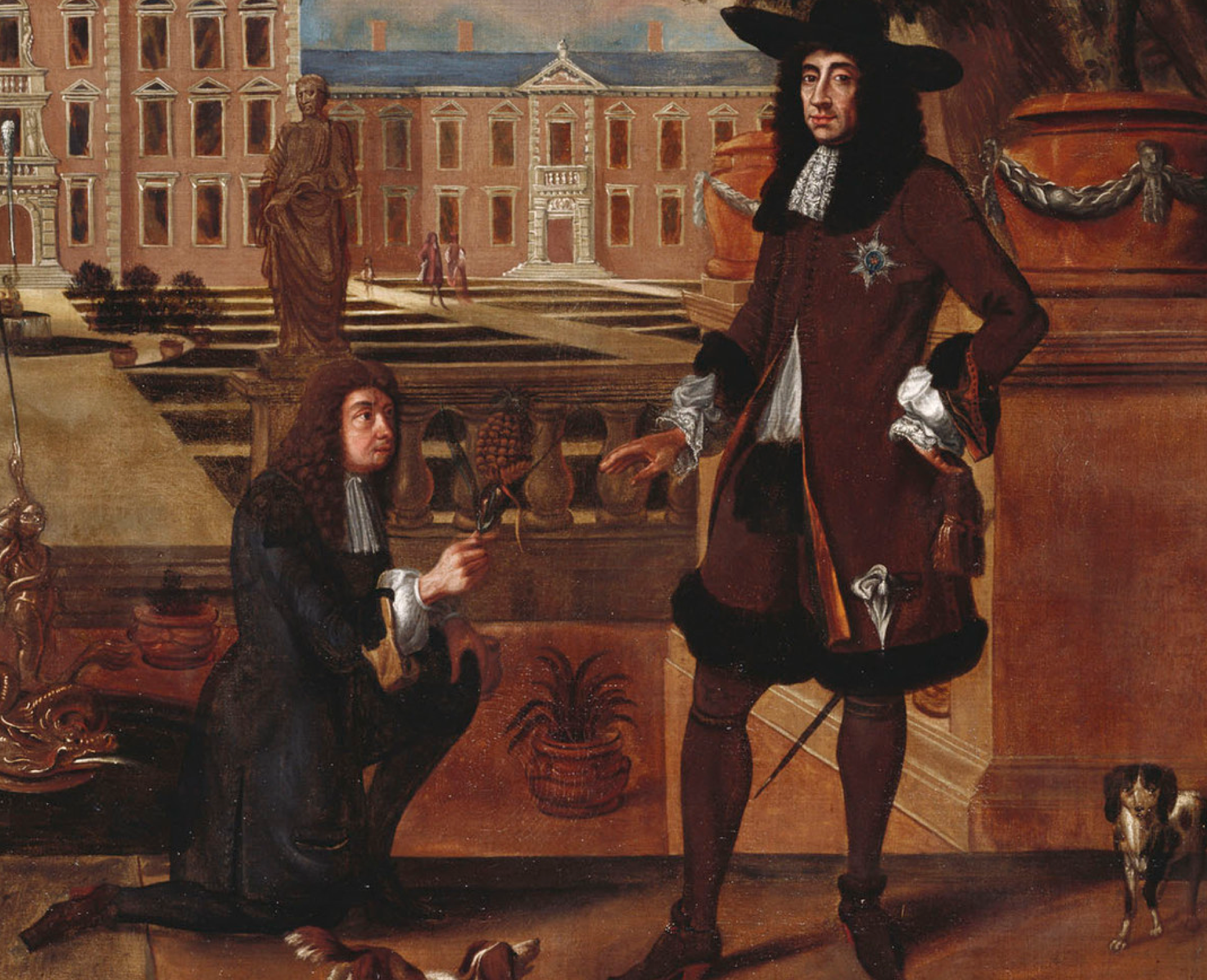
![Ananas comosus (L.) Merr. [as Ananas] pineapple Merian, M.S., De metamorphosibus insectorum Surinamensium, of te verandering der Surinaamsche insecten, t. 1 (1714) drawing:](https://thegardenhistory.blog/wp-content/uploads/2015/09/173288.jpg)



 The Garden History Blog
You must be logged in to post a comment.